Human rights situation in Myanmar ‘plummets to new low’, UN says
New report says abuses against Rohingya and unregulated resource exploitation worsening human rights situation in Myanmar.
Rohingya refugees protest against deteriorating living conditions and demand a safe return to Myanmar, nine years after a military crackdown drove them across the border [Yassin Abdumonab / EPA]
The human rights situation in Myanmar has “plummeted to a new low”, the United Nations has said, citing the “ever-worsening brutal abuse” of the Rohingya minority and the devastating impact of illicit economies, including illegal mining for rare earths.
In a report published on Tuesday, the UN’s Human Rights Office said the quest for control and legitimacy by Myanmar’s military – which seized power in a coup in 2021 – has only deepened the suffering of civilians.
The military has deployed tactics such as “airstrikes, arson attacks, displacement and denial of assistance” against civilians as it battles ethnic armed groups and militias for control of the vast, resource-rich country, the report said.
An estimated 8,075 civilians, including 1,074 children, have been killed since the coup, with at least 1,241 of them in the past year, it said.
The toll is likely higher, the report cautioned, noting that open sources indicate that as many as 15,731 civilians may have been killed since the coup and 3,102 in the last year.
The violence has also resulted in the number of internally displaced people rising to 3.6 million, it said. Some 12.4 million people were facing acute hunger, while 400,000 young children and mothers were suffering from acute malnutrition.
In western Rakhine State, the military and the Arakan Army – a powerful ethnic armed group the military is fighting against – have continued to commit widespread and systematic violations and abuses against the mostly Muslim Rohingya minority, the UN said.
The continuing violence, which comes nine years after a brutal crackdown that forced some 700,000 Rohingya to flee into Bangladesh, has caused renewed displacement.
The report went on to accuse the Arakan Army of carrying out arbitrary arrests, torture, sexual and gender-based violence, forced labour and recruitment, and destruction of villages and religious sites.
When Rohingya try to escape forced recruitment, they are detained and “routinely subjected to ill-treatment”, with former detainees describing beatings, the removal of fingernails, and chilli being applied to genitals.
The UN Human Rights Office said the absence of the rule of law in Myanmar has also resulted in a booming illicit economy, with illegal rare earth mining in northern Kachin and northeastern Shan State strengthening the expansion of transnational criminal networks.
Satellite imagery confirmed Kachin State as the primary rare-earth mining area, with 302 new sites since 2021 – a 149 percent increase.
Mining run-off, meanwhile, has caused environmental contamination, which, in turn, has affected maternal and reproductive health, the report said, citing sharp surges in miscarriages and other pregnancy complications tied to heavy metal and chemical exposure.
UN High Commissioner for Human Rights Volker Turk called the findings deeply troubling.
“This report depicts a picture of suffering, misery, and cruelty on multiple levels and across the country that is heartbreaking,” Turk said.
The high commissioner urged states, companies and investors to reconsider their involvement with the state.
“I call on all states, companies and investors to undertake serious soul-searching with respect to their actions – or inaction; to ask: is this fair and just for the people of Myanmar?”
Foto: privat. Frå artikkelen «Thorleif sin historie», sjå sarkomer.no
29. august 2026: For eitt år sidan la eg inn denne helsinga på minnesidene til Thorleif. Eg bloggar ho på nytt her. Til minne om Thorleif på 1-årsdagen for hans død!
Eg sender dykk desse tankane eg har no:
Thorleif, hans liv som aktivist og kjempar for rettferd og mot undertrykking vil stå som ein bauta etter han. Som ein av mine beste vener gjennom mange, mange år, personleg hjelpar og politisk kollega er eg djupt takksam for å ha vore din ven og aktivistbror i utallege demonstrasjonar og markeringar. Takk for alt me har gjort saman, Thorleif!
Veldig, veldig glad i deg, vil tenkje på deg alltid!
Six months ago today, the United States and Israel launched their first strikes of on Iran, assassinating Supreme Leader Ali Khamenei in Tehran and hitting nuclear and military sites around the country.
Those attacks prompted Iran to begin strikes on US military assets and infrastructure in Gulf countries – and for the Lebanese armed group, Hezbollah, to fire rockets into northern Israel, prompting near-daily Israeli responses since then and, at one point, control over one-fifth of Lebanon.
Neither side has gained the upper hand since. Iran has used its control of the Strait of Hormuz to squeeze Washington and global energy markets, and the conflict has settled into a stalemate, which months of negotiation have not broken.
Al Jazeera tracks the first six months of the war, from the numbers killed and displaced to the shock suffered by the global economy.
Here are some of the key numbers:
At least 7,900 people killed
According to the latest official figures, at least 4,350 people are confirmed killed in Lebanon, 3,527 in Iran and 28 in Gulf states since the war began on February 28.
A further 60 Israelis and 18 US service members have been killed in Iranian attacks. The Pentagon says 757 US personnel have been wounded.
Figures are compiled from national health ministries and official bodies, and may change as the situation evolves and more information becomes available.
More than 5,500 attacks
According to the Armed Conflict Location and Event Data project (ACLED), a US-based conflict monitoring group, the US and Israel have carried out at least 3,580 attacks on Iran since February 28. Over the same period, Iran carried out at least 2,053 attacks across the Gulf and the wider Middle East.
(Al Jazeera)
Hormuz: From 100 ships daily to seven
Before the war, at least 100 ships passed through the Strait of Hormuz each day, more than half of them tankers, carrying tens of millions of barrels of oil, as well as liquefied petroleum gas (LPG) and other petrochemicals.
That collapsed within days of the war beginning. After the IRGC announced the strait’s closure on March 2, traffic fell to an average of five vessels a day and stayed there through the April ceasefire and the US blockade of Iranian ports.
The June 17 interim agreement increased the daily average to 20, but still only one-fifth of normal traffic, before the US resumed its blockade on July 14 and traffic sank back to five per day.
In the six months since fighting began, an average of seven vessels a day have passed through the strait.
(Al Jazeera)
70 confirmed attacks on ships
Attacks on dozens of vessels have also been responsible for the decrease in shipping.
According to the International Maritime Organization (IMO), there have been 70 confirmed incidents involving ships in the Strait of Hormuz, resulting in 19 seafarer fatalities as of August 26.
(Al Jazeera)
War has cost the US $37.5bn … and counting
Last month, US Defense Secretary Pete Hegseth told a Senate hearing that the war had cost $37.5bn so far, up from about $25bn in late April and roughly $30bn in July. He said the total included payroll, operations, maintenance and anticipated costs through to the end of the budget year on September 30.
The true figure is likely higher. US media have reported the Pentagon’s internal estimate at $80bn to $100bn, including repairs to damaged US bases, replacing destroyed aircraft and replenishing weapons stocks.
The administration has not published an itemised breakdown.
Oil price is 22 percent higher than pre-war
Since the start of the war, Brent crude has risen roughly 22 percent, from $72.48 a barrel to $88.58 on August 28. It peaked at $120.88 on April 30, 67 percent higher than its pre-war level, after six months of volatile trading.
(Al Jazeera)
US oil reserve at lowest level since 1982
The US Strategic Petroleum Reserve, the government’s emergency stockpile of crude oil, has fallen to 290 million barrels, about 41 percent of its 714-million-barrel capacity and its lowest level since November 1982.
Other countries have released stocks too. The US pledge was the largest national share of a coordinated release of 400 million barrels agreed on March 11 by the 32 member countries of the International Energy Agency – the largest emergency stock release in its history.
(Al Jazeera)
Israel still occupies parts of Lebanon
Despite a ceasefire agreement between Lebanon and Israel that took effect on April 17 and was renewed on June 26, Israeli forces continue to occupy parts of Lebanon and carry out attacks.
Before the ceasefire, Israeli forces occupied nearly one-fifth of Lebanon – about 2,000sq km (770sq miles). A buffer zone covering roughly six percent of the country remains in place.
Fighting resumed on March 2, after Iran-backed Hezbollah fired at Israel in support of Tehran, three days into the US-Israeli war on Iran. Israel responded with a major offensive in Lebanon, killing at least 4,350 people over the months since and leaving 12,510 injured, according to Lebanon’s Ministry of Public Health.
Trump approval falls to 33 percent
Trump’s approval rating has fallen to the lowest of his presidency.
A Reuters/Ipsos poll, which closed on August 24, found that 33 percent of Americans approved of his performance in the White House and 65 percent disapproved, matching the December 2017 low of his first term.
The poll found that 80 percent of Americans, including 87 percent of Democrats and 71 percent of Republicans, think US involvement in Iran “will go on for an extended period of time”. Just 16 percent expect it to end within weeks.
The two nuclear bombs dropped on Japan in 1945 killed and maimed hundreds of thousands of people, and their effects are still being felt today.
By the end of 1945, the bombing had killed an estimated 140,000 people in Hiroshima, and a further 74,000 in Nagasaki. It is estimated that of those killed, 38,000 were children. In the years that followed, many of the survivors would face leukemia, cancer, or other terrible side effects from the radiation.
The Suzuki siblings: Nine-year-old Kimiko (left) and 11-year-old Hideaki (right) were killed in Hiroshima. Read their story, and others at the Children’s Peace Memorial
“Each person had a name. Each person was loved by someone. Let us ensure that their deaths were not in vain.” – Setsuko Thurlow, survivor of the August 1945 atomic bombing of Hiroshima Nobel Peace Prize acceptance speech, December 2017
The uranium bomb detonated over Hiroshima on 6 August 1945 had an explosive yield equal to 15,000 tonnes of TNT. It razed and burnt around 70 per cent of all buildings and caused an estimated 140,000 deaths by the end of 1945, along with increased rates of cancer and chronic disease among the survivors.
A slightly larger plutonium bomb exploded over Nagasaki three days later levelled 6.7 sq km. of the city and killed 74,000 people by the end of 1945. Ground temperatures reached 4,000°C and radioactive rain poured down.
Photo: Tricycle belonging to 3-years-and-11-months-old Shinichi Tetsutani – who was riding outside of his house in Hiroshima when the atomic bomb was detonated over the city on August 6th, 1945. Courtesy of the Hiroshima Peace Memorial Museum, copying and use of this photo without permission is prohibited.
No response capacity
If a nuclear weapon were to be detonated over a city today, first responders – hospitals, firemen, aid organisations – would simply be unable to help. This powerful video by the Red Cross explains why:
The reason we know this is that the extent of the damage in Hiroshima and Nagasaki in 1945 made it nearly impossible to provide aid. In Hiroshima 90 per cent of physicians and nurses were killed or injured; 42 of 45 hospitals were rendered non-functional; and 70 per cent of victims had combined injuries including, in most cases, severe burns.
All the dedicated burn beds around the world would be insufficient to care for the survivors of a single nuclear bomb on any city.
In Hiroshima and Nagasaki, most victims died without any care to ease their suffering. Some of those who entered the cities after the bombings to provide assistance also died from the radiation.
Photo: Courtesy of the Nagasaki Atomic Bomb Museum, copying and use of this photo without permission is prohibited.
Long-term effects
It takes around 10 seconds for the fireball from a nuclear explosion to reach its maximum size, but the effects last for decades and span across generations.
Five to six years after the bombings, the incidence of leukaemia increased noticeably among survivors. After about a decade, survivors began suffering from thyroid, breast, lung and other cancers at higher than normal rates.
Paintings created by survivors. Courtesy of the Hiroshima Peace Memorial Museum, copying and use of without permission is prohibited
Pregnant women exposed to the bombings experienced higher rates of miscarriage and deaths among their infants; their children were more likely to have intellectual disabilities, impaired growth and an increased risk of developing cancer.
And for all survivors, cancers related to radiation exposure still continue to increase throughout their lifespan, even to this day, seven decades later.
The Hibakusha
Koko Kondo was buried under rubble with her mother who was holding the 8-month-old child during the attack on Hiroshima, and has spent a lifetime campaigning for the abolition of nuclear weapons. Photo: Ari Beser
The Hibakusha (survivors of the bombings of Hiroshima and Nagasaki) are integral to the history of the atomic bombings of these cities – not only because they are among the few true nuclear weapons experts to have experienced the actual impact of these weapons – but also because of the tireless efforts of many Hibakusha to eliminate nuclear weapons.
From the iconic story of Sadako’s 1000 paper cranes to the tireless efforts by Hibakusha to rid the world of nuclear weapons to this very day, their stories are stories of hope and determination that must not be lost. Survivors of the atomic bombings of Hiroshima and Nagasaki are living witnesses to the horror of nuclear war and when we talk about nuclear weapons, we must talk about the real unacceptable effects they have on human beings.
Setsuko Thurlow – Hibakusha and lifelong activist for the elimination of nuclear weapons – delivers the Nobel Lecture on behalf of ICAN in 2017. Photo: Jo Straube
After decades of campaigning for a world free of nuclear-weapons, the Treaty on the Prohibition of Nuclear Weapons adopted in 2017 holds great significance for the Hibakusha. A survey among 6000 Hibakusha carried out by Kyodo News showed that a vast majority feel that Japan should join the U.N. treaty banning nuclear weapons, underscoring their discontent with the government’s opposition to the agreement. Joining the treaty would represent a recognition by Japan of its affected citizens’ rights and suffering.
80.2% of Hibakusha welcomed the UN Treaty on the Prohibition of Nuclear Weapons
– Kyodo News poll, 2018
Since the Treaty’s adoption, many Hibakusha have continued their tireless advocacy efforts to abolish nuclear weapons. The Hibakusha Appeal calls on all governments to join the TPNW. World leaders must heed the calls of Hibakusha, and of concerned citizens around the world, for a nuclear-weapon-free future.
The International Campaign to Abolish Nuclear Weapons (ICAN) is a coalition of non-governmental organisations in more than one hundred countries promoting adherence to and implementation of the United Nations Treaty on the Prohibition of Nuclear Weapons. This website was made possible thanks to the generous support of New Zealand and Swiss Loterie Romande.
Place de Cornavin 2, 1201 Genève, Switzerland Email: info@icanw.org General inquiries: +41 22 788 20 63 (Geneva)
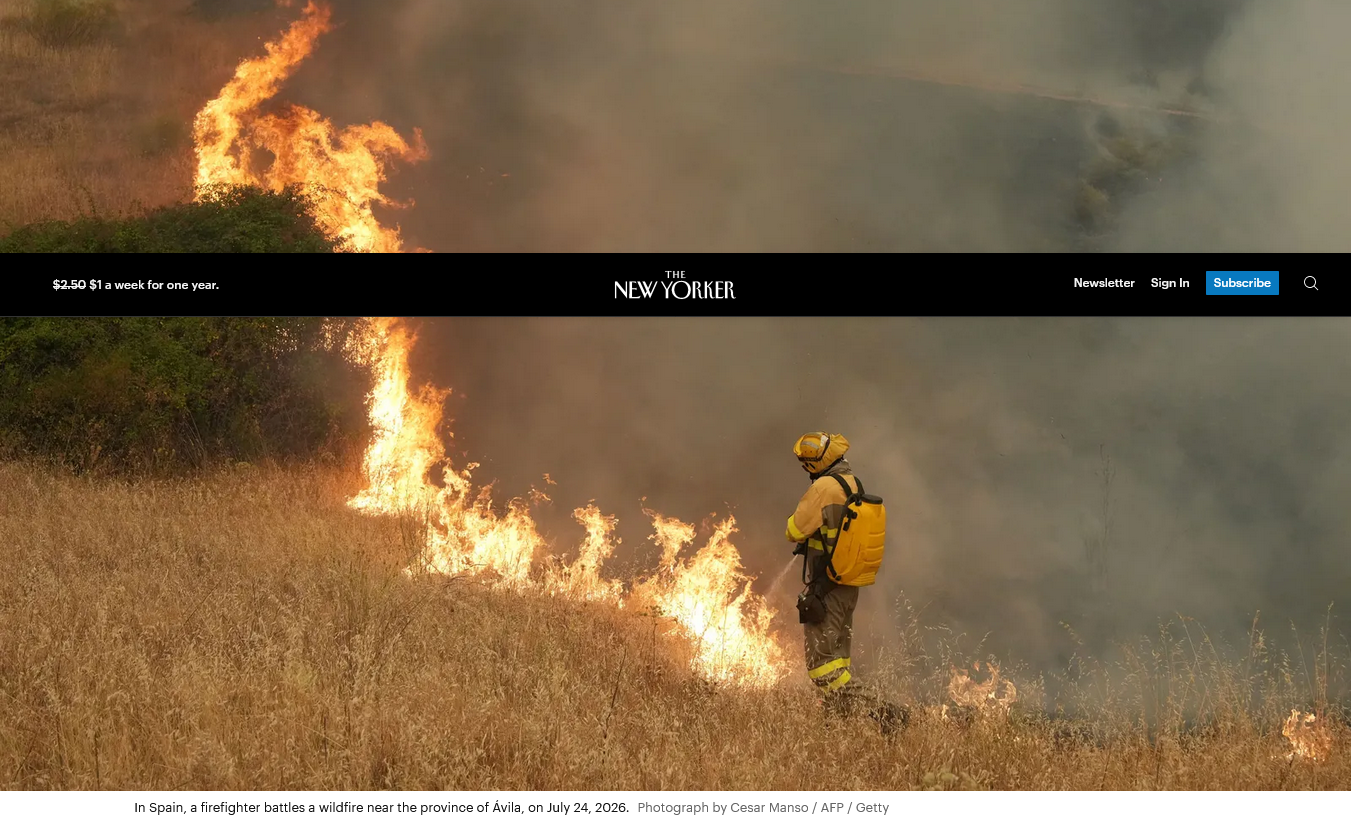
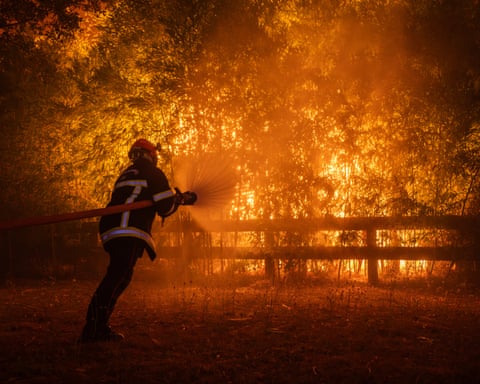
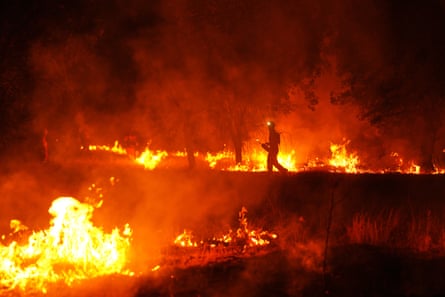
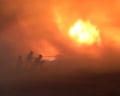
The hellish infernos that have torn through parts of France and Spain have caused deaths, the evacuation of 330,000 people from their homes, widespread destruction and clouds of toxic smoke. Records have already been smashed and with the fourth heatwave of the European summer setting in, there are few signs of the waves of wildfires ending.
The extreme severity of the blazes is the result of “whiplash” wet-then-dry weather this year, supercharged by the climate crisis. Last winter and much of spring in western Europe was very wet, encouraging heavy growth of trees, shrubs and other vegetation.https://interactive.guim.co.uk/datawrapper/embed/GmCxm/1/?dark=false
However, by May the first of a series of heatwaves had hit Europe. All heatwaves are made more intense and more likely by the global heating caused by fossil fuel burning. The heatwave at the end of June was the most severe ever recorded in Europe and would have been impossible without the added heat from more than a century of carbon pollution.
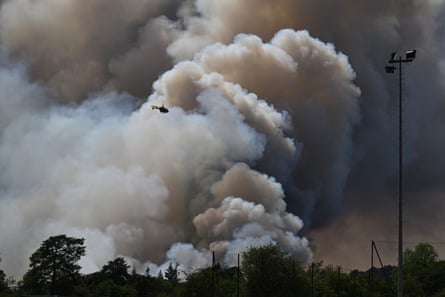
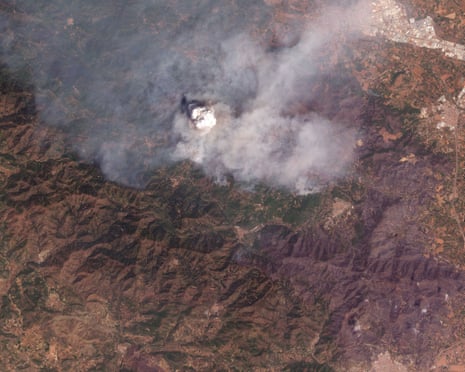
The situation has been worsened by the unprecedented development of enormous “fire clouds” – pyrocumulonimbus – in France. These form from the heat from huge fires and become a self-feeding firestorm, spitting lightning bolts and sparking further blazes.
A pyrocumulonimbus, or ‘fire cloud’, in the Fontainebleau forest region, about 37 miles south of Paris, France. Photograph: Emma Da Silva/AP
Firefighters use controlled burning to halt a wildfire near Cebreros, Ávila province, Spain. Photograph: Manu Fernández/AP
The severity of the fires has been extremely challenging for the fire-fighting authorities, who in the past would have expected to extinguish the fires. One firefighter, Javier García, told Associated Press he had never faced anything like it in his two decades in the job.
“The evolution is alarming,” he said, adding that they were now prioritising evacuations and property protection because fast-moving walls of flames were too ferocious.
What have been the consequences?
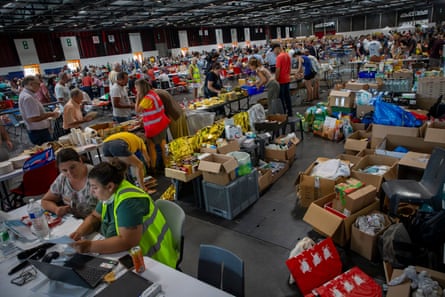
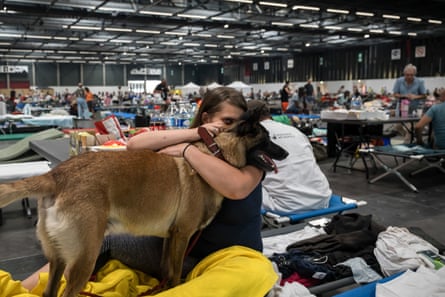
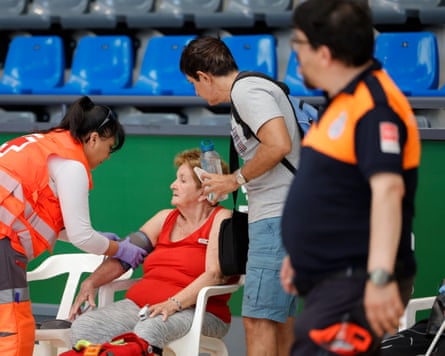
Many thousands of residents and holidaymakers have had to evacuate, often prompted by urgent alerts sent to their phones. Emergency shelters have been set up, including 78 by the Red Cross in Spain. “This is a pattern we are seeing more and more across Europe: heatwaves, drought and wildfires feeding into one another, and communities bearing the consequences,” said Maria Alcazar Castilla, from the International Federation of Red Cross and Red Crescent Societies.
Evacuees at the Bordeaux exhibition centre in France. Photograph: Albert Llop/NurPhoto/Shutterstock
An evacuated woman with her dog in the exhibition centre in Bordeaux. Photograph: Ed Jones/AFP/Getty Images
A sports centre in Boadilla del Monte, Madrid, Spain, has become a shelter for evacuated residents. Photograph: Víctor Lerena/EPA
The longer-term damage to homes and livelihoods is yet to be reckoned with, but will be large. The wildfires around Bordeaux have claimed some of the region’s famous vineyards, while the tourism and manufacturing industries around Valencia have been hard hit.
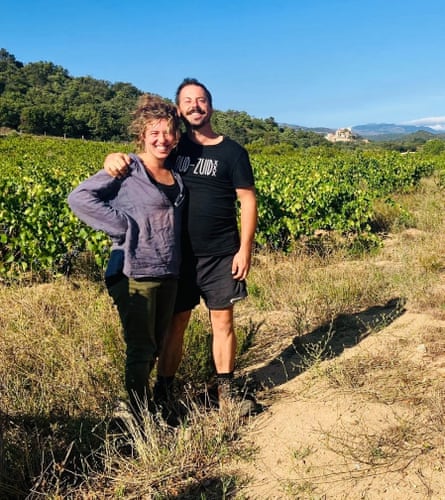
The winemakers Antoine Latipau and his wife, Yana-Cheyenne, have lost most of their farm to the fires in Trévillach, in the French Catalan south. Photograph: Antoine/Guardian Community
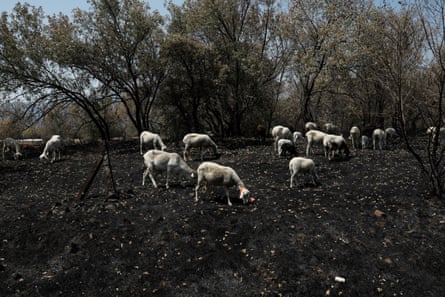
Sheep search for food on a scorched pasture near Piedralaves, 60 miles west of Madrid. Photograph: Óscar del Pozo/AFP/Getty Images
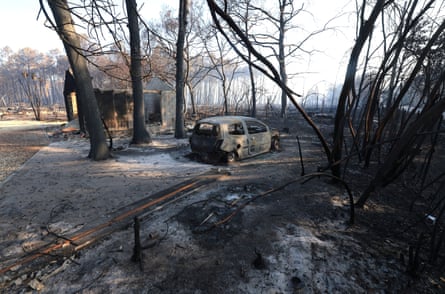
A burnt car in Gironde, France. Photograph: Yves Herman/Reuters
A further longer-term impact will be the damage to health caused by the toxic smoke from the fires. About 1.5 million people a year are estimated to have their lives shortened by wildfire smoke.
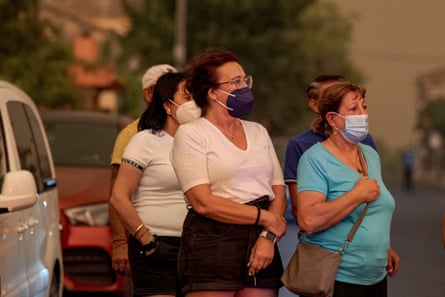
Residents try to shield themselves from the toxi smoke in Avila, Spain. Photograph: Anadolu/Getty Images
Emmanuel Macron, the French president, has described the wildfire emergency as the “toughest” situation the country had dealt with since the second world war. In Spain, Pedro Sánchez, the prime minister, said his country was suffering the effects of the climate crisis.
A towering pyrocumulus in Castellón province, Spain. Photograph: 2026 Planet Labs PBC/Reuters
Simon Stiell, the UN’s climate chief, said: “The science on the cause is unequivocal: global heating, driven by humanity burning colossal amounts of coal, oil and gas, is making protracted heatwaves, severe floods and violent mega-storms more frequent, more intense and more costly.
“The awful costs of this climate crisis – both human and economic – are now reaching national emergency levels. What needs to be done is equally clear: leave coal, oil and gas behind faster, scale up renewables and protect people where the impacts are already hitting hardest.”https://interactive.guim.co.uk/uploader/embed/2026/07/eurotemp29jul-zip/giv-32554r1Fh3CqVXgI5/?dark=false
The EU has watered down a series of green measures in the past year in the face of political opposition and corporate lobbying. Hadja Lahbib, the European commissioner for crisis preparedness, told the Financial Times: “The commission can only be as ambitious as the member states want it to be. When member states drag their feet [on the climate crisis] … there is a real danger and an incalculable price.”
The Guardian’s climate forum 2026. On Tuesday 20 October, join Damian Carrington, and our panel of experts – including Prof Andy Haines, Katie White MP, Asad Rehman, Shruti Suresh, Gareth Thomas and Amy Fairman – for a hopeful and solutions-focused evening. Book tickets here or at guardian.live
The Pakistani military has imposed a communications blackout as it conducts a violent siege aimed at crushing a movement for electoral reform in Azad Kashmir.
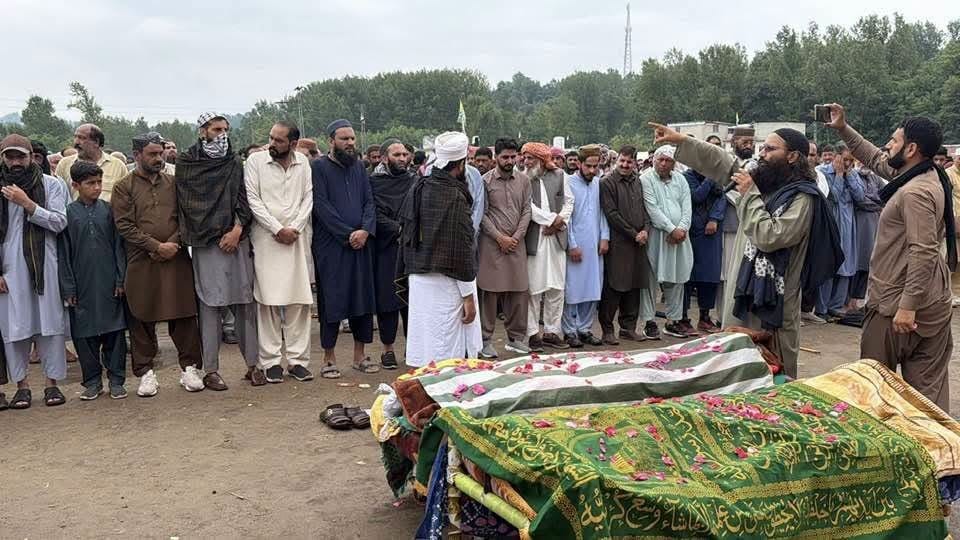
Funeral prayers for JAAC leader Sardar Umar Nazir’s brother Usman Nazir, led by their brother Siddique Nazir. Photo from the Facebook page of Hamza Naseer.
Early on the morning of July 9, 2026, men from a paramilitary force known as the Pakistan Rangers began raiding homes in the village of Gehl Topi, a few kilometers from the city of Rawalakot in Pakistan-administered Kashmir—known locally as Azad Kashmir.
It was four weeks after protests over electoral reform erupted in Azad Kashmir, and a curfew was in place. The local mosque announced over its loudspeaker that the Rangers, who operate under military authority, had entered the village, and a crowd began gathering.
The armed men opened fire on the crowd, according to one eyewitness and another person who has family members in the village. Hassan Zohaib, who was present at the scene, said his cousin, Muhammad Nasir Khan, 39, was killed. Khan, a night caretaker at a government-run school, who had walked downhill along the Link Road to see why people were gathering. When the Rangers opened fire, a bullet entered Khan’s side, tore through his rib cage, and exited his neck. “We rushed him to the Rural Health Center in Chitra Topi, but there were no doctors or paramedical staff, and the blood loss was too severe. He could not survive,” his cousin, Hassan Zohaib, told Drop Site News.
Khan has four children; the eldest is ten. The same day, Zohaib’s family buried a second relative killed by military gunfire in the same village, a 22-year-old named Wajid Siddique. “I am not sure what kind of ammunition they are using, because he was shot in his lower abdomen, which was blown away, and he died instantly,” Zohaib said. “We could not even take him to the hospital.”
Neither Siddique’s nor Khan’s death has been reported in the local press, which is subject to intense censorship and has not been allowed to report on the violent crackdown in Kashmir. For eight weeks now the demonstrations in Rawalakot—a city just 40 kilometers away from the disputed Line of Control with India that has become an epicenter of the movement—have been met with live-fire by Pakistani security forces, mass arrests, and a siege of the city.
Local officials and hospitals have not shared an official tally of total civilians killed. On July 2, Amnesty International estimated at 40 killed before regional elections began on July 2. Locals who spoke to Drop Site said that number is a significant undercount.
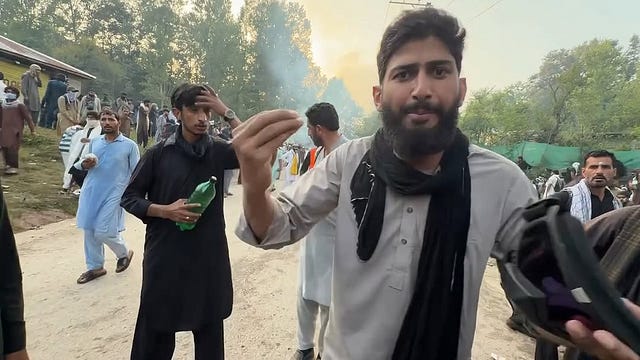
Despite the violent crackdown, civilians have continued to demonstrate against local authorities and the Pakistani military. In a video circulating on social media this week, a travel vlogger identified as Aqeel says to the camera, “The streets of Rawalakot are drenched in blood. They are shooting our brothers with the bullets they purchase with our taxpayer money,” as gunshots are audible in the background.
Harris Qadeer, editor of the local newspaper Roznama Jeddojehad, told Drop Site that he has documented 89 deaths in Rawalakot and Mirpur as of July 28 by collecting first-hand accounts of funerals, burials, and death records maintained by a civil society group that has been leading the protests.
“Forty-five people were killed before July 27, and a list of their names was compiled by consulting their family members. An additional 37 people were killed on July 27 and 28,” he said. On Monday, Qadeer added, paramilitary forces killed 22 more civilians, as well as another 13 the next day.
The region has remained under curfew and a complete internet blackout since June 5, 2026. No food or medicine has entered and grocery store owners are not allowed to open for business. Regular announcements from loudspeakers of local mosques declare that any civilian violating curfew, including women and children, will be shot without hesitation.
“Armed officers torture anyone who attempts to open for business and a majority of the rations present inside the stores were confiscated by the officers for their own use,” Qadeer said. Local residents of Rawalakot are only able to bring negligible amounts of food and groceries from their relatives in nearby villages.
“Patients can still not access any medicines and those who could afford to move had to move to Rawalpindi and Islamabad where they are forced to live in hotels,” he added.
Escalating Repression
Protests in Azad Kashmir began in early June over electricity tariffs, wheat prices, and accusations of bribery and corruption by local government officials, led by the Jammu Kashmir Joint Awami Action Committee (JAAC). JAAC, a coalition of local traders, civil society members, and political activists, has been organizing demonstrations in Kashmir for the past three years.
But the core demand from the protesters centers around the allocation of 12 reserved seats in the local assembly for Indian Kashmiri refugees living in Pakistan, which the authorities accepted in September 2025, but backed out as the region approached election day. Within a few weeks, the protests evolved into a Kashmir-wide call for electoral reforms.
The 12 seats sought by locals are reserved for refugees who left Indian-administered Jammu and Kashmir for Pakistan after the partition of the subcontinent in 1947, which also includes their descendants. These people settled in various parts of the country and are now registered to vote in Pakistan’s four other provinces rather than in Pakistani administered Kashmir.
Civil society activists including the JAAC argue that this system takes local governance issues out of the hands of those actually living in Azad Kashmir. Those eligible to run on these seats are not residents of Kashmir and, JAAC argues, therefore do not represent the concerns of locals. Pakistan’s military establishment and the central government have historically used these seats to sway votes in favor of policies that go against the interest of Kashmiris.
JAAC circulated a charter of demands with 38 points that formed the bedrock of negotiations between the chief organizers of the protest movement and the Chairman of the Overseas Pakistanis Forum (OPF), Syed Qamar Raza Shah, who is believed to maintain a close relationship with Pakistan’s military chief, Field Marshal Asim Munir.
The group is demanding reforms to the system of of assembly seats, elimination of bribery and corruption in government departments, provision of interest-free loans for the youth, elimination of false charges against protesting civilians, and medical treatment for protesters injured by armed forces among others.
In a recent video statement published on JAAC leader Sardar Umar Nazir’s Facebook page, he reiterated the demand for electoral reforms. “This election that’s ongoing right now is being carried out at gunpoint,” he said. “We will not create obstacles for this election but we, as JAAC, declare these fraudulent and farcical.” He further invited all residents of Muzaffarabad to reject the elections and continue protesting on the streets of Kashmir.
Pakistan’s military junta has shown little tolerance for the protests. The JAAC was designated as a terrorist organization by the government in June. Since then the Pakistan Rangers, along with other security forces working under the Pakistani Army and officials working for the district administration, have been carrying out regular “flag marches”—sending processions of 20 to 25 vehicles carrying masked men, mounted with machine guns, through villages around Rawalakot with sirens blaring.
“They’ve spread so much fear and intimidation into the hearts of the residents in that region, to a common village man it is an unbelievable sight,” said Zohaib. “As soon as ten or more people gather just to see what’s going on, they open fire at them.”
On June 4, a trader was shot during a confrontation with law enforcement officers. The next day, family members took the body to Combined Military Hospital (CMH) in Rawalakot for a post-mortem examination. The request for an examination was denied, enraging locals who began gathering outside the hospital.
On June 5, the AJK government issued a notification declaring JAAC a proscribed organization under the First Schedule of the Anti-Terrorism Act 2014, citing “terrorism” and conduct “prejudicial to peace and security,” listing 147 members of the civil society group as a members of a terrorist organization.
Then, late on the night of June 6, JAAC organizers returned to Rawalakot from a meeting in Khaigla, eight kilometers from the city. Unidentified men opened fire, killing Shahzaib Habib, an activist who worked closely with the JAAC leadership.
The following night, clashes broke out in Rawalakot between supporters of JAAC and the police, resulting in the deaths of seven civilians and three police officers, according to the police commissioner of Poonch, Sardar Waheed.
The local government then imposed a legal measure banning all public gatherings and suspending cellular service across the region. That measure has remained largely in place since.
“Three people were killed in my village on the same day, there is no access to the internet and barely any access to cellular services. It is impossible to tell how many people have been shot dead by the paramilitary forces so far,” said Zohaib.
Several government employees have been fired, and pensions have been seized for several retired military officers who were accused of participating in the protests.
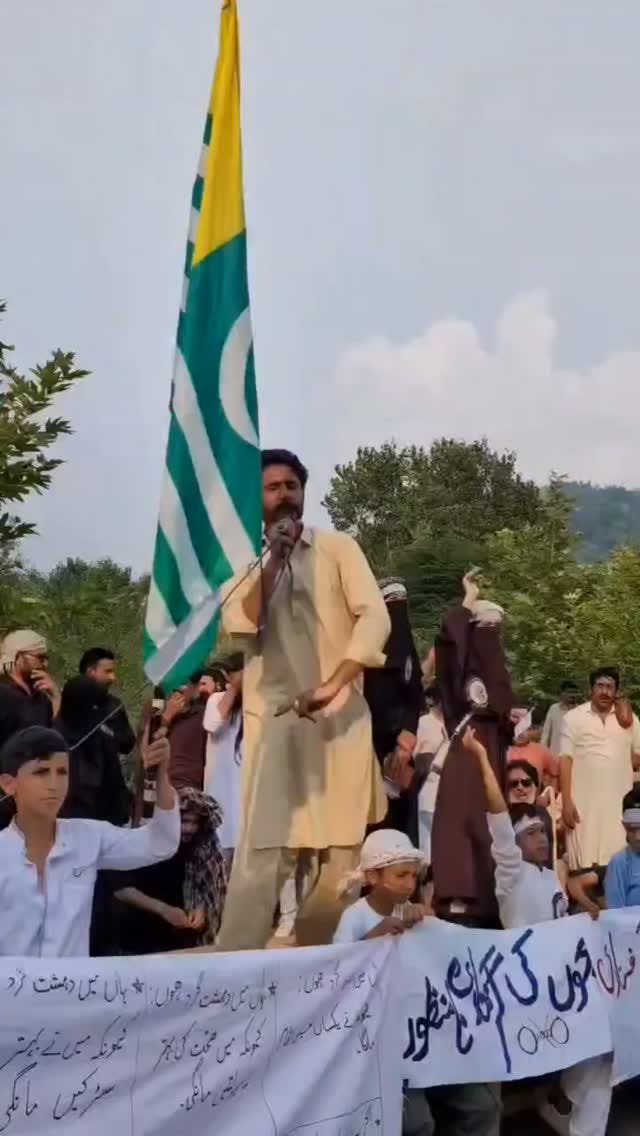
On July 9, JAAC called for a region-wide strike to close markets, businesses, educational institutions and public transport. Protesters established a sit-in at Drek, a suburb on the outskirts of Rawalakot, among six other protest venues, while Pakistan Rangers and Frontier Constabulary (FC) forces were deployed en masse. More than 45 civilians were killed in the violent crackdown that followed.
On July 27, as Mirpur division voted, the JAAC marched into Rawalakot city, defying the region-wide curfew. The two days that followed were the deadliest in terms of civilian casualties. Members of the FC and the Rangers situated themselves on rooftops to try to quash any protests in the street. Reports emerged that security forces had shot civilians indiscriminately, including those who had no part in the protest.
Shehreyar Zulfiqar, born and raised in Rawalakot, moved to Lahore in 2018 and regularly visits his family. He now speaks to his mother by phone every three days, on a line that has become increasingly unreliable. His family lives within a 100 meter distance from the hospital and has witnessed much of the repression up close. His neighbor Farrukh Aziz, who ran a grocery store, was shot dead on July 27.
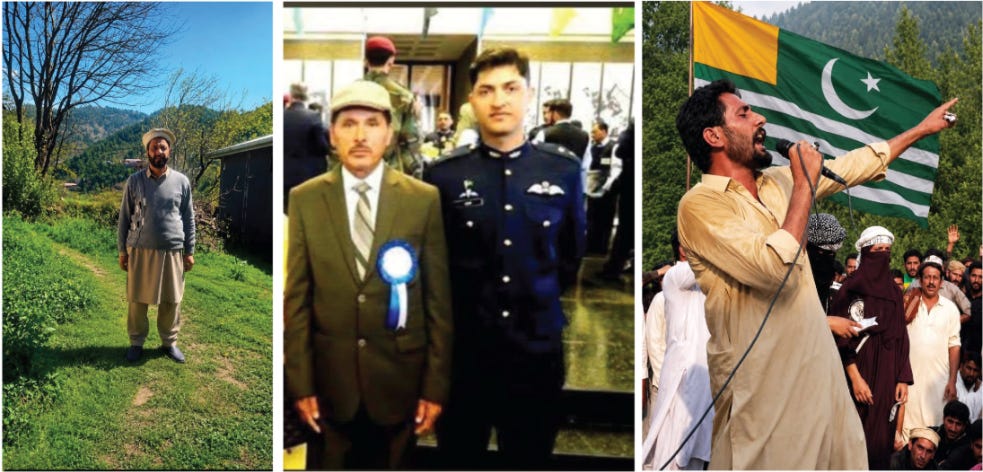
Right to left: Farrukh Aziz, shopkeeper; Abdul Aziz (father of Uzair Aziz); Uzair Aziz (PAF squadron leader); Osama Jameel (PhD student).
“He was not a part of the march, he had nothing to do with the political atmosphere in the city. He was only grabbing groceries from his own store for his family members,” Zulfiqar told Drop Site News. “Snipers killed him with a headshot, they were perched atop a nearby building and they killed him when he was on his way back home.”
Usman Nazir, the brother of JAAC leader Umar Nazir, was also killed on July 27 when the Rangers opened fire on protesters in Rawalakot.
In the same neighborhood, an officer of the Pakistan Air Force (PAF), squadron leader Uzair Aziz, lives with his family.
His father Abdul Aziz, who was a school teacher at a local high school, and his brother were also shot by armed officers in the streets of Rawalalot as the two were on their way back home. “His father passed away and his brother is severely injured,” said Zulfiqar. “They have not even returned his father’s dead body to their family. And this is not even a civilian, this man leads a squadron in the air force.” Aziz’s family, Zuliqar added, were not involved in the protests; his family has lived in Rawalakot for four generations.
In one of the many videos from the scenes of protest on the ground, a young student is seen reciting Sarfaroshi Ki Tamanna, an Urdu poem written by Bismil Azimabadi, which roughly translates to “The desire to sacrifice our lives is now in our hearts; let us see how much strength is in the arms of our executioner.”
That student was Osama Jameel, a geology PhD scholar at Quaid-i-Azam University in Islamabad, and a member of the Jammu Kashmir National Students Federation (JKNSF), a group that has been aligned with the JAAC for the better part of a decade. On July 28, he was gunned down at Chinar Chowk, while marching towards Muzaffarabad.
Omer Khan, a member of the JKNSF was privy to the negotiations between the government and JAAC from a year ago. “They had signed an agreement and accepted the demands, including the one about 12 assembly seats after eight civilians were killed in September 2025,” he said. “When elections came closer, they backed out of every promise they made because they [the military establishment] have been using these seats to install their own leadership in the Kashmir assembly, overturning the democratic choice of the people of Kashmir.”
“They Have Subjected Us to Collective Punishment”
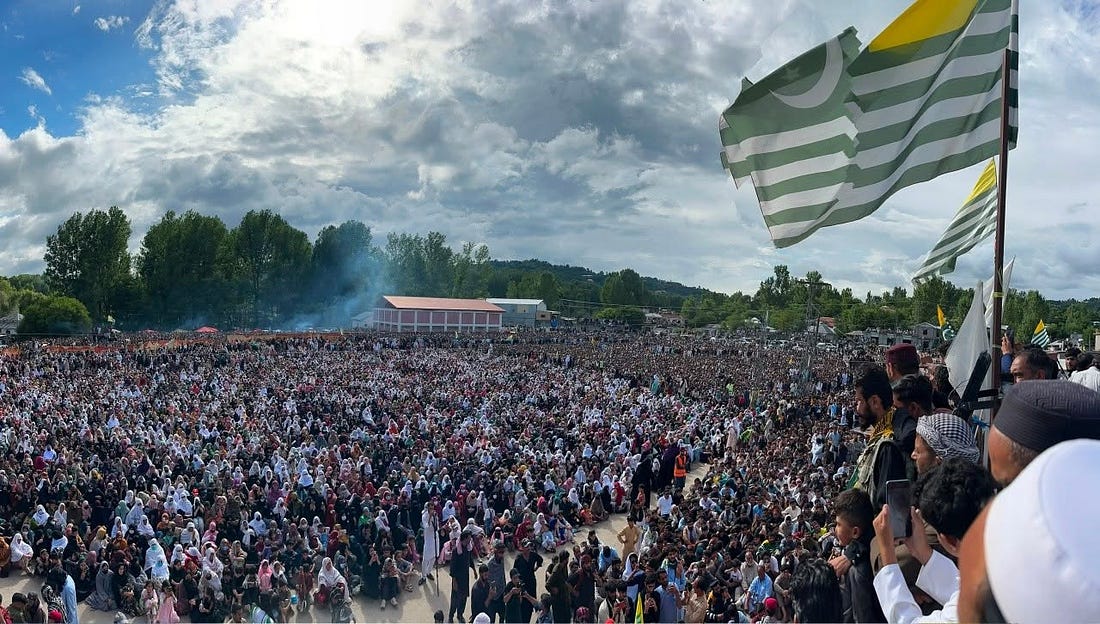
Thousands of residents gathered in Drek, Rawalakot on July 23, 2026. Photo from the Facebook page of Hamza Naseer.
Pakistan’s Defense Minister Khwaja Asif has labeled the protesters as enemies of the state and ruled out any possibility of future negotiations with the JAAC. On Tuesday, Asif told reporters, “There will be no dialogue with the protesters. I bracket them with India. I put them in the same category as India and consider them as enemies of Pakistan.”
The crackdown has triggered a major backlash in the Kashmiri diaspora, including in London where more than 1.5 million Kashmiris from Pakistan live and where thousands gathered in a massive demonstration against the violence this month.
JAAC activists on the ground are now planning to conduct a march to enter Rawalkot on Saturday in defiance of the siege, before continuing in a planned procession onwards to Muzaffarabad, the capital of Azad Kashmir.
Qadeer, the local journalist in Azad Kashmir, was forced to relocate his family members to the city of Rawalpindi in Punjab. He told Drop Site that the situation has become unbearable for journalists and activists still attempting to document conditions inside the province.
“No journalist is allowed to move, in fact no journalist is acknowledged as a member of the press even if they have a card identifying them as such. Everyone with video recordings in their phones are forced to delete them,” Qadeer explained. “They torture everyone attempting any journalistic activity. They have beat me up in public as well.”
He added, “They are punishing us all indiscriminately, they are subjecting us to collective punishment and they want to make an example out of us. They are using battle-grade weapons, the violence is senseless.”
A guest post byAreeba Fatima Investigative journalist, fact checker, researcher, and socialist feminist. Contributor @ Drop Site News, Data Journalism student @ Columbia University, Senior Producer @ Soch Videos.
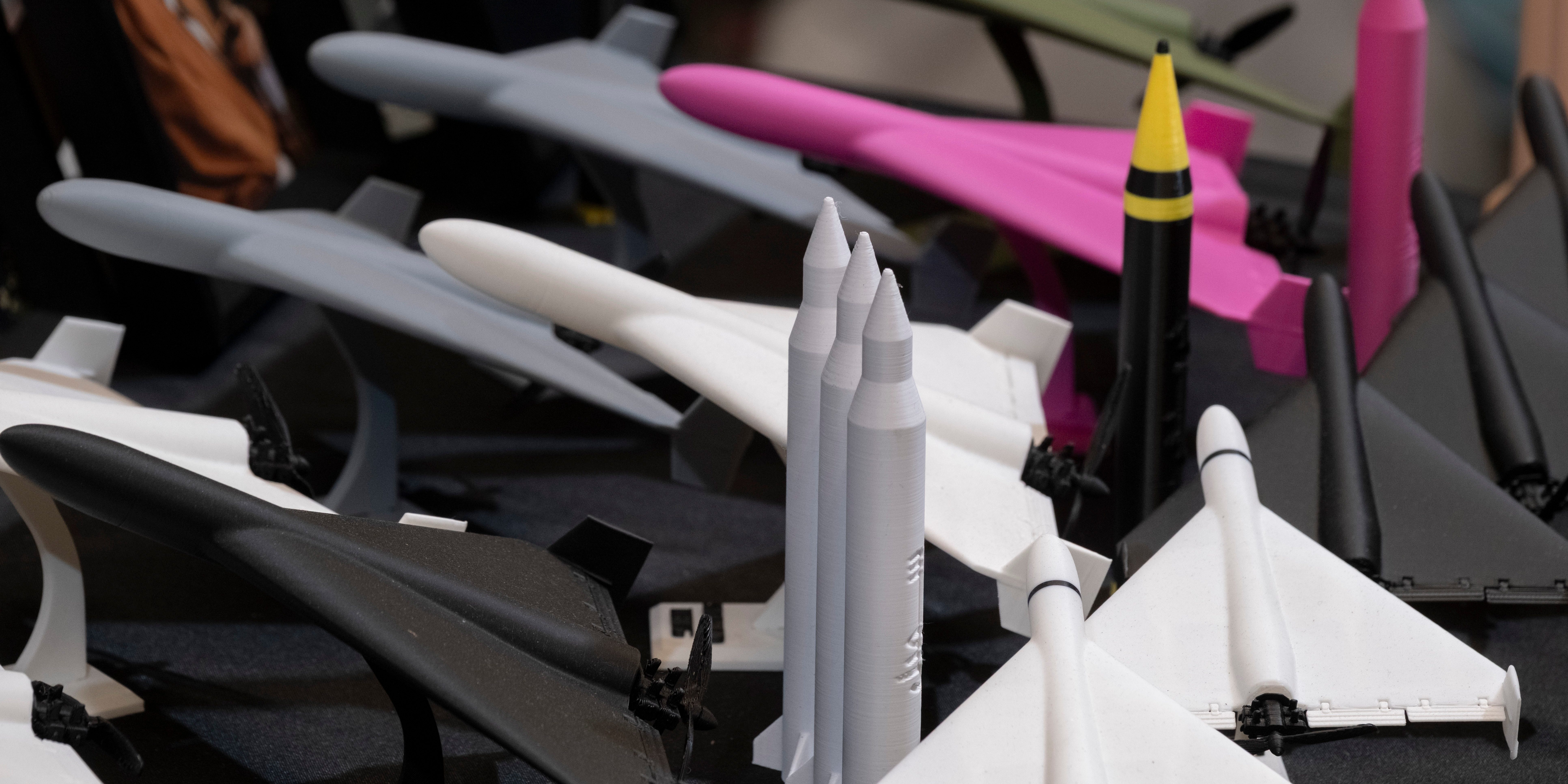
Scale models of Iran-made ballistic missiles and the UAV Shahed-136 are displayed in Tehran on June 15, 2026. Photo: Morteza Nikoubazl/NurPhoto via AP
As munitions streaked through the night sky, a plaintive cry like a whale song echoed in the darkness. U.S. troops grabbed their gear and headed for shelter as the warning sirens rang out, a leaked video shows.
The military personnel, clad in a mix of combat fatigues and gym attire, piled into a bunker, huddling in the darkness. “Guys, off the walls if we can,” a woman, likely a medic, advised, warning about the danger of traumatic brain injuries.
The footage, reportedly from Jordan’s Muwaffaq Salti Air Base, where three U.S. troops were killed during Iranian ballistic missile and drone attacks on July 17 and 18, offers a glimpse of the dangers faced by U.S. forces across the Middle East.
The attacks are continued demonstrations of Iran’s ability to target U.S. bases across the Middle East and kill U.S. troops, despite months of claims by President Donald Trump and self-styled War Secretary Pete Hegseth that Iran’s military was annihilated. As this fiction has collapsed, U.S. Central Command has refused to discuss the number and scale of the strikes. “I have nothing for you on that,” Maj. Emma Thompson, the command’s media operations chief, told The Intercept.
Iran has attacked at least nine U.S. outposts across the Middle East since July 9, according to a U.S. official who spoke to The Intercept on the condition of anonymity because they were not authorized to speak with the press. Several of these bases suffered “significant” damage in the attacks, the source said.
Iran’s military managed to overwhelm U.S. air defense systems using a mix of attack drones and advanced ballistic
missiles, according to the official. Numerous factors make the missiles difficult to defeat, the source said: They travel at hypersonic speeds, have complex navigational capabilities including methods to circumvent jamming, and some can be guided or steered.
Stocks of advanced air-defense missiles, like Patriot and THAAD interceptors, are so depleted that U.S. forces are not shooting down all Iranian missiles and drones aimed at U.S. and allied targets across the Middle East, the official said, referencing a Friday report by NBC News that revealed the tactic. The official told The Intercept that the U.S. allows missiles through its defenses only in cases where a strike is judged not to imperil U.S. lives.
The U.S. and its allies burned through more than 11,000 munitions, including large amounts of defensive missiles, in the first 16 days of the war alone, according to a March analysis by the Royal United Services Institute. The report predicted then that U.S. forces were about a month away from running out of THAAD interceptors. An April report by the Center for Strategic and International Studies noted that “diminished munitions stockpiles have created a near-term risk.” A follow-up report the next month warned that it would “take three or more years from today to return to prewar inventory levels” of Patriot and THAAD missiles.
Brig. Gen. Hossein Mohebbi, an Islamic Revolutionary Guard Corps spokesperson, said that “Patriot systems have been weakened to such an extent that Iranian missiles and drones are reaching their targets without being intercepted.” He said that during a flurry of attacks from July 8 to July 22, Iran struck numerous air defense and radar installations, including six “Patriot air-defense radars.”
CENTCOM did not reply to a request for comment on the claims by the U.S. official or Mohebbi.
The official confirmed that Iran also recently attacked Tower 22, a U.S. military outpost on the northern Jordanian border with Syria. Satellite images as well as photos and videos circulating online indicate the base suffered extensive damage. (In 2024, a drone attack on Tower 22 by an Iran-backed militia killed three U.S. troops.)
Thompson refused to confirm Iranian attacks on various U.S. bases across the Middle East. “We don’t comment on battle damage assessments,” she said.
Iran has fired between 8,000 and 9,000 drones and missiles at targets across the Middle East since the U.S.–Israeli war began in February, according to the official. Iran’s Islamic Revolution Guard Corps recently warned residents of countries that host American forces to keep at least 1,650 feet away from any buildings housing U.S. personnel. The group is also fielding crowdsourced information on “new locations of the American occupying forces” from people in these countries.
The IRGC specifically mentioned “covert and secret” facilities in a statement posted on their website. CIA sites in Iraq, Saudi Arabia, and elsewhere in the region were reportedly struck, possibly with Russian assistance, according to Reuters. A former Pentagon consultant with ties to the defense industry told The Intercept that Russia has certainly provided “targeting support” to Iran during the conflict but did not comment directly on attacks on CIA facilities.
Despite Trump’s insistence that Russia and China are “not participating” in the Iran war, Hegseth recently said both are “enabling some of the things Iran is doing.” In March, CIA Director John Ratcliffe told senators that the “Iranians are requesting intelligence assistance from Russia, from China and from other adversaries of the United States,” but said he would only talk about what they might have provided in a classified setting.
The lethal strike on Muwaffaq Salti Air Base in Jordan killed Pvt. Isabella Gonzales, 19, of Carrollton, Texas; Lt. Tyler James Feehan, 25, of Ewa Beach, Hawaii; and Sgt. Angel S. Rampersad, 28, of Ozone Park, New York. All three soldiers were from air defense units. They were “not actively engaged in anti-aircraft activity” during the attacks, according to a different “defense official” who spoke on background because they were not authorized to disclose the information.
An Iranian drone attack on Erbil Air Base, Iraq, on July 18 led to the death of Army Sgt. Michael Emmanuel Swinton, 30, of Fayetteville, North Carolina, and left another soldier injured during what CENTCOM called a “controlled detonation” of the downed aircraft.
In April, Hegseth told the Senate Armed Services Committee that “CENTCOM had every possible measure they could to ensure that our troops are protected.” The U.S. official would not address possible failures of force protection measures that led to the most recent deaths, due to operational security. But the official said that Hegseth’s claims “obviously were not true.” They noted that it was no secret that earlier casualties were caused by a lack of sufficient overhead protection, referencing a March 1 drone attack on the U.S. base at Port Shuaiba, Kuwait, that killed six troops.
Hundreds of U.S. personnel have been killed or wounded in the war. Months of reporting by The Intercept found the Pentagon’s official casualty tally is a gross undercount, which another U.S. government official called a “casualty cover-up.”
Israel, Saudi Arabia, Jordan, Iraq, and Qatar said they intercepted attack drones on Monday, two days after the United States abruptly suspended a two-week campaign of airstrikes against Iran amid concern over the dwindling stocks of air defense missiles and a reported dearth of Iranian targets. Trump insisted on Tuesday that there had been some “very good talks” with Iran but failed to offer evidence when confronted with Iranian denials.
Saudi Arabia said on Monday that the drone attacks it suffered were “carried out by Iran-backed militias operating in Iraq.” On Tuesday, Jordanian authorities said they downed a drone in the east of the country, near its border with Iraq and Saudi Arabia.
Federal judges in Texas have sentenced 16 so-called antifa activists to a combined 560+ years in prison in a case stemming from a July 4 protest last year outside ICE’s Prairieland Detention Center.
It’s a grotesque miscarriage of justice, and The Intercept has already racked up thousands of dollars of legal expenses fighting to access key documents under state open records law.
We refuse to back down, no matter how long this fight goes on. But we’re counting on your help to ensure we have the funding for what has already become a costly legal fight.
Eight of the Prairieland defendants received prison terms of 50 years or more. One defendant who wasn’t even present at the protest received a 30-year sentence for merely moving a box of antifascist zines.
The Prairieland case is the government’s first set of convictions under President Donald Trump’s executive order designating antifa as a domestic terrorist organization, and we’re already seeing similar prosecutions in other states.
There’s no bigger reporting priority for The Intercept right now than exposing the Trump administration’s assault on free speech, and, as a nonprofit news outlet, we rely on your donations to help power everything we do.
However, donations to The Intercept have slowed down at the worst possible time, and we’re counting on your support to help close this urgent fundraising shortfall.
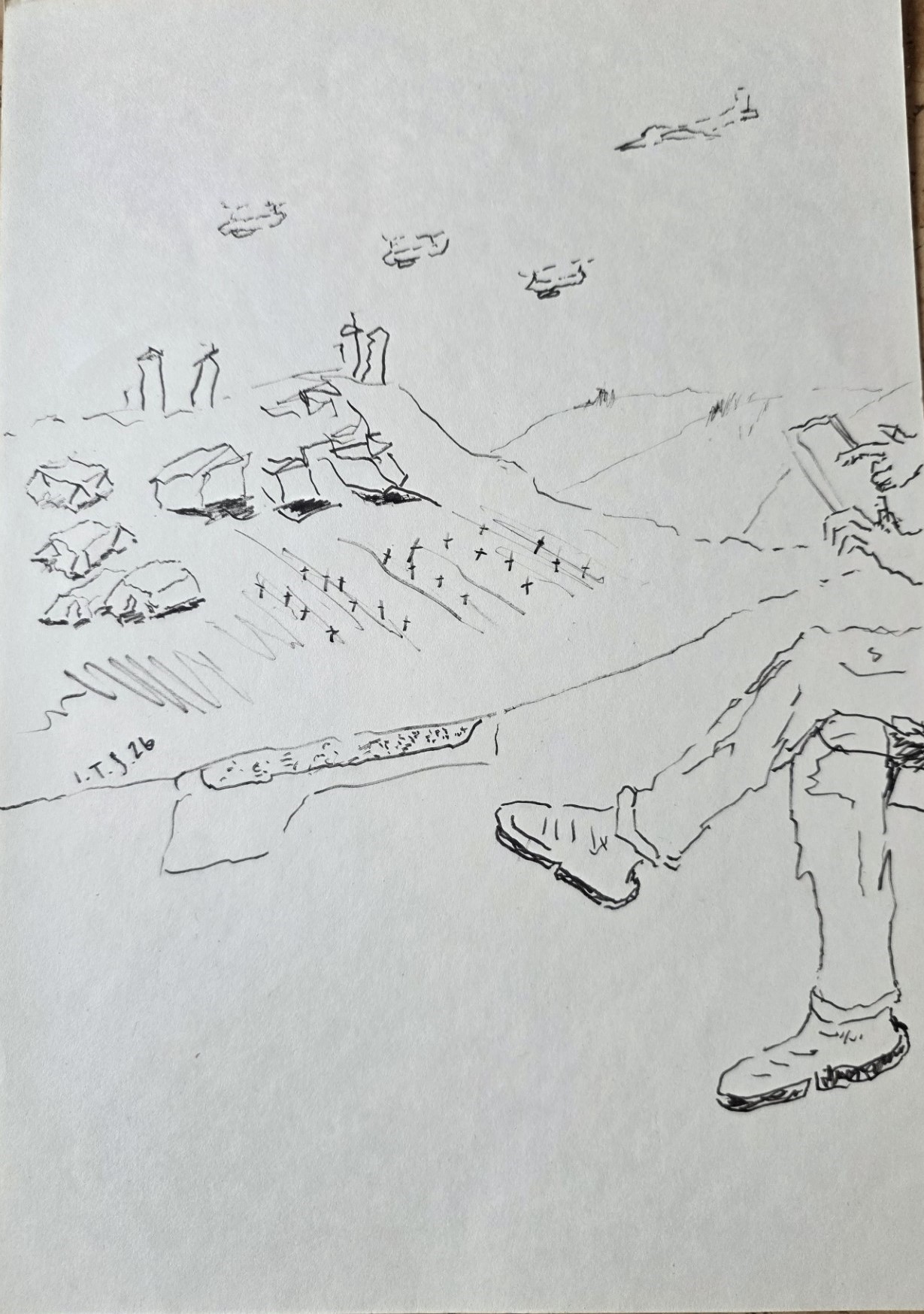
«Droneprogrammeraren», Tusj på papir, juli 2026, Ivar Tveito Jørdre
Med vestleg lisens til å drepe – Sionismen eig ingen grenser
Denne «type tekst» har vore skreve mange gonger. Han har vore skreve i dag, i går, i førgårs, og han vert diverre skreve i framtida også! Om ikkje nokon særs stor endring hender, så må ein halde fram å skrive. MEN, kvar gong ein skriv er det endå verre enn før, heilt jævleg mykje verre, endå fleire drepne og skadde enn før, endå meir støtte militært til Israel enn før og endå meir «dei» og «oss», enn før. LAT OSS ALLE KREVE AT VERDA (les: USA og Vesten) STOPPAR DETTE BLODBADET OG FOLKEMORDET, ELLER ER VERDAS SJØLVRESPEKT HEILT VEKKE NO? TIDA VIL VISE, OG PROTESTANE VÅRE VIL VISE!
KOR MANGE FLEIRE PALESTINSKE OG LIBANESISKE LIV SKAL OFRAST FOR SIONISMEN?
KOR MANGE? FØR VESTEN OG USA DREG I SNORA OG STOPPAR APARTHEID-ISRAEL?
Me veit det alle saman. Me har blod på henda! Vesten har blod på henda! Ja, det internasjonale samfunn har det. Dette er blodig storpolitikk. Det handlar ikkje om menneskeverd. Det handlar ikkje om likeverd. Det handlar ikkje om rettferd. Det handlar om kynisme. Det handlar om brutalitet. Det handlar om geopolitikk. Det handlar om «dei» og «oss». Me er skuldige i dette!
Sidan det er dei andre så er det forsvar, det er ikkje åtak. Nei, nei, det er ikkje åtak. Og sidan dei andre er f.eks. Palestinarar og libanesarar, så kan me angripe dei og kalle det forsvar. Så kan me la vera å kritisera «den sterke parten», men kalle det forsvar, kalle det forståeleg, kalle det retten til… Så kan me la vera å kritisera vår eigen regjering, for dei forsvarar seg jo. Det er jo «dei» dei forsvarar seg mot. Me går ikkje ut i gatene for «dei». Nei, det gjer ikkje mange nok av oss i alle fall! Og, no skal «me alle» i Noreg også forsvare «oss» mot «dei». «Dei» for oss er russarane. Me rustar oss til tennene! Det har Israel gjort lenge, med vår (Vestens) hjelp!
I snart 80 år har USA og Vesten rusta opp Ekspansjonsstaten, hjelpt med atomvåpen, hjelpt med store summar og våpen. Dei verste våpen har «ME» hjelpt med: klasevåpen, fosforvåpen, KI (Kunstig Intelligens)-droner, KI-drap, og medlemsskap og deltaking i EM i fotball og Melodi grand prix. Big deal, heh!
Slik kan me la det gå sin gong. Det har me gjort så mane gonger før. Det vert vel «våpenkvile» att. Det har no hendt før. Ja, dei klarar nok dette denne gongen også. Mange gonger før har me latt det gå sin gong, me i Vesten. Me som er saman med den sterkaste våpenmakta i verda. Slik har me gjort det mange gonger før. Me har gjort ingenting lenge, me har latt det gå. Me gjorde det i 2006 då det byrja for alvor, me gjorde det under Gazakrigane i 2008-9, i 2010, i 2011 under bakkestyrkeåtak, me gjorde det under Gazakrigen i 2014, i 2018 under grenseprotestane, under bombinga av Gaza om våren 2021 og me gjer det framleis, no, idag, i 2026. Slik held me på!
Under den første organiserte palestinske Intifada (Motstand) i 1987 og seinare i 2000, gjorde heller ikkje vestlege styresmakter noko som helst for å stoppe israelske overgrep, bygging av «Apartheidmuren», hemnåtak med raseringar og «bulldosing» av palestinske heimar og landsbyar. Dei gjorde ingenting. Berre snakk! Berre det evinnelege maset om «at me er djupt uroa over…» Men, «me» heldt fram å gje våpen, ja. Visst gjorde me det. Det er slik me held på!
Gjorde Vesten noko som likna på økonomiske sanksjonar og våpenstans til Israel under invasjonen av Libanon i 1982, til og med heilt til Beirut, bomba ting sønder og saman, med mange drepne? Nei, ingenting! Gjorde Vesten noko med bombinga av Libanon i 2023. Absolutt ingenting! Gjer Vesten noko med det som hender i dag, ny invasjon og storstilt bombing av Libanon sidan mars, med langt over 3000 drepne? Du gissa rett, INGENTING!
Inntil me alle ser «dei andre» som oss. inntil me alle ser det triste, det forferdelege, det meiningslause, det urettvise, ja, så vil det triste, det forferdelege, det meiningslause, det urettvise, berre halde fram. Inntil me ser at ei sterk makt tek andre sitt land, inntil me ser overmakta, inntil me ser Vesten i alt dette, ja, så vil det berre halde fram. Det vil halde fram i det «uendelege». Inntil me alle ser «bjelken i vårt eige auge og ikkje splinten hjå «dei andre»!
India’s Cockroach Protests End as Modi Government Bows to Demands
Hundreds of thousands of young protesters assembled in Delhi’s Jantar Mantar every day to demand the resignation of the education minister and accountability from the Modi government.
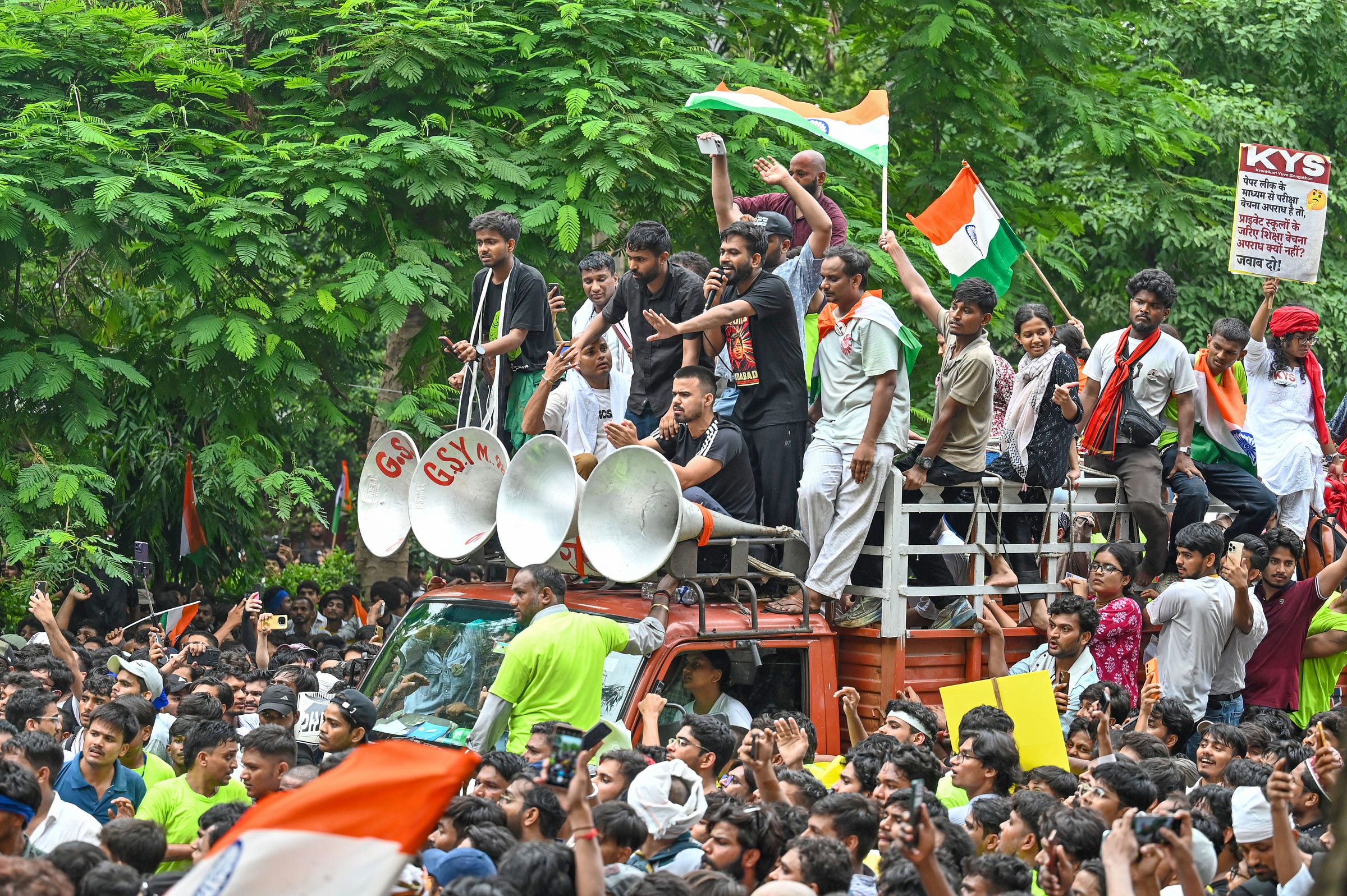
Abhijeet Dipke, founder of the Cockroach Janta Party, speaks in a protest march towards Parliament from Jantar Mantar on July 20, 2026 in New Delhi, India. Photo by Sanchit Khanna/Hindustan Times via Getty Images.
DELHI—Protesters occupying the central parts of Delhi, India were triumphant on Saturday evening after Prime Minister Narendra Modi’s government accepted all demands raised by the movement’s leaders, including the resignation of the country’s education minister Dharmendra Pradhan.
The protest was spearheaded by the newly formed Cockroach Janta Party (CJP)—a wordplay on Indian Prime Minister Narendra Modi’s Bharatiya Janata Party (BJP). The word “cockroach” is attributed to the Chief Justice of India Surya Kant, who in May referred to the youth of the country as “cockroaches” during a court hearing.
Ministers of the Modi government’s cabinet sat for talks with CJP representatives on Friday and Saturday. At the end of the talks on Saturday, the CJP announced that the government had agreed to all their demands.
Accepting all the protesters’ demands was a rare surrender to popular dissent in Modi’s 12 years of being in power, during which the Hindu nationalist leader has built his image as a strongman that does not back down or take criticism kindly.
“This is just the beginning of a larger movement that will restore basic governance and will work for the people of this country,” said Sauraav Das, a spokesperson for CJP.
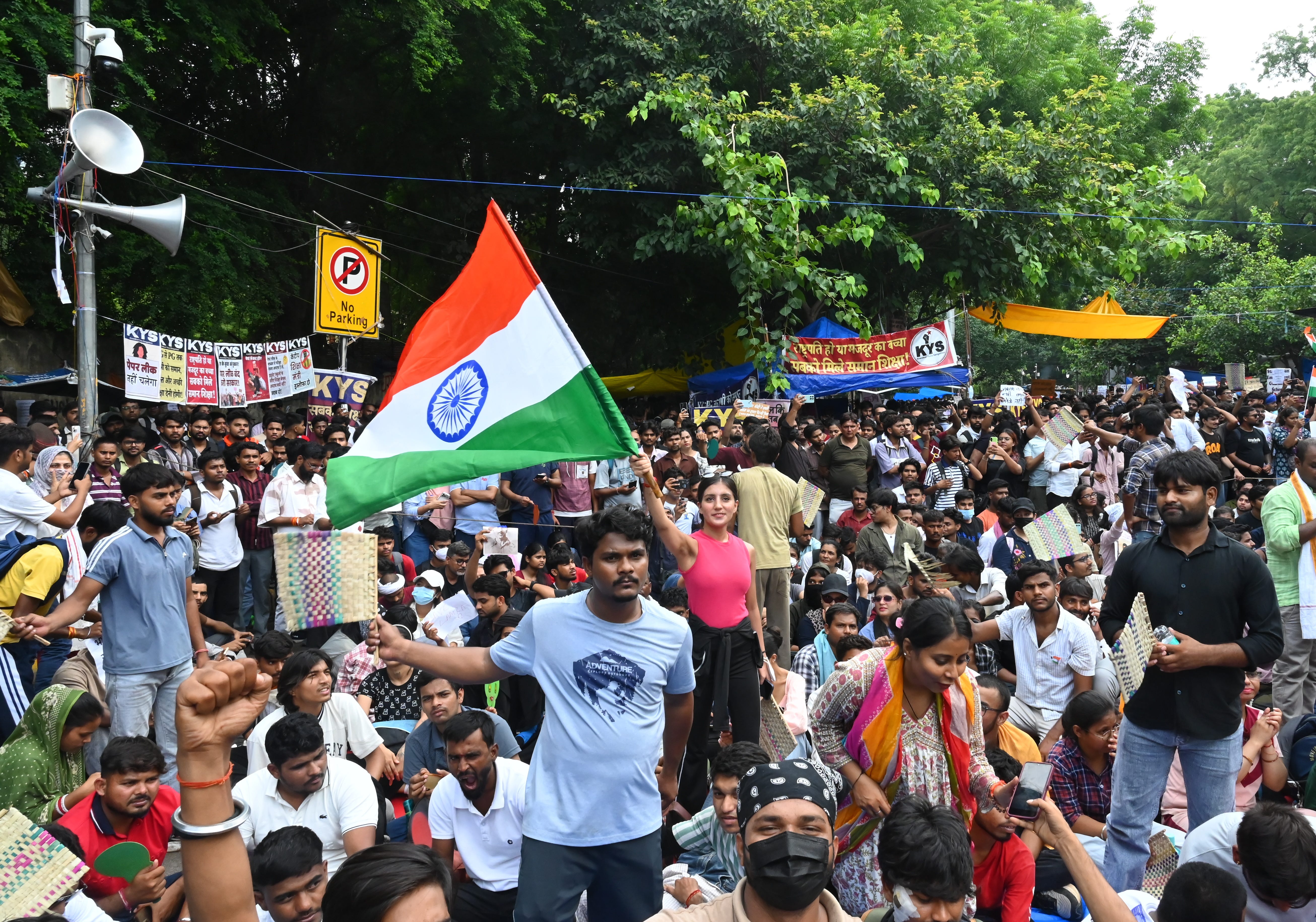
Hundreds of thousands of these cockroach protesters had been assembling for over a month at Jantar Mantar, which is less than half a mile south of Connaught Place, the central market in the heart of Delhi. They were demanding the resignation of Pradhan, who is also a senior leader in India’s ruling Bharatiya Janata Party, the party of Modi. The protesters at Jantar Mantar consider Pradhan to be responsible for failing to prevent “paper leaks”—the unauthorized release of highly competitive national college entrance examinations, often hours and sometimes minutes before the exam is due.
The Jantar Mantar movement emerged in May in response to a leak of the National Eligibility cum Entrance Test (NEET), the countrywide medical entrance exam. Reports suggest at least a dozen students across the country died by suicide after the tests were canceled. Protesters claim the number is over 20. The protestor’s demand that the families of each of these students be paid ten million Indian rupees was accepted by the government on Saturday.
After Delhi’s police and other armed forces cracked down heavily against protesters on Monday, the market became a pale shadow of its usual self. Traffic was redirected. And at least half a dozen metro stations around it were shut. Instead it was full with a young, Gen Z crowd who were there to register their dissent against the Modi government in growing numbers and spirit unseen in recent years.
Betu Yadav, a 26-year-old post-graduate student from Uttar Pradesh was hit on the back of her head with batons by male police officers on Monday, leading to intense bleeding that required seven stitches. As news of the government agreeing to the demands emerged, Yadav, still wearing a bandage over her head, said that she can finally celebrate the fruit of her month-long struggle.
“The fight that we fought has transformed into a big success. And today, on the 25th of July, Dharmendra Pradhan has resigned. Along with the resignation of Pradhan, the struggle to overthrow the BJP government will also be achieved by the same youth and the same crowd,” she said.
Crowds of supporters of the Cockroach Janta Party gather at Jantar Mantar to Join the ongoing protest, on July 23, 2026 in New Delhi, India. Photo by Vipin Kumar/Hindustan Times via Getty Images.
Police Brutality Backfired
Many of the Cockroach protesters had poured into Jantar Mantar from various parts of the country since Monday, when leaders of CJP called for a protest march to the Indian parliament demanding Pradhan’s resignation.
As protesters began their march on parliament, the Delhi Police and other armed forces cracked down heavily, jamming the internet in central Delhi, using tear gas, beating students with batons, and in some instances shooting them with pellet guns. At least one person has been reportedly left with a permanent disability due to the use of pellet guns.
Multiple students were detained, many of whom have been since released and charges were pressed against some.
“I was shoved to the ground and pulled across,” said Sachin Rawat, a software engineer who came from Lucknow, Uttar Pradesh. Rawat incurred injuries on his forehead, shoulder, arm, and legs on Monday. “I consider this as the love of Delhi Police,” he said satirically, adding, “whenever there is a revolutionary struggle, there will be such signs of it being repressed.”
Video evidence has since gone viral on social media showing a senior police officer slapping a young woman, and other male officers groping and attacking women.
The brutalities witnessed on Monday pushed more students to join the movement, with lines to enter the central area of the protest site reaching several blocks at any point of the day in the past week. Since videos of police action against students went viral on social media, protests spread to a dozen other cities around the country.
Apart from Pradhan’s resignation, the leaders of the CJP also demanded that all charges pressed against peaceful protesters be withdrawn. A spokesperson for CJP who was present at talks said that the government has agreed to withdraw all charges against protesters across the country.
A Broken Education System
“I had to appear twice for the same exam. It was really stressful. I still don’t know which university I will be admitted to,” said 17-year-old Mohammad Kashan, whose dream is to study at the prestigious Jawaharlal Nehru University in Delhi. Earlier this year, Kashan had taken the Central University Examination Test (CUET), which admits students into federal government-owned colleges across the country. Each year, over ten million students appear for this exam.
Kashan came to Delhi with a friend on July 22, on a low-cost train ticket from Patna, the capital city of Bihar, a state in eastern India. Kashan said the police brutality against students he saw on social media for simply demanding accountability pushed him to join the protests. He has no friends or family in Delhi and was sleeping on the sidewalk since he arrived with a thin cloth for a bed and his back-pack as a pillow.
Twenty-one-year-old Shalu Yadav also took a train but traveled even further, from Hyderabad, in the southern Indian state of Telangana. She is studying law and said she fought with her parents to be present at the protest.
“Our education system is completely broken, it does not guarantee a seat in an institute nor does it guarantee a job. I saw the call for the protest and I decided I need to attend it,” Yadav said.
Since Modi took office in 2014, the budget of India’s Ministry of Education, as a share of the national budget, has dropped by nearly half, even as overall spending has increased, according to a recent investigation by The Indian Express.
Protesters pointed out that the government is instead privatizing education rapidly. “The entire exam system gets outsourced to private contractors. So there is no accountability for paper leaks. Funding for universities and research has been cut down. We are against this entire education policy,” said Priyam, a master’s student at Delhi University and a member of Collective, a progressive students group.
“This is bigger than a protest, it is a movement. There is no future in this country right now. I won’t leave till the government resolves our issues, including the resignation of the education minister,” Yadav said on Thursday.
Many like Yadav are now packing their bags to finally head home after a week, or in some cases after almost a month, of volunteering at the protest site.
Solidarity with Students of Gaza
For 21-year-old Tubassum, a Master’s student at Delhi University, the movement symbolizes solidarity with other struggles. Although she has two cousins who had to re-appear for the medical tests and were depressed through the entire ordeal, showing up for a protest means a lot more for Tubassum, who came sporting a keffiyeh over her burqa. She was in ninth grade when her mother and aunts joined the Muslim women’s protest at Shaheen Bagh, Delhi, in 2019-20, against a citizenship bill that discriminated against Muslims.
“I remember how people showed up for each other in 2019 at Shaheen Bagh against the Modi government. I want to extend the same solidarity to my peers. And while we raise our voice for our education, I also stand with the students of Gaza who suffered a genocide. Whose education has been ripped due to the genocide” she said.
Bhumi, an undergraduate student at Delhi’s Ambedkar University, and a member of Collective, a progressive student group, was also wearing a keffiyeh and has been attending the protest since last month. “No one is free until everyone is free. This struggle is not only about education but also about basic rights. Not only about paper leaks, but also about rights of workers, farmers, and transpeople. And this solidarity extends to Gaza,” she said.
Crowds of supporters of the Cockroach Janta Party gather at Jantar Mantar to Join the ongoing protest, on July 23, 2026 in New Delhi, India as the police crackdown on protesters at Jantar Mantar and neighbouring areas rocked both Houses of Parliament. Photo by Vipin Kumar/Hindustan Times via Getty Images.
Modi Loses the Narrative
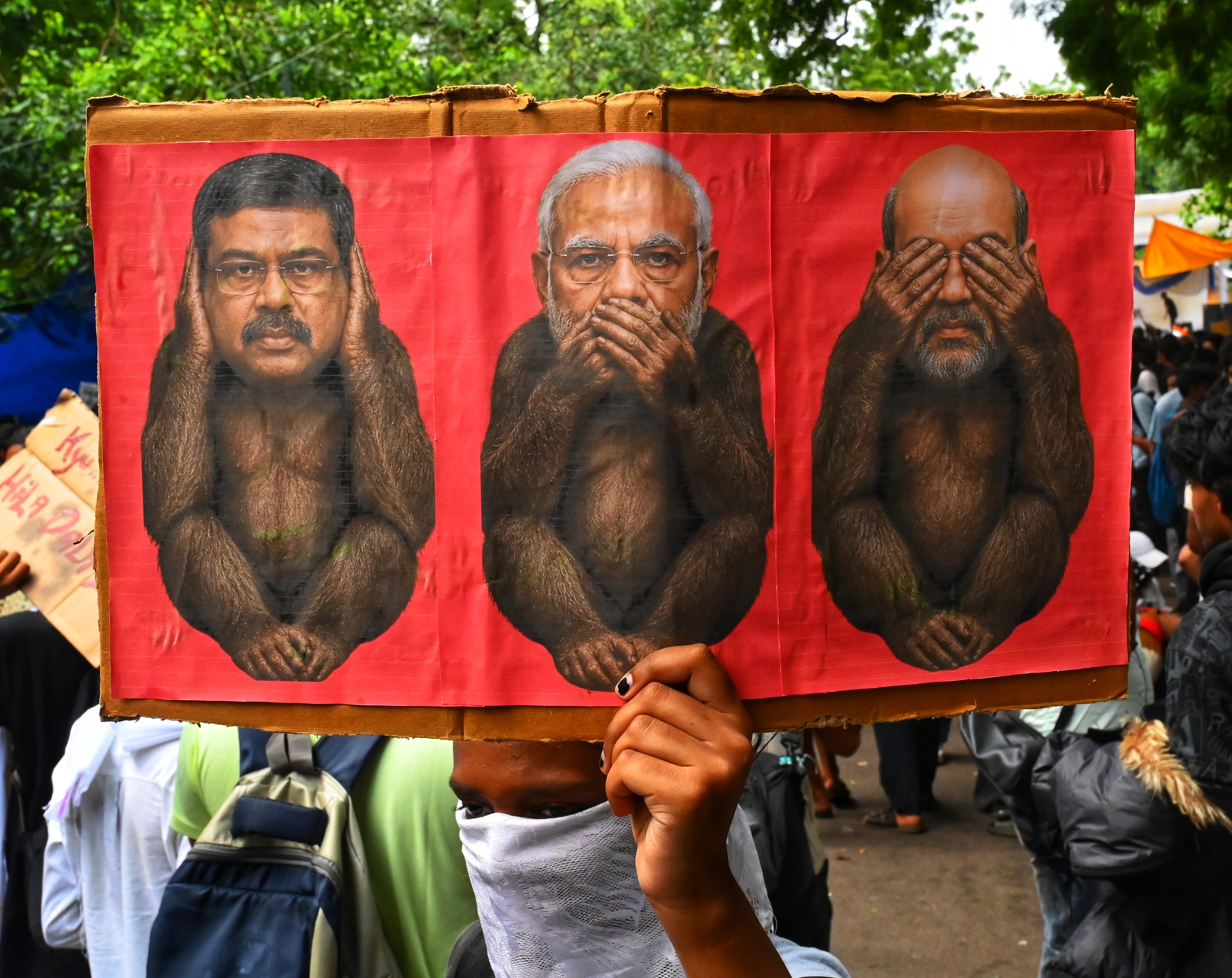
While the central demand of the Jantar Mantar movement was the resignation of the education minister, protesters did not hesitate to direct their attention at Modi.
Since Monday’s police action, the most popular slogan heard through the protest site chanted in Hindi translates to, “Whenever Modi gets scared, he sends the police in front.” Gen Z protesters speaking the language of viral Instagram reels and memes were also often heard chanting nasty slogans that ridicule Modi.
“We cannot forget that the ruling party BJP is responsible for this. We cannot forget that Home Minister Amit Shah is responsible for the brutalities. We cannot forget that this is ultimately Narendra Modi’s government that perpetrated the paper leaks and the police brutality,” said Neha Bora, national president of the leftist group All India Students Association, during a speech from the center stage of the protest site on Thursday night. Bora went on a hunger strike for 23 days, ending on July 20, demanding the resignation of the education minister.
In response, Modi has promised to set up fast track courts that address the paper leak issue. On Thursday night, he released a statement in a vertical video format on his social media—seen as a way to be more Gen Z friendly—promising that his government will take imminent action against paper leaks. On Friday night there was another video with a similar message. And on Saturday, his government bowed down to the demands.
Rahul Verma, an election analyst and a professor of politics at Shiv Nadar University, argues that many from within Modi’s Hindu nationalist base also appeared to support the movement, placing him on the defensive.
“Unlike many previous mobilisations against the BJP this movement draws hugely from groups that have constituted an important part of the party’s electoral coalition,” he wrote in a column. “A large number of these young, aspirational Indians and their parents on the protest site may have even voted for BJP in the recent past. They are protesting because the systems through which they hoped to advance appear increasingly unreliable.”





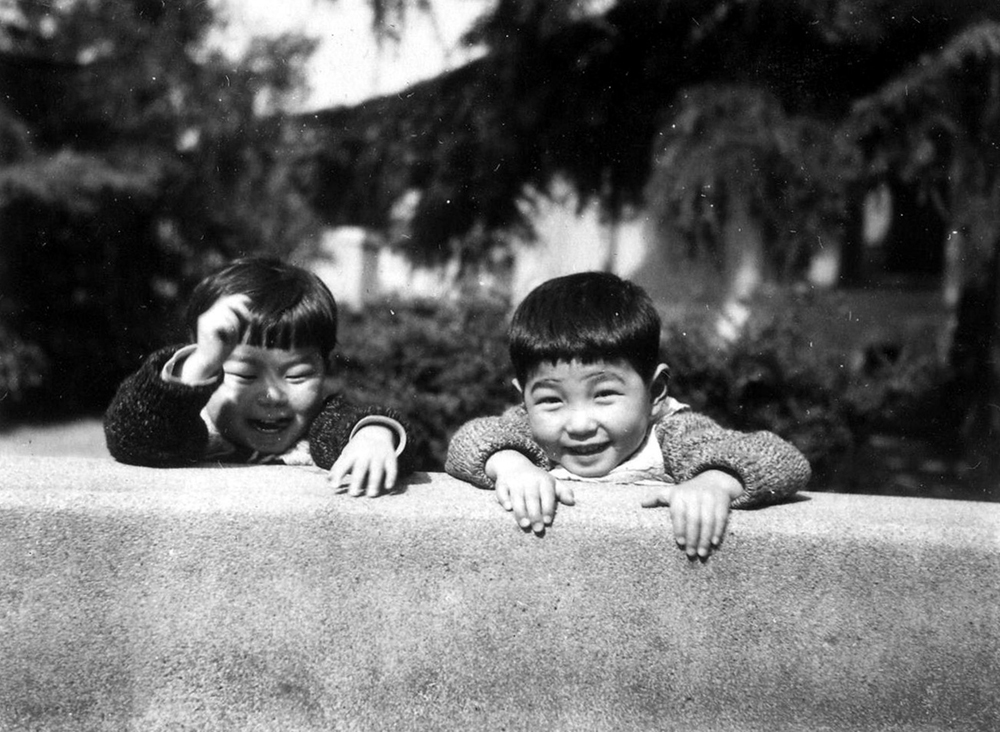
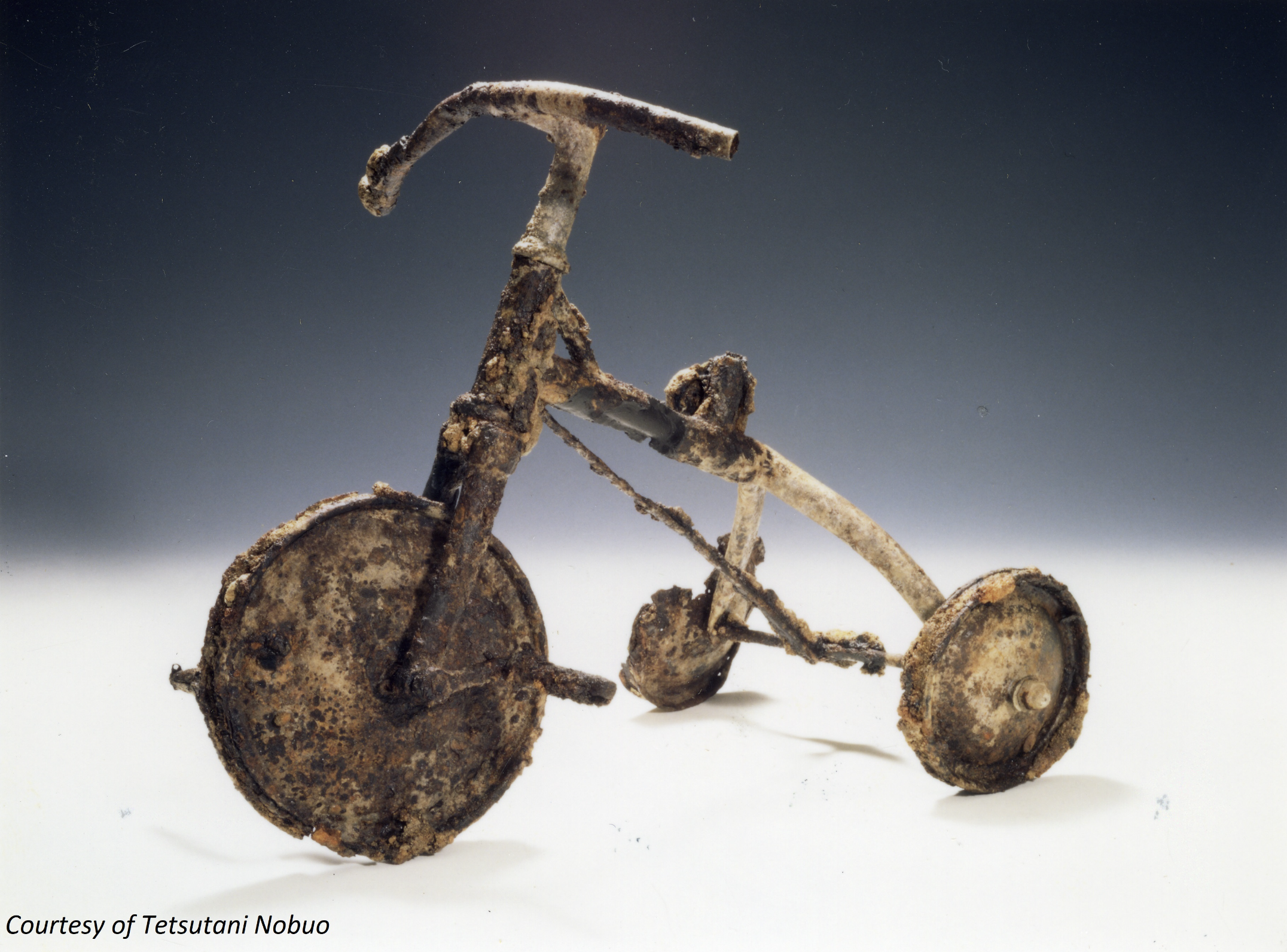
 Photo: Courtesy of the Nagasaki Atomic Bomb Museum, copying and use of this photo without permission is prohibited.


 Koko Kondo was buried under rubble with her mother who was holding the 8-month-old child during the attack on Hiroshima, and has spent a lifetime campaigning for the abolition of nuclear weapons. Photo: Ari Beser
 Setsuko Thurlow – Hibakusha and lifelong activist for the elimination of nuclear weapons – delivers the Nobel Lecture on behalf of ICAN in 2017. Photo: Jo Straube