Someone have to defend Glenn Diesen, in this «same tone» country – for the sake of free speach – damn it!

Here’s Glenn Diesen’s own words, on that he feels been «chased» by Norwegian media and academia:

The Death of Academic Freedom in Norway

Prof. Glenn Diesen

Glenn DiesenNov 22

Norway’s largest print newspaper, Aftenposten, argued this week that I should not be allowed to teach at a Norwegian university. Why? They accuse me of lying and spreading conspiracy theories. Do they need any evidence for this character assassination? None at all. Instead, they attempt to justify it by comparing me to a Holocaust denier for no apparent reason. This is the new standard of journalism in Norway: journalists cite the smears of their colleagues and refer to government “fact-checks” that they cannot / refuse to defend. As they cannot find any incorrect facts, they have to accuse me of spreading a “narrative” similar to the Kremlin, or being “pro-Russian” as I argue for diplomacy instead of sending more Ukrainians to their deaths in a proxy war against the world’s largest nuclear power. There is nothing that can be done. They can make any absurd claims because nobody will come to your defence for fear of being caught in the line of fire. When the political-media establishment comes for you, you are truly all alone.

And why should I not be allowed to teach in Norway? I previously taught Russian security strategy, military studies, international relations theory, and political economy for nine years in Australia and Russia. However, I would never even consider teaching a class in Norway in which I had to mention the word “Russia,” as journalists would inevitably find something that deviates from NATO’s official truths and could thus be labelled as “Russian propaganda.” During my first year teaching in Norway, I was contacted by a Norwegian journalist investigating me for spreading Russian propaganda in the classroom. The allegations were easily dismissed, as I was teaching research methods and had never mentioned the word “Russia” in the classroom. For the past six and a half years, I have been teaching sociology and research methods, as it is difficult for Norwegian journalists to cancel someone for spreading “Russian propaganda” when they are teaching Max Weber and Émile Durkheim.

Ignoring inquiries?

The newspaper also had the audacity to write: “The professor largely ignores inquiries from mainstream Norwegian media outlets.” Absolute nonsense. What inquiries have I ever received from Norwegian journalists? Over the past 6.5 years, I have been contacted approximately 25-30 times to respond to accusations of being “controversial”, “pro-Russian”, “pro-Georgian”, “pro-Iranian”, “pro-Chinese”, a “propagandist”, or “spreading Kremlin narratives”. My engagement with the media has been reduced to being allowed to respond to smears and labels that are never backed up by any evidence. Consequently, every media inquiry produces headlines along the lines of Professor Diesen “denies” spreading Russian propaganda or Professor Diesen “denies” being paid by the Kremlin. What is there to deny when there is never an argument or any evidence to address?

During the past 6.5 years, I have only once been asked for my opinion on a political issue, back in 2022. The newspaper was subsequently pressured by the mob into apologising and even published an article thereafter arguing that it should have informed the public that I was “controversial”. They had the opportunity to challenge my arguments during the live interview but did not. They never explained what I had said that was wrong, nor did they give me an opportunity to defend myself against their denunciation. Since then, even the Defence Minister cautioned the two podcasters against speaking with me as I was accused of spreading “Russian propaganda” by arguing (and documenting) that NATO expansion provoked the Ukraine War. So I ask again, what inquiries have I ever ignored? The journalists are eagerly shaping the narrative of my resignation, not reporting on reality.

The campaign after I resigned

I initially considered taking a temporary break and asked my university for one year of unpaid leave to get away physically and escape the headlines. As I wrote to my university, I requested “one year of unpaid research leave to conduct research within my core area of expertise, with the application further supported by additional circumstances, including death threats, harassment in the workplace, and other challenges that have made it necessary to withdraw my children from school and sell our house”. My application was rejected without any explanation and with no interest in even addressing the documented harassment in the workplace. After I was left with no other option but to submit my resignation from the university, I thought that at least we would get some peace by permanently ending my employment in Norway.

However, over the past week, no fewer than 15 Norwegian media outlets have published hit pieces about me, and not a single one could point to anything specific I have actually argued. Yet, there was no shortage of meaningless labels and citing of unsubstantiated smears. I am baffled by the intensity and absurdity of it all, especially since these articles are all based on reporting that I have already resigned from my position as a professor at the university.

They have already won… The endless smears, censorship, threats, and intimidation worked — yet they still do not stop. This new campaign seems intended merely to ensure that I leave the country completely discredited.

While it is extremely sad to be pushed out of the country and pressured into exile, I take some comfort in knowing that, in a few weeks, I can return to normal teaching and a normal life beyond this Norwegian bubble of warmongering, disinformation, and censorship where academic freedom goes to die.

Posta under nedrustning, Noreg - Norway, Politic&Society | Merkt , , , , | Kommenter innlegget

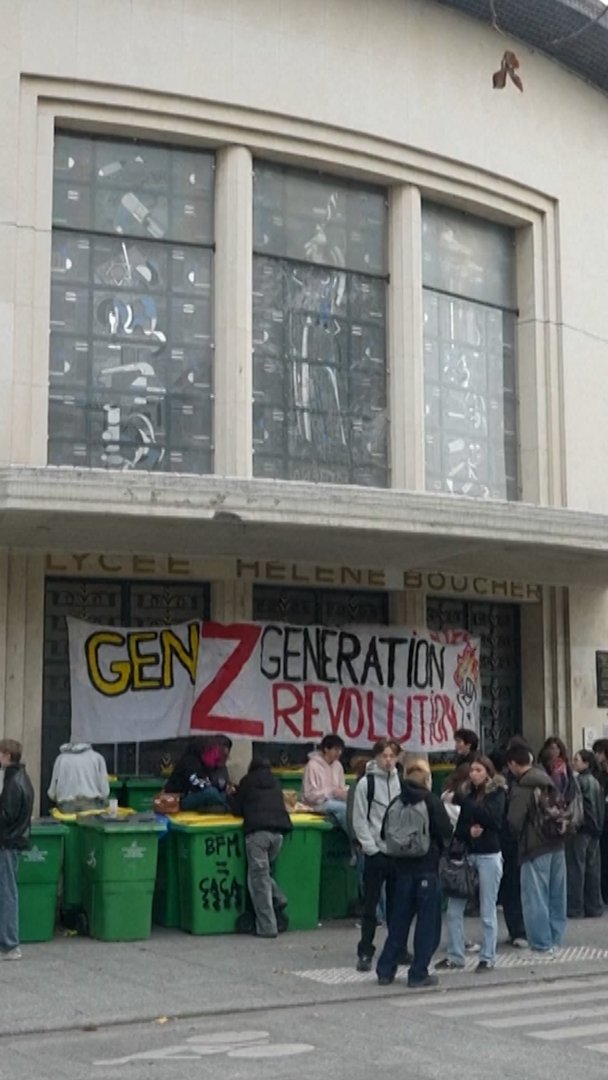
UPRISING ACROSS EUROPE – THE YOUTH ARE IN THE LEAD!

Young protesters hit the streets across Europe

Frankfurt (Germany) (AFP) – Protesters rallied across Europe on Friday to vent anger over issues from high living costs to military spending and the climate crisis, ramping up pressure on political leaders they accuse of ignoring the concerns of young people.

Issued on: 20/11/2026 – france24.com

Reading time

Students marched near the Colosseum in Rome
Students marched near the Colosseum in Rome © Alberto PIZZOLI / AFP

Demonstrators hit the streets in cities from Italy to Germany, Switzerland and Britain, many waving signs emblazoned with «fight for our future», setting off flares and burning cardboard models of tanks.

The rallies, coordinated by a youth-led coalition of over 50 groups, are fuelled by grievances that vary from place to place, including Israel’s war in Gaza, high rents and deteriorating learning conditions at schools and universities.

But a common theme runs through them — a sense that governments across the continent are too busy with geopolitical crises and helping big business, and not investing enough in the well-being of younger generations.

Olivia Ferrario, an 18-year-old high school student at a protest in the Italian city of Milan, told AFP that young people were displaying their «dynamism and determination» by taking to the streets.

Demonstrators in London called for better living conditions and an end to wars
Demonstrators in London called for better living conditions and an end to wars © Brook Mitchell / AFP

«If the government does not listen to us, we cannot remain silent,» she said at the demonstration that attracted tens of thousands of protesters.

Police deployed in large numbers due to fears of a repeat of the street violence that has marred recent major protests in France and other countries.

«Lost so much hope»

In Switzerland, organisers claimed that more than 40,000 protesters had taken to the streets nationwide.

«Austerity is social violence,» read a banner in Lausanne, while another blared: «Be vegan, but eat the rich.»

The demonstrations were mostly peaceful. But a small number of people clashed with police after it ended, resulting in the deployment of tear gas and water cannon, the domestic Keystone-ATS news agency reported.

Students set fire to a cardboard tank during a protest in Milan
Students set fire to a cardboard tank during a protest in Milan © Stefano Rellandini / AFP

In Berlin, about 1,000 university students and school pupils protested over concerns including Germany’s rapid rearmament, which has stoked fears of a return to compulsory military service.

«I simply think it’s indefensible… to force someone to learn how to fight and kill, and then send them to war,» Helena Kossatz, 18, who finished high school last year, told AFP.

While Europe seeks to rearm in the face of a hostile Russia, organisers of the continent-wide protests say funds allocated to rearmament should be spent on education, youth policies and housing.

Several hundred protesters, some in school uniform, gathered at demonstrations in London outside parliament and in nearby Trafalgar Square, waving placards that said «save higher education» and «Fight for our futures not their wars».

«I’ve lost so much hope,» Eliz, who had taken the day off from college and gave only one name, told AFP.

The 18-year-old said she was unsure whether she would go to university, «because of money. Because most jobs are getting taken over by AI. Everyone’s just kind of more depressed».

Students hold a placard during a demonstration as part of the Youth Strike against austerity and militarisation, in Lausanne, on November 20, 2026.
Students hold a placard during a demonstration as part of the Youth Strike against austerity and militarisation, in Lausanne, on November 20, 2026. © Fabrice COFFRINI / AFP

There were scuffles between groups of right-wing and anti-fascist demonstrators, and AFP saw a handful of arrests.

Chants of «Palestine will live forever» rang out at the London protests, and Palestinian flags were on display at several of the demonstrations across Europe.

In Rome, high school students marched behind a banner that read: «We will take freedom if no one gives it to us — against the government, the war and the high cost of living.»

There were scuffles in the Italian capital, with some protesters throwing bottles and smoke bombs at police.

«Dreadful» schools

Protests took place in Frankfurt outside outside the former headquarters of the European Central Bank
Protests took place in Frankfurt outside outside the former headquarters of the European Central Bank © Kirill KUDRYAVTSEV / AFP

Demonstrators called for more funding for education and railed against increased military spending during protests in the Spanish capital Madrid.

Gabriela Gimeno Serrano, a 16-year-old high school student, said there were 33 students in her class with just one teacher.

«Classrooms are very small, the facilities are in an absolutely dreadful state,» she told AFP, adding some schools were even plagued by rats and cockroaches.

Protests are set to extend into the weekend, with trade unions and housing associations calling for further demonstrations.

The protests come around the anniversary of the Yellow Vests movement in France, which rattled President Emmanuel Macron in 2018 and 2019. Demonstrations are planned there on Saturday.

People hold a giant Palestinian flag reading 'silent dictatorship' during a student protest in Milan
People hold a giant Palestinian flag reading «silent dictatorship» during a student protest in Milan © Stefano Rellandini / AFP

The protests in European countries have in part been inspired by recent demonstrations in France, which have sometimes turned violent.

Those began when students demonstrated at high schools in mid-September to demand better learning conditions, fuelling a nationwide campaign against soaring prices, inadequate public services and police brutality.

burs-sr/jsk/phz/mjw/tc

© 2026 AFP

Posta under Europa, Fagrørsle og kamp, Klima, nedrustning | Merkt , , , , , , | Kommenter innlegget

Den internasjonale dagen for vald mot kvinner – 25. november 2026

Indonesisk portrett, olje på lerret, 80 x 60 cm, 1995, Ivar Tveito Jørdre

Kamerater, Vi kjemper videre!

Den 25. november er den internasjonale dagen for vold mot kvinner. Fra første stund har dagen blitt markert i solidaritet med kvinner som kjemper mot undertrykking og spesielt mot imperialistisk undertrykking.

Dagen, 25. november, markeres til minne om de tre Mirabal-søstrene, som i 1960 ble drept for sin motstand mot USA-imperialismen i Den dominikanske republikken. De tre søstrene ble drept fordi de våget å kjempe mot undertrykking. «Om de dreper meg, skal jeg strekke armene opp fra graven og bli enda sterkere.» Minerva Mirabal. La ordene til Minerva stå som en kampglød for vår tid, og la oss møte dagene som kommer med samme mot.

Vold mot kvinner er et samfunnsproblem som er innebygd i dagens råtnende og døende stadie av kapitalismen. Når kapitalismen og imperialismen føler seg truet, øker også stats-volden mot kvinner slik vi har sett, spesielt i Frankrike.

Kvinner, særlig de i undertrykte klasser og nasjoner, blir holdt nede og fratatt sine demokratiske rettigheter. Kvinner i Polen blir fratatt retten til å ta abort, der abort sidestilles med mord. Kvinner drevet på flukt fra Ukraina blir tvunget inn i prostitusjon og kvinner i Gaza blir utsatt for et folkemord. I Norge blir 1 av 10 kvinner utsatt for vold i nære relasjoner, og 1 av 5 utsatt for voldtekt.

Men der det finnes undertrykking, finnes det også kamp og motstand. 25. november er en internasjonal kampdag. Vi må stå sammen i kampen, skulder ved skulder, for enhet i kvinnebevegelsen på antiimperialismens grunnlag, vi vil sammen knuse patriarkatet, som en del av prosessen som feier vekk imperialismen fra jordens overflate. I kampens glød, inviterer vi alle kamerater, venner og interesserte til å bli med oss og markere 25. november 2026! Antiimperialistisk Markering kl. 17.00 på Den Blå Steinen

Antiimperialistisk åpent møte på Danckert Krohn kulturhus, Kong Oscars gate 54

https://bergen4palestine.no/25-nov-internasjonal-antiimperalistisk-dagen-mot-vold-mot-kvinner-bli-med/

med kameratslig hilsen

Royla Eriksen

Bergen4Palestine

Posta under Capitalism, Imperialism, Kvinne- og jentekamp, Vår globale verd | Merkt , , , , | Kommenter innlegget

The Greatest Success of Propaganda Is Convincing Us That We Are Not Subject to Propaganda, Ha, Ha…

Forwarded this email? Subscribe here for moreThe Greatest Success of Propaganda Is Convincing Us That We Are Not Subject to PropagandaProf. Glenn DiesenGlenn DiesenNov 18

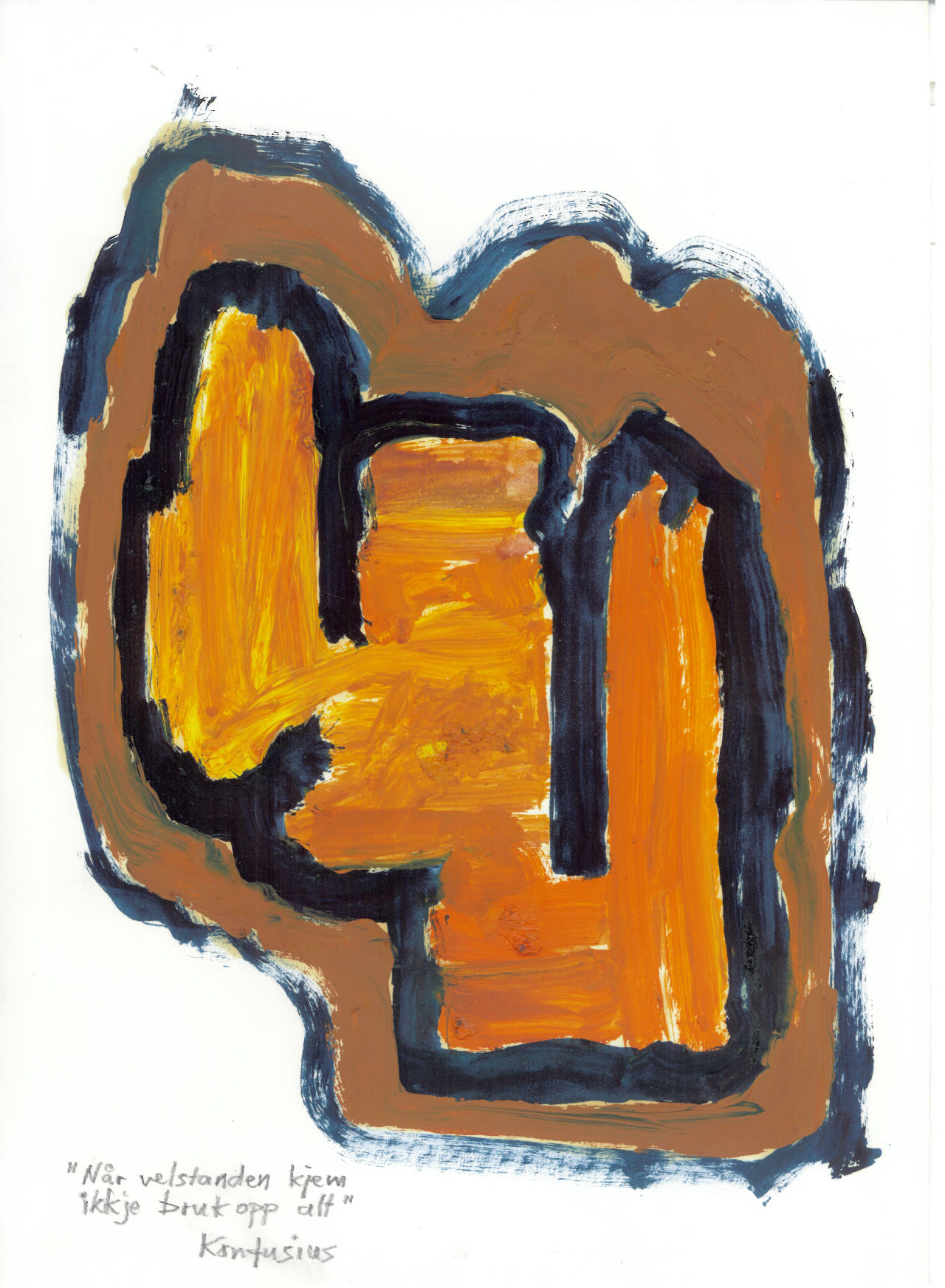
«Vis prpaganda-fingeren», olje på papir, A4, 1999, Ivar Tveito Jørdre

Propaganda is commonly confused with lies, deception and disinformation. This is a fundamental misunderstanding of what propaganda actually does. Propaganda is not primarily about providing false information, but about bypassing reason by manipulating the unconscious group psychology of the public. Even truthful information can be propaganda if it is presented in a manner that appeals to emotions and instincts rather than rational reflection.

The greatest success of Western propaganda has arguably been to convince the public that propaganda is something authoritarian states do. Western democracies, by contrast, merely provide information, promote democratic values and educate their populations. This distinction is itself a product of propaganda, which becomes less effective once people recognise that they are being manipulated.

The Science of Manufacturing Consent

The First World War was a turning point in the development of propaganda as a science. Millions of people were mobilised for industrial-scale warfare, often with extraordinary enthusiasm, by appealing to patriotism, fear, national identity and moral righteousness. The experience demonstrated that public opinion could be organised and manipulated in ways that did not depend on rational arguments.

Edward Bernays, one of the founders of modern propaganda, drew heavily on the work of his uncle, Sigmund Freud. Freud had explored how unconscious instincts and group psychology influence human behaviour, often overriding the rational faculties of the individual. Bernays recognised the political implications: if the unconscious motivations of groups could be understood, public opinion could also be manipulated without people being aware of it.

Having worked on American propaganda efforts during the First World War, Bernays subsequently applied these methods to commercial advertising. His campaign to promote cigarettes among women associated smoking with female emancipation, presenting cigarettes as “torches of freedom”. The campaign did not seek to convince women that smoking was beneficial. Instead, cigarettes were linked to the desire for freedom and social status.

The same principles are applied to politics. Cars are marketed by associating them with status and sexual attractiveness, while wars are sold as struggles for freedom, democracy and civilisation. The propagandist does not need to invent these ideals. Rather, genuine values are exploited to mobilise support for policies that might otherwise struggle to withstand rational scrutiny.

Foreign affairs are particularly susceptible to propaganda because most people have little direct experience of the countries and conflicts they are asked to have strong opinions about. The complexity of international politics is reduced to familiar stereotypes, which provide mental shortcuts for interpreting events. The most effective shortcut is to divide the world into “Us” and “Them”.

The Psychology of Good vs Evil

Human beings have powerful instincts to identify with groups. Nationality, religion, ideology and civilisation provide belonging and security, while external threats enhance internal solidarity. The propagandist exploits these instincts by assigning virtuous characteristics to the in-group and malicious intentions to the out-group. “We” represent freedom, democracy, human rights and civilisation. “They” represent authoritarianism, aggression, oppression and barbarism.

This dichotomy establishes a moral hierarchy in which our interests become universal values, while the interests of adversaries are dismissed as illegitimate. Our military interventions are humanitarian operations, while those of adversaries are unprovoked wars of aggression. Our efforts to influence foreign governments are democracy promotion, while similar activities by adversaries constitute interference. Our information is journalism, while their information is propaganda.

As stereotypes become embedded, contradictory evidence is interpreted to preserve the established narrative. Conformity is rewarded as moral virtue, while dissent becomes evidence of sympathy for the enemy.

Why Democracies Depend on Propaganda

Democracy rests on the principle that sovereignty belongs to the people. Bernays and other many of the initial scholars on propoganda therefore recognised that governments dependent on public consent have powerful incentives to manufacture that consent. Authoritarian governments can rely more extensively on coercion, while democratic governments must persuade the population to support their policies.

Bernays recognised that manipulating organised habits and opinions was an important element of democratic society. The expansion of democracy therefore did not eliminate propaganda. It increased the political importance of influencing public opinion.

Yet, propaganda acquired negative connotations following the two world wars. Bernays rebranded his profession as “public relations”, while governments increasingly adopted terms such as public diplomacy, strategic communications and information management. The methods remained the same, although the language changed.

The concept of propaganda was itself propagandised. Propaganda became something associated with the adversary, while our efforts to shape public opinion were presented as education and objective information. The more convinced a population becomes that propaganda is exclusively a problem in other societies, the less capable it becomes of recognising manipulation within its own political system.

When Propaganda Undermines National Security

Propaganda can be an effective instrument of state power. It mobilises resources, strengthens national unity and encourages sacrifices in pursuit of collective objectives. However, its effectiveness in mobilising confrontation creates problems when circumstances change and diplomacy becomes necessary. Presenting the adversary as evil assists in mobilising the public for war, yet a workable peace through diplomacy becomes problematic as the public will resist any mutual understanding and compromise with ‘evil’.

During the Cold War, anti-Soviet propaganda helped mobilise Western societies against a powerful geopolitical rival. Yet, the same stereotypes complicated efforts to pursue détente and negotiated settlements. When the adversary is represented as inherently evil, compromise becomes appeasement. Diplomacy is interpreted as weakness, while recognising the security concerns of opponents becomes morally suspect.

The persistence of anti-Russian stereotypes after the Cold War has contributed to a political environment in which relations with Russia are interpreted through moral categories rather than the changing balance of power. The instrument designed to strengthen national security can consequently become an obstacle to rational foreign policy.

Recovering Reason in International Politics

The most dangerous feature of propaganda is not that it makes people believe lies. It is that propaganda makes people less capable of recognising the limits of their own understanding.

A population convinced of its moral superiority becomes increasingly unwilling to examine the interests and motivations of adversaries. Political disagreements become tests of loyalty, while the search for compromise is replaced by ideological conformity.

A rational foreign policy requires recognising that all states have interests, that competing security concerns must be understood, and that moral superiority does not eliminate the need for diplomacy.

Understanding an adversary does not require justifying its actions. It is necessary for developing policies capable of producing greater security. The greatest obstacle to peace may therefore be the comforting conviction that we are guided by reason and universal values, while our adversaries are driven by propaganda and irrational ambitions

Posta under Europa, Noreg - Norway, Our global world | Merkt , , , , , | Kommenter innlegget

Bukele Security Model Haiti: 2,000 Troops Test Regional Blueprint – Dangerous for sovereignty and regional replication

Bukele Security Model Haiti: 2,000 Troops Test Regional Blueprint

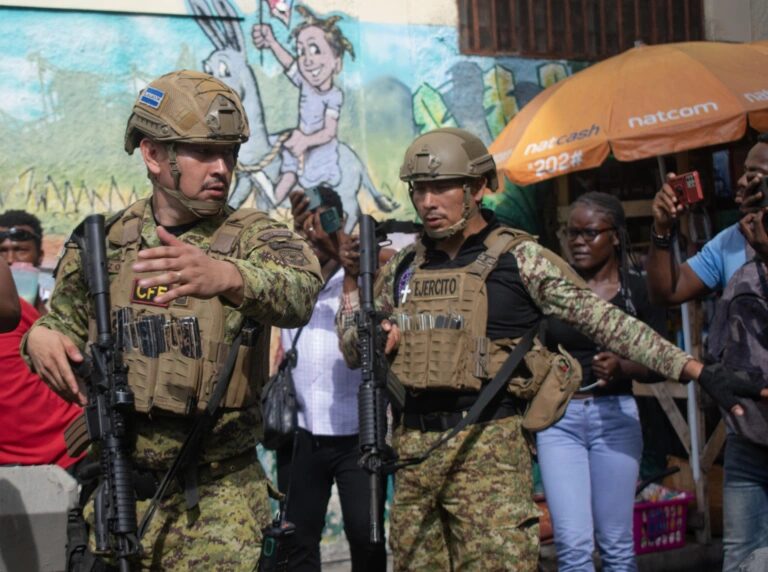
Salvadoran troops deploy in Port-au-Prince as part of the Bukele security model Haiti operation.

More than 2,000 Salvadoran soldiers are operating in Haiti largely outside UN command, raising questions about sovereignty, accountability, and the future of security cooperation in the Americas.


November 14, 2026 Hour: 10:04 am – telesurenglish.net

Bukele security model Haiti deploys 2,000 Salvadoran troops outside UN command, raising concerns over sovereignty and regional replication.

Related: Bukele Says El Salvador Could Dismantle Haiti’s Gangs


Bukele Security Model Haiti: 2,000 Troops Test Regional Blueprint

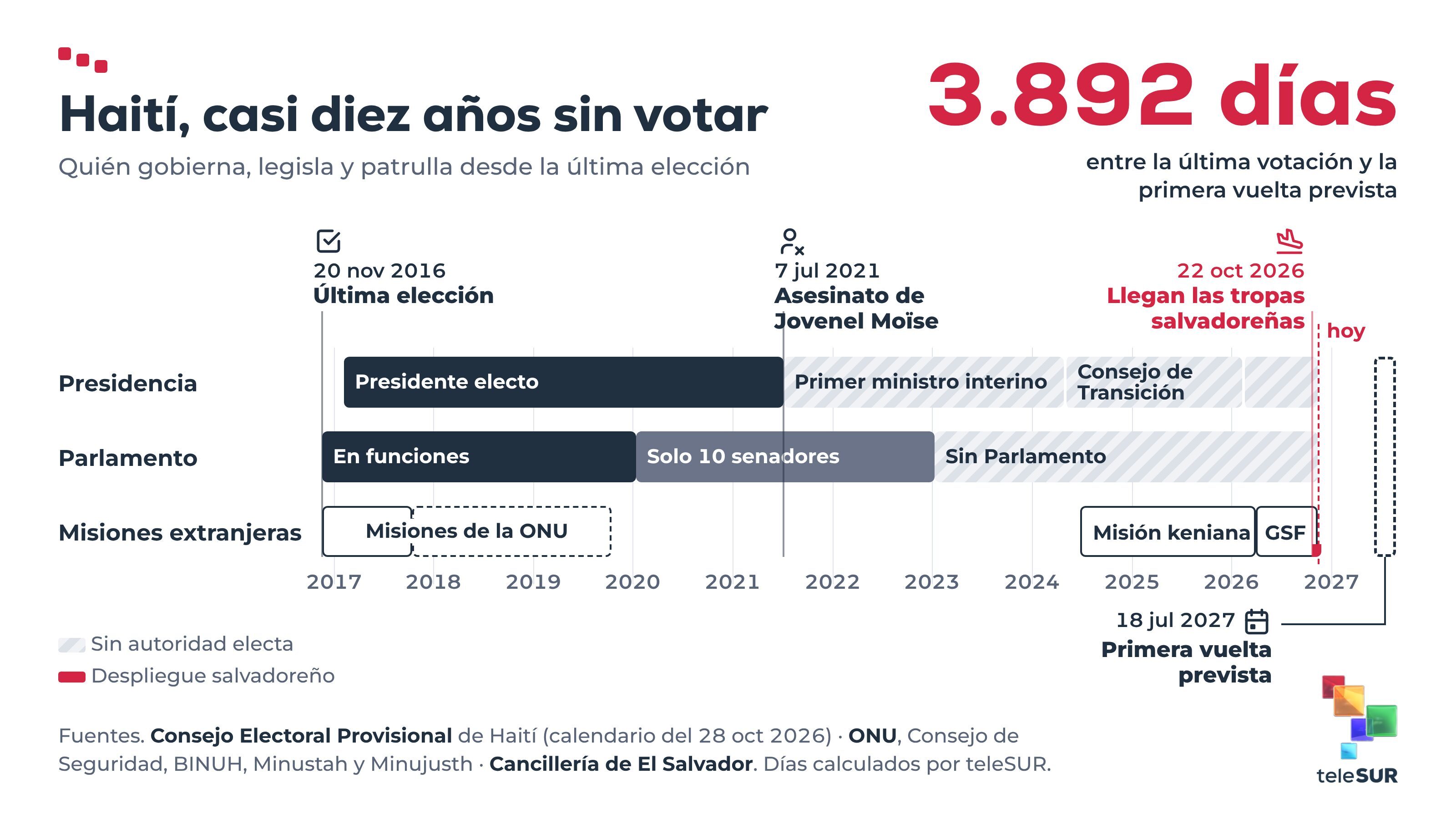
The Bukele security model Haiti deployment has become the first major test of El Salvador’s approach to security outside its own borders. More than 2,000 Salvadoran soldiers are operating in Haiti, largely outside UN command, without a publicly released agreement governing their mandate, duration, or rules of engagement.[telesurtv]

On November 12, about 20 Salvadoran armored vehicles entered the Sylvio Cator stadium in central Port-au-Prince. Haiti’s National Police said the stadium and surrounding areas, occupied by gangs for years, had been recovered and would serve as a base for the Salvadoran troops.[telesurtv]

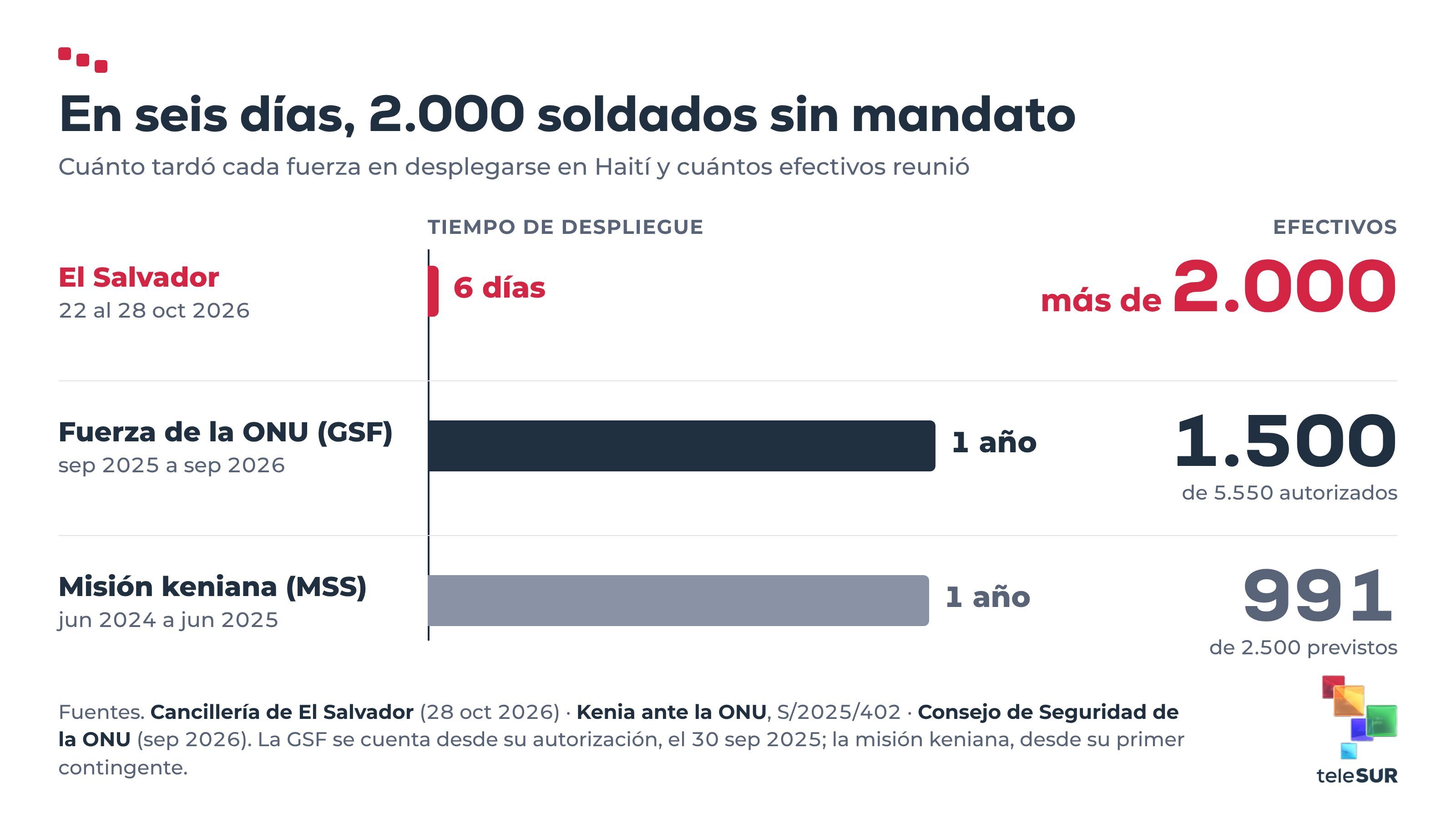
The deployment began on October 22, when the first Salvadoran commandos arrived. Six days later, El Salvador’s Foreign Ministry confirmed that more than 2,000 soldiers were on Haitian territory.[telesurtv]

A Force Outside UN Command

The UN-backed Gang Suppression Force (GSF) had about 1,500 personnel one year into its mandate, out of 5,550 authorized by the Security Council. The Kenyan-led mission that preceded it never exceeded 991 police officers, well below the 2,500 originally planned.[telesurtv]

Most Salvadoran troops operate outside that force. The United Nations has described the deployment as a bilateral matter between El Salvador and Haiti, and no public document has established the mission’s mandate, duration, or rules for opening fire.[telesurtv]

That lack of transparency raises a question that extends beyond Haiti: who can authorize a foreign army to wage war in a country that has not held elections in a decade, and to whom will that army answer if it makes a mistake?[telesurtv]

United Nations Peacekeeping

The Legal Basis Remains Unclear

Until October 18, El Salvador had about 100 military personnel in Haiti, mostly aviation technicians supporting medical evacuations, under an agreement signed by the two countries’ ambassadors before the Organization of American States in October 2024.[telesurtv]

On September 29, El Salvador’s Legislative Assembly approved a transitional law extending that participation for one year. The law states that El Salvador retains jurisdiction over its soldiers and cannot hand them over to international courts or third countries without complying with the treaties it has ratified.[telesurtv]

Four of those technicians disappeared on October 18 after a gang ambushed their vehicle in Santo, northeast of the capital. The first commandos landed on October 22, and by October 27, with about 1,300 soldiers already on the ground, Bukele called President Donald Trump to ask for support for the escalation.[telesurtv]

Trump reportedly told him to “do what you have to do.” Haitian Prime Minister Alix Didier Fils-Aimé, who was attending a wedding in Mexico, returned on October 28 and issued a statement describing the cooperation as taking place “within the framework of the GSF.”[telesurtv]

Amnesty International

Consent Without Elections

International law allows one state to send troops to another if the latter invites them. The International Court of Justice recognized that principle in its 1986 ruling in Nicaragua v. United States.[telesurtv]

Legal doctrine requires that the invitation come from a government recognized as legitimate, be explicit, and arrive before troops cross the border. In Haiti, the first Salvadoran soldiers landed on October 22, while the agreement—if it exists—was approved six days later by a government that did not emerge from elections and without a parliament able to ratify it.[telesurtv]

Haitian security and defense expert Emmanuel Paul called the deployment a “flagrant violation of Haiti’s sovereignty.” He argued that such an agreement should pass through a parliament that no longer exists and be signed by an executive that has lacked a president since the assassination of Jovenel Moïse in July 2021.[telesurtv]

Fils-Aimé, who has led the executive since the Transitional Presidential Council dissolved on February 7, defended the operation on November 3. He said Haiti retains direction over all foreign forces and that the Salvadorans “are here to support us.”[telesurtv]

What Happens if a Soldier Commits Abuse?

Under El Salvador’s September law, if a Salvadoran soldier commits an abuse in Croix-des-Bouquets, only a court in El Salvador can try him. The United Nations cannot monitor the troops because those operating outside the GSF fall outside the human rights due diligence policy the organization applies to that force.[telesurtv]

That raises concerns about accountability. The Salvadoran judicial system, which would have the final say, appeared before the Inter-American Commission on Human Rights on October 26, where the organization Cristosal documented 454 deaths of people in state custody since 2022, including 33 women, three girls, and one boy.[telesurtv]

Haiti last voted on November 20, 2016. Since then, Moïse was assassinated, the last 10 senators left their seats in January 2023, and the country has been governed by an appointed prime minister.[telesurtv]

For the first round of elections scheduled for July 2027, 759,257 voters are registered, in a country with about 6.5 million people of voting age.[telesurtv]

Inter-American Commission on Human Rights

Inside Haiti: Hope and Fear

In Haiti, many people welcomed the Salvadoran troops with applause, and crowds in Port-au-Prince chanted Bukele’s name. Pierre Espérance, director of the National Human Rights Defense Network, welcomed the speed of the deployment but warned that not everyone living in gang-controlled areas is a gang member.[telesurtv]

Activist Monique Clesca acknowledged that Bukele has spoken to Haitians more than their own leaders, but reminded him that Haiti is not his backyard. Jocelyne Noël, director of the Episcopal Commission for Justice and Peace, criticized Haitian authorities for failing to take responsibility.[telesurtv]

In the Cul-de-Sac plain, where the 400 Mawozo and Chen Mechan gangs operate, security operations killed at least 21 people in Croix-des-Bouquets between October 18 and November 2, according to the conflict observatory ACLED.[telesurtv]

Médecins Sans Frontières treated about 30 people wounded by gunfire and explosions in the eight days following the ambush, nearly a third of them women and children. The drones of the Haitian task force, operated with support from Erik Prince’s Vectus Global, had already been linked to more than 1,200 deaths in a year, according to Human Rights Watch.[telesurtv]

Médecins Sans Frontières

A Model With Regional Reach

The Bukele security model Haiti deployment is being watched across Latin America. InSight Crime counted 16 prison projects in 10 countries inspired by El Salvador’s Center for the Confinement of Terrorism (Cecot).[telesurtv]

Costa Rica inaugurated a megaprison for 5,100 inmates in October, whose foundation stone Bukele laid in January. In Peru, Keiko Fujimori has offered five similar prisons, and in Colombia, Abelardo de la Espriella has proposed 10.[telesurtv]

The model’s appeal lies in its promise of rapid results. But critics warn that exporting a security strategy built on mass detention, military force, and limited judicial oversight could deepen authoritarianism rather than solve the underlying causes of violence.[telesurtv]

Geopolitical Context

The Bukele security model Haiti deployment reflects a broader shift in how security is being organized across the Americas. Instead of relying solely on multilateral institutions, governments are increasingly turning to bilateral arrangements, private military contractors, and regional coalitions.

The operation has drawn comparisons to the 1965 intervention in the Dominican Republic, when the Organization of American States approved the creation of an Inter-American Peace Force after more than 40,000 U.S. troops landed in the country.[telesurtv]

Unlike that operation, the Salvadoran deployment has neither an OAS resolution nor a Security Council mandate. That absence of multilateral authorization is what makes the case legally and politically unprecedented.[telesurtv]

The broader implication is that Haiti may become a testing ground for a new security architecture in the Americas. If the model is seen as successful, other governments could seek to replicate it, raising questions about sovereignty, accountability, and the role of the United States in regional conflicts.[telesurtv]

What Comes Next

The immediate question is whether the Salvadoran troops will remain in Haiti beyond the GSF’s mandate, which expires on March 31. The UN political mission is set to renew in January, but no public document says how long the more than 2,000 soldiers will stay or whom they will answer to if something goes wrong.[telesurtv]

For Bukele, the deployment is also a political gamble. He is seeking a third consecutive term in February 2027, after the Assembly controlled by his party approved indefinite reelection and moved up elections originally scheduled for 2029.[telesurtv]

The Haiti operation gives him a platform to present himself as a regional security leader. But it also exposes him to criticism if the mission produces civilian casualties, lacks transparency, or fails to deliver lasting stability.[telesurtv]


Author: JMVR

Source: Agencias

Posta under Latin-Amerika, Politic&Society | Merkt , , , , | Kommenter innlegget

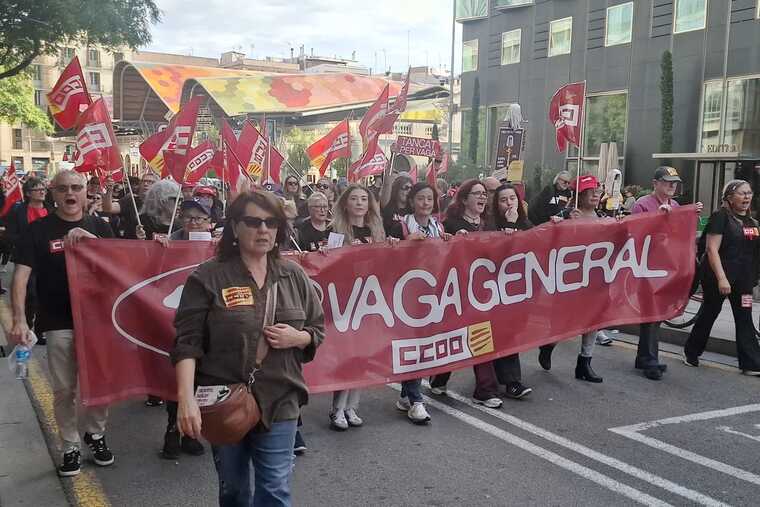
General strike in Spain demands a big Wind of Change!

General strike grips Spanish state: ‘We have to give young people a future’

There was a real sense of collective power which the police were powerless to stop

By Judy Cox in Barcelona

Wednesday 11 November 2026 Issue 3032 – socialistworker.co.uk

Socialist Worker spoke to striking workers on the streets of Barcelona

Socialist Worker spoke to striking workers on the streets of Barcelona

A massive general strike has gripped the Spanish state. The strike began at midnight on Wednesday night with workers blockading roads with burning tyres, occupying building and picketing major workplaces.

In many areas, the police attacked strikers, charging them to break the picket lines and blockades of roads in cities including Valencia and Castellón.

The entire rail network has been shut down in a strike that began on Tuesday. The striking railworkers are demanding better health and safety after the horrific crash on the high speed line two weeks ago.

The entire industrial zone of Barcelona was shut down. And every motorway into both Madrid and Barcelona was shut down by huge pickets.

The government imposed “minimum service” orders on the unions, requiring some workers to turn up to keep transport moving. But in many cases pickets stopped the services running.

Workers from the UGT and CCOO unions came together in the centre of Barcelona at 10.30am to march through the city’s historic streets. The started at the headquarters of the bosses’ association and ended at the Barcelona stock exchange. They marched past the encampment set up by housing activists in Placa de Catalunya.

Workers shut down big shops, including Benetton, Adidas, El Corte Ingles and Zara as they marched, using whistles, flares and fireworks.

Every shop that was open was forced to close by the strikers. There was a real sense of collective power which the police were powerless to stop.

Striking hotel workers told Socialist Worker that they are demanding action on housing, the cost of living, wages and public services.

Victor said, “We work in hotels. You see the luxury hotels are booming, but the hotels for ordinary people are in difficulty.

“They are making big profits—but they don’t want to share them with us.

“Things have got worse for the last 30 years—not just here, but everywhere.

“When I was young, I had a government sponsored flat. I could save up to buy a flat for €180,000. Now, there is no cheap housing and the same flat would cost €450,000.”

Striker Gwendolene said, “We are fighting for housing and for public services. My son is training to be a lawyer, but he is still living at home.

“The government invested in the high speed railways, but they do not spend to keep it safe. And they never invested the short distance trains that people use to go to work and school.

“Spain has more kilometres of high speed train track than anywhere outside China. But they don’t invest in it.”

Miguel added, “Food has gone up by 45 percent. But our wages haven’t gone up. They gave us 2 percent in 2022, 2 percent in 2023, 2 percent in 2024, 2 percent in 2025. Now it’s 4 percent, but that isn’t enough. We have fallen behind.”

Cleaners Yolanda and Sylvia used their mops as placard sticks. Yolanda told Socialist Worker, “We are striking because we cannot afford to feed our children. We cannot afford to keep a roof over our heads. We work so hard, but we get nothing.”

The vice president of the CDT union in Morocco, Younes Firachine, was with a delegation of Moroccan workers who came to Barcelona to show their solidarity.

Younes told Socialist Worker, “The unions must stand together and support each other.

“We face the same issues everywhere. Some get richer, but life is harder for us and for our children.

“We must be together and show solidarity.”

The strike was called by the UGT and CCOO unions along with the renters’ union, the Confederación de Sindicatos de Inquilinos.

A mass campaign over housing erupted after the eviction of 87 year old María del Carmen “Maricarmen” Abascal in Madrid in September. Housing activists have set up encampments in major cities.

Prime minister Pedro Sánchez called a general election for 28 November. Sánchez’s Labour-type PSOE is trailing in the polls to a potential coalition of the right wing PP party and the far right Vox.

Striker Jordi works in financial services. He explained to Socialist Worker that the general election does not offer workers a real choice.

Jordi said, “I will not vote for the PP or Vox. They are of the right. They pretend to care about us, but they just want to win the race, to be elected.

“I cannot vote for Sánchez. He is centre left, but they have been in power for eight years and things have got worse.

“I will go to vote, but I will do a white vote—a protest vote. I won’t vote for any of them. We need to keep striking—we have to give our young people a future”.

Latest News

Protesters flooding the streets (Blocodeesquerdaoficial/Facebook) Europe in revolt

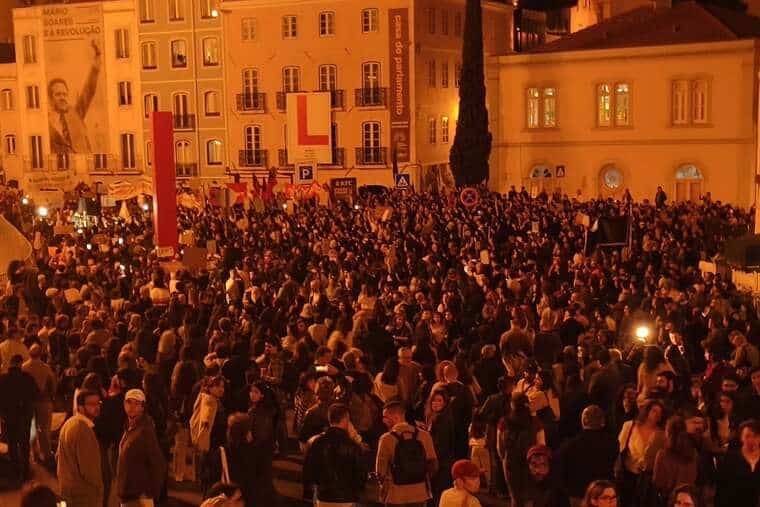
Portuegese protests continue to rage against housing crisis

An encampment remains in Porto, while in Lisbon activists have shifted to mobile protests and a planned general strike

12 November 2026

Europe in revolt

French unions call for new day of strikes on 17 November

PM Lecornu offers only crumbs

09 November 2026

A general view shows the buzz across the factory floor of an exporting garment plant in Bangladesh. Photo : Marcel Crozet / ILO International

Garment workers in Bangladesh force concession after mass strikes

Around a million workers are on strike

08 November 2026

Image of Donald Trump pointing at the camera International

The far right is hurting—but it isn’t beaten

Trump and the far right have suffered electoral setbacks, but the threat has not gone away

07 November 2026

Posta under Europa, Fagrørsle og kamp, Politic&Society | Merkt , , , , , , , , , , , | Kommenter innlegget

Will Democrats Finaly Break With the Israel-Monster?

Democrats Would Be Insane Not to Break With Israel Now

The party has an unequivocal mandate to fundamentally change the US-Israel relationship.

Hamid Bendaas – thenation.com

Politics / November 5, 2026

Abdul El-Sayed greets voters after winning the Senate election in Michigan on November 4. 2026.
Abdul El-Sayed greets voters after winning the Senate election in Michigan on November 4. 2026.(Kyodo via AP Images)

The definition of insanity, famously, is doing the same thing over and over and expecting different results. This should certainly be what Republican strategists are thinking to themselves after launching a needless, illegal, failed, and wildly unpopular war in the Middle East that, just like in 2006, has handed the Democratic Party control of the Senate and a commanding majority in the House in this week’s midterm elections.

Vice President JD Vance released a statement Wednesday morning that served as a rapid autopsy, naming the war with Iran and resultant rising prices as top reasons for Republicans’ generational wipeout. He also cited the United States’ relationship with Israel. These, of course, are not separate issues. In March, the State Department wrote that it had launched the Iran War in large part at Israel’s request (Benjamin Netanyahu having finally found a president foolish enough to fulfill his decades-long desire for this exact war). And the impunity that the US granted Israel for its ongoing genocide of Palestinians in Gaza, its invasion of Lebanon, and its aggressive strikes against its neighbors—including US allies like Syria and Qatar—fueled the arrogance that led to the Iran conflict.

Vice President Vance’s pointed statement was surprising in its seeming disloyalty to his boss. But in saying that voters wanted to, in his words, “change our relationship to Israel,” Vance was only reflecting a truth that millions of people have known for years—even if some within the Democratic Party still might not want to admit it.

In fact, the most glaring issue with Vance’s comments might be that they’re two years late. Americans didn’t just want a fundamental break with Israel in 2026. They wanted one in 2024, and they punished Democrats for refusing to reflect their revulsion at Israel’s actions. It’s worth remembering where we were two years ago: As polls showed a majority of swing-state voters opposing further US funding for Israel, President Biden sent Israel tens of billions of dollars in weapons to continue the slaughter in Gaza.

The Israeli government had announced in August 2024 that it had received 50,000 tons of weapons from Biden in 607 shipments over the preceding 11 months—a weapons shipment every 12 hours. At the same time, Save the Children estimated that Israel was killing a Palestinian child in Gaza every hour. By the end of Biden’s term, the Palestinian Central Bureau of Statistics estimated that Israel had dropped 100,000 tons of bombs on Gaza—the equivalent of seven Hiroshima atomic bombs on an area of land smaller than Detroit. Millions of Americans watched this horror livestreamed, day after day after day.

Biden even made a surprise appearance at the White House Press Briefing Room on October 4, 2024, to say that “no administration has helped Israel more than I have. None.” Meanwhile, the voters Democrats needed to turn out were calling Biden “Genocide Joe.”

We all know what happened next.

In the wake of the Democrats’ 2024 loss, our polling at the Institute for Middle East Understanding Policy Project found that “ending Israel’s violence in Gaza” was the top-cited factor among Biden 2020 voters who defected from Kamala Harris, especially in the crucial swing states of Arizona, Wisconsin, and Michigan. President Biden’s response to the election results was to announce another $8 billion weapons package to Israel as one of his final acts as president.

And we weren’t the only ones picking up on this pattern. Earlier this year, Axiosreported that the author of the Democratic National Committee’s (DNC) 2024 autopsy report also “concluded the war in Gaza hurt Kamala Harris politically.” Concerningly, a version of the report released by DNC Chair Ken Martin made zero mention of either Israel or Gaza.

Nevertheless, many establishment Democrats continued to deny what was staring them in the face. The New York Times reported last year that Senate Democratic leader Chuck Schumer justified his refusal to endorse Zohran Mamdani on the belief that being “deeply critical of Israel” would be a liability in swing states in 2026. This was not reflected in polling at the time, and certainly did not bear out in polling as we approached this election, with most voters in key states including Texas, Maine, Ohio, Iowa, and North Carolina—all states Democrats ultimately flipped—saying they support blocking the transfer of bombs to Israel.

Throughout the 2026 primaries, candidates who recognized Israel’s genocide and called for a weapons embargo against Israel won with the odds stacked against them—including in New Jersey, Pennsylvania, New York, Colorado, Florida, and California. Nowhere was this clearer than in the critical swing state of Michigan, where the American Israel Public Affairs Committee (AIPAC) spent over $30 million—a record amount for one organization to spend in a single Democratic primary in US history—to defeat Dr. Abdul El-Sayed. El-Sayed was able to overcome that record spending because of his moral clarity in recognizing Israel’s genocide, a position that 80 percent of Michigan Democratic primary voters agree with.

El-Sayed also won by refusing to allow AIPAC’s money and political power to intimidate him into silence. For years, advocates for Palestinian rights have tried to warn Democrats about the dangers of candidates backed by AIPAC—an organization largely funded by Republicans and whose agenda contradicts the core values of human equality that the Democratic Party is supposed to represent at its best. That warning was fully realized in Representative Haley Stevens, Senator Schumer’s recruit for the seat.

Her bizarre turncoat act in the last weeks of the election was a historic embarrassment for the Democratic Party, but it was just as much an embarrassment for the claim, so popular in the media, that there is a bitter Democratic voter divide when it comes to what the future of US-Israel policy should be. As the results in Michigan showed, there simply isn’t one.

El-Sayed coasted to a seven-point victory, just as he predicted in May, because Democratic voters fully consolidated behind him and independents broke his way. Stevens’s shenanigans and the millions spent against him by AIPAC couldn’t overcome the majority of Michigan voters—including 66 percent of Michigan independents—who say they want to end US funding to Israel. And despite endless warnings that Jewish Michiganders were set to abandon El-Sayed en masse, early exit polls showed him winning 60 percent of the Jewish vote.

It could not be clearer: Unyielding support for Israel is electoral poison, and candidates who back Palestinian rights, oppose genocide, and call for a decisive break with Israel will win. Democrats—the honest ones, anyway—know this. The question then becomes: What are they going to do about it, now that they have so much more political power?

Unbelievably, some observers are suggesting that Democrats should elide the questions over their position on Palestinian rights, and holding Israel accountable for its ongoing genocide, that have roiled their voters for over three years. That would be a severe betrayal of the clearly stated wishes of the Democratic base that delivered this week’s historic victory.

Others might want to follow AIPAC’s lead. In October, the lobby group announced, in an admission of its own toxicity, that it would stop endorsing candidates going forward, while still continuing to spend millions of dollars in our elections through its super PAC, and presumably more untraceably through shell super PACs, as it has throughout this year.

AIPAC’s new strategy mirrors what some supporters of a close US-Israel relationship foresee for themselves as well. At the 11th hour on election morning, President Trump dubiously claimed in a Fox & Friends phone interview that he would end annual taxpayer funding for Israel’s military at year’s end. Given Trump’s penchant for lying, this is more important for its recognition of this ritual’s unpopularity than it is as a reliable indicator that such a policy change will actually come about under his watch. Regardless, his allies in Congress are, at this moment, advancing legislation to rapidly integrate Israeli weapons companies into the Pentagon procurement process—a method of providing taxpayer funding for Israeli companies at even higher levels than today, and without congressional oversight. Any Democrat who joins them will be walking down a political path they will almost certainly regret.

With the mandate voters have given them, Democrats have every ounce of leverage to strip those measures out of this year’s National Defense Authorization Act. They have every ability to strip funding for Israel’s military out of next year’s budget and send it to Trump’s desk to call his bluff. And they have every ability to bring the Block the Bombs Act for a vote and test how much their Republican counterparts have really learned from this election.

They not only have this ability; they also have every reason to become a party that is a full-throated defender of Palestinian rights—and human rights for every person. They have a mandate to stand against endless war in the Middle East, and to stand up to megadonors and super PACs that have distorted our democracy for too long.

To do anything else is the definition of insanity.

Popular

  1. Gina Hinojosa’s Win Was the Most Important of the Entire Midterms Gina Hinojosa’s Win Was the Most Important of the Entire Midterms Steve Phillips
  2. Let the Investigations Begin! Let the Investigations Begin! Elie Mystal
  3. Democrats Crushed Trump. Here’s What They Should Do Next. Democrats Crushed Trump. Here’s What They Should Do Next. Katrina vanden Heuvel, John Nichols for The Nation
Posta under genocide, Imperialism, Midt-Austen, Palestina | Merkt , , , , | Kommenter innlegget

The INSANE Pentagon Spending Since 2020, and beyond!

Lockheed Martin logo is seen during defense industry exhibition in Kielce, Poland on September 3, 2024. (Photo by Jakub Porzycki, via Reuters)

New Research: Military Contractors Received Over Half of Pentagon Spending Since 2020

Jessica Rosenblum

Posted on July 8, 2025 – quincyinst.org

FOR IMMEDIATE RELEASE

CONTACT: Darcey Rakestraw, darcey@2050strategies.com

PROVIDENCE, RHODE ISLAND, BROWN UNIVERSITY – The reconciliation bill enacted last week pushes annual U.S. military spending beyond the $1 trillion mark, which will likely trigger a more than half-trillion-dollar transfer of wealth from taxpayers to military contractors, according to a new analysis.

A new report by the Costs of War project at Brown University’s Watson School of International and Public Affairs and the Quincy Institute for Responsible Statecraft reveals that from 2020 to 2024, the last five-year period for which full statistics are available, private firms received $2.4 trillion in contracts from the Pentagon, approximately 54% of the department’s discretionary spending of $4.4 trillion over that period.

The report was covered exclusively in The Guardian.

During the five years from 2020 to 2024, the U.S. government invested over twice as much money in five weapons companies as in diplomacy and international assistance. Between 2020 and 2024, $771 billion in Pentagon contracts went to just five firms: Lockheed Martin ($313 billion), RTX (formerly Raytheon, $145 billion), Boeing ($115 billion), General Dynamics ($116 billion), and Northrop Grumman ($81 billion). By comparison, the total diplomacy, development, and humanitarian aid budget, excluding military aid, was $356 billion.

The report was authored by William D. Hartung, senior research fellow at the Quincy Institute for Responsible Statecraft, and Stephen Semler, cofounder of the Security Policy Reform Institute (SPRI).

“High Pentagon budgets are often justified because the funds are ‘for the troops,’” said Hartung. “But as this paper shows, the majority of the department’s budget goes to corporations, money that has as much to do with special interest lobbying as it does with any rational defense planning. Much of this funding has been wasted on dysfunctional or overpriced weapons systems and extravagant compensation packages.”

“Taxpayers are expected to fund a $1 trillion Pentagon budget,” said Semler. “This paper illustrates what they’ll be paying for: a historic redistribution of wealth from the public to private industry.”

The report also found that annual U.S. military spending has grown significantly this century, as has the portion of the budget that goes to contractors: While 54% of the Pentagon’s average annual spending has gone to military contractors since 2020, during the 1990s, only 41% went to contractors.

Annual U.S. military spending, including funding for the Pentagon and military activities funded by other agencies, had risen from $531 billion in 2000 to $899 billion in 2025, in constant 2025 dollars. However, legislation approved in July 2025 adds $156 billion to this total, pushing U.S. military spending to $1.06 trillion. Taking these supplemental funds into account, the U.S. military budget has nearly doubled this century, increasing 99% since 2000.

The report also analyzes the tools of influence used by the arms industry — lobbying, millions in campaign donations, the revolving door, and others — that are expanding. As of 2024, there were 950 lobbyists hired by the arms industry — 220 more than in 2020 — helping to shape policy and increase military spending.

“These figures represent a continuing and massive transfer of wealth from taxpayers to fund war and weapons manufacturing,” said Stephanie Savell, director of the Costs of War project. “This is not an arsenal of democracy — it’s an arsenal of profiteering. We should keep the enormous and growing power of the arms industry in mind as we assess the rise of authoritarianism in the U.S. and globally.”

###

The Quincy Institute is a transpartisan “action tank” and communications project, established to challenge the decades-long obsession of U.S. foreign policy decision makers with global military dominance and war.

Related:

New Research: Think Tank Funding Tracker Provides Insight into Cheerleading of Iran War

Jessica Rosenblum

Posted on March 16, 2026

Reprints

How Pentagon Contractors Are Cashing in on the Ukraine Crisis

William D. Hartung

Posted on April 17, 2022

QI Briefs

Profits of War: Top Beneficiaries of Pentagon Spending, 2020 – 2024

William D. Hartung and Stephen Semler

Posted on July 8, 2025

Posta under Capitalism, Imperialism, Politic&Society, Politikk, samfunn | Merkt , , , , , , , , | Kommenter innlegget

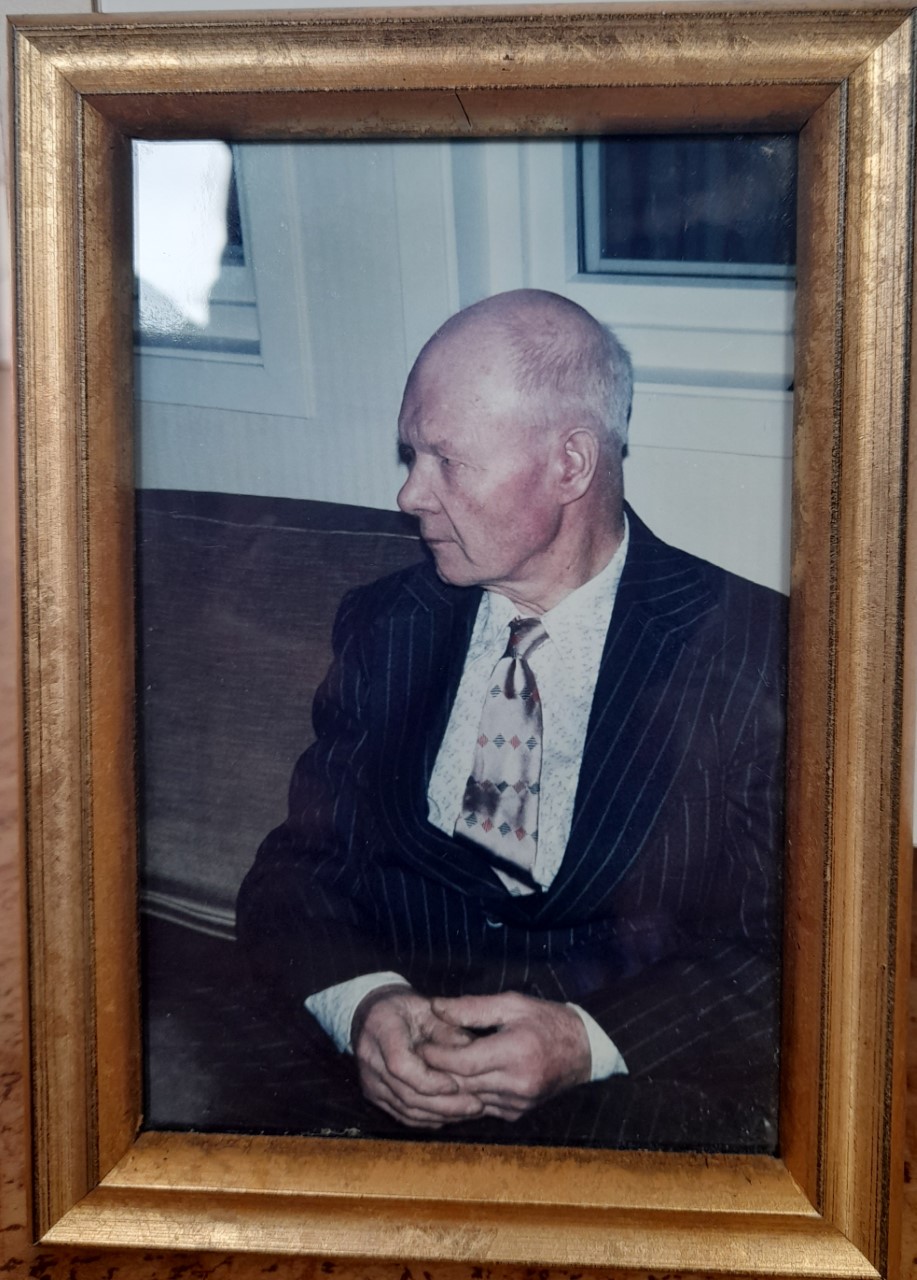
Minneblogg til far sin 105 årsdag

Min far, Sjur Jørdre (06.11.1921 – 08.05.2008)

Far ville ha vorte 105 år i dag, 6. november. Fødd og oppvaksen på Jørdre arbeidde han der heile sitt liv som gardbrukar. Ein arbeidsam kar som alltid stod på for å halde garden drivverdig og å drive han saman med mor, for å gje familien eit grunnlag for eit godt liv på Jørdre. Det var mange ting å gjera og far sa fleire gonger at han låg vaken om nettene av og til med tankar om kva som skulle prioriterast eller ikkje av alle dei gjeremåla han synes han aldri rakk heilt over. Slik var og slik er det nok framleis på ein mellomstor gard, der ein som bonde kan ha mange utmaningar i den daglege drifta. Noko av det far ofte var litt lei seg for var at han aldri heilt fekk tid til ei stor interesse han hadde heilt frå ungdomen. Det var trekkspelet. Diverre vart det lite speling for han opp gjennom åra, heilt til han på slutten av livet tok det fram av og til. Far var samfunnsinteressert og fylde godt med på politikken. Me hadde mang ei gong ganske så «oppheita» diskusjonar om politiske tema. Her fekk eg trena meg på argumentasjonar eg seinare har hatt god bruk for.

Diktet nedanfor vart skreve rett etter far døydde 8. mai 2008. Litt av ein dato også, for hans generasjon, sjølve frigjeringsdagen 1945! Fred vera med far sitt minne!

TIL FAR SITT MINNE (skreve i mai 2008)

Det står ein tom stol heime no

me fyller han med minner

Det står att ein tom kopp på kjøkenet no

me fyller han med minner


Eit langt liv er levd

mykje arbeid og slit har det krevd

Ei epoke av røynsler er over


Det gode med alt dette er;

at livet er stort,

at livet er mangfaldigt


Eit stort tomrom er det etter deg, far

Men me skal fylle det med gode minner

og varme kjensler

Ei anna reise har no byrja, far – god tur!


Far 105 år, tenk det! (skreve 6. november 2026)

Far kunne ha vore 105 år

Det kunne han ha vore, ja

Men, det er berre eit tal

Eit tal er det berre, ja


Det er livet hans som har vore

Eit langt liv har det vore, ja

Langt og arbeidsamt liv, ja

Eit verdig og livsglad liv også, ja


Mykje slit, mykje glede og

Mykje ansvar, mykje omsorg og

Mykje i tankar, mykje i hugen og

Mykje gard, mykje humor og


Ein bonde, frå ei anna tid

Ein kar, frå sin gards univers

Like framt som den vårlege bris

Like framt som det duggvåte gras

Ligg våre minner i fars faktiske liv

Der ligg minnene som perler på snor!

Posta under Noreg - Norway, Politikk, samfunn | Merkt , , , , , | 2 kommentarar

General Strike: The possibility for change for the people!

Hundreds of thousands protest across France over high cost of living

About 600,000 people take part in nearly 200 demonstrations across the country, Interior Ministry says.

PARIS, FRANCE - NOVEMBER 05: Protesters march from Place de la République to Place de la nation during a Nationwide General Strike on November 05, 2026 in Paris, France. French trade unions have called for a national day of strikes, alongside high school students and other groups demonstrating against deteriorating public services and the cost of living in France. The day of action follows three weekends of protests that were prompted by a student campaign to blockade schools over dissatisfaction with conditions in the French education system. The previous demonstrations, although largely peaceful, have seen thousands arrested amid some incidents of violence. (Photo by Tom Nicholson/Getty Images)
Protesters march from Place de la Republique to Place de la Nation during a nationwide general strike on November 5, 2026 in Paris, France [Tom Nicholson/Getty Images]

By Al Jazeera Staff, AFP and AP

Published On 5 Nov 2026 – aljazeera.com

Hundreds of thousands of workers have gone on strike and joined marches across France to demand higher wages, in a new escalation after weeks of protests against the rising cost of living, with police firing tear gas as violence broke out in some cities.

About 600,000 people took part in nearly 200 demonstrations across the country on Thursday, according to the Ministry of the Interior, before a major march began in the capital, Paris.

Those striking are demanding an increase in the minimum wage, higher salaries for all workers, tax reforms and better conditions in schools.

Education, rail, hospital and postal unions called strikes, and the Ministry of National Education said about 16 percent of teachers were on strike.

The Eiffel Tower and the Arc de Triomphe were closed for the day. CGT union leader Sophie Binet told the Paris rally that the question was not whether workers would win but “how much we’re going to win”.

epa13355794 Protesters participate in a demonstration against rising living costs and cuts to public services in Paris, France, 05 November 2026. France is bracing for new protests expected to bring together Yellow Vest (Gilets Jaunes) activists, high school and university students, trade unions and other groups demonstrating over rising living costs, fuel prices, and deteriorating public services. EPA/FIRAS ABDULLAH
Protesters participate in a demonstration against rising living costs and cuts to public services in Paris, France, November 5, 2026 [Firas Abdullah/EPA]

France has seen regular protests since September, when students began demonstrating against poor conditions at public high schools.

The movement has since merged with wider anger about the cost of living and inequality, which led to the worst rioting in years on October 17. The government reported blockades at 81 of 3,700 high schools, and a student association said classes were suspended at 1,000.

At the protest in the northern city of Lille, Hugo, a history student, told Al Jazeera that he was angry about the social situation in France.

“The workers are angry that wages are too low, life is getting more and more expensive and in the universities and high schools, we can feel the lack of public services. So, there is a common anger in the country, and that’s why I am here today. I’m angry about this social situation,” he said.

“There is money in the society, but it’s in the hands of a small group of people, and we have to fight to change the situation,” he added.

In the capital, Paris, Jack Eisner, a student at Sciences Po, told Al Jazeera that people are protesting because they feel like their “future is at stake”.

“Whether it’s the environmental crisis, whether it’s war, it’s just getting harder and harder to find a job and an education,” he said. “I think a lot of younger people feel the same way and a lot of older people too with the rising prices of goods and fuel.”

In the southern city of Marseille, a 31-year-old social worker named Lea, who spoke with the AFP news agency without giving her second name, said she was fed up with counting her money.

“My basket of 20 items has become too expensive. We’ve got nothing to eat; it scares me. I’m buying lousy products. We want cheaper groceries, cheaper petrol,” she said.

“This social movement gives us hope. It’s been a long time since we’ve seen anything like this,” Lea added.

“I feel like it’s catching on, that there’s a convergence,” said 60-year-old protester Jean-Marc Morel.

“There are a lot of us here, and it’s joyful, it’s diverse. We’ve got all kinds of professions, old people, young people,” he added.

PARIS, FRANCE - NOVEMBER 05: Protesters march from Place de la République to Place de la nation during a Nationwide General Strike on November 05, 2026 in Paris, France. French trade unions have called for a national day of strikes, alongside high school students and other groups demonstrating against deteriorating public services and the cost of living in France. The day of action follows three weekends of protests that were prompted by a student campaign to blockade schools over dissatisfaction with conditions in the French education system. The previous demonstrations, although largely peaceful, have seen thousands arrested amid some incidents of violence. (Photo by Tom Nicholson/Getty Images)
Protesters march from Place de la Republique to Place de la Nation during a nationwide general strike on November 5, 2026 in Paris, France [Tom Nicholson/Getty]

While the marches were largely peaceful, the ministry claimed several hundred masked “black bloc” protesters assembled in Lyon, where tear gas was fired, and at least one vehicle was torched.

There were incidents in Nantes, and a fire broke out at a school near Toulouse after incendiary devices were thrown. In Paris, police used tear gas to stop students blocking a high school.

Interior Minister Laurent Nunez had promised “an extremely firm response” to any violence, with 70,000 police deployed. France has faced criticism for its handling of the demonstrations, with allegations of police brutality prompting internal investigations. Several teenage protesters have been seriously wounded and thousands arrested since the protests began.

The protests come at a crucial time. France is due to elect a new president in April, with Emmanuel Macron unable to run again, and polls suggest far-right candidate Marine Le Pen is the favourite.

The eurozone’s second-largest economy is also trying to redress its finances.

Several European countries, including Germany and Portugal, have seen protests against declining living standards. The news agency Reuters reported that a Group of Seven (G7) foreign ministers’ meeting has been moved from Marseille to Paris at the last minute, a move diplomats called “chaotic”.

PARIS, FRANCE - NOVEMBER 05: A firework explodes at a police officer's feet as protesters clash with riot police at a march from Place de la République to Place de la nation during a Nationwide General Strike on November 05, 2026 in Paris, France. French trade unions have called for a national day of strikes, alongside high school students and other groups demonstrating against deteriorating public services and the cost of living in France. The day of action follows three weekends of protests that were prompted by a student campaign to blockade schools over dissatisfaction with conditions in the French education system. The previous demonstrations, although largely peaceful, have seen thousands arrested amid some incidents of violence. (Photo by Tom Nicholson/Getty Images)
Police officers clash with protesters during a nationwide general strike on November 5, 2026 in Paris, France [Tom Nicholson/Getty]

Recommended Stories

list of 3 items

Related

Posta under Europa, Fagrørsle og kamp, Politic&Society | Merkt , , , , , , , , | Kommenter innlegget