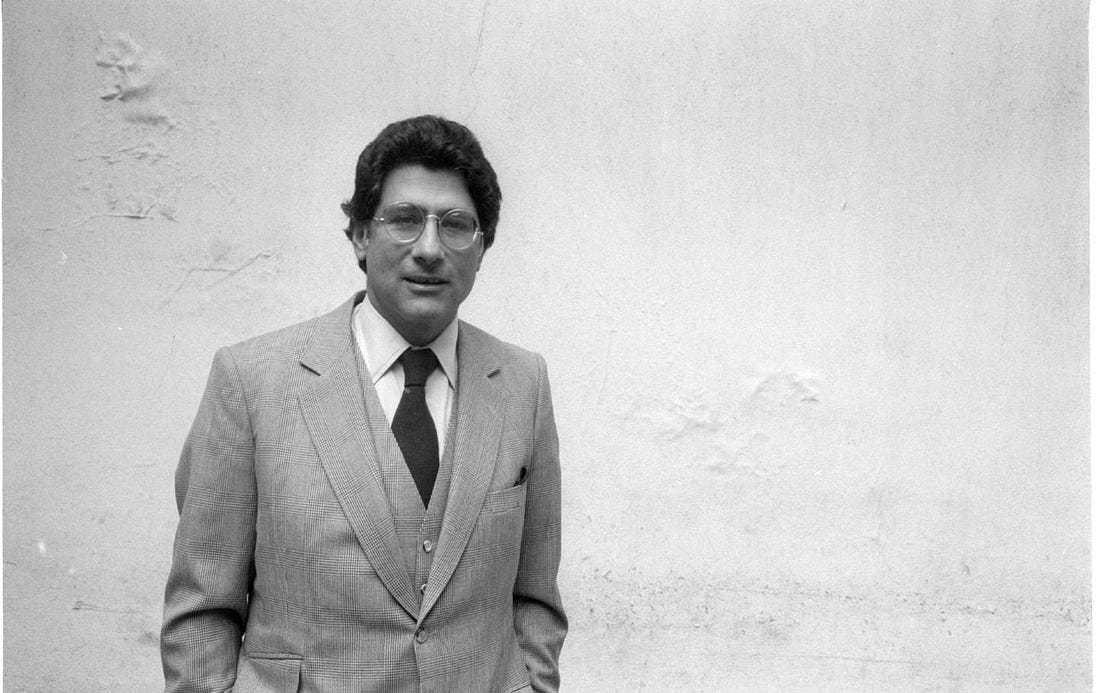
Edward Said – Sophie Bassouls / Sygma via Getty Images
In the spring of 1991, Edward Said and his wife, Mariam, traveled from New York to South Africa, where the Columbia professor had been invited to deliver a lecture on academic freedom. Although Nelson Mandela had been released from Robben Island a few months earlier, apartheid was still in force—as was the academic and cultural boycott administered by the African National Congress, which had approved Said’s visit.
On arriving in Johannesburg, Said met briefly with Mandela, and was then taken for a much longer conversation with the ANC’s deputy president, Walter Sisulu, in what Said later described as “a deeply illuminating discussion” of the history of the South African struggle, with the ANC “now for the first time in its history in the ascendancy…with obvious points of difference and comparison with the Palestinian struggle, then, as now, very much not in the ascendancy.” The cordiality of the encounter, however, was marred for Said by the ostentatious display in the ANC leader’s office of a copy of Jerusalem: Sacred City of Mankind—a coffee-table book by Teddy Kollek, the city’s longtime mayor and international symbol of liberal Zionism.
Their conversation was not filmed, and is not featured in Edward Said: Between Worlds, the new documentary that serves both to introduce one of the 20th century’s most important writers and thinkers to a new audience two decades after his death in 2003 and as a deeply personal history of the Palestinian struggle in the 20th century. I mention it here not to fault the filmmakers, who have used their unprecedented access to the Said family archive (including a trove of 8mm home movies filmed by Edward’s father, Wadie Said, showing the writer’s childhood home in West Jerusalem) to assemble a deeply moving portrait, but to underline both what Said was up against—and how often even those who regarded themselves as sympathetic to his cause misunderstood him…
Walid Daqqa, the Palestinian prisoner who turned decades in Israeli jails into moments of thought, creativity and love. This is the story of Walid Daqqa, one of the longest-serving Palestinian prisoners in Israeli jails, told by his immediate family and in voice recordings he made behind bars.
From a sharp-minded boy in 1948 Palestine to a clandestine PFLP organiser sentenced to life imprisonment, Daqqa turns his cell into a classroom, a think tank and, eventually, a wedding venue when he marries Sanaa Salama inside Ashkelon prison.
Through intimate testimonies from family, former prisoners and his lawyer, the film explores Walid’s idea of “parallel time” – living both under “tonnes of concrete” and beyond the walls. It recounts the smuggling of his sperm, the birth of his daughter, Milad, and his powerful message to her: hate oppression, not people. As cancer consumes him and Israel refuses his release, Milad’s final chant, “Freedom for our prisoners. For my father”, echoes a struggle that outlives Walid Daqqa’s life.
Mayor Zohran Mamdani speaks during a news conference at City Hall in New York City on Sept. 14, 2026. Photo: Angela Weiss/AFP via Getty Images
LAST YEAR, WELL before DoorDash’s $131.5 million settlement with New York City for underpaying 264,000 delivery workers was announced Tuesday, the company spent around $1.4 million on the campaign to stop Zohran Mamdani, who oversaw the historic settlement, from becoming mayor.
At the time, DoorDash’s campaign contributions in the run-up to the 2025 mayoral election were considered unusually large — it made a single $1 million gift to a super PAC that, at the time, was the largest donation in the race — and faced criticism from other candidates in the race. The food delivery giant’s settlement agreement, the largest worker settlement in the city’s history, brings further scrutiny to those donations.
Through that election cycle, DoorDash spent around $1.4 million against Mamdani and in favor of former New York Gov. Andrew Cuomo. The company was one of the top donors to the biggest outside spender in the election, a virulently anti-Mamdani super PAC called Fix the City.
While on the campaign trail, Mamdani had promised to regulate delivery apps and further protections for delivery workers, proposals that earned him the support of delivery worker groups.
At the time, DoorDash’s large spending raised eyebrows. Now, the company has to pay its workers around 100 times the amount it spent attempting to influence the election, owing to a mayoral administration that refused to overlook concerns with the company’s conduct.
“It’s not a contribution, it’s an investment, with the donor or investor expecting something in return,” said Greg Coleridge, a former co-director of Move to Amend, an advocacy group that seeks stringent regulations against corporate money in elections. “Here is an instance where organized money from a company that was trying to avoid being responsible and accountable, was unsuccessful.”
Announcing the new settlement, Mamdani said, “The size of this settlement shows the damage done to workers by wage theft. But it also shows that enforcement matters.”
In a public statement about the settlement, DoorDash said, “Simply put, we screwed up. Our mistakes meant some Dashers were underpaid or paid late. While these mistakes weren’t intentional, that doesn’t make them okay.” (DoorDash did not respond to a request for comment on its campaign contributions.)
The Smear Campaign Against Mamdani
DoorDash contributed $1 million to Fix the City, a super PAC that spent $31 million in the mayoral election, accounting for close to half of the total outside spending in the race, largely funded by big corporations and billionaires. DoorDash made the payment in May 2025, at a time Mamdani’s campaign was gaining significant momentum ahead of the mayoral primaries in June.
Fix the City ran a barrage of ads, phone calls, text messages, and other forms of political communication seeking to prevent a Mamdani victory and portraying him as a politician with “radically dangerous ideas” and “a risk New York can’t afford.”
The group artificially altered Mamdani’s beard in a campaign mailer and made it appear longer and darker, an act that the Muslim mayoral candidate had called out as “blatant Islamophobia.”
At the end of video ads by Fix The City, a campaign finance disclosure in small text at the bottom of the screen read, “The top three donors to the organization responsible for this advertisement are Michael Bloomberg, DoorDash, John Hess.”
DoorDash also gave $1.8 million to Local Economies Forward NY, a super PAC that contributed more than $360,000 to Cuomo’s campaign.
Aided by corporations like DoorDash and billionaires like Bloomberg, the overall independent spending by super PACs seeking to defeat Mamdani was more than eight times what was spent in his favor, according to The Intercept’s analysis of data published by the NYC Campaign Finance Board.
A Historic Settlement
DoorDash’s settlement followed an investigation by the NYC Department of Consumer and Worker Protection. The Mamdani administration said that the investigation “found that DoorDash deliberately paid workers below the Minimum Pay Rate or not at all.”
Under the settlement with the city, the food delivery giant will pay over $115 million in worker restitution and over $16 million in civil penalties and administrative fines.
Two weeks after assuming office, the Mamdani administration warned delivery apps to comply with worker protections, sending notices to DoorDash and others, and announcing a lawsuit against the delivery app Motoclick.
The Department of Consumer and Worker Protection’s citywide investigation into DoorDash began after dozens of workers reported that the company had failed to pay them or had paid them late for work they had performed.
As part of the settlement, DoorDash must submit detailed compliance data reports to the Department of Consumer and Worker Protection every month for three years, and the company’ activities will also be monitored through workers sharing data with the city.
The settlement announced by Mamdani is not the first run-in that DoorDash has had in recent years with restitution payments in New York.
In May 2024, the company agreed to pay $75,000 in a settlement after New York Attorney General Letitia James found that the company routinely rejected applicants with criminal histories in violation of the New York City Fair Chance Act. In February 2025, the attorney general settled with DoorDash for $16.75 million after the company used tips to subsidize workers’ guaranteed pay.
“They knew that by having a mayor who’s willing to put resources [for workers], it’s gonna be detrimental to their corporate model,” said Ligia Guallpa, executive director of the Worker’s Justice Project, a group that organizes for low-wage immigrant workers and had helped several DoorDash workers file complaints with the Department of Consumer and Worker Protection. “DoorDash decided to invest money in trying to buy our city’s democracy.”
«Kva skjer?» II, Olje på lerret, 2023, Ivar Tveito Jørdre
Lørdag 26. september markerte Antikrigsinitiativet (AKI) vår motstand mot USAs militærbaser i Norge og i Norden! Det ble arrangementer mange steder i Norden også, og mange av AKIs medlemmer og andre i Norge møtte opp:
Parolene for demonstrasjonene i hele Norden, var: – Nei til USA-baser i Norden! – For et Norden uten atomvåpen! – Stopp opprustning og krigsforberedelser!
LO i Bergen og omland Norsk Folkehjelp Bergen Antikrigs-Initiativet Latin-Amerika gruppen Bergen Stopp NATO Norges Kommunistiske Parti Vestland Bergen Sosialistisk Venstreparti Internasjonal Kvinneliga for Fred og Frihet Fred og Rettferdighet Vestland Rødt Bergen Bergen Sosialistisk Ungdom Nei til atomvåpen Bergen Bergen Rød Ungdom Kvekersamfunnet i Bergen Bergen for Fred
Vestlige media har den siste tiden rapportert om Tysklands opprustning. NRK Dagsrevyen med et innslag 20.09, Le Monde diplomatique (september-utgaven) med ikke mindre enn fem artikler om emnet, for å nevne noen.
I de fem artiklene i Le Monde diplomatique kan en lese om den politiske viljen til opprustning, om militarisering av det sivile samfunnet, om våpenproduksjon som redningsplanke for tysk industri og om USA som pådriver av den tyske opprustningen. Her er et utdrag fra Le Monde diplomatique: Sitat fra Friedrich Merz (innsettelsestalen i Bundestag, 14 mai 2025). Tysklands mål er
»å bygge det kraftigste konvensjonelle militærapparatet i Europa». For den tyske forsvarsministeren Boris Pistorius har den tyske opprustningen tre mål, økonomisk, militært og strategisk. Det første er å revitalisere en skakkjørt industri, det andre er å forsvare NATOs nordflanke mot Russland, det tredje er å sikre Tyskland den fremtidige ledelsen av den europeiske delen av NATO. Det siste målet er i tråd med USAs langsiktige strategien for Europa. Allerede i 1997 uttalte Zbigniew Brzezinski at »Tyskland da var i stand til å få frem sin mening og Europas fremtid» og at
»USAs interesser ligger i å utnytte Tysklands dominans i NATO.»(min merknad: som sikkerhetspolitisk rådgiver for Jimmy Carter og rådgiver ved Center for Strategic and Internasjonal Studies spilte Zbigniew Brzezinski en viktig rolle i utformingen av USAs utenrikspolitikk).
På sikkerhetskonferansen i München (2025) langet USAs visepresident Vance ut mot den »europeiske modellen», mot FN og FN-traktaten. På besøk i München ett år senere, gjentok USAs utenriksminister Marco Rubio angrepene mot FN. Han roste Trump for hans »fredsråd» og hans planer om å gjøre Gaza-stripen til en koloni. Rubios tale fikk stående applaus fra de fremmøte, blant dem Tysklands forsvars- og utenriksministre.
Artikkelen viser til forsvarsminister Tore Sandviks uttalelse under hans besøk på ubåtanlegget på Håkonsvern utenfor Bergen:
Tysk og norsk mannskap »skal ha kompetanse til å seile sammen. En tysker vil kunne være med på å seile med en norsk ubåt.»
»Håkonsvern blir hovedvedlikeholdsanlegget av ubåter for både Tyskland og Norge», skrev Forsvarets forum. Derfor er kapasiteten ved anlegget utvidet fra seks til ni ubåter. Den totale rammen er foreløpig på 9,63 milliarder kroner.
Tysklands opprustning ser ikke ut til å bekymre norske styresmakter som tvert i mot søker tettere samarbeid med den tyske militærmakten.
Uten å dyrke revansjisme, må en ta lærdom av historien. Det finnes ingen empirisk grunn til å ønske et militært sterkt Tyskland velkommen.
Ingen begeistring for opprustning i det tyske folk.
Også Le Monde diplomatique understreker den folkelige motstanden mot opprustning: »Mellom 80 og 90% av tyske elever er mot obligatoriske militære tjenester.» Dette skjer på tross av en massiv militarisering av det sivile samfunnet. Avisen nevner reklamer for Rheinmetall på fotballarenaer, meldinger fra Bundeswehr på pizzaesker, Forsvarets dag på TV med 10 år gamle barn som poserer med våpen, innførsel av militær vitenskap som fag på skoler (Bayern). Den folkelige motstanden mot opprustning og militarisering har kommet godt til uttrykk ved de siste lokalvalgene i Tyskland. AfD, Die Linke og BSW (Sahra Wagenknecht) omtales i vestlige media som »ekstreme», AfD velgere som nostalgikere av de tredje riket. Slik demoniseres de tyske partiene som kan danne et parlamentarisk grunnlag for nedrustning og avspenning. På det norske Stortinget har vi dessverre ikke et eneste parti som opponerer mot denne opprustningsspiralen, slik vi ser i Tyskland.
The End of Rojava: Kurds in Northeast Syria Face an Uncertain Future Amid Integration With Damascus
Despite the formal dissolution of the SDF and the Kurdish-led autonomous zone, northeast Syria remains in a liminal state—not fully Syria, but not entirely separate, either.
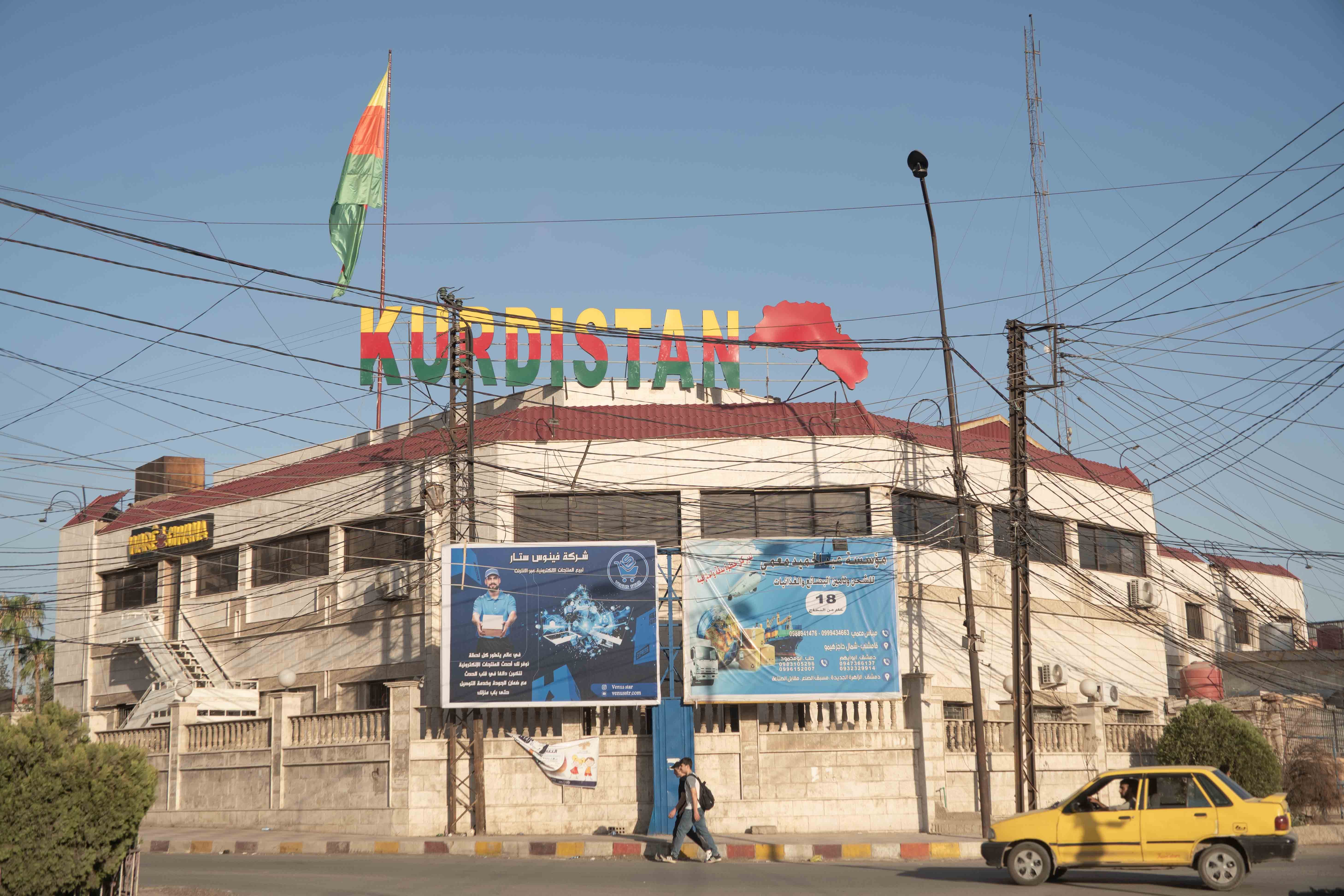
A building in Qamishli, northeast Syria, bearing the name Kurdistan. September 9, 2026. Photo by Anagha Subhash Nair.
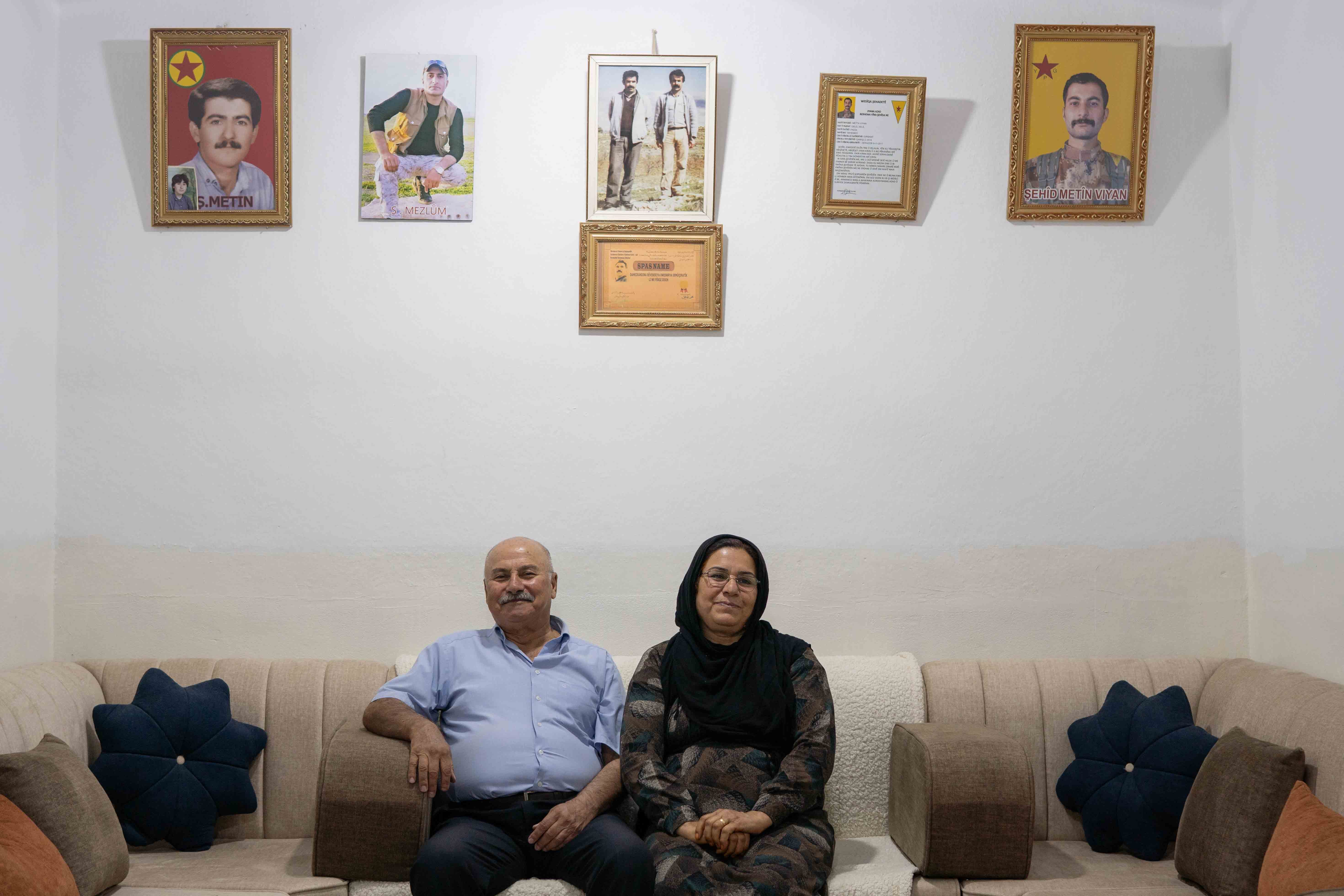
QAMISHLI, Syria—Faded photographs of the dead line the walls of Fadia Ismail’s home in Hasake province, Syria—images of martyrs who died in the long quest for a Kurdish homeland.
Her son’s image is among them. Dalil was killed fighting ISIS in the flat desert of Al-Omar oilfield in 2017 when he was just 29. Dalil “died for Rojava,” she said in reference to the Kurdish-led political project in northeast Syria that gained de facto autonomy in 2012.
But now, as Syria’s president pushes to integrate the Kurdish community of the northeast into a unified Syria, the dream of Rojava as a self-governing Kurdish state has all but come to an end.
“All of our martyrs have been betrayed. All the blood we shed and for what?” she raged. “What did Dalil die for?”
Fadia Ismail sits in her home in Gerbawi, Hasakeh with her husband under framed photos of martyrs from her family. September 9, 2026. Photo by Anagha Subhash Nair.
On August 25th, the Autonomous Administration of North East Syria (AANES), also known as Rojava, and its military component, the Kurdish-led Syrian Democratic Forces (SDF), formally dissolved after more than a year of negotiations between the SDF and the new Syrian government led by Ahmed al-Sharaa. The talks ended when a surprise offensive by the government in January forced the SDF into accepting an integration agreement into a Syrian state. But many Kurds who spoke to Drop Site are fearful of rejoining a wider Syrian state that had previously marginalized and discriminated against them for decades under the Assad regime.
As the sun set on Gerbawi village in the countryside of Qamishli, Fadia and her husband enjoyed the cool twilight air on their porch. “There is no integration. This is the imposition of defeat,” she said as she swatted at flies landing on the brim of her teacup. “Alongside Dalil, how many other lives were lost to capture Al-Omar oilfield? We lost it overnight.”
“We have lost our chance at a better future.”
Kurdish Women Fighters
The SDF’s fighters now serve under the new Syrian flag and the senior leadership are to be given roles within the Syrian government. Mazloum Abdi, the SDF’s commander-in-chief, has been appointed as a special advisor to President Al-Sharaa.
However, their female counterpart, the Women’s Protection Units (YPJ), who rose to prominence for their crucial role in the war against ISIS, are stuck in limbo, as Syria’s Ministry of Defense has refused to admit women into its ranks. The YPJ grew to become one of Syria’s most recognizable fighting forces, drawing global attention for its all female battalions that fought the Islamic State.
“Syrian law permits women to work in any position based on merit—except as combatants,” Mustapha Abdi, a senior member of the presidential team for the implementation of the integration agreement, told Drop Site News. “There is to be no female combat element within the Syrian military.”
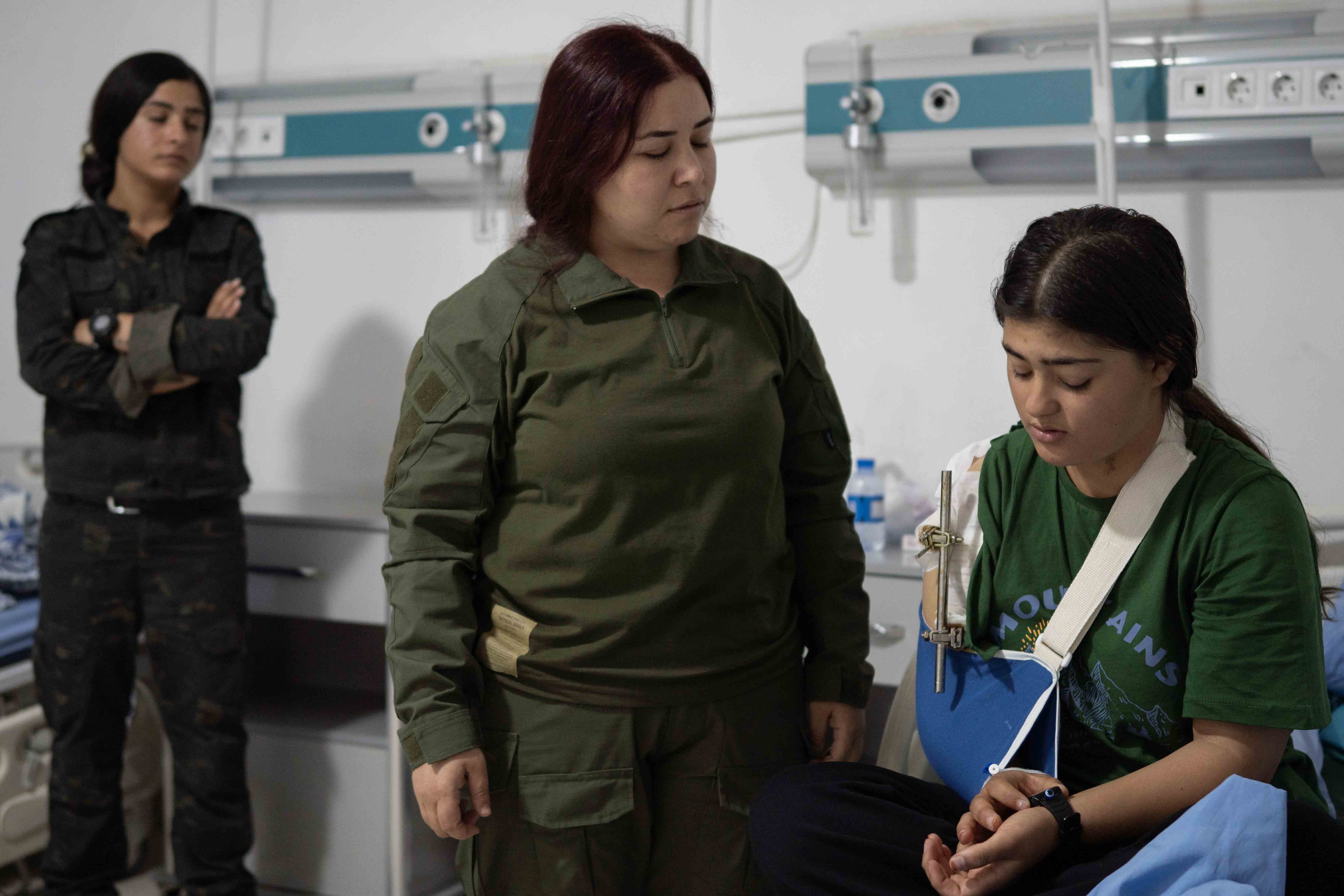
The decision has left former YPJ fighters in limbo. In Hasake’s Khabour military hospital, Isiyan, 19, was recovering from a recent surgery. In January, with the SDF in full retreat ahead of the government’s offensive, Isiyan was ordered to get out of Raqqa, when her unit was ambushed on the road to Kobane. “I was hit by a Kalashnikov round that shattered the bones in my shoulder,” she said. “I lost a lot of blood.” She has been hospitalized since then, her days plagued by boredom and her nights by nightmares of what happened.
Isiyan, 19, recovers from a battle injury in a hospital in Hasakeh as her comrades visit her. September 7, 2026. Photo by: Anagha Subhash Nair.
Despite the attack, she is impatient to get back to her unit. “I miss my comrades,” she said. Isolated in hospital, she seemed unaware of the SDF’s dissolution. And like the rest of the YPJ, she had no sense of what her future would hold.
While integration into the Syrian military appears to be a red line for the government, Ruksan Mohammed, the YPJ spokesperson, said that, following the official dissolution of the SDF, YPJ leadership had met with officials from the Interior Ministry, and that “the possibility of integrating the YPJ as a special and organized force was emphasized.”
“We discussed how women can play an important role in protection of rights and society,” she told Drop Site. However, “no dates have yet been set for the upcoming meetings because we are waiting for a response from the Ministry of Interior.”
Before the dissolution of the SDF, as integration progressed in all other dimensions, the YPJ had largely found itself frozen out of talks, and according to Mohammed, were only afforded a single meeting with the government in April.
Abdi confirmed this, saying that the lack of any further meetings was because the YPJ “were offered non-combat roles, such as administrative office based work, which they refused.”
Violence Targeting Kurds
The atmosphere is tense in northeast Syria following repeated incidents of violence targeting Kurds. Last Thursday, Sipan Hazni, a recently integrated Kurdish soldier was kidnapped and decapitated by Arab members of the Begara tribe. His killing set off the latest round of mass unrest, culminating in a riot and a fire at a prison in Kobane, which resulted in the deaths of seven detainees.
In Hasake city, the government’s decision to end SDF-era fuel subsidies has left the city cloaked in darkness. “People can’t afford the generator bills now, so they leave the lights off,” Musa Kiki, 65, said. “What kind of government is this?”
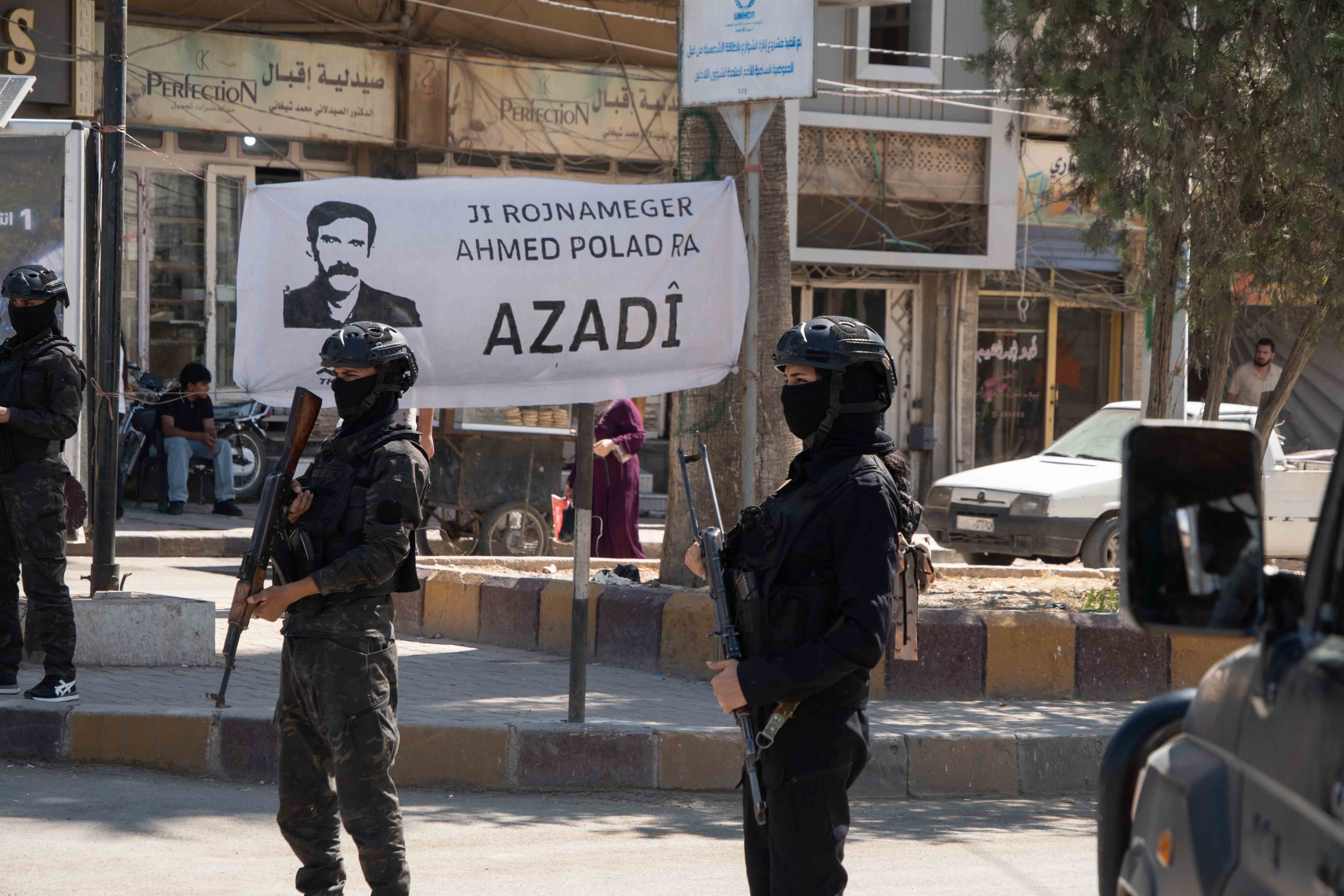
Internal security forces stand in Qamishli during a protest in northeast Syria. September 10, 2026. Photo by Anagha Subhash Nair.
Kiki was attacked by the people who stole his home. He was part of the first convoy of Kurdish refugees returning to their homes in Serekaniye, a region from which he was displaced following Operation Peace Spring, an incursion by Turkey and the Turkish-backed Syrian National Army militia in 2019.
When he arrived back, he found his camera shop had been seized by a stranger and people were living in his house. “Honestly, I wish I had never tried to go back,” he said, stubbing out a thin cigarette. “The house had been ransacked. There were no windows or doors. The stairs were destroyed and someone had ripped out all the cables.”
“These people aren’t even from the area,” he added. “The person who took my home is from Deir Ez Zour, and my brother’s home is occupied by an Iraqi, imagine that.”
Despite the integration agreement stipulating the safe return of displaced peoples, under the protection of the Syrian government, Kiki and a number of other returnees were attacked by a group of armed men in the street.
“A large group of masked men came at us with clubs and knives, they were dragging people out of their cars,” he recounted. “One smashed the windshield of our car and the glass injured my grandchild.”
Ahmad Al-Hilali, the government-appointed deputy governor of Hasake, condemned the attacks, while Mahmoud Khalil Ali, the deputy head of Hasake’s internal security forces, announced the arrest of several perpetrators.
However, the government’s response did little to quell the simmering anger, with the attack setting off a night of rioting in Hasake province, during which protesters stormed Hasake city’s internal security headquarters and burned the recently hoisted Syrian flag. The following day, a security point of recently integrated SDF fighters was attacked, killing one and injuring three.
Kiki has little trust in the government. Although the occupant in his home has assured him that he would leave once he has found an alternative place to stay, “there is no way to ensure that,” he lamented. “If the government wanted they could go in and clear them out in a day, but they won’t.”
“Who can I complain to?” he added. “The government has done nothing for us.”
Language and Kurdish Identity
The issues at play also extend to governance and, in a crucial way, to language.
Behind blastproof walls and multiple layers of security checks, Jihan Said Hisam is busy in her new role as the newly appointed head of Qamishli municipality. Until June, she had been negotiating with the government on behalf of the AANES, until her name was suggested for the position during talks. Now, she sits in front of a large Syrian flag speaking on behalf of that same government.
“I am optimistic for the future,” she said. “After 15 years of war, we can begin again and rebuild Syria.” Before the interview, her press office informed Drop Site that she wouldn’t be able to answer “political questions.”
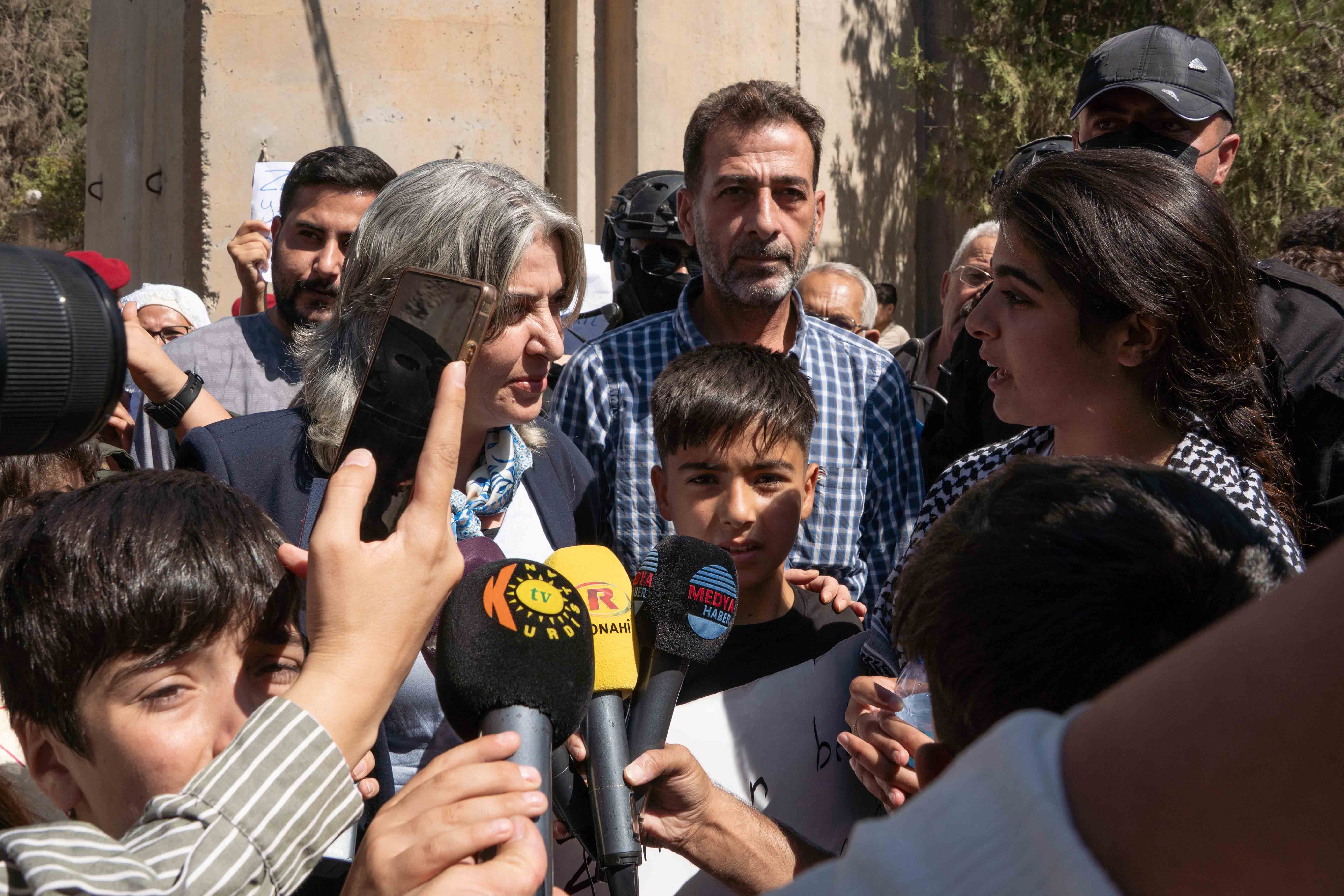
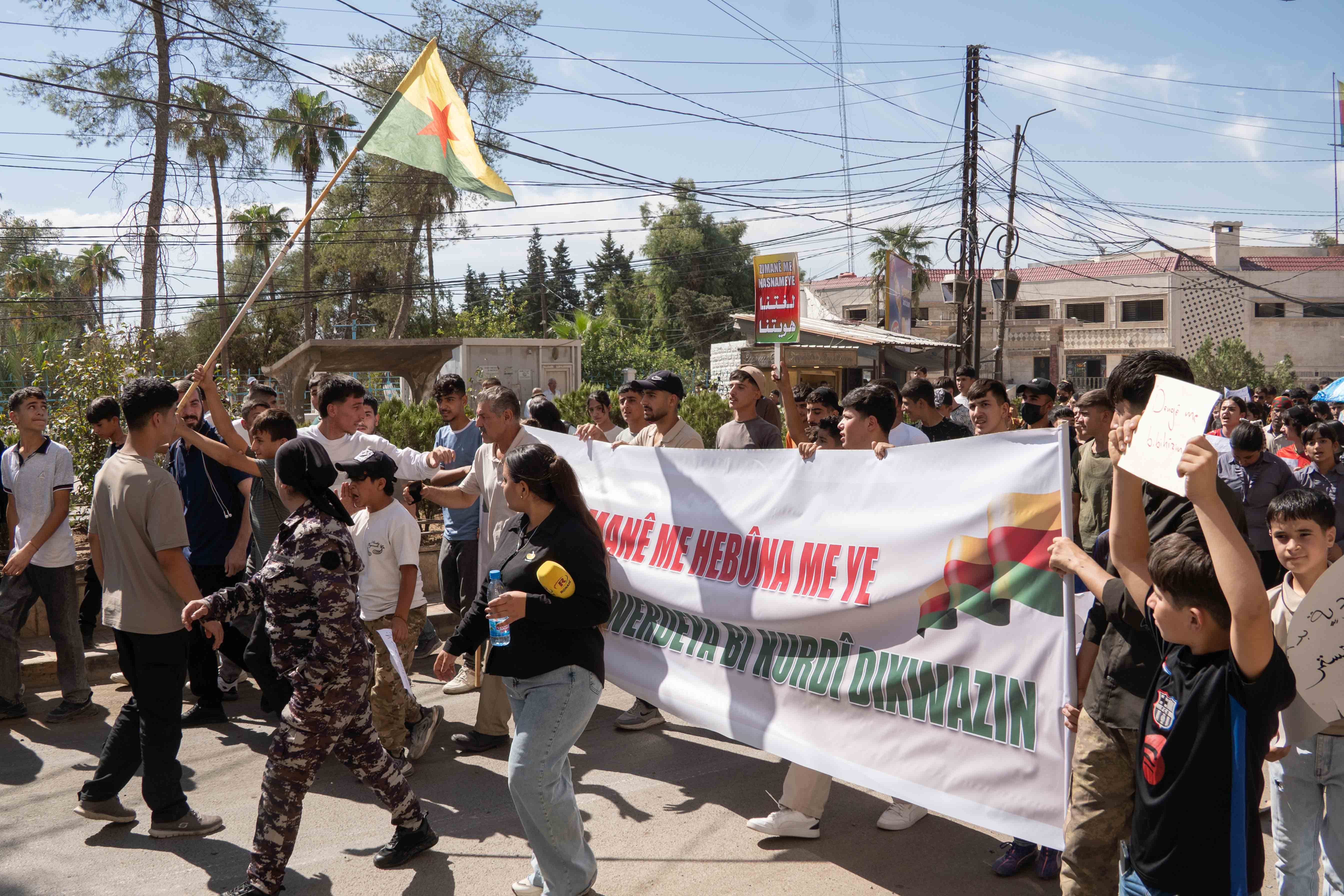
Not long after the meeting, last Thursday, a large column of hundreds of children and young men and women, chanting and holding placards calling for the protection of Kurdish language, wound its way to the gates of the municipality building. Young boys attempted to scale the blast walls, but were pulled down and scolded by the armed guards.
After a few minutes, to the whistles and cheers of the awaiting protesters, Hisam made her way into the crowd to make an impromptu speech. “Although we are having a difficult time with the government, I urge you not to stop studying,” she railed. “Your education is vital and we still believe the government may reverse its decision.”
“I stand with you completely and I will work to raise your voices with Damascus,” she added.
Jihan Said Hosam, head of the Qamishli municipality, speaks to protesters outside her office in northeast Syria. September 10, 2026. Photo by Anagha Subhash Nair.
Despite the formal dissolution of the AANES, the office of the Department of Foreign Affairs remains a beehive of activity. In a plush office inside, Ilham Ahmed greeted a number of different officials.
Until recently, she had been the co-president of the AANES, but following the dissolution, Ahmed is to become a member of parliament with a role on the Constitutional Committee, responsible for overseeing the drafting of Syria’s new constitution.
“We still don’t know how much power the constitutional committee will have,” she acknowledged. “Although we expect the parliament to play the standard legislative role in developing Syria’s institutions.”
While Ahmed spoke diplomatically, she admitted shortcomings in how negotiations are unfolding. “We feel that the issues aren’t really being taken seriously,” she explained. “Their approach is superficial and won’t lead to meaningful solutions.”
Despite that she recognized that the government has been willing to compromise on certain issues. “They initially offered us a deal which would have had Kurdish offered in school as an optional second language, akin to English,” she said. “We rejected this offer outright.”
“While we ultimately seek education in Kurdish, the outline of the integration file is yet to be finalized, so we remain optimistic,” she added.
As part of the integration agreement, Kurdish—the language of education for the last decade in northeast Syria while it was relatively autonomous—is set to be taught for three hours a week, alongside an additional hour of geography, history, or philosophy class in Kurdish. This is designed as a transitional settlement during the next academic year while a final settlement is yet to be agreed upon.
Last Wednesday, hundreds of children gathered in the streets and schoolyards of Qamishli. They chanted in Kurdish, demanding constitutional recognition for their language, and rejecting Damascus’s plans to return northeast Syria’s education system to Arabic.
People protest in Qamishli against a decision as part of SDF-Damascus integration that reduces the use of Kurdish language in education. September 10, 2026. Photo by Anagha Subhash Nair.
“I don’t speak Arabic well. I won’t be able to learn in it,” said Jihan Hafer, 14. “If they make us learn in Arabic, then I won’t come to school.”
“I’m scared for my future, that I will lose my chance for an education.”
Mustapha Abdi, a senior member of the government’s negotiating team, acknowledged that the agreed settlement didn’t go far enough. “To be honest, three classes a week is good in interior regions, but in Kurdish areas like northeast Syria, it is not enough completely,” he admitted.
He explained that while 1,400 schools are set to teach Kurdish, the government hopes “the number can also increase in the next year.”
“We have started now as a first step. We don’t want to make the step too big, so that the step succeeds,” he added.
Mezkil Hassan, a lecturer in Kurdish language at Rojava University, believes the policies are part of an effort to reverse a decade-long linguistic and cultural renewal that has taken place amongst northeast Syria’s Kurdish population.
“The Kurdish people have learnt that their existence is connected to their language,” explained Hassan. “This decision threatens the language and undermines Kurdish identity within Syria.”
Rojava University, founded in 2016 as a Kurdish language university, and only recently recognized by the Syrian government as part of the integration agreement, is set to switch teaching over to Arabic according to Hassan.
The Ministry of Higher Education did not respond to a request for comment.
Many Kurds fear a return to the Assad era, in which “the state did not recognize Kurdish identity as a legitimate part of Syrian culture,” explained Alexander McKeever, a researcher and author of the newsletter This Week in Northern Syria. “It viewed the Kurds as an alien population and so banned Kurdish-language instruction and cultural production.”
The Syrian government has sought to allay these concerns. In January, Al-Sharaa issued a presidential decree that recognized Kurdish as a “national language,” and annulled a controversial 1962 census that had effectively stripped citizenship from thousands of Kurds.
However, this decree doesn’t make Kurdish an “official” language nor one that is constitutionally protected. In fact, Syria is yet to draft its constitution.
Despite the formal dissolution of the SDF, northeast Syria remains in a liminal state—not fully Syria, but not entirely separate either. The individuals manning the checkpoints are no different than before, although some now wear the uniform of the government. While the flag of Syria’s government flies above public buildings, it is rare in the city streets, where the flags of Rojava and photos of martyrs remain ubiquitous.
The future of northeast Syria will not be determined by the change of flags or uniforms. After 15 years of governing themselves, those who sought to build an autonomous system are being asked to place their trust in a centralized state.
Whether that trust can be built will determine the success of integration and for the Kurdish community, it may come down to whether the new government can make them feel that there is still a place for them under Syria’s new flag.
Hun vil ha lillebroren ut av gruvene, der han kan bli begravd levende. Vi andre har viktigere ting å tenke på.
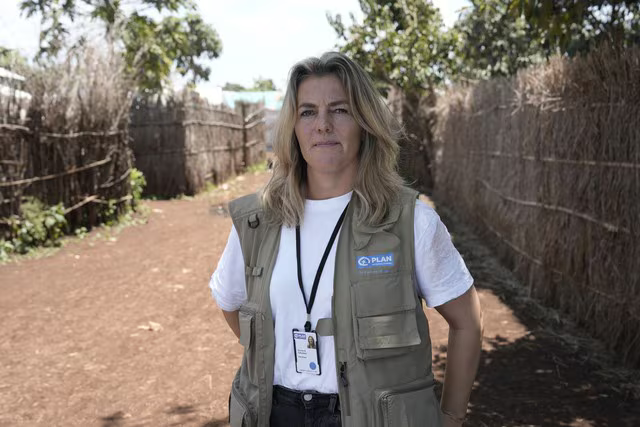
Gunvor Knag Fylkesnesgeneralsekretær i Plan International Norge
Publisert 17. sep. 2026
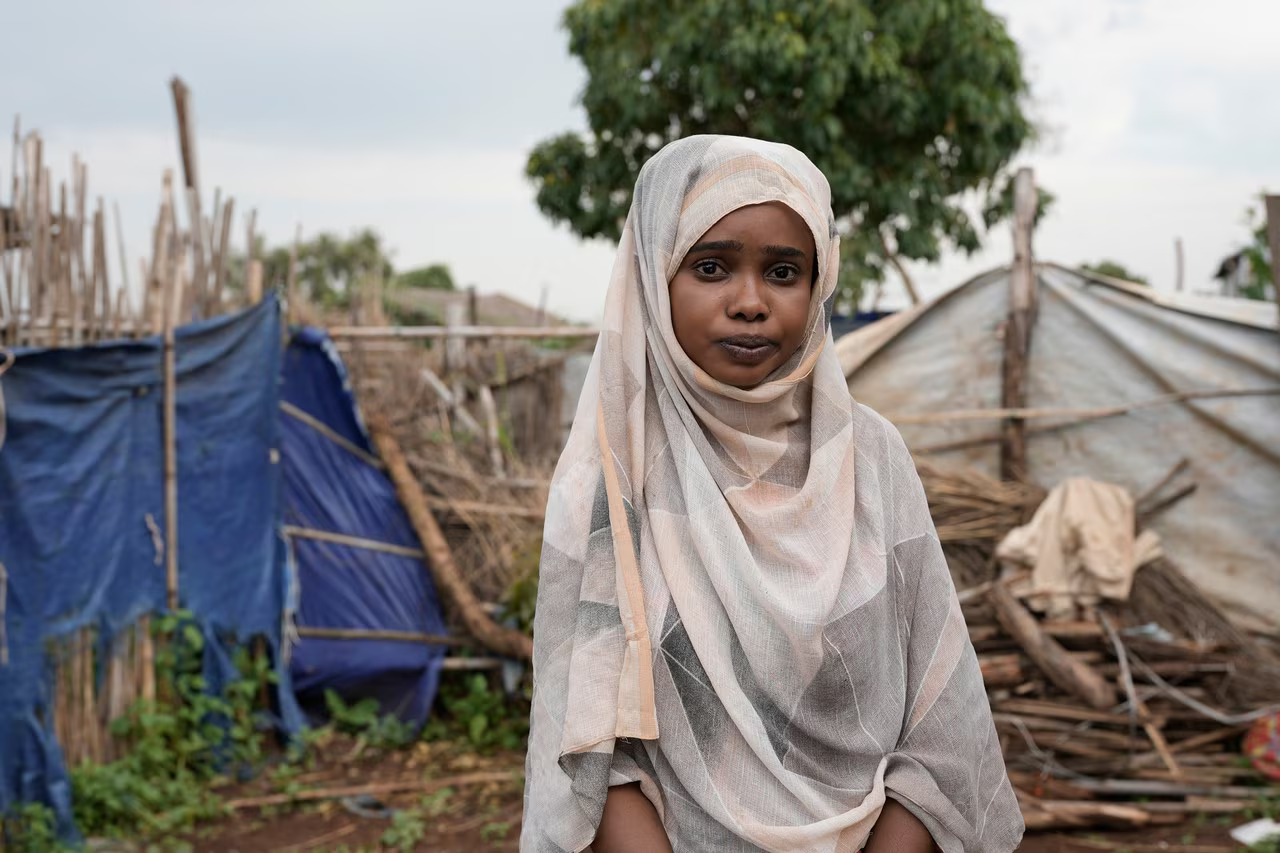
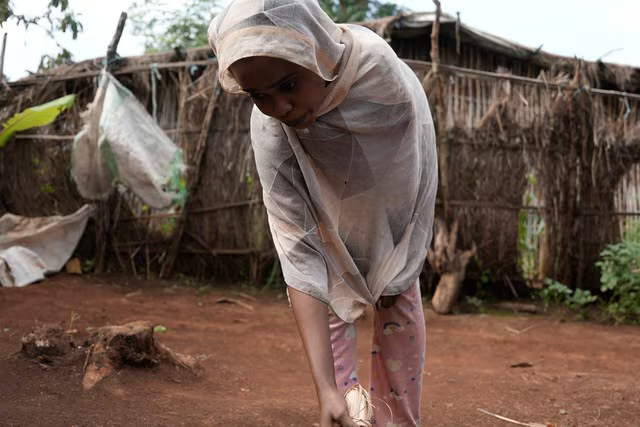
17 år gamle «Maryam» utenfor teltet sitt i en flyktningleir i Etiopia. Foto: Håvar Karlsen / Plan Norge
I en flyktningleir i Etiopia, like ved grensen til Sudan, ser jeg hva verdens bistandskutt betyr i praksis.
Like ved leiren ligger gullgruvene. Der letes det etter gull i trange, farlige hull i bakken. Dit går stadig flere barn nå.
«Det som mangler, er verdens vilje til å stille opp»
En av dem er den 14 år gamle lillebroren til Maryam. Jeg møtte henne i flyktningleiren forrige uke, og hun forteller at foreldrene er drept og at broren drar til gruven så de ikke skal sulte.
Hun er redd fordi han er for liten til det tunge og farlige arbeidet. Selv er hun 17, og har også ansvaret for brødrene på 6 og 3 år.
«Maryam» har sluttet på skolen for å ta vare på brødrene på 14, 6 og 3 år. Foto: Håvar Karlsen/ Plan Norge
Bare litt gull kan være nok til å hjelpe familien en stund. Men ingen vet om eller når de finner noe. Barn blir syke. De får malaria. De blir bitt av slanger. Gruvene kan kollapse. Barn kan bli begravd levende.
For jentene kommer krisen ofte med flere lag av fare.
Når familier mister livsgrunnlaget sitt, øker risikoen for at jenter utsettes for vold og utnyttelse. Jeg får høre at flere jenter slutter på skolen for å brødfø familien, eller giftes bort fordi familien ikke lenger klarer å mette alle.
«Dette er bistandskutt i praksis»
Foreldrene vil ikke dette. De vil at barna skal gå på skolen. Leke. Være trygge. Men hva gjør du når matrasjonene er halvert, pengestøtten har stoppet og du ikke vet hvordan du skal gi barna dine mat?
Det er dette bistandskutt betyr.
Sudan er i dag verdens største humanitære krise. Mer enn 33 millioner mennesker trenger nødhjelp. Halvparten av dem er barn. Millioner er drevet på flukt, både inne i Sudan og over grensene til naboland som Etiopia.
«Maryam» gjør husarbeid. Foto: Håvar Karlsen/ Plan Norge
De som kommer hit, kommer ofte med nesten ingenting. Noen bare med klærne de har på seg. Jeg møter barn som har flyktet alene. Søskenflokker der den eldste plutselig må være mamma, pappa og forsørger på én gang.
Barn som ikke vet hvor foreldrene er. Barn som har sett foreldre bli drept. Jenter som har overlevd voldtekt, og bærer på dype psykiske og fysiske sår. Noen er gravide etter overgrep.
«Hun er redd fordi han er for liten til det farlige arbeidet»
For dem er ikke flukten over når de krysser grensen. Da begynner kampen for mat, trygghet, helsehjelp, skole og en framtid.
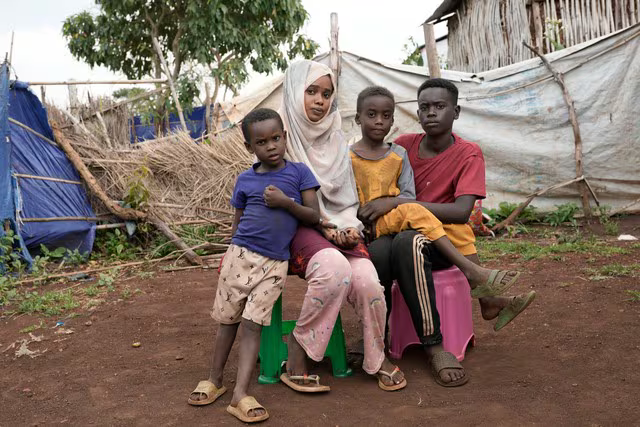
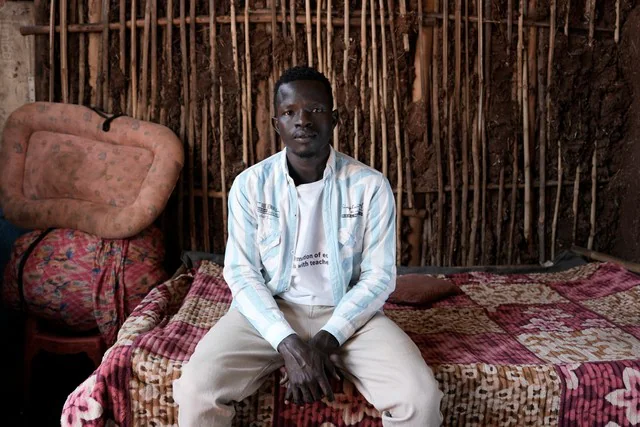
I leiren møtte jeg også 25 år gamle Samir. Han har tre egne barn, men har også tatt ansvar for seks barn til. Ikke fordi livet hans er enkelt. Men fordi, som han sa til meg: «De har jo ingen andre.» Flere ganger har han hentet noen av fosterbarna ved gullgruvene selv om de ikke får lov.
«Samir» i jordhytten sin i en flyktningleir i Etiopia nær grensen til Sudan. Han har ansvar for til sammen ni barn hvorav seks er fosterbarn. Foto: Håvar Karlsen/ Plan Norge
Han er en av de lokale støttepersonene vi samarbeider med i leiren. Da han fortalte sin historie, ble han rørt. Det var første gang noen hadde spurt hvordan han hadde det.
Det sier mye om menneskene jeg møter. De står i en ekstrem situasjon, men bærer likevel andre.
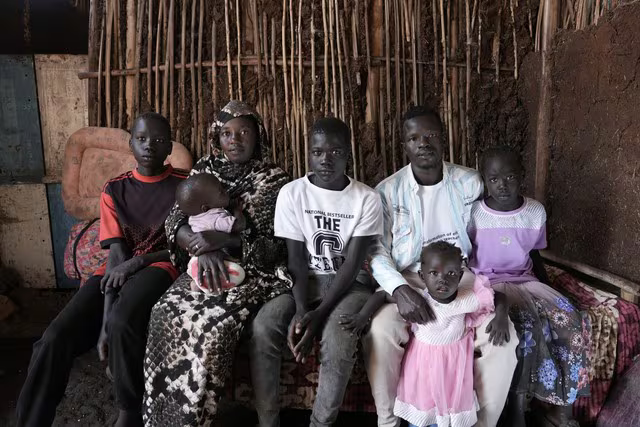
Samir med familien og noen av fosterbarna. Han har ansvar for til sammen ni barn hvorav seks er fosterbarn. Foto: Håvar Karlsen/ Plan Norge
I en slik situasjon handler humanitær hjelp om mer enn å dele ut mat og vann.
Det handler også om å bearbeide traumer så barn klarer å ta inn læring, og beskytte barn mot de neste konsekvensene av krisen. Vi er til stede i leiren for å støtte barn og familier på best mulig vis. Men pengene strekker ikke til.
Verdenssamfunnet har de siste årene vendt blikket innover. Med USA i spissen, har land etter land kuttet i bistanden. Norge er unntaket. Det skjer samtidig som behovene øker, konflikten blir mer intens, og barn rammes hardere.
Det fremstilles ofte som ansvarlig politikk. Som nødvendige prioriteringer. Som budsjettdisiplin. Men her ved grensen til Sudan ser jeg hva regnestykket egentlig betyr.
«Etter flukten kommer kampen for mat»
Verdenssamfunnet må gjøre langt mer for å presse partene i Sudan til å stanse krigen. Men mens vi venter på politiske løsninger, kan vi ikke la barna betale prisen alene.
Nå har jeg tenkt å uttrykke ei mening om noe jeg vet lite om. For andres del. Men jeg vet hva som gjelder for meg.
Saken er at jeg har skjønt at noen synes det er vrient å forholde seg til folk med kreft. Det oppleves vanskelig bare å ringe. Hva sier man egentlig til en som har fått kreft?
Tenk om det ikke passer. Tenk om hun er lei seg. Tenk om jeg begynner å gråte. Hva skal jeg si? Tenk om jeg sier noe feil. Kanskje jeg bare skal late som om jeg ikke så henne.
«Tull med meg. Se meg rett i øynene»
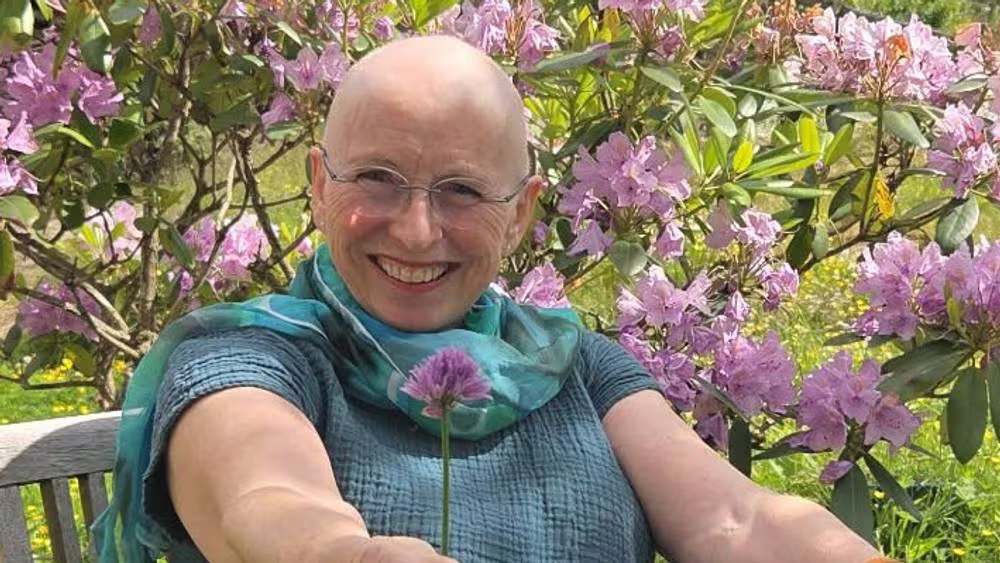
For de som kjenner meg, er det lett å se at jeg er under behandling for kreft. Håret forsvant. Beina er ikke helt som før. Tjukk har jeg blitt.
Det er synlig forskjell fra den lettbeinte Randi som har brukt store deler av livet i høye fjell, på lange skiturer og i kajakk, eller som kunne jobbe nærmest døgnet rundt på øya si i Steigen.
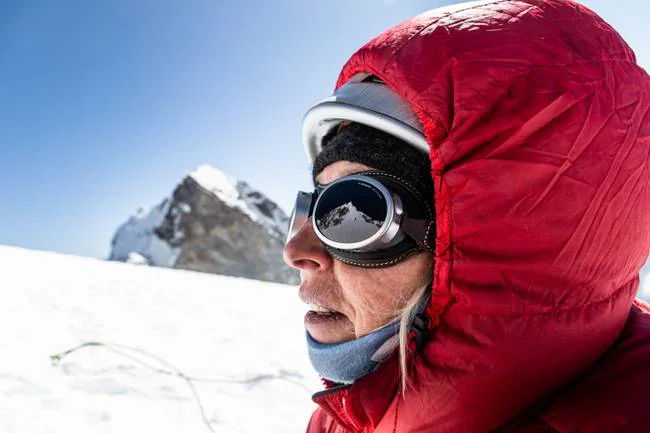
Randi Skaug var første norske kvinne på Mount Everest og har besteget «Seven Summits», det høyeste fjellet på hvert av de sju kontinentene. Bildet er fra Himalaya.Foto: Eirik Schøning
Og det er merkbare forskjeller for meg. Enkelte dager har det kjentes langt til postkassa.
Jeg gikk tidlig åpent ut med at jeg har kreft. Samtidig ga jeg tydelig uttrykk for at jeg ikke ønsker at noen skal synes synd på meg. Hvis dere er triste, blir jeg også trist. Det trenger jeg ikke.
«Du trenger ikke å gå i moll for å være deltakende»
For min aller beste medisin er å være i godt humør. Det aller, aller beste med den medisinen er at den kan tas i ubegrensede mengder, og bivirkningene er ikke bare til å leve med: de er gode.
Jo bedre hverdager, jo bedre søvn, jo mer matlyst og jo mer krefter har jeg til å stå i behandlingen. Bare jeg skriver dette, kjenner jeg at kroppscellene strutter.
Min oppfordring er å snakke til meg uten å legge hodet sørgmodig på snei og spørre i nedadgående toneleie: «Hvordan haaaar du deeet?»
Jeg har det jo fint. Ingen grunn til å ødelegge dagen.
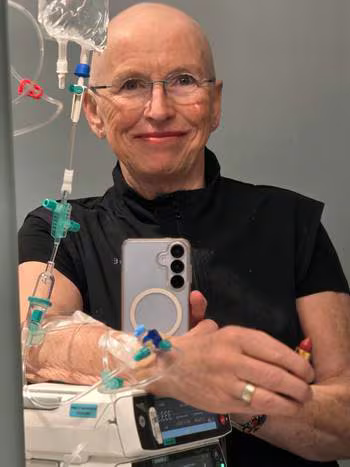
Randi Skaug på Radiumhospitalet.Foto: Randi Skaug
Nei, gjør heller som en god venn når han ringer. Da spør han: «Harru fått deg no’ i det siste eller?» Og så skoggerler vi.
Og neste gang kommer jeg til å svare: «Ja, bestiller på Oda jeg, vettu. Og på freddan har de tre for to.» Og da kommer vi til å skoggerle igjen. Sammen.
Og med det samme har jeg blitt bittelite grann friskere.
Så tull med meg. Tilby din hjelp. Se meg rett i øynene. Strekk ut en hånd. By på din varme. Del din tid. Gi meg en high five. Stå støtt og vis at du bryr deg.
Du trenger ikke å gå i moll for å være deltakende.
«Foreslå gjerne noe konkret»
Er du glad i meg, så si det gjerne med et stort deilig smil. Det er ikke noe å grine over. Prøv med et ekstra trykk på «eeer så glad i deg», og knyt nevene i lufta mens du viser hvordan du har lyst til å klemme meg flat.
Det er ikke sikkert jeg kan ta imot noen klemmer akkurat nå, fordi immunforsvaret svikter. Men klemmer vil jeg ha. Luftklemmer!
Misforstå meg rett. Klart omsorg kjennes godt. Jeg nyter alle hjerter, liflige heiarop og korte og lange kommentarer. Alle besøk og alle hilsener. All hjelp og alle klemmer. Grunnen til at jeg skriver om hvordan jeg takler dette, er at jeg håper det kan være til hjelp for andre.
Da får kreften plutselig en verdi. En positiv verdi.
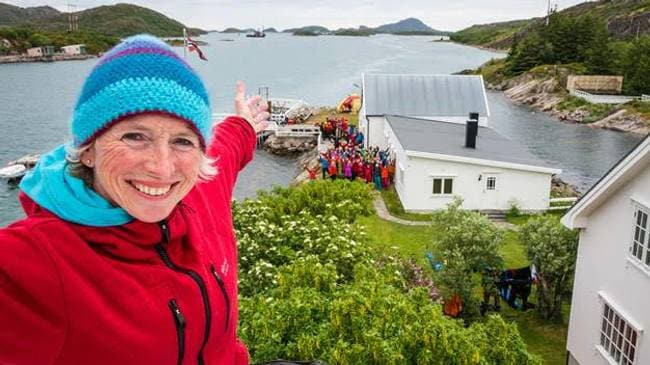
Randi Skaug hjemme på Naustholmen i Steigen, der hun driver et opplevelsessenter.Foto: Marthe Stensland Jørgensen
Vi er mange som får kreft. Veldig mange blir friske. Noen blir det ikke. Det er siste reis. En god venn har nettopp fått den beskjeden.
Jeg spurte hvordan han ville bli snakket til. «Snakk normalt til meg sånn som du ellers ville gjort. Gjerne om sykdommen også, men ikke bare om den.»
«Min aller beste medisin er å være i godt humør»
Han er så fin, har akseptert situasjonen og forteller at hans plan er å gå ut av livet med et smell. Han er tydelig på hva han drømmer om å rekke før han går i mål, og jobber beinhardt for å komme seg ut av rullestolen på veien til det uunngåelige.
Jeg synes det er så sterkt og flott. Klart de siste dagene skal bli det beste de kan bli. Men det er enda ei stund til, og mange gode dager skal komme før den dagen. Det kommer han og vi rundt ham til å sørge for.
Og kjenner du noen som trenger litt omsorg og du ikke helt vet hva du skal gjøre, så foreslå gjerne noe konkret i stedet for bare å si: «Si fra hvis det er noe jeg kan gjøre»:
«Hei, jeg har lyst til å gjøre noe sammen med deg. Jeg henter deg og du kan velge hva vi gjør.»
«Hei, skal jeg ta med litt middag og stikke innom, eller?»
«Hei, blir du med en tur ut og mater fugler?»
«Hei, blir du med og spiller dataspill i kveld?»
«Hei, hva kan jeg hjelpe deg med i huset?»
«Hei, jeg skal ut og handle. Hva kan jeg ta med for deg?»
Jeg elsket «Norges tøffeste». Nå blir jeg bare sint.
Iben Jespersen, 14 årSkoleelev
Publisert 12. sep. kl. 11:11
«Norges tøffeste» er en TV-serie som pleide å få meg i godt humør, skriver Iben Jespersen. Foto: Skjermbilde NRK og privat.
(Dette er en kronikk som gir uttrykk for avsenderens personlige meninger om temaet.)
Jeg gledet meg til den nye sesongen av kanskje Norges beste reality-TV-serie, «Norges tøffeste», fordi jeg vet at den legger opp til likestilling mellom kjønnene.
Serien, der kvinner og menn konkurrerer om hvem som er sterkest fysisk og mentalt, har vært et viktig bidrag til likestilling.
Produksjonen har løftet frem sterke kvinner og fremstilt dem som likestilte konkurrenter til menn. Programmet har vært et godt eksempel for yngre generasjoner, som ser opp til slike tøffe TV-profiler som får en viss status.
Men etter bare noen få minutter inn i første episode siger skuffelsen innpå, da denne statusen misbrukes av de mannlige deltakerne.
«TV-serien gjør at jeg blir både lei meg og sint»
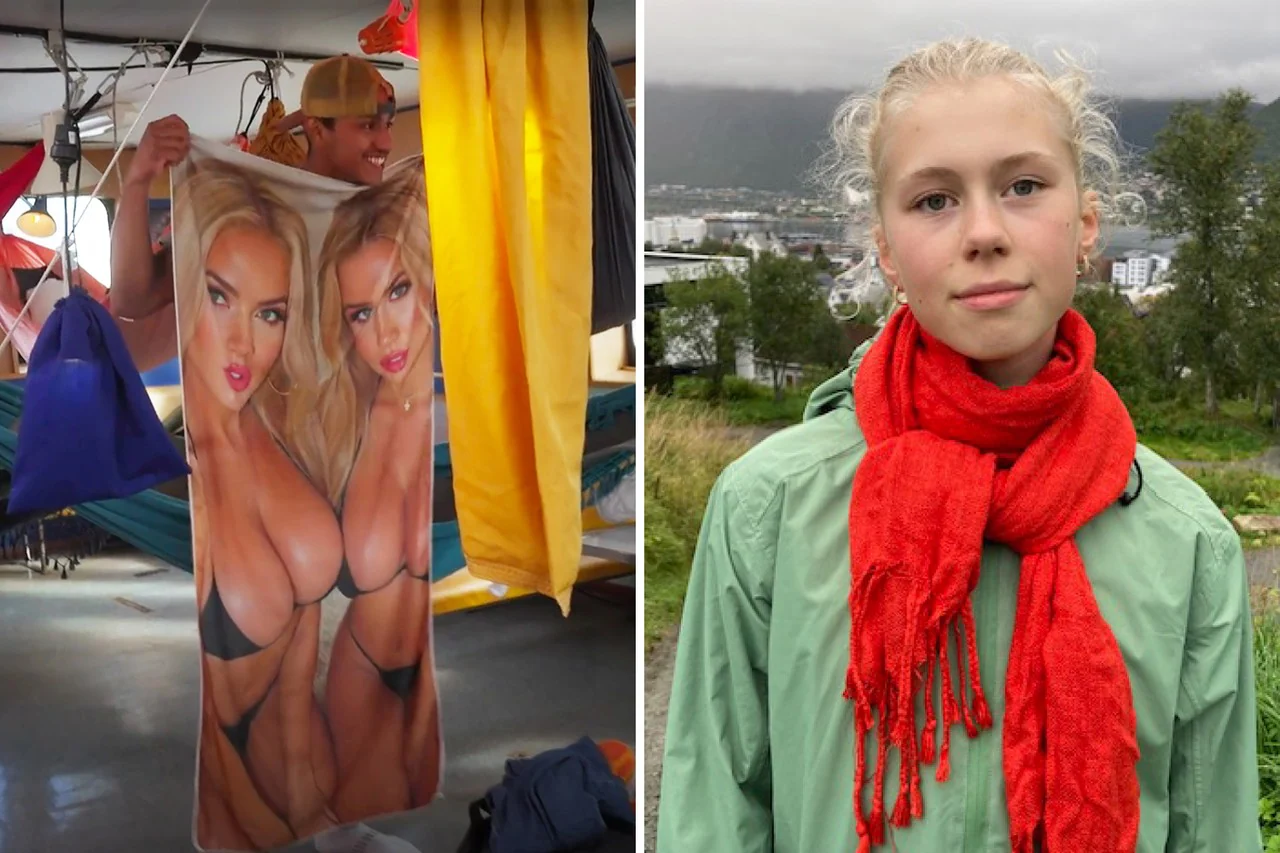
Et håndkle med damer i bikini blir dratt opp av sekken, og deretter hengt opp, noe som kanskje ikke høres så ille ut med det første, men når de også begynner å tulle med det og kalle det for «lættis», da forstår man hvor utrolig kvinneundertrykkende denne oppførselen egentlig er.
Det er en TV-serie som før pleide å få meg i godt humør, men som nå gjør meg både sint og lei meg. Jo lenger vi kommer inn i episoden, dess mer mates dette sinnet, og jo større blir skrivelysten.
Jeg lurer virkelig på hvorfor kvinner fortsatt blir objektifisert på den måten. Og særlig, hvordan rikskanalen NRK, som jobber for likestilling, kan la noe så kjønnsdiskriminerende bli godkjent.
«Holdningene blandes inn i en mannssjåvinistisk og antifeministisk suppe»
Det er mange flere scener i episoden som provoserer, som når mennene ser på bilder av de kvinnelige deltakerne og en av dem sier noe sånt som «Jeg bryr meg ikke så mye om det er blondine eller brunette. Så lenge de har fin personlighet og et glimt i øyet, ikke minst, så kommer du langt på godsida mi».
Måten de får kvinner til å høres ut som små, viljesvake individer, som bare bryr seg om å komme på godsiden til en eller annen «machomann», gjør meg rett og slett uvel.
Et annet tilfelle som skaper fortvilelse, er når de småprater om de kvinnelige deltakerne. De forteller om hvem de har lagt ekstra merke til og hvem som fanget oppmerksomheten.
«Jeg lurer virkelig på hvorfor kvinner fortsatt blir objektifisert på den måten»
Fokuset virker ikke å være på kvinnene som likestilte, men mer som objekter.
Alle disse holdningene blandes inn i en veldig mannssjåvinistisk og antifeministisk suppe, med unge menn som ikke viser respekt for kvinner.
The fight over the future is rapidly unfolding before our eyes. With debates roiling Washington over calls to rein in artificial intelligence before it’s too late as the U.S. continues to wage official and unofficial wars around the world, many of the world’s most powerful players are licking their chops.
Yes, there’s destruction all around. But these players have carefully concocted a plan: to hasten a familiar vision that combines biblical, militant, and futuristic images of the end times so they can save themselves.
“We didn’t feel that the old ways of understanding who Trump is, what he’s trying to accomplish — even what fascism is — was fully capturing what we were seeing. Here we’re thinking about invading Greenland, declaring Canada the 51st state, creating an ICE army, the relationship with El Salvador’s maximum-security prisons. So we’re trying to map this,” says Klein. It seemed to be “a fascism that had no vision of our world continuing. There’s always an apocalyptic quality to fascism, but there is a horizon for the in-group after the cataclysm, and we weren’t seeing that in this politics. It was much more about bunkering down in and taking breakdown for granted.”
“End times fascism is an alliance of three main components,” says Taylor. The religious fundamentalists who helped elect Donald Trump, wanting to hasten along a violent Armageddon so Jesus will return. The tech accelerationists “exalting in the possibility that some sort of super intelligence, some sort of digital being might take over.” The ethnonationalists who view immigration as an existential threat, so they fortress the border and hoard resources. “These different prongs find a kind of uneasy alliance in their conviction that this world’s going to hell and that their group will survive the wreckage,” says Taylor.
It may sound bizarre. And it is. But that doesn’t mean we should ignore it, Klein says. “This is a really dangerous pattern of thought: that out of the worst things possible comes the beautiful, glorious golden city. And that’s the template of all of these action films and video games, and it leads one to embrace the worst and to not fear what we should fear,” says Klein. “When Trump shares a video of a remade Gaza with a Trump Tower, he’s doing a version of that story. When Sam Altman says he’s summoning a digital god, and we’re going to have utopia with AI, and yeah, let me cover the whole world with data centers and accelerate the climate crisis because it’s going to be utopia … he’s doing the story. So we have to be able to identify it — because we’re all living with the consequences of this terrible story and we need better stories.”
“In this moment, we’re up against a fascism that is against all humans, in a way. We quote Kelly Hayes, an activist based in Chicago, and she says, ‘Every fascism has its subhumans, and for techno-fascists, it’s just humans in general.’ This is opening up a bigger fight beyond ‘I am a man’ to just like, this is life versus the machines, and there’s something very unprecedented about that and potentially very unifying,” says Taylor, noting that the collective uprising, across the political spectrum, against data centers shows people breaking free of one so-called inevitable future.
For more, listen to the full conversation of The Intercept Briefing on Apple Podcasts, Spotify, YouTube, or wherever you listen.