
Edward Said: Between Worlds
A new film biography depicts the Palestinian writer as still out of place—and ahead of his time.
| NATION MAGAZINEOCT 1∙PREVIEW |
by D.D. Guttenplan
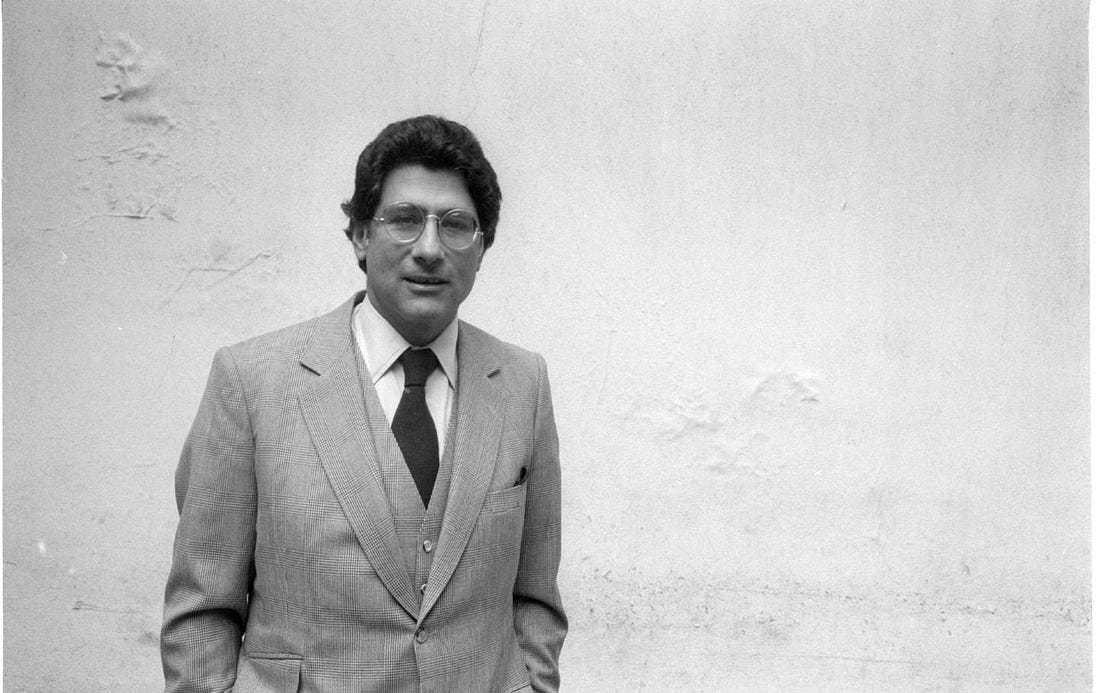 |
Edward Said – Sophie Bassouls / Sygma via Getty Images
In the spring of 1991, Edward Said and his wife, Mariam, traveled from New York to South Africa, where the Columbia professor had been invited to deliver a lecture on academic freedom. Although Nelson Mandela had been released from Robben Island a few months earlier, apartheid was still in force—as was the academic and cultural boycott administered by the African National Congress, which had approved Said’s visit.
On arriving in Johannesburg, Said met briefly with Mandela, and was then taken for a much longer conversation with the ANC’s deputy president, Walter Sisulu, in what Said later described as “a deeply illuminating discussion” of the history of the South African struggle, with the ANC “now for the first time in its history in the ascendancy…with obvious points of difference and comparison with the Palestinian struggle, then, as now, very much not in the ascendancy.” The cordiality of the encounter, however, was marred for Said by the ostentatious display in the ANC leader’s office of a copy of Jerusalem: Sacred City of Mankind—a coffee-table book by Teddy Kollek, the city’s longtime mayor and international symbol of liberal Zionism.
Their conversation was not filmed, and is not featured in Edward Said: Between Worlds, the new documentary that serves both to introduce one of the 20th century’s most important writers and thinkers to a new audience two decades after his death in 2003 and as a deeply personal history of the Palestinian struggle in the 20th century. I mention it here not to fault the filmmakers, who have used their unprecedented access to the Said family archive (including a trove of 8mm home movies filmed by Edward’s father, Wadie Said, showing the writer’s childhood home in West Jerusalem) to assemble a deeply moving portrait, but to underline both what Said was up against—and how often even those who regarded themselves as sympathetic to his cause misunderstood him…


