The fascist-US imposes more sanctions on ICC

US imposes sanctions on ICC

9. October 2026 – www3.nhk.or.jp

The administration of US President Donald Trump announced on Friday that it is imposing sanctions on the International Criminal Court, escalating its campaign against the organization.

Secretary of State Marco Rubio released a statement on social media saying, «We will ban transactions with this rogue court, cutting off their resources and crippling their ability to operate against us.»

Rubio said the US will continue its campaign to «dismantle» the court until Americans are no longer threatened. He also said he expects allies to help «rein in» the ICC.

The court’s president, Akane Tomoko, criticized the move as «historically unprecedented» and added that the ICC «firmly rejects» the sanctions.

Akane said: «Seeking to obstruct a court of law from fulfilling its judicial mandate is unacceptable. It is an attack against sovereign states that have created the court. It is an attack against the international legal order.»

The US had already imposed sanctions on the ICC’s leadership, including Akane, in August.


US unveils sanctions on ICC in move court condemns as «assault on rule of law»

Tom Bateman,State department correspondent,

Anna Holligan,in The Hague,and Florence Freeman – bbc.com

Reuters Outside the International Criminal Court (ICC)
The ICC said it would not be «deterred» by the sanctions

The Trump administration has unveiled sweeping sanctions on the International Criminal Court (ICC) in a significant acceleration of its attempt to «dismantle» what it sees as a «rogue» institution.

US Secretary of State Marco Rubio said the measures – which include a ban on US entities making transactions with the ICC – were intended to «defend US sovereignty» and accused the court of seeking to prosecute Americans.

The ICC said the measures were an assault on the rule of law and the foundations of the international legal order.

The announcement came just hours after former ICC judge Navi Pillay was awarded the 2026 Nobel Peace Prize for her efforts to promote peace and international law.

The US has already sanctioned 17 of the ICC’s judges and officials, but this move sanctions the court itself as an institution and is intended to collapse its ability to operate financially.

However, the US has provided a six month grace period before some of these latest sanctions kick in, meaning member states can keep paying for its operations – a move Washington says is to allow countries time to negotiate a «solution to address» US concerns.

UN Secretary General Antonio Guterres called the US decision «a serious blow to our collective pursuit of international criminal justice, of which the ICC is a key pillar».

The UK joined Canada, Denmark, Germany, France, Italy, Japan and the Netherlands in reaffirming their «continued and unwavering support» for the ICC and said they «regret and strongly disagree with» the sanctions.

They also praised the court’s staff for their work bringing «those accused of the most serious international crimes to justice», as well as supporting victims.

The ICC was founded in 2002 to prosecute war crimes, crimes against humanity and genocide, and counts 125 countries as member states. Several major countries remain outside the ICC, including the US, Russia, China, India and Israel.

The Trump administration argues the ICC is run by what it calls globalists who threaten American sovereignty.

It is furious over a past investigation into actions of US soldiers in Afghanistan the court has since closed and by its arrest warrants for Israeli officials including Prime Minister Benjamin Netanyahu. The new sanctions, however, do not say that those warrants must be withdrawn before the measures can be lifted.

But Rubio said Trump would not allow the ICC to prosecute Americans, adding: «Either the ICC will end its threats, or we will end the ICC.»

The US sanctions will stop US companies from providing goods or services to the ICC, such as banking or software.

Rubio said Washington had delayed imposing the sanctions in the hope that the ICC and its member countries would address US concerns. He said the measures had been structured to allow other countries to negotiate a possible solution.

He also called on US allies that were ICC signatories, including the UK, to «rein in» the institution.

The Netherlands, which hosts the court in The Hague and is also a Nato ally of the US, faces particular pressure. Dutch Foreign Minister Tom Berendsen has said the sanctions would seriously affect the court’s ability to function.

Netanyahu welcomed the sanctions, saying the ICC was «not a court» but a political body that threatened law-abiding democracies and «the very idea of national sovereignty».

Reuters Rodrigo Duterte, the former president of the Philippines, pictured at the ICC
Among those awaiting trial in The Hague is Rodrigo Duterte, the former president of the Philippines

The ICC said that the sanctions were aimed at disrupting its work and intimidating those who co-operate with it – but that it «will not be deterred».

It called the measures «an assault on the rule of law» and said no one should be punished for serving the cause of justice, adding: «History will judge this moment.»

This showdown potentially marks the gravest crisis in the court’s 24-year history. Rather than targeting individual ICC judges and prosecutors, the US is now sanctioning the court itself.

The sanctions could ultimately see the ICC unable to try cases, meaning detainees awaiting trial or judgment could have to be released, according to Professor Ryan Goodman from the New York University School of Law.

Among those awaiting trial in The Hague is Rodrigo Duterte, the former president of the Philippines.

The 81-year-old is accused of the extrajudicial killing of thousands during his deadly «war on drugs» between 2011 and 2019. Others awaiting trial or with pending appeals include former senior figures accused of war crimes in Libya, Sudan and the Central African Republic.

Goodman says that as a senator, Rubio was «out front» highlighting Duterte’s alleged crimes.

He told the BBC such a release would be «enormously damaging to the global effort towards international justice [and] towards the Philippines».

«[For] the victims, it just has to be incredibly traumatic because a lot of them participate in the ICC proceedings to put themselves on the line with a hope that justice will come around,» adds Goodman, a former special counsel at the US Department of Defence.

Among the carve-outs announced as part of today’s sanctions are «licenses» allowing the ICC to continue «services for the operation of facilities used for the detention» of Duterte and others.

However, Goodman says ultimately these detainees may have to be released «as a matter of law» if the financial sanctions mean the court cannot conduct fair trials or appeals.

More on this story

US announces new sanctions on top ICC figures

Nobel Peace Prize winner Navi Pillay dedicates award to «survivors of international crime»

Posta under genocide, Midt-Austen, Our global world | Merkt , , , , , , | Kommenter innlegget

Meloni strucks Italy’s democracy with a right-wing stroke!

Italian Parliament Approves Meloni’s Electoral Reform

Italian PM Giorgia Meloni, Oct. 2026. X/ @SecolodItalia1


October 8, 2026 – telesurenglish.net

The ‘Stabilicum’ law grants a seat bonus to the winning coalition and showcases center-right unity ahead of the 2027 elections.

On Thursday, the Italian Parliament handed Prime Minister Giorgia Meloni a victory by giving final approval to her electoral reform, a key measure ahead of the 2027 general elections.

RELATED:

Italy’s Giorgia Meloni Trademarks Her Voice Against AI Deepfakes

After a long and difficult legislative process, the text was approved in the Chamber of Deputies by 227 votes in favor and 164 against from the center-left opposition bloc. All of it came down to a secret ballot that had fueled the risk of dissident lawmakers.

With this step, Meloni pushes through a flagship reform in her final year of the legislative term and displays the unity of her coalition with the conservative Forza Italia (FI) and the far-right League, which have often disagreed on some aspects of the new system.

“With the final approval of the new electoral law, when Italians vote again they will be able to choose everything: the party, the coalition, the platform, the candidate for prime minister and, again, their Parliament,” Meloni celebrated.

A Bet on Stability: The ‘Stabilicum’

The ‘Stabilicum’ law seeks to shore up the stability of future governments and correct the chronic volatility of the Italian political system, which has accumulated 68 administrations in its 80 years as a democratic republic.

To that end, as its main novelty, the law grants a seat “bonus” (70 in the Chamber of Deputies and 35 in the Senate) to the list or coalition that exceeds 42% of the vote at the polls.

It also restores a system of locked lead candidates combined with the possibility for voters to express preferences for other candidates, a formula that had generated disagreements among the government’s partners during negotiations.

Closing Ranks in the Coalition

The approval of the Stabilicum law has represented a show of strength for Meloni, who manages to close ranks after the tensions experienced during the law’s passage between her Brothers of Italy party and the allies with whom she has remained in power for four years.

All alarms had gone off in July, when several lawmakers from the right-wing majority itself voted anonymously against a section of the text in the Senate.

That insubordination fueled rumors for weeks of a definitive boycott by the so-called “snipers,” the defectors in the Lower Chamber. However, that risk has been dispelled today, as has the prime minister’s political horizon.

“To those who hoped to see the center-right divided, today we respond with facts: we are united, cohesive, and determined to fulfill the commitments made to citizens,” Meloni boasted.

Deputy Prime Minister Antonio Tajani, a Forza Italia member, celebrated the approval of the reform and argued that the new system will guarantee political stability and strengthen Italy’s international credibility.

“We say ‘yes’ to lasting governments capable of carrying out the platforms presented to citizens; ‘no’ to those political intrigues so beloved by the left that betray the decisions of voters,” the Foreign Minister wrote on X.

The text reads, “The ruling majority has passed an electoral law tailor-made for those already in power. Parties continue to hand-pick the candidates who enter Parliament, thanks to a system of directly appointed lead candidates.

The number of signatures required for parties without current parliamentary representation to run in the elections has quadrupled, rising from 1,500 to 6,000 per constituency. Furthermore, a coalition can secure a bonus of 105 seats with just 42% of the vote.

Fewer choices for voters, more obstacles for aspiring candidates, and more power for those in government. Meloni is changing the rules of the game on the eve of the very elections in which Italians are to pass judgment on her administration.

The law is dubbed ‘Stabilicum,’ yet the only thing stable about it is the deception perpetrated against the citizenry. We are working to oppose this assault on representation, the democratic process, and respect for the will of the people.”

The Road to the 2027 Elections

The bill moved forward despite the frontal rejection of the opposition bloc — the Democratic Party (PD), the Five Star Movement (M5S) and the Green and Left Alliance (AVS) — which considers Meloni’s law unconstitutional and a “tailor-made suit” to perpetuate the right in power.

PD Secretary Elly Schlein accused the government of “changing the rules of the game with the match already underway,” while M5S President Giuseppe Conte called the reform “covert autocracy” and attributed “fear of losing” to Meloni’s camp.

Although the absence of a formal electoral calendar grants some margin for maneuver, the ‘Stabilicum’ — as long as it is not declared unconstitutional, as the opposition wants — reshapes the political board by penalizing fragmentation and favoring alliances.

The new electoral architecture increases pressure on the center-left opposition, which has still not articulated a unitary candidacy capable of challenging Meloni for leadership and remains entangled in whether or not to hold joint primaries.

The approval of the law comes after Meloni reached another political milestone in September by making her government the longest serving one in Italy’s recent history, surpassing the record of Silvio Berlusconi’s second administration.

teleSUR/ JF

Source: EFE
Deputati PD

@Deputatipd

Follow

«La destra approva il #Melonellum e cambia le regole del gioco a meno di un anno dalle elezioni perché hanno paura di perdere. La maggioranza impone una legge elettorale che prende in giro i cittadini con le finte preferenze e introduce un premierato mascherato» – @simonabonafe

The text reads, “The Right is pushing through the “Melonellum” and changing the rules of the game less than a year before the elections because it fears defeat. The majority is imposing an electoral law that makes a mockery of citizens with sham preferential votes and introduces a covert form of executive leadership.”

Continue watching on X

Posta under Europa, Politic&Society | Merkt , , , , , | Kommenter innlegget

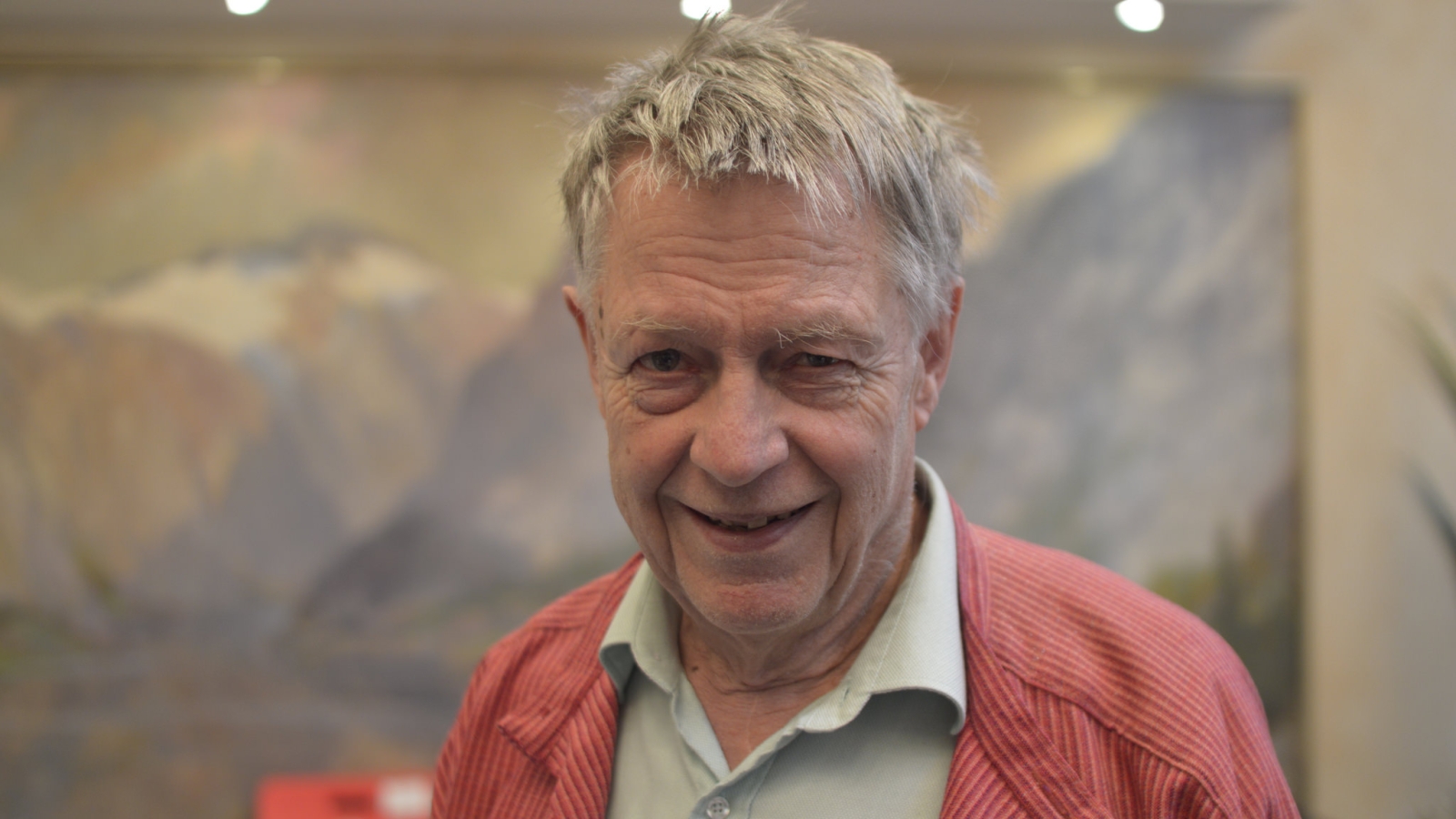
Til minne: Dag Seierstad – den viktige stemma mot norsk EU-medlemskap – er død, 90 år gamal

Av Einar Frogner, leder i Nei til EU

Til minne om Dag Seierstad

09. okt. 2026 – Nei til EU

Minneord

8. oktober døde Dag Seierstad, 90 år gammel. Gjennom sju tiår var han den fremste strategen, kunnskapsformidleren og ildsjelen i kampen mot norsk EU-medlemskap.

Dag Seierstad var medlem av styret i Nei til EU fra 1990 til 1995, og ledet Oppland Nei til EU i de viktige årene fra 1991 til 1994 og igjen i mange år etter årtusenskiftet. I 1995 gikk han på som utreder i Nei til EU, en jobb han hadde fram til 2003, da han kom tilbake i Nei til EUs styre. Han avsluttet karrieren i Nei til EU som medlem av rådet, der han bidro med kunnskap og samlende løsninger helt til helsa sa stopp for den aktive deltakelsen. 

Da Nei til EU i 2012 bestemte seg for å innføre æresmedlemskap, var det bare én kandidat som protesterte: Dag Seierstad selv. Han mente ordningen var «tull» og at ingen bør gjøres forskjell på, men landsmøtet var ikke i tvil. 

Som Nei til EUs aller første æresmedlem stod Dag som selve symbolet på den folkebevegelsen som to ganger har sagt nei til unionen. 

– Nøkternhet har alltid vært en dyd for den norske nei-sida, og ikke minst for Dag Seierstad. Den innsatsen han har lagt ned for Nei til EU er likevel av en så unik karakter at den fortjener å bli løfta fram, sa daværende Nei til EU-leder Heming Olaussen. 

Er det ett ord mange forbinder med Dag Seierstad, er det kunnskap. Han la grunnlaget for at nei-sida alltid måtte være best på kunnskap. Bare slik kunne vi vinne den daglige EU-kampen. 

For å ære Dags innsats opprettet Nei til EU Seierstad-stipendet, som gjennom flere år ble tildelt masterstudenter som skriver om EU- og EØS-relevante spørsmål.  

Dag Seierstad vokste opp på Bjølsen i Oslo og utdannet seg opprinnelig til cand.real. i fysikk. Men det var samfunnsengasjementet som skulle definere hans livsverk. I 1967 ble Dag valgt inn i sentralstyret i SF, og særlig viktig var innsatsen som leder av partiets EEC-utvalg. Han forfatta blant annet en studiesirkel om EEC som ble produsert i 7000 eksemplarer før heftet ble til Pax-boka EF eller Norge? i 1972. 

Mange husker Dag fra serien med ukentlige kronikker om EU som først gikk i Ny Tid, så i Nationen og til slutt i Klassekampen. Til sammen ble det over 1000 kronikker! Den faglitterære produksjonen var også imponerende: I festskriftet fra 2006 skrev Knut Kjeldstadli at Dag Seierstad er representert i BIBSYS med til sammen 2700 sider han har skrevet eller redigert. Senere har det blitt enda flere. 

Dag var også viktig i Europa-utvalget. Under ledelse av professor Fredrik Sejersted leverte utvalget i januar 2012 en NOU på 911 sider om Norges avtaler med EU. Dags innsats som kritisk stemme var svært viktig for at utredninga ble mer nyansert enn den ellers ville blitt. Han var også helt sentral i arbeidet med Alternativrapporten (2012), som endra den norske EØS-debatten – ikke minst i fagbevegelsen. I 2017 var Dag hovedforfatter av Nei til EUs egen EØS-melding. 

Dags arbeid var spesielt viktig for den faglige motstanden mot EØS og EU. Hans evne til å kle av kompliserte direktiver og forklare konsekvensene for norske arbeidsfolk, gjorde han til en høyt respektert kunnskapsleverandør i fagbevegelsen. 

I 2020 mottok han Trondheimskonferansens hederspris. Prisen ble gitt for hans utrettelige innsats for å spre kunnskap om EØS-avtalens betydning for arbeidslivet og for hans rolle som premissleverandør i den faglige debatten. 

John-Peder Denstad, den gang leder av LO i Trondheim, sa ved tildelingen at: – Dag Seierstad tildeles Trondheimskonferansens hederspris for sitt langvarige og utrettelig virke for å styrke norsk fagbevegelse som en viktig kraft i klassekampen for å skape demokrati og et menneskevennlig arbeids- og samfunnsliv. 

– Dag er ikke en politikertype som har søkt lederstillinger, rampelys og overskrifter. Hans virke har vært det langsiktige, konkrete og lokale politiske arbeidet. Han har vært opptatt av at venstresida ikke vinner fram uten engasjement og aktivisme. Han har derfor søkt seg ut, også utenfor eget parti, for å bygge brede og slagkraftige allianser, sa Denstad. 

Dag Seierstad var en viktig brobygger mellom ulike politiske miljøer, og var alltid raus mot nei-folk som kom fra andre politiske miljøer enn han selv. Dag bidro til å skape en romslig nei-side med plass for ulike syn i debattene. Han vil bli sterkt savnet av alle i Nei til EU. 

© Nei til EU

Posta under Europa, Fagrørsle og kamp, Noreg - Norway, Politikk&Samfunn | Merkt , , , , , , | Kommenter innlegget

2026 Nobel Peace Prize awarded to Navi Pillay – Trump and zionists are pissed!

NewsFeed

‘Is it April fool’s?’ Navi Pillay reacts to Nobel Peace Prize news

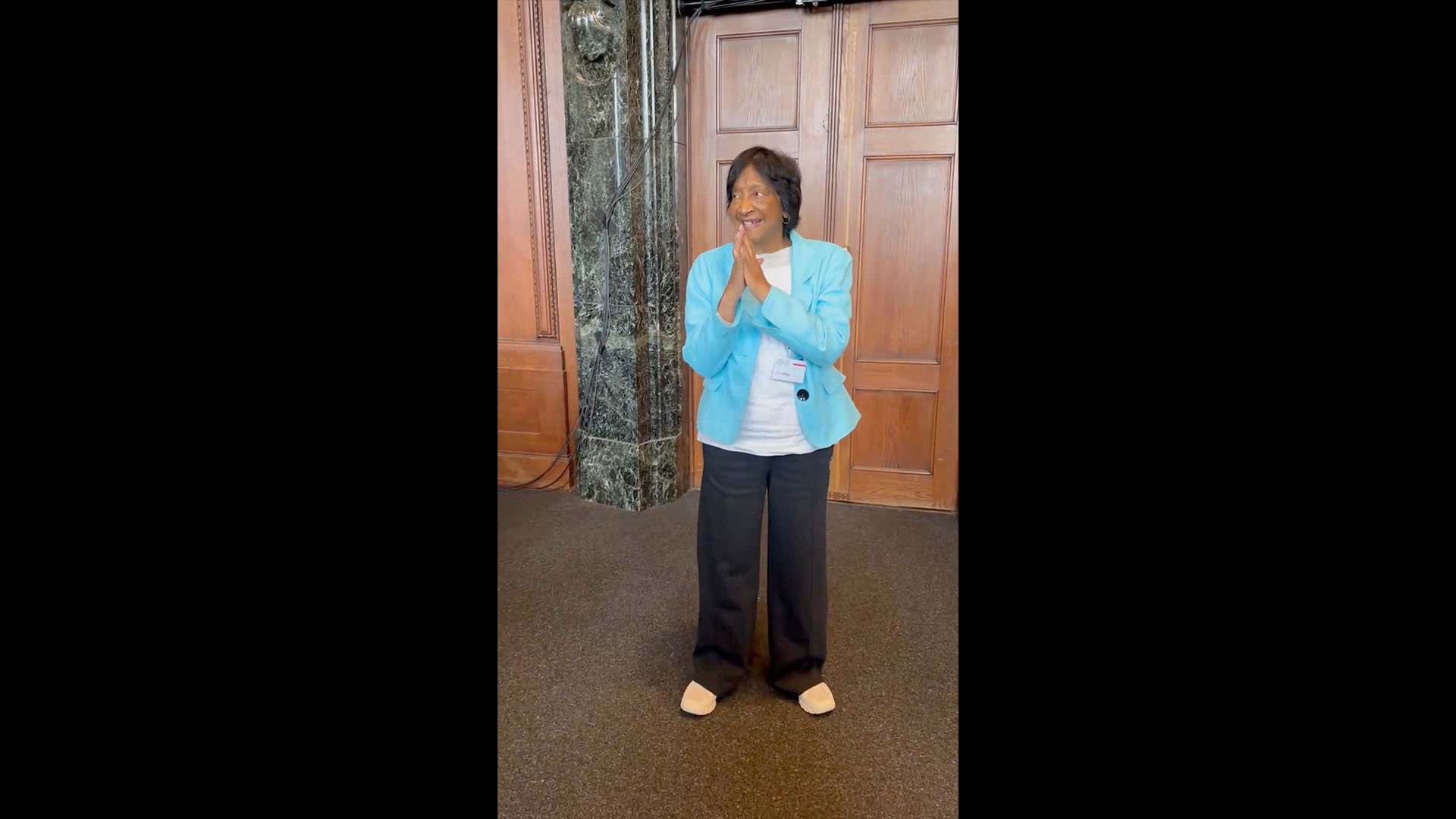
International judge Navi Pillay was applauded by colleagues as she gave her first public reaction to her Nobel Peace Prize win, and joked about ‘sharing it with Trump’. Pillay only learned the news after the announcement because the Nobel committee was unable to reach her.

Published On 9 Oct 2026 – aljazeera.com

2026 Nobel Peace Prize awarded to Navi Pillay

Pillay has been instrumental in ensuring war crimes and genocide are prosecuted, Nobel committee says.

FILE PHOTO: U.N. High Commissioner for Human Rights Navi Pillay smiles during a news conference at the United Nations European headquarters in Geneva, Switzerland October 18, 2012. REUTERS/Denis Balibouse/File Photo
Navi PIllay is the winner of the 2026 Nobel Peace Prize [File: Denis Balibouse/Reuters]

By Al Jazeera Staff, AFP and Reuters

Published On 9 Oct 20269 Oct 2026

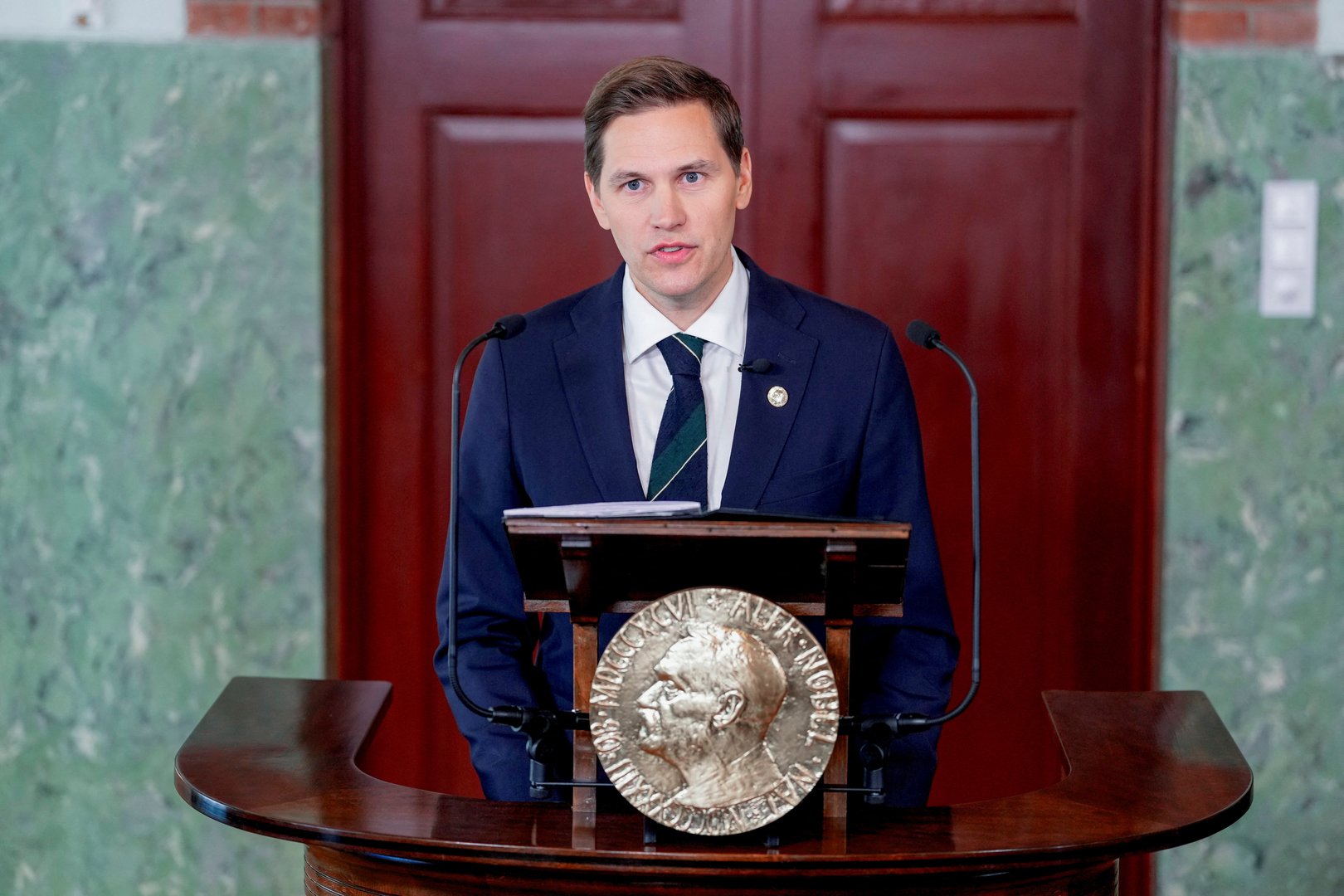
The Norwegian Nobel Committee has awarded the 2026 Nobel Peace Prize to Navanethem “Navi” Pillay.

The committee’s announcement of the 125th Nobel Peace Prize, made on Friday in Oslo, said the award would go to the South African jurist for her work to promote peace and international law.

It added that Pillay, a former United Nations high commissioner for human rights, had been instrumental in ensuring war crimes, crimes against humanity and genocide are prosecuted.

“At a time of existential challenges – including more wars and conflicts than the world has seen in a long time – international law is no longer just a supplement to peace and security. It is an absolute necessity,” the committee said in a statement.

Committee Chairman Jorgen Watne Frydnes said the system of international law was “under tremendous pressure” and its institutions were “under attack”. It is judges, he continued, “who guard the thin red line between order and chaos”.

Reacting to her Nobel win, Pillay, 85, said she would “dedicate this award to all of the survivors of international crimes”.

She made her statement in the historic courtroom in Germany’s Nuremberg where the trials prosecuting Nazi leaders after World War II were held.

“Perhaps it was meant to be that I was in this historic courtroom … when the announcement was made, and I was informed of the award,” Pillay said.

She also drew attention to UN Independent International Commission of Inquiry on the Occupied Palestinian Territory, which she chaired. It concluded last year that Israel was responsible for genocide in Gaza with a specific intent to destroy Palestinians in Gaza.

“The last thing I did is the delivery of the report on Gaza, naming what’s happening there as genocide,” Pillay said on Friday. “One of the main reactions to that report is paying tribute to me for my courage. And you can imagine how surprised I was. Why would you need courage to speak the truth?”

‘A tribute’ to those defending international law

A South African of Indian Tamil origin, the 85-year-old Pillay was the first woman to start a law practice in what was then the province of Natal in 1967.

She was a defence lawyer for Nelson Mandela, who previously won the Nobel Peace Prize, and other anti-apartheid activists and was the first woman of colour to serve on South Africa’s High Court.

She later served on the International Criminal Tribunal for Rwanda and the International Criminal Court and as the UN’s rights chief.

The committee highlighted her role during her time on the Rwanda tribunal in establishing that rape and sexual violence can constitute crimes against humanity and genocide.

Her work on the UN inquiry on the occupied Palestinian territory said last year that Israel’s president, prime minister and former defence minister had “incited the commission” of genocide.

“We concluded that the State of Israel is responsible for the commission of four genocidal acts in Gaza with the specific intent to destroy Palestinians in Gaza,” she declared in a presentation to the UN General Assembly at the time.

Reacting to Pillay’s Nobel win, Israel’s Ministry of Foreign Affairs in a post on X on Friday, called it “the grotesque weaponisation of an award to legitimise anti-Israel hatred and prejudice”.

Pillay currently sits on the International Court of Justice in the case in which Myanmar stands accused of genocide against the Rohingya.

“Today’s prize is a tribute to all those working to uphold and defend international law, the rule of law and human rights, and secure peace, justice and human dignity,” UN Secretary-General Antonio Guterres reacted to the news of Pillay’s success.

South African President Cyril Ramaphosa said the award was a “profound tribute to the veteran jurist’s courage, integrity and lifelong commitment to justice”.

Nobel chair admits they haven’t reached Peace Prize winner Pillay

International law ‘under political attack’

The prize, which is worth 12 million Swedish crowns ($1.2m), will be presented in Oslo ‌on ‌December 10 on the anniversary of the death of Swedish industrialist Alfred Nobel, who founded the awards in his 1895 will.

Four other prizes were announced earlier this week for medicine, physics, chemistry and literature.

The Nobel committee received nominations for 287 candidates for this year’s peace prize. Other contenders included the International Space Station, emergency teams in Sudan, children’s advocates in Ukraine and two top international courts.

Ashok Swain, a researcher at Uppsala University in Sweden said that while the prize will not deliver any concrete change on the ground, the messaging of the award to Pillay is key in the current climate.

“International law … was never perfect, but at least some rules were there. Now, it has become a free-for-all, and everyone interprets it the way they want,” he told Al Jazeera.

United States President Donald Trump has long coveted the prize and repeatedly said he deserves it despite starting the ongoing US-Israel war on Iran.

Last year’s winner, Venezuelan opposition leader Maria Corina Machado, handed her medal to Trump after the US deposed Venezuelan former President Nicholas Maduro in January.

Pillay joked that she might share her prize with the US leader.

“If you clap a little bit more, I may share this prize with Trump,” she said in a video posted on social media by the secretary-general of Amnesty International that showed Pillay being applauded after the announcement of the award.

Hours after Pillay’s victory, US President ⁠Trump said the Nobel committee “demeaned” the prize by awarding it to Pillay, as the White House imposed more sanctions on the International Criminal Court.

In Pillay’s comments on Friday, she denounced attacks on international legal institutions.

“We are living through an era when international law and human rights are under significant political attack,” she said. “This worsening reality is particularly visible with the attacks on the International Criminal Court.”

RECOMMENDED STORIES

RELATED

Posta under Afrika, genocide, Imperialism, Our global world, Palestina | Merkt , , , , , | Kommenter innlegget

The Saudi Coalition-murderers kills another innocent civilian

14-Year-Old Girl Riding Home on a School Bus Killed by Saudi Coalition Strike in Yemen

Yemen’s civil war between Ansarallah and a Saudi-backed coalition has reignited across the country.

DROP SITE OCT 8∙GUEST POST

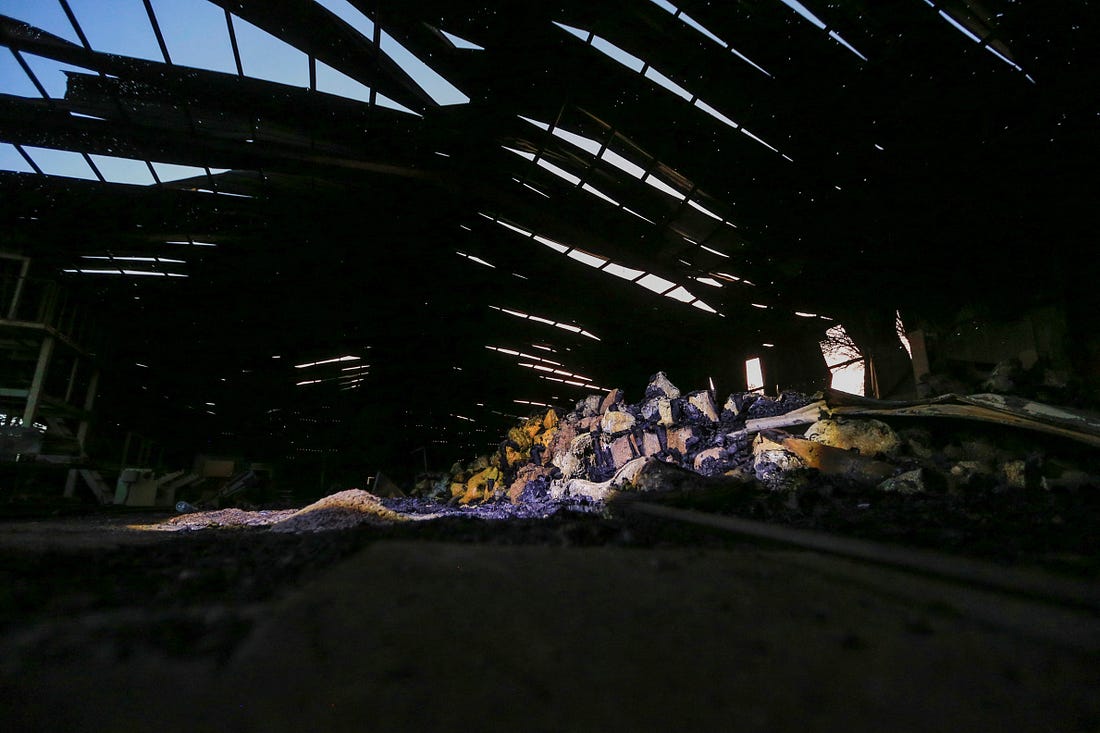
Melted foam inside a factory after a strike by a Saudi-led coalition in the Shamlan neighborhood of Yemen’s capital Sana’a on October 4, 2026. Photo by Mohammed HUWAIS / AFP via Getty Images.

Story by Rachid Mohsen*

SANA’A, Yemen—On the afternoon of October 5, 14-year-old Athir al-Amri had just taken the last exam of her first semester. She was on a school bus going home when an airstrike hit next to the bus as it drove through the Saawan area of eastern Sana’a, Yemen’s capital. Shrapnel struck her in the head, killing her, witnesses and relatives said.

“She was planning to spend the holiday playing as all children do during school breaks,” her 35-year-old cousin, Mohammed Al-Lahida, told Drop Site News. “The shrapnel decapitated her. If her mother saw her body, she would die of grief.”

Two of her classmates were also wounded, one of them gravely, in the strike by the Saudi-led coalition.

Ansarallah, an armed group also known as the Houthis, seized the capital Sana’a in 2014. A Saudi-led coalition intervened in 2015 on the side of Yemen’s internationally recognized government. A civil war raged for eight years, killing tens of thousands and sparking one of the world’s worst humanitarian crises, until a fragile ceasefire was brokered in 2022.

The civil war reignited in July when Saudi Arabia carried out airstrikes to prevent an inbound Iranian passenger plane from landing in Ansarallah-controlled Sana’a. In response, Ansarallah declared a maritime blockade on all Saudi-linked vessels in the Bab al-Mandab Strait, one of the world’s busiest shipping lanes.

The fighting escalated sharply last month when Ansarallah swept down the Red Sea coast, overcoming Saudi-backed government forces and capturing the key port city of Mokha as well as islands in the Bab el-Mandab Strait, allowing them to tighten their declared blockade of Saudi shipping. Saudi Arabia and its allied forces in Yemen then embarked on a military offensive to retake the territory, launching airstrikes on Ansarallah along the Red Sea coast and other areas controlled by the group, including Sana’a. Ansarallah responded by escalating missile and drone attacks on Saudi Arabia.

The Saudi-led coalition’s Colonel Turki Al-Maliki said on October 5 that 100 fighter jets took part in Operation Dawn of Yemen and destroyed 324 “high-value targets,” including weapons depots, boat explosives storage and naval mines. He described them as “legitimate military targets belonging to the terrorist Houthi militia.”

Brigadier General Yahya Saree said on X on October 7 that the Saudi coalition had carried out 1,798 airstrikes and missile attacks since the escalation began, concentrated on Sanaa, Taiz, Marib, and Al-Jawf. On October 6 and 7, Ansarallah fired ballistic missiles at Abha International Airport in Saudi Arabia’s Asir region and at King Khalid International Airport in Riyadh, killing three people, wounding dozens, and disrupting operations, the coalition said, accusing the Houthis of “terrorist attacks on civilians and civilian objects in the kingdom.”

Almost 1,000 people have been killed in the latest fighting, most of them fighters, with over 200,000 displaced, according to the United Nations. Al-Amri is among 83 civilians killed and 146 wounded in Ansarallah-controlled areas since the escalation began in September, Dr. Anees Al-Asbahi, spokesperson for the Ansarallah health ministry, told Drop Site News, around 60% of them women and children.

“Shrapnel tore through the vehicle”

Rehab Al-Jaafari and Reem Al-Wakedi, both also 14 years old, were on the bus with al-Amri. Al-Jaafari’s father, Bassem, told Drop Site News they were the only three girls left on the bus when the strike happened. Al-Jaafari told her father they had asked the driver to stop and wait when the first missile hit near the Atiya petrol station nearby.

“He told them not to worry and sped on to reach safety. As the bus passed a Houthi compound that was being targeted, a second missile struck and shrapnel tore through the vehicle. Rehab pulled the classmate beside her down beneath the seat. Athir was sitting in the back row,” the father said.

Al-Jaafari woke up later in the back of a Houthi military pickup truck, one of several military vehicles that carried the wounded to Al-Nubala Hospital. Al-Wakedi sustained moderate injuries to her arm and was in the emergency room having her wounds dressed. Before she went into intensive care, Al-Jaafari asked her father where the other girls were. Bassem told his daughter that al-Amri was being treated on another floor. He did not tell her she had been killed.

Al-Jaafari had shrapnel lodged in her back and lost the sight in her right eye. A wound to her face damaged her ear and left her unable to open her mouth properly. She remains on intravenous fluids and is vomiting whatever she eats. Doctors removed shrapnel from her right arm, and a wound to her right foot means it will be some time before she can walk. The hospital discharged her on October 6, according to her father, though she requires continued medical care.

No Shelter

On October 3, a strike near al-Sabeen Hospital for Maternity and Childhood in Sana’a damaged the facility’s windows, medical equipment, and medicine supplies, and injured 10 staff and patients, the health ministry’s Al-Asbahi told Drop Site.

A nurse, Aisha Mohammed, said her right arm was broken when a door fell on her. Window glass shattered and breathing equipment flew across the room. “Premature babies and infants in incubators were among the most exposed,” Mohammed said. The next day, on October 6, warplanes flew over again, causing some patients to flee the hospital.

Only about 60% of Yemen’s health facilities are fully functioning, and comprehensive trauma and emergency care is available at about 6% of those assessed, according to the World Health Organization (WHO).

“Our hospitals cannot withstand this kind of attack,” Al-Asbahi said, warning that hospitals rely on generators that need scarce fuel.

Residents say the launch of ballistic missiles from inside the city brings its own terror. At dawn on October 8, people woke to a huge blast that many thought was a strike. It was a missile launched from near Sana’a airport, residents said.

Wesam Ahmed, who works for a company delivering goods from Jeddah—Saudi Arabia’s second-largest city—to Sana’a, said strikes damaged its office in Attan, southwest of Sana’a. He said he has suspended work and lost hundreds of customers.

Tawfiq al-Hamidi, head of the Geneva-based SAM Organization for Rights and Liberties, which documents violations in Yemen, said the Saudi-led strikes have hit populated areas in broad daylight. The internationally recognized government has warned residents to stay away from Ansarallah military sites.

“But in Sana’a, avoiding every site linked to the group could mean avoiding large parts of the city, which has no civil defense system or shelters to speak of,” al-Hamidi said.

* The reporter has been granted anonymity because of the security situation in Yemen. Rachid Mohsen is a pseudonym.

This article is published in collaboration with Egab.

Posta under Asia, Imperialism | Merkt , , , , , , | Kommenter innlegget

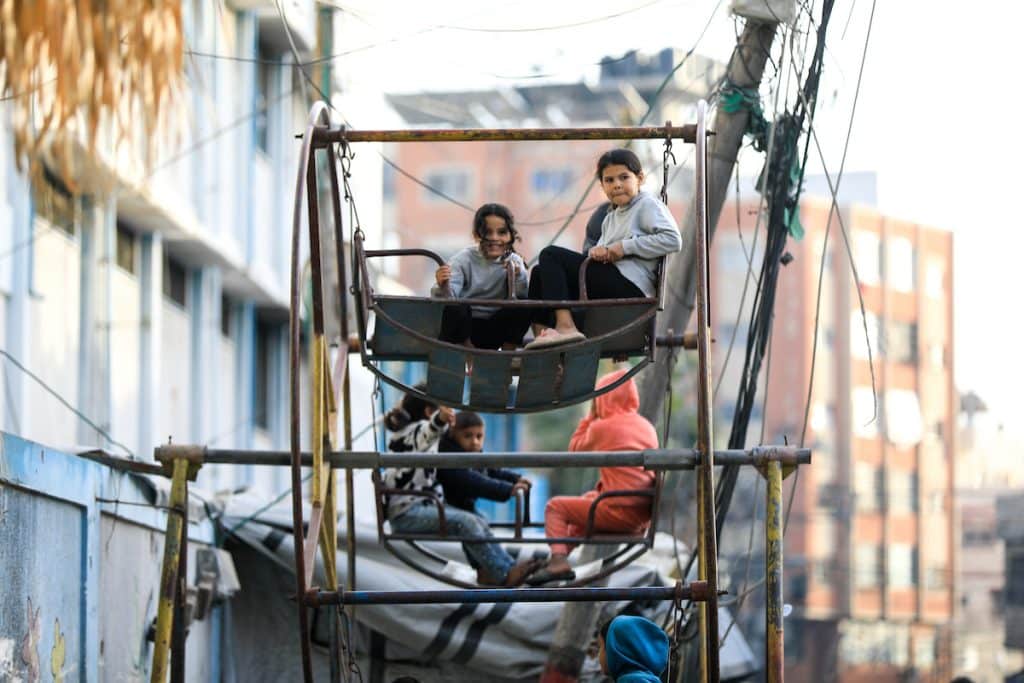
An entire generation of children born into the genocide has no memory of how life was like before, and doesn’t know about the world outside Gaza’s walls

The children in Gaza who have no memory of the world before the genocide

In Gaza, an entire generation of children born into the genocide has no memory of how life was like before, and doesn’t know about the world outside Gaza’s walls.

BY TAREQ S. HAJJAJ  OCTOBER 7, 2026 – mondoweiss.net

Palestinian children attend classes at tent school in Rafah, April 30, 2024. (Photo: Ahmed Ibrahim/APA Images)PALESTINIAN CHILDREN ATTEND CLASSES AT TENT SCHOOL IN RAFAH, APRIL 30, 2024. (PHOTO: AHMED IBRAHIM/APA IMAGES)
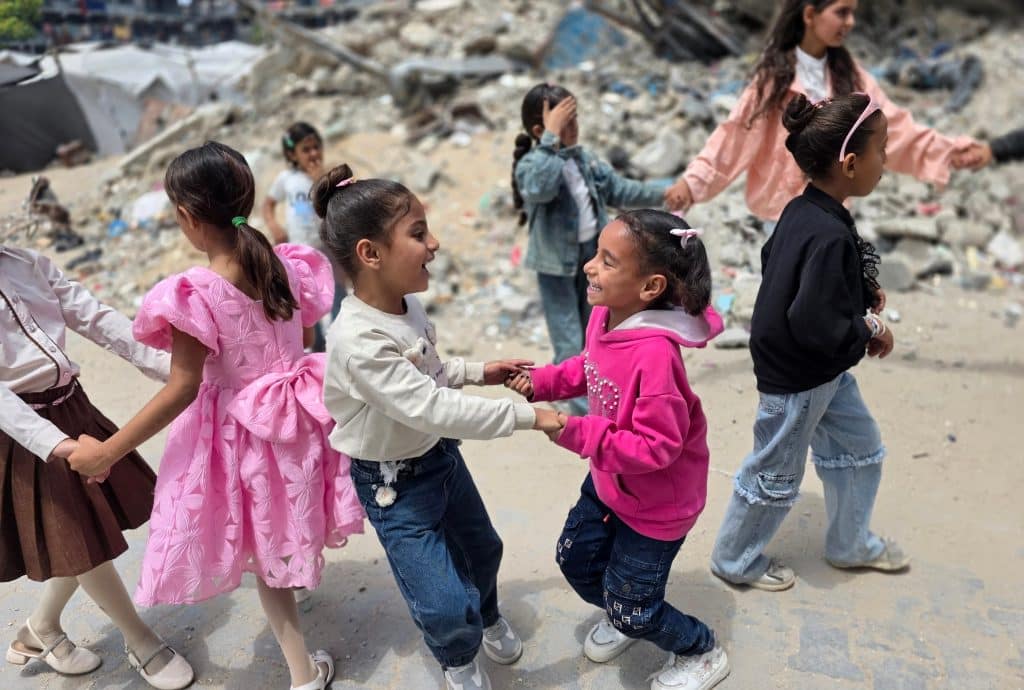
When I left Gaza in 2024, after six months of living through genocide, I wanted one thing above all else: to spare my only child a life spent permanently at war. I did not want him to grow up believing that the whole world looked like Gaza.

But I left more than fifteen nieces and nephews behind. Many were still too young to understand the world they had been born into. They were learning what a home was, what a school was, what it meant to be alive, at the very moment those things were being destroyed around them.

I spent the next year and a half in Cairo. It took me a long time to learn how to inhabit ordinary life again. Whenever I saw a garden, a playground, a school, or children playing freely and safely in the street, I could not simply enjoy the sight. Gaza was always there, beneath it.

A garden brought back the rubble. A school brought back the children who no longer had one. Even safety became a reminder of those still denied it.

There was a comparison I could not stop making: why could children elsewhere grow up among their families and the people who loved them, while Gaza’s children remained trapped in this unending cycle of occupation, bombardment, destruction, genocide, and hunger? How could a child starve to death in a world with so much food?

I kept thinking about the children whose first understanding of life was taking shape inside the genocide. My niece, Elaf, was a year and a half old when I left. She was still at the beginning of everything.

Then her life changed entirely. A tent became her home. Missiles and bombs became the sounds she fell asleep to. Rubble shaped the landscape through which she was learning to see the world, and daily death shaped her first knowledge of life.

What could she know of the world beyond Gaza’s walls? What reason did she have to imagine that elsewhere, children slept without bombardment, lived in homes that stood, and went to schools built to shelter them?

I feared she would grow up believing that life in Gaza was simply life.

The genocide has reached into children’s sense of what is possible.

At first, I thought this was a danger facing mainly the youngest children: those born during the genocide, or too young to remember anything before it. But children who were two or three when it began, and are now five or six, are also learning to see the world as rubble upon rubble. 

I hear it in their questions.

During a video call with my brother Osama, who has eight children, his six-year-old son, Muhammad, saw me sitting on a sofa in a brightly lit room.

“Uncle, how did your tent fit that sofa?” He asked. I did not know how to answer.

His question took me far from the room where I was sitting. Muhammad had lived in a beautiful home before the genocide. But now, when he looked at his uncle’s home, he was left wondering how such lavish furniture could fit into the only kind of home he had come to expect. 

He had more questions. “Is your tent made of fabric pieces, or is it ready-made? Do you have a community kitchen that gives you food?” 

These were simply the only frames of reference he had to try to understand my life, asking whether the arrangements that governed his own survival also governed mine. Shelter meant a tent. Food meant waiting for a meal to be distributed.

There was nothing strange about his questions. What was unbearable was how much sense they made within the life imposed on him.

Children amid displacement tents in Nuseirat in the central Gaza Strip, March 11, 2026. (Photo: Ramzi Abu Amer/APA Images)
CHILDREN AMID DISPLACEMENT TENTS IN NUSEIRAT IN THE CENTRAL GAZA STRIP, MARCH 11, 2026. (PHOTO: RAMZI ABU AMER/APA IMAGES)

The change reaches older children, too. My nieces, Amira and Heba, respectively 12 and 10, remember life before. Yet I can hear their expectations for ordinary life shrinking.

They no longer ask for much from a school. They hope it might be something more than tents pressed against one another: perhaps a wooden structure with a roof of corrugated steel sheets.

During one call with my brother, Amira sat beside him as we discussed my son starting school.

“Are your schools tents, or are they wooden?” she asked. Those were the possibilities she offered me. I asked what she liked about her own school.

“We leave our cramped tent and go to a bigger one,” she said. “We can play more freely. There is a little space where we can play.”

Her answer stayed with me. Even that small difference — being able to move from one cramped space to another slightly less cramped one — mattered.

Then I asked what she wished her school could have.

“The school is very hot in summer, and in winter the rain gets in,” she told me. “I wish there were a fan in summer and a heater in winter.”

She did not ask to return to a school like the one she had attended before the genocide. She asked for something that might make the tent more bearable.

I cannot know what she has forgotten, or what she has pushed aside because remembering it hurts. But I can hear what has disappeared from the wishes she shares with me.

The genocide has reached into children’s sense of what is possible. The tent remains, and the dream becomes to make it cooler. The rain comes through; the dream is for it to be a little warmer.

What frightens me is how familiar these conditions have become. Children have learned to move through them, to make room for play wherever they can, to ask for improvements within them. Their ability to adapt helps them get through the day. It also reveals the depth of what they have been forced to endure.

A child should not have to learn to dream in terms of a tent.

Displaced Palestinian children play on the first day of Eid al-Adha among tents and destroyed buildings, Khan Younis, May 27, 2026. (Photo: Tariq Mohammad/APA Images)
DISPLACED PALESTINIAN CHILDREN PLAY ON THE FIRST DAY OF EID AL-ADHA AMONG TENTS AND DESTROYED BUILDINGS, KHAN YOUNIS, MAY 27, 2026. (PHOTO: TARIQ MOHAMMAD/APA IMAGES)

Three years without a toy

Arwa Jundiya, 23, has given birth to two daughters during the genocide. One is three years old. The other is one.

Her older daughter is growing up without knowing what it means to live in a house. She has never known the family home that shaped the childhoods of so many of us in Gaza: grandparents, parents, uncles, and their families living on different floors of the same building, sharing their days across one extended household.

Jundiya speaks of that life as something no longer available to her children. “The house was more than a shelter — it held the people among whom a child grew up.”

But there is another deprivation she returns to, something so small that its absence becomes almost impossible to comprehend. “My three-year-old daughter has never held a toy,” she said.

Poverty leaves little room for such purchases, Jundiya explains. “Toys are no longer readily available for parents to buy,” she explained. “My husband spends most of his time trying to secure food for them. The work of keeping them fed consumes what might once have gone toward making them happy.”

Jundiya tells me that her children spend their days lying inside the tent, with little to do and nowhere to go. There are precious few ways of breaking the monotony, and the stones and sand beside the tent are the only things they have to play with.

“Maybe in five years, my children will ask me about their lives,” she says. “I don’t know what I will tell them. I don’t know whether I will say that the whole world is like Gaza, or that Gaza is the only place where children face this fate.”

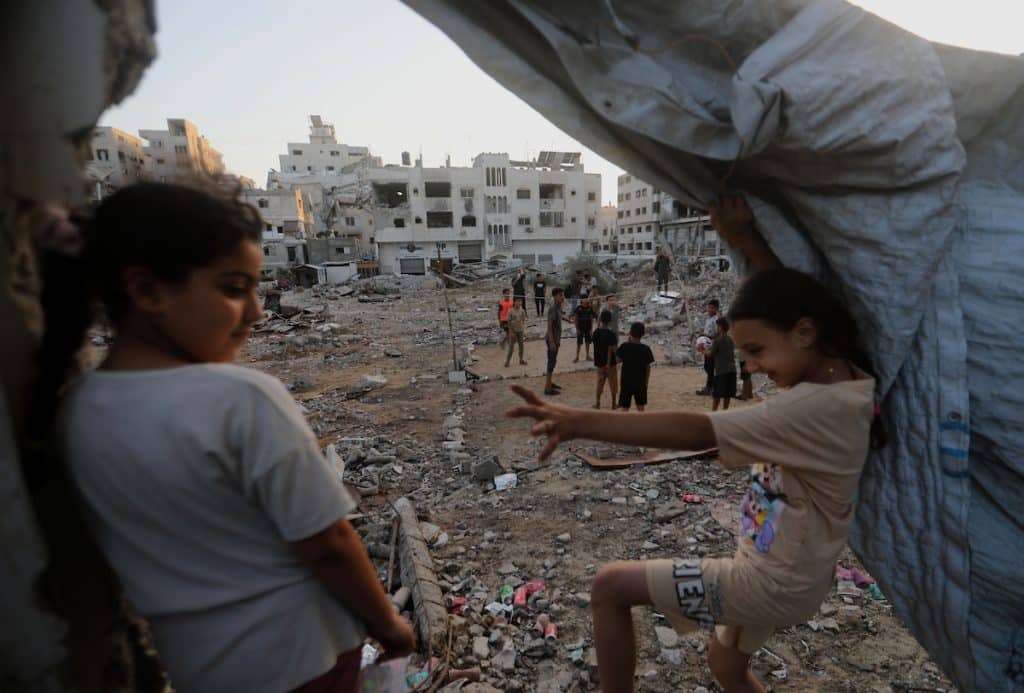
Palestinian children play volleyball on a court set up among the ruins of buildings destroyed in the war in Gaza City on September 16, 2026. (Photo: Bilal Osama/APA Images)
PALESTINIAN CHILDREN PLAY VOLLEYBALL ON A COURT SET UP AMONG THE RUINS OF BUILDINGS DESTROYED IN THE WAR IN GAZA CITY ON SEPTEMBER 16, 2026. (PHOTO: BILAL OSAMA/APA IMAGES)

Her question returns me to the fear that made me leave.

Her children have little connection to the world outside. There is no internet available to them, no television inside the tent. They cannot see the places their mother might compare their lives to. Gaza is the world they know.

I think of my son, and of the life I wanted him to discover beyond war. Then I think of the children I left behind: Elaf falling asleep to bombs, Muhammad trying to fit my sofa inside a tent, Amira wishing for a fan, Arwa’s daughter reaching the age of three without ever holding a toy.

These are some of the ways the genocide continues inside childhood. It takes away the places where children live and learn, then narrows their understanding of what a home or a school can be. It deprives them of ordinary pleasures until those pleasures become things they have never known to ask for.

But the children are still curious. They still want to play. They still ask questions about the world. Yet the world they have been given offers them tents, hunger, and rubble as answers.

When Muhammad asked how my tent could fit a sofa, I heard a child trying to make sense of what he could see. I also heard how far we had allowed his expectations to fall.


Tareq S. Hajjaj
Tareq S. Hajjaj is the Gaza Correspondent for Mondoweiss and a member of the Palestinian Writers Union. Follow him on Twitter/X at @Tareqshajjaj.

Free speech is under attack—especially when it comes to Palestine.

From the censorship of student voices to the assassinations of journalists in Gaza, the cost of telling the truth about Palestine has never been higher. At Mondoweiss, we publish fearless reporting and critical analysis that others won’t touch—because we believe the public needs to know the truth about Palestine.

We’re funded by readers who believe in justice, transparency, and freedom of the press.

If you believe journalism should challenge power—not serve it—please make a donation today.

Related Posts

Shooting and craving: on NAZA and the mediated obscene

OCTOBER 8, 2026Palestinian Karam Abu Haloub and his wife Faten prepare iftar food during the third day of the holy month of Ramadan in a tent they set up on the ruins of their destroyed home in the Al-Shimaa area of Beit Lahia in the northern Gaza Strip, March 3, 2025. Thousands of Palestinian families in the Gaza Strip live in tents amidst a lack of basic necessities after the Israeli war on the Gaza Strip. (Photo by Omar Ashtawy/ apaimages)

Genocide and the slow erosion of the family in Gaza

OCTOBER 7, 2026Israeli settlers block the main road leading to schools in Khirbet Umm al-Khair, near Hebron, in the southern West Bank, by erecting a fence, hindering students' access to education due to the lack of safe alternative routes. Hebron, West Bank, April 14, 2026. (Photo by Mamoun Wazwaz/ apaimages)

Three Octobers in the West Bank, and the lands we can no longer reach

OCTOBER 7, 2026

4 COMMENTS

Most Voted 

John O

 October 7, 2026 1:22 pm

A few months ago, I read Children of the Blitz, a collection of memories of people who had been kids during the Second World War in Britain. Many had experienced traumatic events, but one thing distinguished them from their counterparts in contemporary Gaza: they usually had somewhere to go to reach safety. Gaza is the size of Detroit in the US or Birmingham in the UK. There is nowhere to go.

Thomas Ellenberg

 October 7, 2026 3:47 pm

The horror Israel is inflicting is more than inhumane. It has become a true enemy of human mankind.

© 2026 Mondoweiss. All rights reserved.

 TOP

https://js.verygoodvault.com/vgs-collect/2.18.4/lib/index.html#telemetry=1&tnt=dG50dzFwem5sYW0%3Dhttps://js.stripe.com/v3/controller-with-preconnect-990107755f9c2f10be87aa658d7e5783.html#__shared_params__%5Bversion%5D=v3&__shared_params__%5Blight_experiment_assignments%5D=%7B%22token%22%3A%2225d38f41-8778-4f20-b106-978511e8036c%22%2C%22assignments%22%3A%7B%7D%2C%22unqualifiedExperiments%22%3A%7B%22react_version_18_v3%22%3A0.25%7D%7D&apiKey=pk_live_HkY6R5QMJyAK3pkyih4EShmZ&stripeJsId=25d38f41-8778-4f20-b106-978511e8036c&stripeObjId=sobj-882522ff-fa16-44e3-a5d7-1b53171867a4&firstStripeInstanceCreatedLatency=304&controllerCount=1&isCheckout=false&stripeJsLoadTime=1791470165741.2&manualBrowserDeprecationRollout=false&mids%5Bguid%5D=NA&mids%5Bmuid%5D=NA&mids%5Bsid%5D=NA&referrer=https%3A%2F%2Fmondoweiss.net%2F2026%2F10%2Fthe-children-in-gaza-who-have-no-memory-of-the-world-before-the-genocide%2F%3Fml_recipient%3D200693838707164610%26ml_link%3D200693823173559423%26utm_source%3Dnewsletter%26utm_medium%3Demail%26utm_term%3D2026-10-08%26utm_campaign%3DPalestine%2BLetter%2B10%2B07%2B26&controllerId=__privateStripeController6951https://js.stripe.com/v3/m-outer-3437aaddcdf6922d623e172c2d6f9278.html#url=https%3A%2F%2Fmondoweiss.net%2F2026%2F10%2Fthe-children-in-gaza-who-have-no-memory-of-the-world-before-the-genocide%2F%3Fml_recipient%3D200693838707164610%26ml_link%3D200693823173559423%26utm_source%3Dnewsletter%26utm_medium%3Demail%26utm_term%3D2026-10-08%26utm_campaign%3DPalestine%2BLetter%2B10%2B07%2B26&title=The%20children%20in%20Gaza%20who%20have%20no%20memory%20of%20the%20world%20before%20the%20genocide%20%E2%80%93%20Mondoweiss&referrer=&muid=NA&sid=NA&version=6&preview=false&__shared_params__%5Bversion%5D=v3https://js.stripe.com/v3/hcaptcha-invisible-f351536f5975d76d1131a98feba57951.html#debugMode=false&parentOrigin=https%3A%2F%2Fmondoweiss.net

Posta under genocide, Our global world, Palestina | Merkt , , , , , , , , | Kommenter innlegget

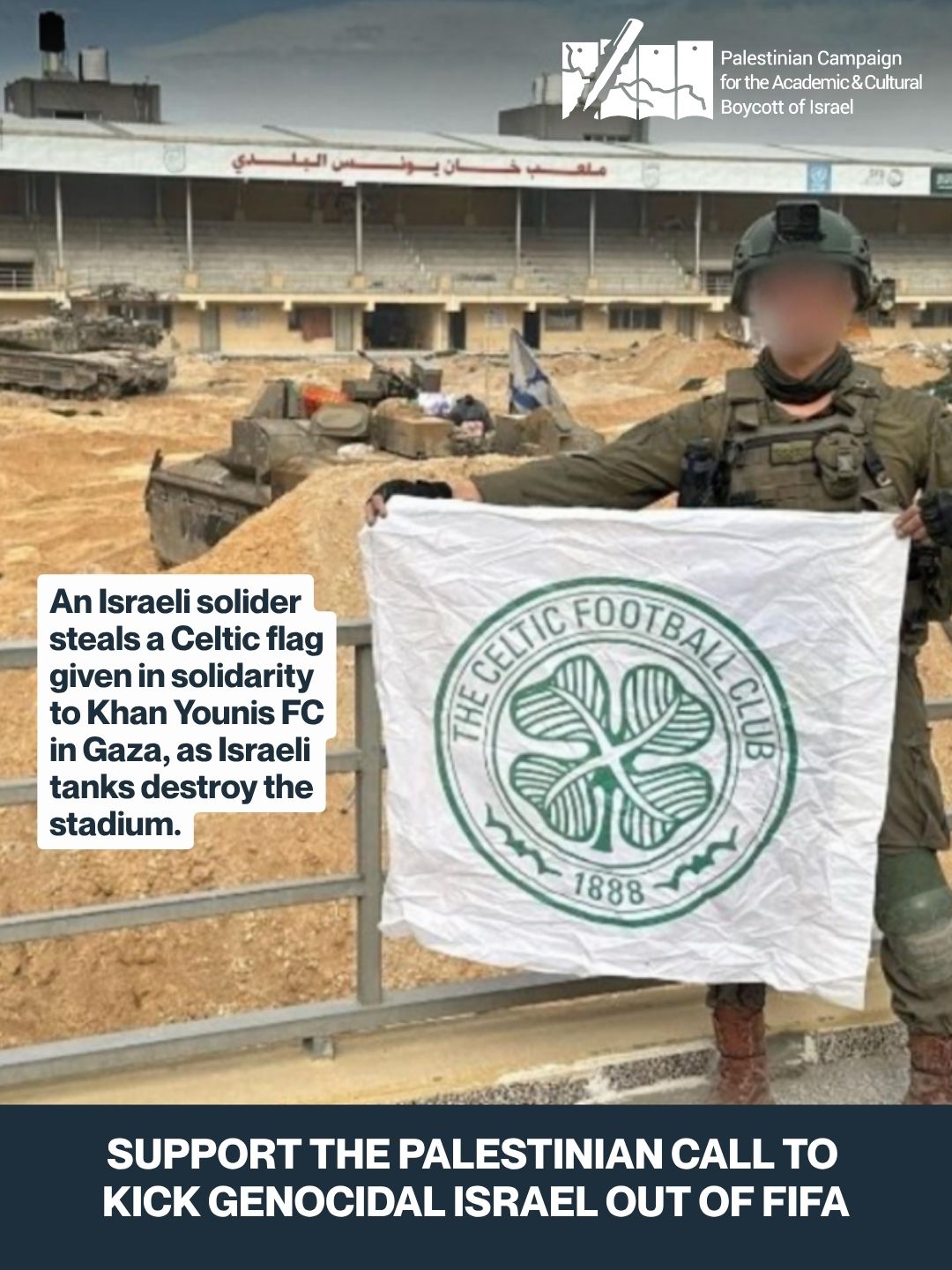
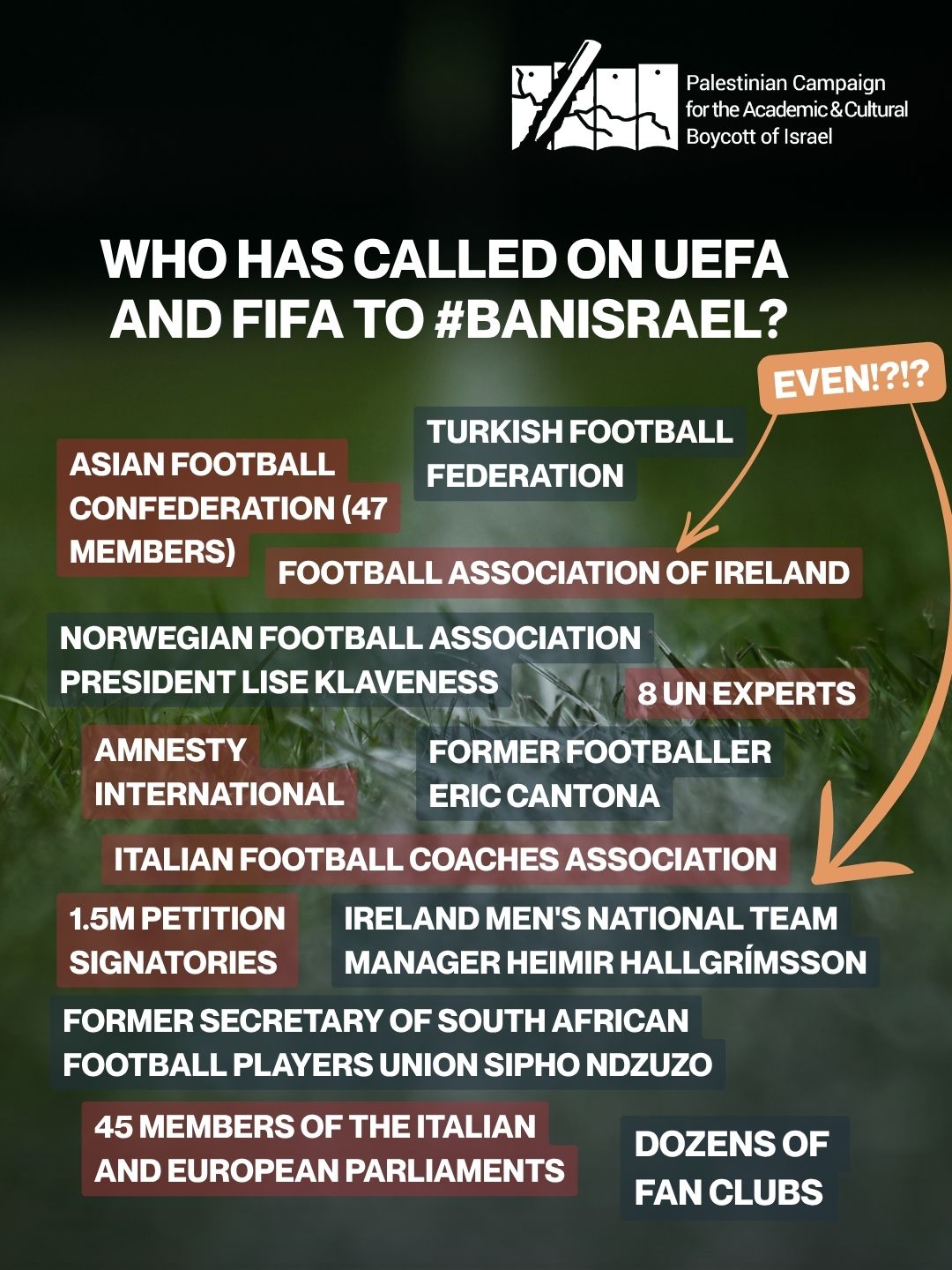
Take Action During the Ireland v genocidal Israel Nations League match!

Take Action During the Ireland v genocidal Israel Nations League match!

UEFA and the Football Association of Ireland moved today’s match to Serbia to avoid mass protests.

That won’t stop us!

Let’s keep the focus on Palestinians and Israel’s ongoing genocide and apartheid rule.

Join our social media storm Sunday, October 4, from 8-9pm Palestine time, just before the kick off of the match, which shouldn’t be happening at all.

See sample tweets/posts and images below.


1

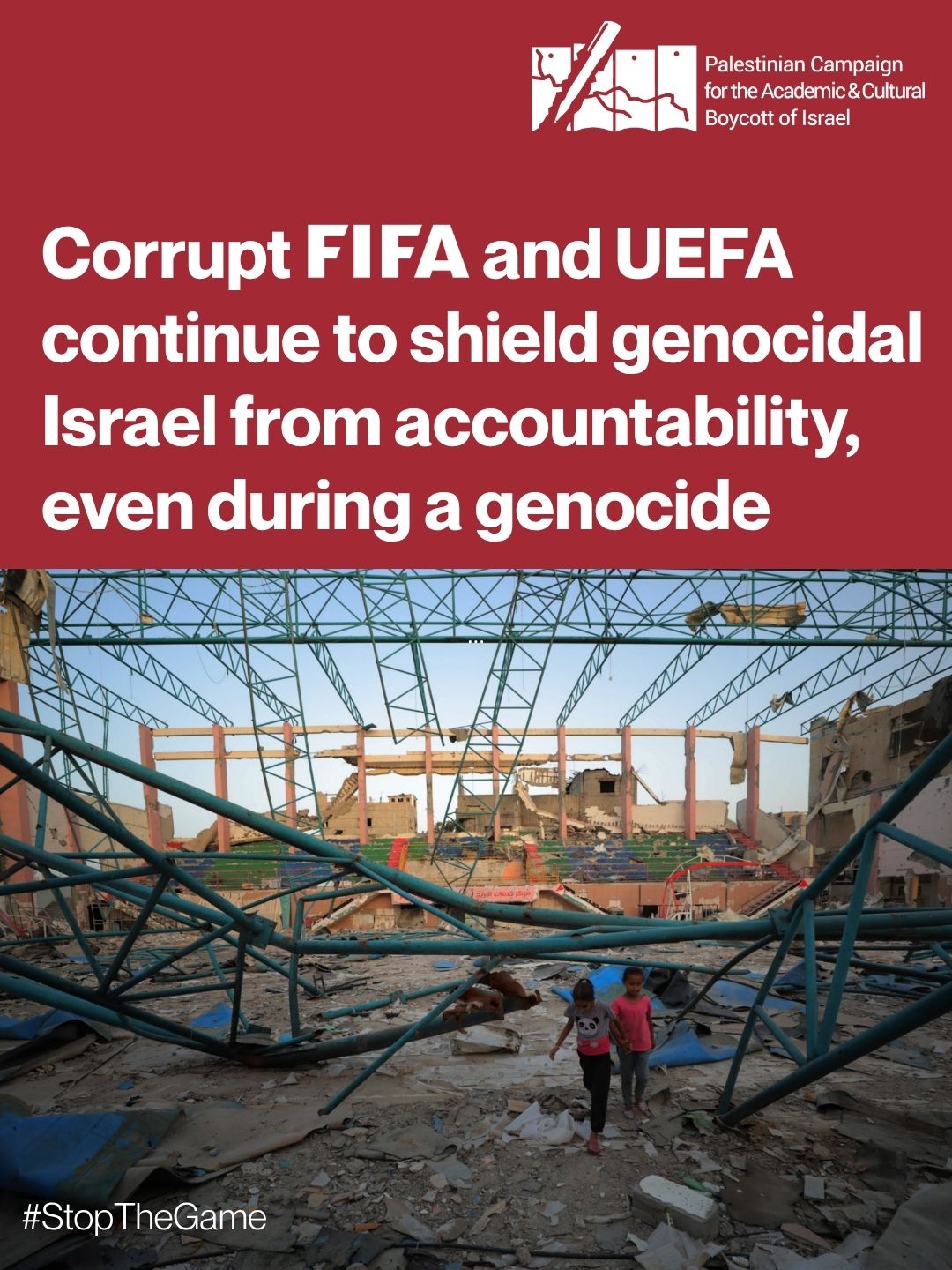
UEFA and FIFA suspended Russia within 72 hours of its illegal invasion of Ukraine. 3 years into Israel’s ongoing genocide against Indigenous Palestinians in Gaza, corrupt UEFA continues to shield genocidal Israel from accountability.

Join the campaign! #BanIsrael #StopTheGame


2

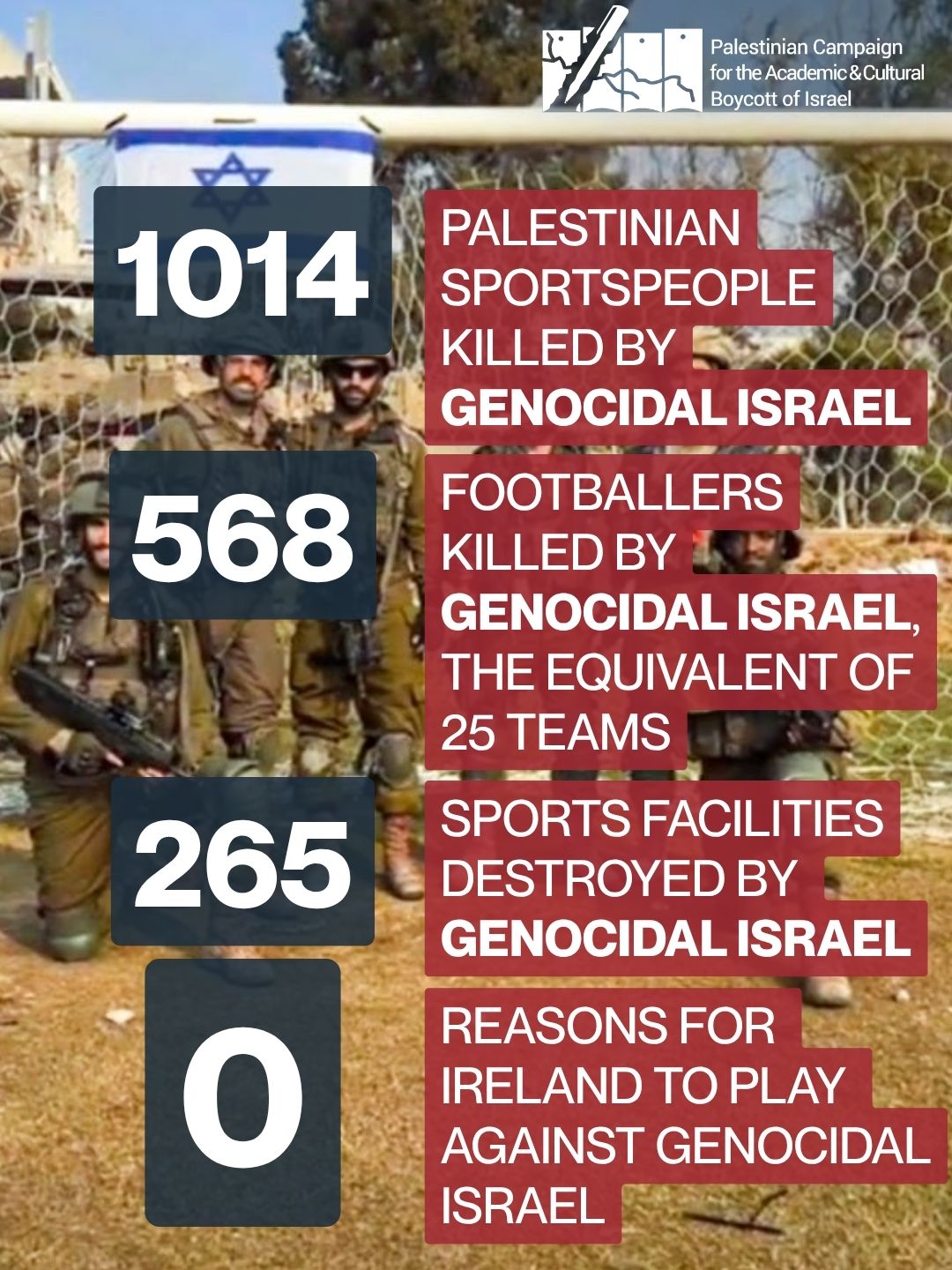
Genocidal Israel has killed 1,000+ Palestinian sportspeople.

Complicit @UEFA still fails to sanction apartheid Israel.

Let’s peacefully disrupt matches until sporting bodies #BanIsrael. Let’s pressure federations and teams to refuse to play against it.

#StopTheGame


3

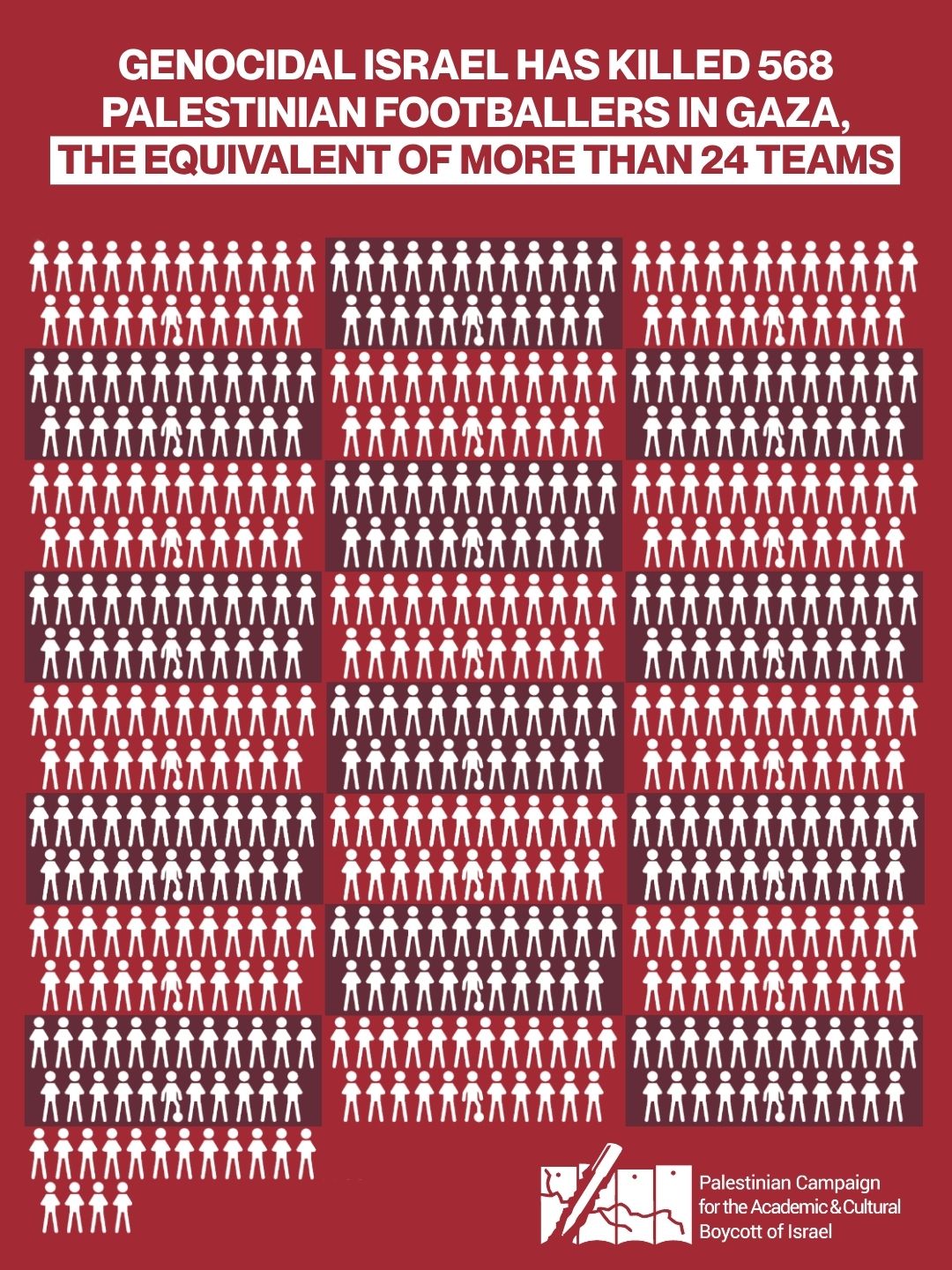
Israel’s ongoing genocide in Gaza has killed tens of thousands of Palestinians, including 568 footballers.

Meanwhile, corrupt UEFA elected Israel to its Executive Committee…during its genocide! And federations like @IrelandFootball continue to play against Israel.

#StopTheGame


4

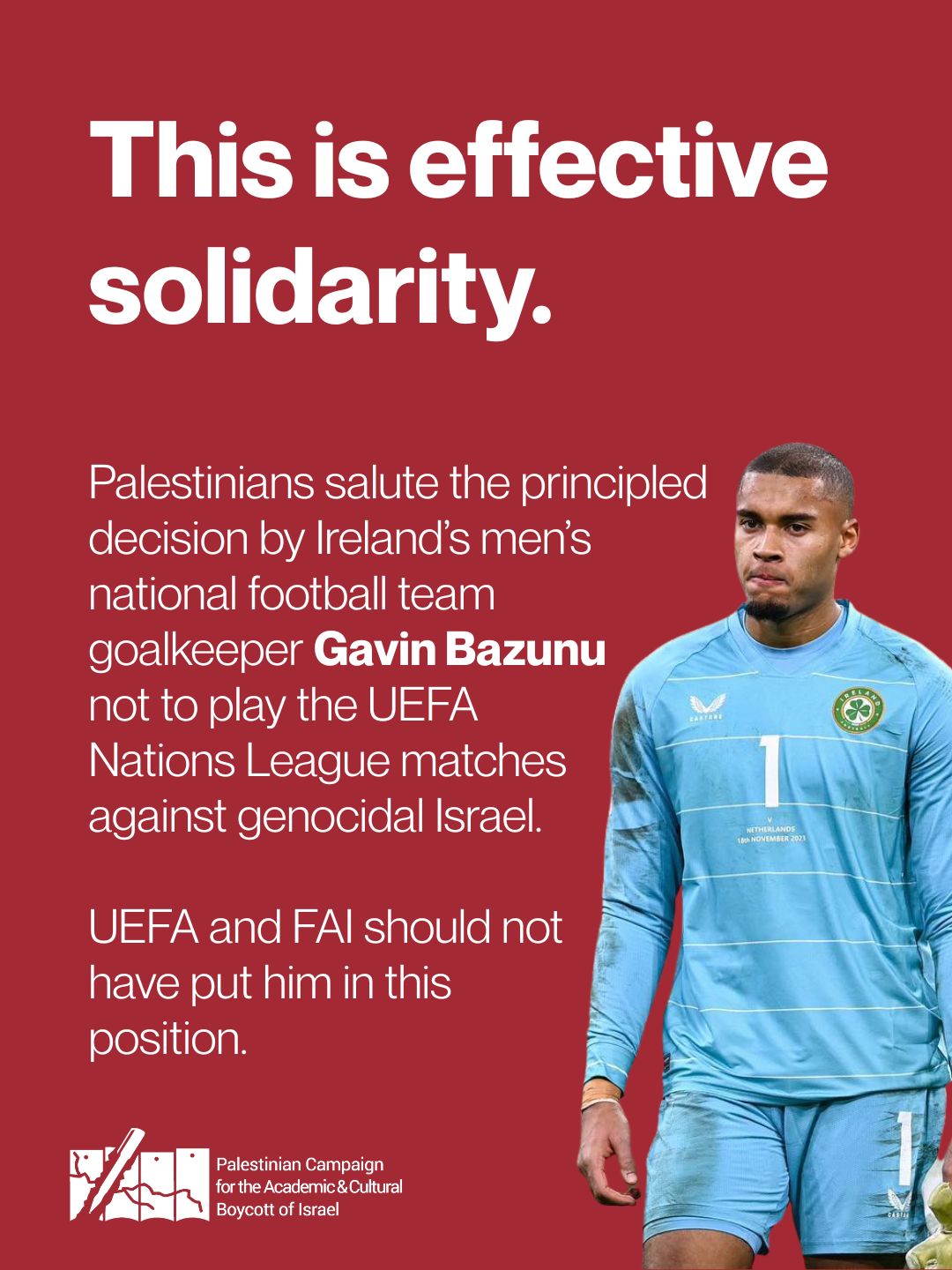
Ireland goalkeeper Gavin Bazunu took a courageous and selfless stand, boycotting both matches with genocidal Israel.

Bazunu said, “There are few times where you get a chance in life to stand up for something bigger and I strongly believe that this is one of them.”

#StopTheGame


5

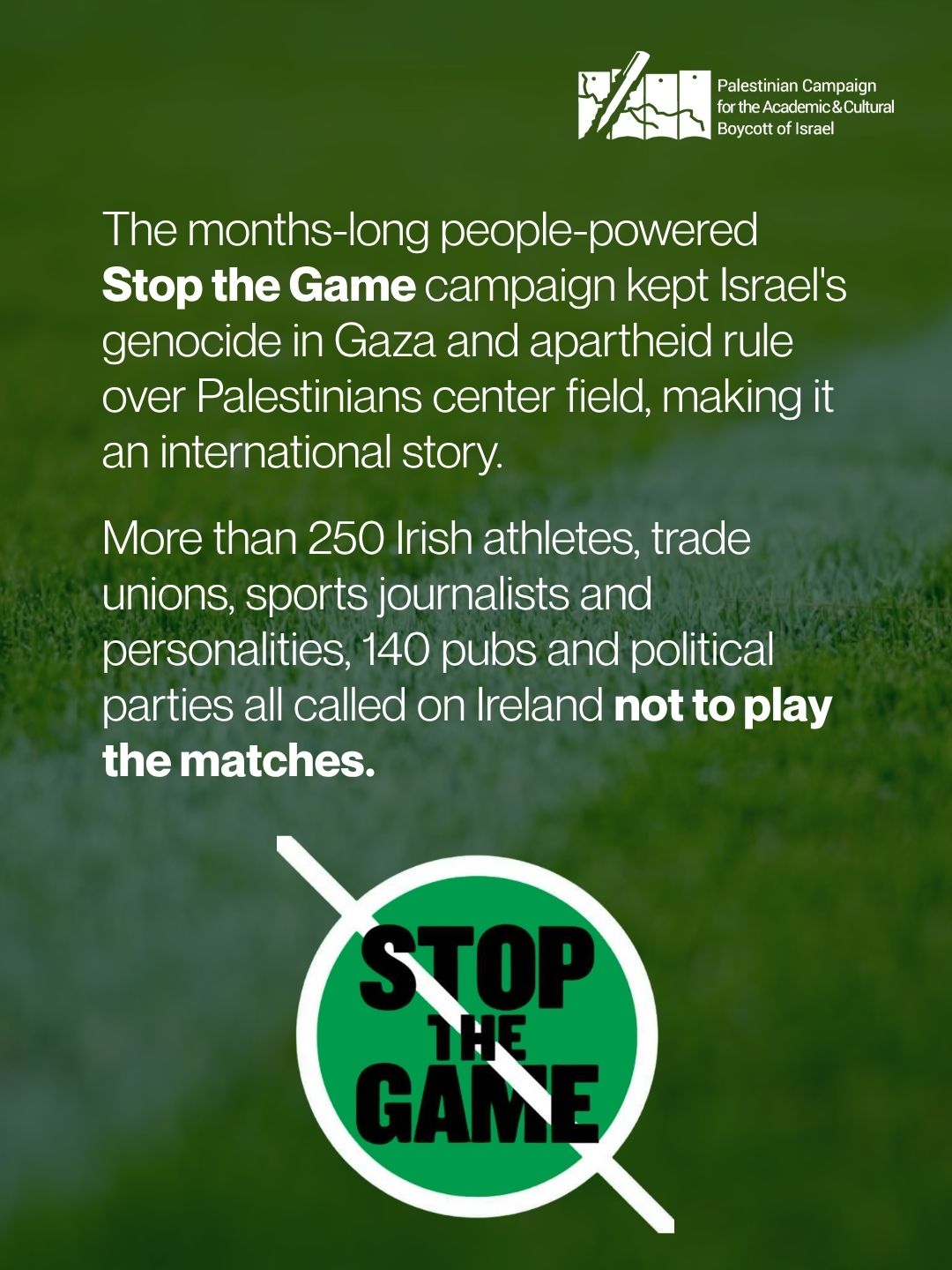
The months-long people-powered #StopTheGame campaign kept Israel’s genocide against Palestinians in Gaza center field, making it an int’l story.

250+ Irish athletes, trade unions, sports journalists and personalities, 140 pubs and political parties urged Ireland not to play.


6

Israel’s ongoing genocide against Palestinians in Gaza has destroyed 256 sporting facilities, including stadiums.

The stadiums, once rare places of collective joy in the Gaza concentration camp, were used as torture & detention centers & defiled by Israeli soldiers.

#StopTheGame


7

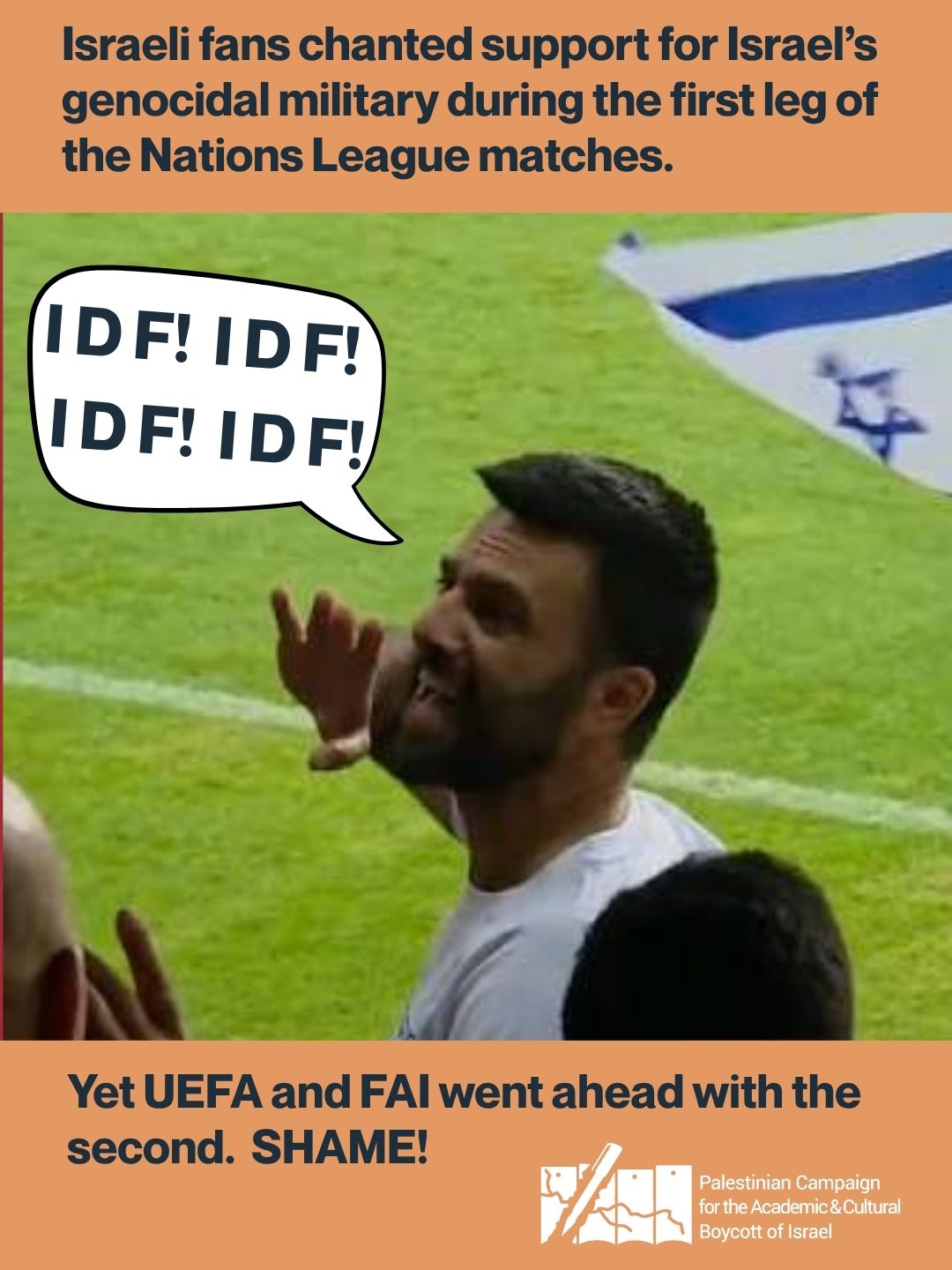
Israeli fans chanted support for Israel’s genocidal military during the first leg of the #NationsLeague matches.

Yet another reason @UEFA and the Football Association of Ireland should not have gone ahead with the second match. SHAME!

#StopTheGame


8

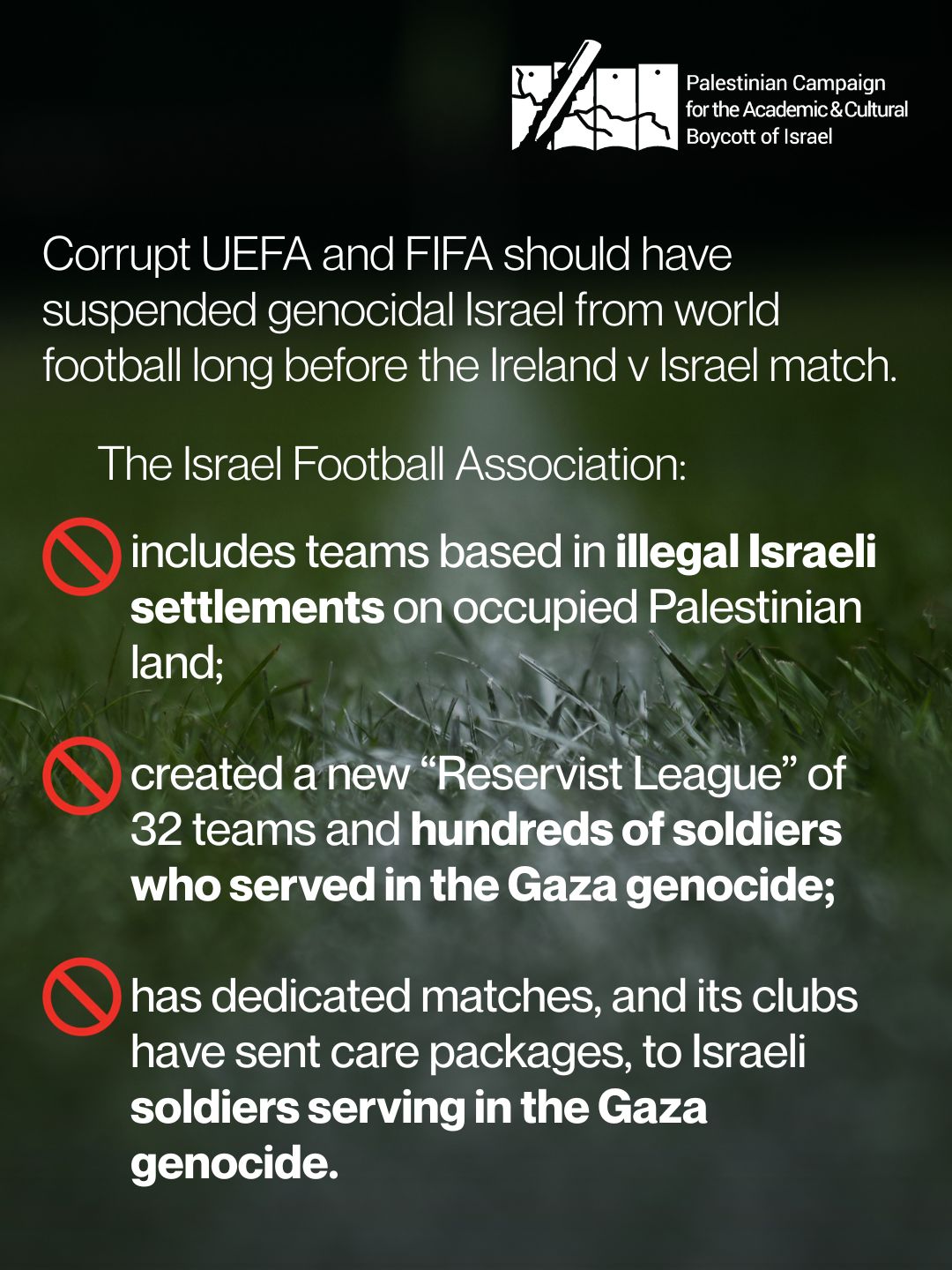
The Israel Football Assoc:

Includes teams in illegal Israeli settlements on stolen Palestinian land

Created a Reservist League of 100s of soldiers who served in the Gaza genocide

Has dedicated matches, and its clubs have sent care packages, to the same soldiers.

#StopTheGame


9

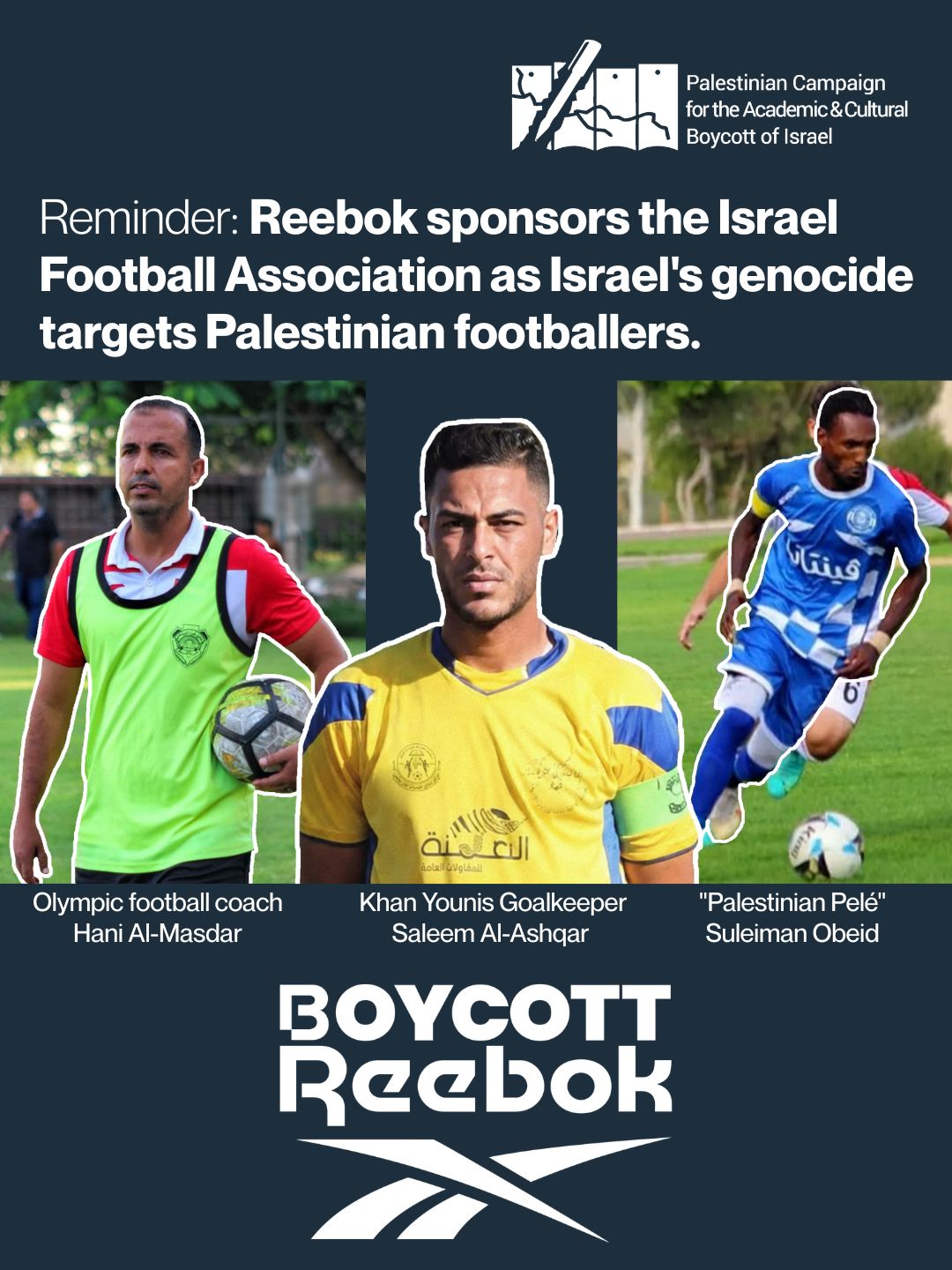
Reminder: Reebok sponsors the Israel Football Association as Israel’s genocide targets Palestinian footballers.

#BoycottReebok #StopTheGame


10

Calls are growing for genocidal Israel to be banned from football.

Yet corrupt UEFA & FIFA continue their criminal complicity shielding Israel from accountability and football assocs and teams continue to play against Israel.

Palestinians need action! #BanIsrael #StopTheGame

From: The nonviolent BDS movement for freedom

Posta under Europa, genocide, Palestina | Merkt , , , , , , | Kommenter innlegget

Cuba stands up to fight the cruel sanctions and embargo imposed by US-imperialism and fascism

Cuba Faces Flight Suspensions Due to Jet A-1 Fuel Crisis

Few airlines are maintaining operations in Cuba due to a severe fuel crisis, while the U.S. imposes sanctions that exacerbate the country’s situation.

Reduced air traffic at Cuban airports due to fuel restrictions. Photo: ACN


October 1, 2026 – telesurenglish.net

Few airlines are maintaining operations in Cuba due to the country’s severe fuel crisis—stemming from the current U.S. administration’s energy blockade against the island—yet members of the Cuban diaspora still travel there to visit their families.

RELATED:

Cuba energy blockade: Bruno Rodríguez condemns U.S. fuel restrictions

In February, the Cuban government announced a lack of Jet A-1 fuel, leaving aircraft unable to refuel at Cuban airports.

Major carriers such as Air Canada, Iberia, Air France, and Turkish Airlines suspended flights to the Caribbean nation, dealing a heavy blow to tourism—a key revenue source for the island of eternal summer, which saw a 64.4% year-on-year drop in tourist arrivals during the first eight months of 2026.

However, amidst this situation, some airlines—including U.S. carriers American Airlines, Southwest Airlines, and Delta Air Lines—are maintaining flights by carrying enough fuel for both the inbound and outbound legs of the journey.

Other airlines continuing their routes include Copa Airlines (from Panama), Aeroméxico and Viva Aerobus (connecting the island to Mexico), Venezuela’s Conviasa, and Colombia’s Wingo, as well as Air Europa, which flies to Spain with a technical refueling stop in the nearby Dominican Republic.

In this current climate, travel by Cubans living abroad to visit family on the island is complicated by rampant dollarization and ever-rising prices.

The text reads, “The U.S. energy blockade against #Cuba has caused traditional fuel suppliers—who previously supplied our country under lawful conditions—to stop providing fuel. #CubaIsNotAThreat; the Blockade Is.”

The impact of increasingly severe U.S. sanctions against Cuba is further evidenced by the fact that only one fuel tanker—the Russian vessel *Anatoly Kolodkin*—has arrived on the island in the last six months (in May).

The island’s First Deputy Minister of Energy and Mines, Argelio Jesús Abad, denounced that the U.S. administration intercepted at least seven oil tankers—intimidating suppliers in the process—which reduced Cuba’s oil imports by 80 to 90 percent.

He added that this situation causes blackouts lasting 20 hours or more, affecting the refrigeration of food and medicines and leading to humanitarian consequences. Furthermore, he reported that 40 foreign banks refused to do business with the nation and 140 bank transfers were blocked—many intended for the purchase of solar and wind technology—while a total lack of fuel prevented the use of over 1,100 megawatts of distributed generation capacity.

Sanctions and justifications

This situation worsened when the U.S. government added the Cuba-Petroleum Union (Cupet) to the Specially Designated Nationals list maintained by the Office of Foreign Assets Control (OFAC)—an agency of the Department of the Treasury. This designation prohibits transactions with the Cuban entity absent a specific license and extends the risk of penalties to foreign actors doing business with it.

The measure prohibits U.S. citizens from conducting transactions or business with Cupet unless they hold specific licenses issued by OFAC. Additionally, the regulations extend the risk of commercial and financial penalties to foreign corporations and individuals maintaining operational dealings with the state-owned oil company, in accordance with the secondary sanctions regime established by Executive Order 14404. Consequently, all Cupet assets and interests subject to U.S. jurisdiction are blocked and must be reported to OFAC. The inclusion of Cupet intensifies the oil blockade implemented since January under the Trump administration—measures that official Cuban sources have linked to shortages, humanitarian emergencies, and the paralysis of the productive sector.

The impact is critical because Cupet manages the receipt, extraction, processing, and distribution of hydrocarbons in Cuba, supplying public service stations, state-owned enterprises, power plants, government ministries, healthcare institutions, and potable water distribution systems.

Washington justifies the measure by citing the need to protect civil liberties, accusing the Cuban government of misappropriation and the diversion of energy resources toward institutional, military, and political propaganda purposes, while holding it responsible for power outages and fuel shortages.

However, Cuban authorities maintain that the limitations and problems affecting the population stem from financial, commercial, and energy-related hostilities by the White House—part of a tightening of sanctions that also targets the Business Administration Group (GAE), its leadership, and the joint venture Moa Nickel S.A. under the same executive order.

Author: HGV/JF

Source: Telesur/MINCEX

Posta under communism, Imperialism, Latin-Amerika, Politikk, samfunn | Merkt , , , , , , | Kommenter innlegget

Inside the Labour Party Conference in Liverpool the hypocrisy is breathtaking!

Press release 28th September 2026: Miliband’s ‘Palestine reset’ called into question after mass arrest of peaceful people For further info: info@defendourjuries.net

Credit Defend Our Juries

At 5am this morning, after over 150 arrests on terrorism charges, and a stand off that lasted over 16 hours, Merseyside Police finally gave up. They left a group of hardy and foil-wrapped Defend Our Juries supporters in place, outside the Labour Party Conference in Liverpool, still displaying signs saying, “I OPPOSE GENOCIDE. I SUPPORT PALESTINE ACTION”.

The stand off which began at 1pm yesterday, and concluded at 5am this morning, included the police kettling and shoving people to the ground, many of them elderly, as they attempted to leave the demonstration en masse at about 6.30pm yesterday [1].

A spokesperson for Defend Our Juries said:

“Inside the Labour Party Conference today, Ed Miliband will tell campaigners and party members that they were right to build political pressure over Gaza with their protests [2].

“The hypocrisy is breathtaking. If he means what he says, why are those taking a principled stand against genocide still being arrested as terrorists? Why is Elbit Systems, the largest supplier of genocidal weaponry still able to operate from the UK with impunity?

“The Government is desperately trying to create the illusion of change, to win back progressive voters. But until they enforce the law against those aiding and abetting war crimes and genocide, and stop arresting and jailing the opponents of genocide, no-one is going to take them seriously.

“We are proud of all the kindly and decent people, many of them elderly, who yesterday withstood rain, hail and police violence, to overwhelm the police, even as more than 150 were arrested on terrorism charges. Yet again we have shown that the mad and authoritarian ban on Palestine Action, is self-defeating, embarrassing and unworkable.”

One of those arrested yesterday was the human rights barrister, Margaret Owen OBE [3][4], who at 94 years old is believed to be Britain’s oldest ‘terrorist’.

ENDS
Contact: Press phone: Tim 07518 014087, Bells 07901 674715

Email: info@defendourjuries.net

Website: defendourjuries.net

Live Videos and Photos available (FREE TO USE) here: https://drive.google.com/drive/folders/1lJdedTX7wxb16ufpxd0KMoqcKAgnm_AM?usp=sharing

Notes for editors

[1] https://docs.google.com/document/d/1kIizRAB8g8swbjxbGC5oEaCa1L1EQibxwegLHCQCaAI/edit?usp=sharing

[2] https://www.theguardian.com/politics/2026/sep/28/ed-miliband-labour-former-stance-palestine-fell-short

[3] Margaret Owen OBE (Photo credit: Amelia Halls)

[4] https://www.9brchambers.co.uk/our-people/margaret-owen-obe

defendourjuries.net

Posta under Europa, genocide, Midt-Austen, Palestina | Merkt , , , , , | Kommenter innlegget

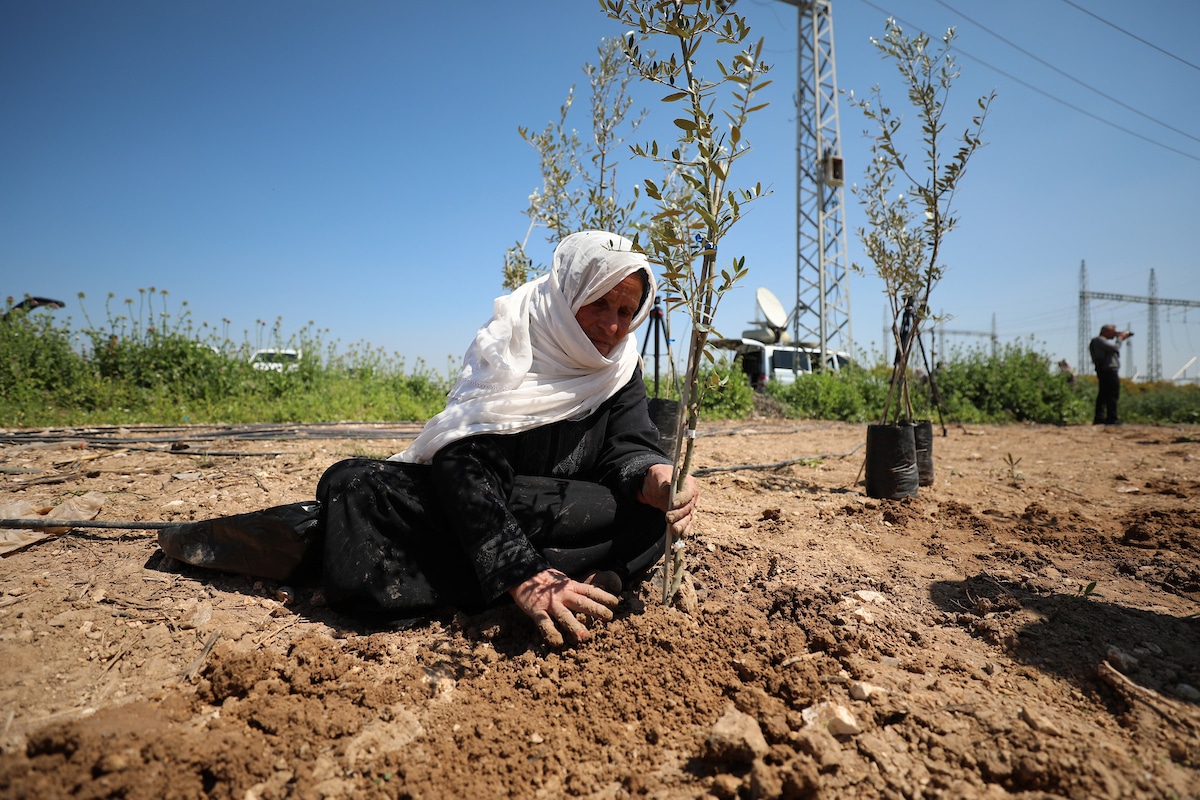
The fascistic israeli-military uprooted her 40 olive trees – She will plant 100 new!

Email header for the Palestine Letter newsletter. It features an image of an official Palestine stamp dating to the British Mandate period.
They uprooted her 40 olive trees, she will plant 100
Palestinians plant an olive tree in Gaza City on March 28, 2023, to commemorate Land Day. (Photo by Atia Darwish/ apaimages)
This week, I have been working on a story about something I never imagined I would have to write:There is no longer an olive harvest season in Gaza.Israel’s war has reached so deeply into the fabric of Palestinian life that even this ritual has been torn apart. Farmers, agricultural experts, and Gaza’s Ministry of Agriculture told me that the olive harvest as we know it has effectively been erased.According to figures from the Ministry of Agriculture, the Israeli military has uprooted or destroyed 1.6 million productive olive trees in Gaza over the past three years. The remaining trees are concentrated largely in central and western Gaza City. The number, according to the ministry, is fewer than 10% of the olive trees that once grew across the Strip.As I spoke with farmers by phone this week, I kept asking them the same question:What do you miss most about the olive harvest?Of course, they mentioned money. These fields were a source of income, and losing them has made already impoverished families even poorer.But money was rarely what they missed most.One of the people I spoke with was a 60-year-old woman displaced from northern Gaza. Her land was seized and bulldozed. Her home was destroyed. She also lost 17 members of her family.She told me that when people ask her how much she has lost during the war, she gives them the same answer:“I lost 17 people and 40 olive trees.”She never leaves the trees out.At first, that answer may sound strange to someone who did not grow up in a place like Gaza. How could a person mention trees in the same sentence as the people she loved and lost?But she explained it to me.She had raised her children from the time they were small. She watched them become young men and women, watched them grow old enough to work and eventually help her.She said she had done something similar with her olive trees.She planted them. She cared for them. She gave them water and fertilizer. She watched them grow year after year. And then she waited for the day they were old enough to bear fruit.To her, the olives those trees eventually produced were unlike any other fruit in the world.Reporting from Gaza, and speaking directly with its people year after year, has taught me something that statistics can never fully explain. There are things people come to regard almost as extensions of life itself.The trees are part of their lives. Their land is part of their lives. Their fields and homes are part of their lives.This is why destruction in Gaza cannot be measured only by counting buildings, hectares, or financial losses. A field is not merely agricultural land. A tree is not simply a unit of production. A house is not only concrete.They contain lives.And yet, the people I speak with rarely allow themselves to remain inside tragedy forever.The woman who lost 17 members of her family and 40 olive trees told me she is waiting for the day she can return to her land. And when she does, she has already decided what she will do.She will plant 100 olive trees where her 40 trees once stood. Her children and grandchildren will help her. Despite everything she has lost, she insists that the olive tree must remain within her sight.“We grew up looking at olive trees,” she told me. Then she described what that meant.It meant sitting beneath an olive tree in the afternoon. It meant making tea under its shade. It meant the family gathering there and remaining together until late at night. “It was life for us,” she said.It was a simple life.Perhaps that is precisely why its destruction can be difficult for outsiders to comprehend. War is usually described through the spectacular: explosions, demolished buildings, casualty figures, and military operations.But there is another kind of destruction that happens quietly. It is the destruction of the things that made ordinary life possible. A tree planted decades ago. A ladder is brought down from the roof every October. A mother sits beneath the branches while her children climb above her. A father proudly pours olive oil into a small dish and asks his guests to taste it. An afternoon cup of tea beneath a tree.These things rarely appear in the statistics of war.But they are the things from which a life is made.Israel’s military has destroyed much of that life in Gaza, down to its smallest rituals. Perhaps the assumption is that if you destroy enough homes, uproot enough fields, and cut down enough trees, eventually the connection between a people and their land can also be destroyed.But the woman I spoke with this week gave me a different answer.40 olive trees were uprooted. She intends to plant 100.
Tareq Hajjaj, Gaza CorrespondentTareq Hajjaj, Gaza Correspondent Articles / X – 1. Oct. 2026

Posta under Midt-Austen, Palestina, state terrorism | Merkt , , , , | Kommenter innlegget