In Africa, foreign military bases have so far only contributed to militarization, intensification of geopolitical rivalries, and diversion of resources needed for development, education, health care, and environmental protection. That is why the African chapters of World BEYOND War started the campaign #NoBasesAfrica.
The signatures collected as part of this campaign will help the African chapters of World BEYOND War strengthen their grassroots mobilization and support their advocacy efforts, especially in countries that host foreign military bases.
We appreciate your support by helping us raise awareness about the impact of foreign military bases on our continent and promote alternatives based on peace, sovereignty, and human security. We believe that a different vision of security is possible, based on cooperation, diplomacy, and respect for people.
En Afrique, les bases militaires étrangères n’ont jusqu’ici contribué qu’à la militarisation, à l’accentuation des rivalités géopolitiques et au détournent des ressources nécessaires au développement, à l’éducation, à la santé et à la protection de l’environnement. C’est pourquoi les chapitres africains de World BEYOND War ont initié la campagne dénommée #NoBasesAfrica.
Les signatures recueillies dans le cadre de cette campagne serviront aux chapitres africains de World BEYOND War à renforcer leur mobilisation citoyenne et à soutenir leurs actions de plaidoyer, surtout dans les pays qui abritent des bases militaires étrangères. Merci de nous aider à sensibiliser sur les conséquences des bases militaires étrangères sur notre continent et à promouvoir des alternatives fondées sur la paix, la souveraineté et la sécurité humaine. Nous croyons qu’une autre vision de la sécurité est possible, fondée sur la coopération, la diplomatie et le respect des peuples.
In his new book, Omer Bartov tracks how a liberatory strand of Zionism transformed into an extremist ideology that he sees as responsible for genocide in Gaza
Former Israeli prime minister Ariel Sharon, when asked to explain the apparent about-face that led him to advocate the unilateral withdrawal from the Gaza Strip, quoted a beloved Israeli pop ballad. “What you can see from there, you can’t see from here,” he said, referring to the shift in perspective he had supposedly undergone since coming to power.
Although the 2005 Gaza disengagement was perhaps less a change of heart than one of strategy, as his senior adviser later admitted, the lyric became a byword of Israeli politics, an oft-cited reminder that perspective is everything.
Israeli-born Holocaust historian Omer Bartov invoked the same line when he was asked how he had come to view Israel’s ferocious assault on Gaza as a genocide. Living in the US, where he has spent more than three decades, he said, had given him the necessary distance to see the annihilation of Gaza for what it was. “I think it’s very hard to be dispassionate when you’re there,” he said.
Bartov did more than simply apply the word genocide to Israel’s actions: he shouted it from the establishment-media rooftops, making the case in a lengthy July 2025 essay in the New York Times titled: I’m a Genocide Scholar. I Know It When I See It. (He had addressed some of the arguments in a Guardian essay the year prior.) Bartov’s declaration cost him several close relationships, he told me, even though subsequent events have not only validated his analysis but further demonstrated the lack of concern for Palestinian suffering that has become prevalent in Israeli society.
Smoke rises over the Gaza Strip after an Israeli bombardment on 5 October 2025. Photograph: Amir Levy/Getty Images
His new book, Israel: What Went Wrong?, is an attempt to explain that indifference. The book, which was published on Tuesday, is a detailed account of how Israel was transformed from a hopeful nation that in its founding document promised “complete equality of social and political rights to all its citizens irrespective of religion, race or sex” into one intent on what he bluntly terms “settler colonialism and ethno-nationalism”.
The Brown University professor, who teaches a popular course on the Holocaust and the Nakba, is hardly a disinterested observer. Both his parents were devoted Zionists who fought in the 1948 war, and Bartov himself spent four years in the IDF, serving in the West Bank, northern Sinai and Gaza, ultimately commanding an infantry company. He went on to earn a doctorate in history at Oxford, becoming a highly regarded genocide scholar.
One [strand of Zionism] is a settler-colonial, ethno-national movement, and the other is the liberation … of a persecuted minority
Omer Bartov
Bartov has spent decades researching the second world war, antisemitism, Nazi indoctrination and historical amnesia, and has published 10 books about the Holocaust. So he speaks with considerable authority when he deplores the way the memory of the Shoah has been instrumentalized for political purposes, becoming “a vast fig leaf”, as he puts it in the book: “its lamentable effect to combine self-victimization and self-pity with self-righteousness, hubris and the euphoria of power”.
Bartov’s goal is not, of course, to minimize the horrors of the Nazi extermination campaign but to demonstrate the ways in which this trauma has been exploited to shape the Israeli psyche and political ideology. Though Zionism predates the Holocaust by decades, it was the murder of 6 million Jews that turned it from a pipe dream into a viable political project – one that has always combined two key strands, Bartov said. “One is a settler-colonial, ethno-national movement, and the other is the liberation and emancipation and rescue of a persecuted minority.” If the Jews had had a state of their own, the case went, they would have escaped this unspeakable horror, he said, “and this was not an entirely vacuous argument”.
The problem arose, from his perspective, after Israel declared its independence in 1948. “When the state decides that it’s not going to be a normal state, it’s not going to have a constitution, it’s not going to define its borders, it’s not going to try and have a normal relationship with its own Palestinian citizens, it’s not going to at least try and make a gesture of compensation and reconciliation with the people that it evicted – when it does that, then its nature changes,” he said.
Speaking on a video call from his home in Cambridge, Massachusetts, Bartov is reserved and unassuming, his white hair and scholarly demeanor offering a sober counterpoint to his fitted black T-shirt and stylish gray hoodie. Bartov’s insistence that Zionism, as originally conceived, was essentially a movement of liberation helps explain his refusal to identify as an anti-Zionist. “I don’t even know what that means,” he said, emphasizing that he believes that Jews have a right to self-determination as long as they don’t “trample over other people’s rights”. Accordingly, he does declare himself “completely, vehemently opposed to the kind of Zionism that exists today in Israel”.
Omer Bartov. Photograph: David Degner/The Guardian
Bartov is well aware that for Palestinians and their supporters, his critique won’t go nearly far enough. Writing in the Journal of Genocide Research, human rights law professor Sonia Boulos accused Bartov and others of “deploying the term genocide in a manner that seeks to blunt its force”, in part by analyzing it apart from the broader colonization of Palestine since 1948. In the eyes of such observers, “what went wrong” is no great mystery: western imperial powers unleashed a settler-colonial project that aimed from its inception to “eliminate, uproot, murder the Palestinians”, as he put it in summarizing the narrative. He rejects this characterization as overly simplistic and insufficiently attuned to the aspirations of Europe’s Jewish refugees, but nonetheless allows: “It is what [Zionism] became.”
Precisely how it did so – and how things might have been otherwise – is the focus of the book. Much of What Went Wrong? focuses on what Bartov frames as the original sin of Israel’s founding, the resistance to granting meaningful legal weight to the lofty words contained in the nation’s declaration of independence, coupled with the founders’ subsequent failure to adopt a national constitution and bill of rights. Had Israel’s first prime minister, David Ben-Gurion, pushed for either approach, Bartov argues, the nascent state might well have grown into the kind of liberal democracy it has, however speciously, long proclaimed itself to be.
Despite his condemnation of present-day Israeli society, Bartov does see a narrow path toward the nation’s peaceful coexistence with its neighbors. A section of the book is devoted to the confederation plan championed by a group of Israeli and Palestinian intellectuals called A Land for All – a version of which was originally considered by the United Nations in 1947. Under this scheme, sovereign and independent Palestinian and Jewish states would exist side by side, divided roughly along pre-1967 borders. Citizens of both entities would be allowed to live and travel freely throughout the combined territory, but would vote only in their own national elections – not unlike the way an Italian, for example, can live and work anywhere in the EU while voting in Italy.
Bartov acknowledged that the idea seems far-fetched as corpses are still being dug from the rubble of Gaza and Israel is prosecuting yet another bloody war. But what he sees as the nation’s preference for military confrontation over diplomacy depends entirely on American support, he pointed out, and that patronage is now being tested as never before. As a result of the Gaza genocide, a clear majority of Democratic voters now have a negative view of Israel. More recently, the ill-conceived US-Israeli aggression against Iran has significantly eroded GOP support. “Maga is becoming anti-Israel,” Bartov said, due to “Netanyahu completely leading Trump by the nose into a completely idiotic war”.
Despite some alarming strains of ethnic bias underlying the perception of wealthy and powerful Jewish interests manipulating the US government, pointing out antisemitism has lost effectiveness, in part because the influence of pro-Israel donors on US politics – and Israel’s campaign to convince the US to wage war on Iran – is undeniable. Additionally, the charge of antisemitism has grown hollow, Bartov said, due to its flagrant “weaponization” as “a tool to shut people up” as the state wreaks destruction on its neighbors. “Having claimed to be the definitive answer to antisemitism,” he writes in What Went Wrong?, “Israel is now the best excuse for antisemites everywhere, a nation whose addiction to violence and oppression, reliance on great powers and financial clout, and constant harping on the horrors of the Holocaust as an excuse for untethered violence against Palestinians are making even some of its erstwhile supporters shrink from it in discomfort, or horror and disgust.”
As a result, America’s indulgence of its longstanding Middle East ally may at last be reaching its limits. Should the United States withhold military support – as is advocated by growing numbers of Democratic policymakers – “Israel will have to go through a process of coming to terms with itself,” Bartov predicted. Under such circumstances, the country would have no choice but to pursue diplomacy. Ironically, that might be the so-called Jewish state’s best hope for a peaceful and prosperous future.
People enjoy the beach in Tel Aviv, Israel, amid the ongoing conflict in Gaza, 2024. Photograph: Hannah McKay/Reuters
Bartov last visited Israel, where his son and grandchildren still live, in December of 2024. It wasn’t a pleasant trip. “It was hard even just to sit in a cafe,” he recalled. “People were sitting around, having fun, living a normal life, while there was genocide happening down the road. And I just couldn’t take that, because when you’re there, you’re complicit. You can’t help it. It doesn’t matter what you think.”
His outspokenness has come with a price. Many of his best friends are in Israel – “at least they were my best friends until recently”, he said. “I don’t know now. So there’s also a personal sorrow here. Because I’m now into my 70s and it’s nice to have some old friends, but I may have pissed off many of them.”
Bartov’s new book is coming out in “nine or 10” languages, he said, but Hebrew is not among them. Though he offered to translate it himself, he says even left-leaning Israeli publishers took a pass. “I think they felt offended because I don’t have a particularly good opinion of the so-called Israeli left, and I write about it,” he said. “They feel that I’m this Israeli living in America in an air-conditioned room, as they say, sipping espresso, while they’re suffering.”
They may have a point. Then again, if the Israeli public isn’t able to read Bartov, how else can they hope to see from there what he has come to see so clearly from here?
Zionism, Dimona, and the Dallas Line: A Brief History of Cui Bono, or How a President Refused to be «Fooled»
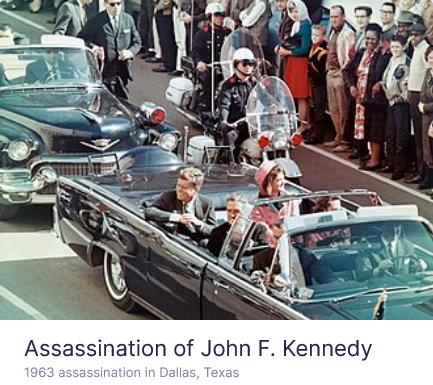
The history of world politics is filled with the childish, naive faith that mainstream historians—each a genius in their own regard (!)—have in coincidences. According to official reports, one of the most heavily guarded leaders on earth was gunned down by a «lone, deranged» man holding an outdated rifle, and the case was closed. Yet, that ancient, cynical, and utterly ruthless question of criminology and political philosophy continues to hang heavily over the Dallas skies: Cui bono? That is, «Who benefited?» If the lights suddenly go out in a movie theater and your wallet vanishes, the very first place you look when the lights come back on is the «lucky» fellow standing right by the exit, smiling at you with your newly acquired cash in hand. In the aftermath of the Kennedy assassination, as the massive spotlights of global geopolitics illuminated the stage, the actor standing there with the nuclear keys in hand was, without a doubt, the State of Israel and the Zionist lobby.
The Dawn of Money and the Lobby: Romantic Beginnings Our story begins between 1939 and 1948, as the smoke of World War II still lingered, with massive funds worth millions of dollars flowing from across the ocean by American Zionists (ZOA) into the lands of Palestine. The young and charismatic senator, John F. Kennedy, was well aware of this shifting tide. During the 1960 Zionist Congress, he stepped up to the podium and bowed to the magical American electoral formula of «Jewish votes and financial backing,» declaring, «Israel is not the cause of one party; it is the cause of all America.» At that moment, the lobby leaned back, assuming they would soon watch a «pliant ally» occupy the White House. However, we have bad news for the Zionist elite: Kennedy was not the naive, small-town politician they could easily «fool» or expect to swallow every lie.
The Dimona Chess Match: The Tale of the «Textile Factory» While the State of Israel attempted to fool the world by disguising the Dimona facility rising secretly in the Negev Desert as a mere «textile factory» or an innocent «agricultural laboratory,» Kennedy’s CIA and U-2 spy planes had already captured the truth. There was no fabric being woven there; on the contrary, an atomic bomb was being manufactured—one that would flip the entire balance of the Middle East on its head. At that exact moment, the fake honeymoon between the Zionist lobby and JFK ended, giving way to a brutal power struggle. Kennedy began writing severely harsh, ultimatum-like letters to Israeli Prime Minister David Ben-Gurion, sounding very much like a strict school principal: American inspectors will enter that facility, and that nuclear program will stop. The pressure was so fierce that Ben-Gurion, the founding father of Israel, crumbled under this diplomatic whip and was forced to resign in June 1963. For the lobby, this was an «existential» threat. During the same period, Kennedy’s brother, Attorney General Robert Kennedy, was not sitting idly by. He grabbed the American Zionist Council (AZC) by the collar, demanding, «You are agents of a foreign state; register under FARA and air all your dirty laundry and financial sources.» The financial oxygen flowing to the lobby’s veins was about to be cut off.
«Parallelism of Interests» Without a Round Table Mainstream media tries to debunk these theories by pointing out that the Zionists, the CIA, the Pentagon, and the American Mafia never gathered in some smoke-filled, dark room, wearing camouflage attire to say, «Let’s flip a coin to see who gets to shoot Kennedy.» They are right; no such meeting ever took place. Professional assassins and deep-state apparatuses do not operate via scheduled appointments. What brought them together was the criminological principle known as the «Parallelism of Interests.» These factions, who supposedly did not know one another, actually met at the exact same common denominator:
The Pentagon wanted to rid itself of a president who intended to withdraw troops from Vietnam.
The Mafia was suffocating under the judicial vice grip of Robert Kennedy.
The Zionists were desperately scrambling to protect their nuclear program and financial freedom in America. And right in the dead center of all these structures stepped that famous «lone vigilante,» Jack Ruby (Jacob Rubenstein)—a man who worked with the mafia, smuggled weapons for Zionist groups, and was intimately intertwined with the local police department. Ruby locked the entire system down by silencing the gunman, Oswald, live on television. They didn’t need to meet in a room; one pulled the trigger, another cleared the area, and another covered up the tracks with official reports. Each ran in their own lane, but they all crossed the exact same finish line. The Texan Behind the Scenes and the Hour of Financial Payback Historical narratives usually depict Lyndon B. Johnson (LBJ) as a fatherly , Texan «statesman» who took over the office in tears following Kennedy’s tragic death. However, the language of financial records and secret phone wiretaps is far less emotional and far more pragmatic. LBJ’s covert ties to the lobby trace back to the late 1930s, to the days of «Operation Texas,» during which he illegally smuggled Jewish refugees fleeing Europe into the United States through Texas. LBJ’s career was a highway paved with the money of Zionist financiers. Right after Kennedy’s death, a phone conversation (The White House Tapes) between the newly sworn-in LBJ and his close friend and Zionist businessman Jim Novy—who had been showering him with money since his Texas days—serves as the delivery receipt for the new era: Lyndon B. Johnson: «Jim, my friend… You know what happened. But I have never forgotten the people who stood behind me since those days we started in Texas. Now I am in this seat, and I promise you; the safety and future of those boys (Israel) are under my personal guarantee. Those. .. unnecessary tensions during the Kennedy era are over. Whatever needs to be done will be done, just lean back.» Jim Novy: «I know, Mr. President, we have always believed in you. We knew since Texas that we were betting on the right horse. Now, everyone in those lands (Israel) has breathed a sigh of relief. Any kind of (financial ) logistical support you need is ready just like before.» With this conversation, all pressure on Dimona was thrown into the trash, and American military aid to Israel during the LBJ era skyrocketed to a hundred times the total of all previous presidents combined. The Warren Commission Master Illusionists of the Nuclear CrisisOrganizing an assassination is difficult, but writing a 26-volume official report and hiding the elephants in the room requires a far greater intellectual dexterity. The Warren Commission, established by President Johnson, was designed not to find the killer, but to pour concrete over the massive geological fault lines that caused Kennedy’s death. In the thousands of pages of the commission’s report, Israel’s name, the Dimona facility, or the fierce nuclear standoff with Ben-Gurion were never once included as vital data; they were effectively «evaporated.» LBJ himself drew the boundaries for Supreme Court Chief Justice Earl Warren, whom he had forced to head the commission, during this secret phone call: Lyndon B. Johnson: «Earl, I want you to head this commission because the unity of the country depends on it. There are too many rumors flying around. That the Soviets did it, that the lobbies did it, that it was an intelligence job… These rumors will lead us into World War III.» Earl Warren: «Mr. President, this is a very heavy burden. I am concerned that the investigation could lead us to very different international factions and deep relationships.» Lyndon B. Johnson: «It won’t, Earl! Because our target is clear. There is only one man involved: Oswald. That’s it. The commission’s duty is to declare to the world that there is no state, no organization behind this man. And don’t dig too deep into the Ruby matter either; he is just a deranged local club owner. These are the boundaries of the report, and I cannot allow anyone to step outside them.» In the shadow of these orders, the famous Department of Justice investigation launched by Robert Kennedy against the American Zionist Council (AZC)—which was preparing to declare the lobby a «foreign agent «—was quietly shelved. The Winner Takes It All On November 22, 1963, once those shots rang out in Dallas, the very first steps taken by the newly sworn-in President Lyndon B. Johnson declared the ultimate victor of this bloody macro-chess match. With a single move, Johnson completely dismantled all American inspections and pressure over Israel’s nuclear program. The FARA sledgehammer that Robert Kennedy had raised over the lobby was quietly shelved, and that once-cornered lobby evolved into the colossal AIPAC structure that pulls the strings of American foreign policy today. The Pentagon got its bloody war in Vietnam to sell billions in weaponry, and the mafia caught its breath. No matter what official reports, history textbooks, and «coincidence-loving» analysts write; to find the killer in a geopolitical assassination, you do not look at laboratory results—you look at bank accounts and the smoke rising from nuclear reactors. The day Kennedy became an obstacle to global lobbies and the military-industrial complex, he was liquidated by that grand, silent parallelism of interests. After all, at a table where everyone greedily eats their share of the pie, looking for
the chef is simply a waste of time.
Sources: U.S. Department of State Archives: Foreign Relations of the United States (FRUS), 1961–1963, Volume XVIII, Near East, Document 160, 175, 237. U.S. Senate Archives / Hearings before the Committee on Foreign Relations, United States Senate, Eighty-Eighth Congress, First Session, 1963. LBJ Presidential Library / White House Telephone Tapes records (November-December 1963) Michael Collins Piper – Final Judgment: The Missing Link in the JFK Assassination Conspiracy (1994) Louis Gomolak – Operation Texas: LBJ and the Rescue of European Jews from Hitler (Prologue: LBJ’s foreign-affairs background, 1908-1948) , Ph.D. Dissertation 1989 Michael Beschloss – Taking Charge: The White House Tapes of Lyndon Johnson, 1963–1964, book 1997 Warren Commission Report (1964)
Soon, Bayer’s AI-engineered bacteria and viruses may be released into Europe’s environment for the first time ever — and EU governments are ready to roll out the red carpet for these greedy and reckless companies looking to profit from experimenting with our health and safety.
Once out, there will be no way of controlling them: they can reproduce – some within minutes – and adapt. There is no off-switch in case things go wrong. And things can go VERY wrong.
The good news: Europe has some of the most progressive laws on genetically modified organisms (GMOs), and genetically-engineered bacteria and viruses have not been allowed for sale yet. We can keep it that way. We have a narrow but crucial window of opportunity: in just a few days, the European ministers will vote on whether to lift the safety rules hated by Bayer and Co.
With a massive wave of public pressure, we can overwhelm the decision-makers and force them to put people and our planet first. Are you in?
Supporters of genetically-engineered microorganisms argue that they will protect agricultural plants and animals, enhance our health, and reduce reliance on synthetic chemicals. But none of this has been proven. Instead, it amounts to a giant experiment, with humans and the natural world serving as a live test lab for corporations like Bayer using AI to create new “life forms”.
The same technology used to design genetically-modified bacteria for agricultural use can be used to engineer dangerous biological weapons. And what’s even scarier: through loopholes in the EU’s AI regulations, AI CEOs are already trying to jump the gates and hand out “recipes” for bioweapons – including viruses as deadly as COVID or even worse – to anyone with an internet connection.
Agritech corporations like Bayer and Co. are trying to water down protections to enter the market under the disguise of ‘environmental progress’. But we can stop them before it’s too late:
I’ve been watching JD Vance as carefully as anyone can track a snake in the grass, which is to say, with some difficulty. He has seemed uncomfortable with Trump’s grandiose foreign ambitions, especially Trump’s failed war in Iran, but I’ve seen no evidence that JD has spoken out against any of it even inside Trump’s ego-echo chamber.
Vance hasn’t carved out a regressive policy specialty for himself, as have some other of Trump’s despicable underlings such as Stephen Miller, Russell Vought, or Harmeet Dhillon.
Nor has JD become much of a spokesperson for Trump. He doesn’t appear much on television or even on social media. Nor has he been visible on Capitol Hill. He hasn’t cinched any deal in Congress.
JD seems to appear when and where a vice president is supposed to, but then disappears again into the daily effluence of Trump.
But there’s one particular area where JD seems to stand out (I was tempted to write “excel” but it’s impossible to excel at something as execrable as JD’s specialty.) He is the regime’s strangest bigot.
Among all the bigots in the Trump regime — and there are many — JD’s bigotry stands out for a particular lunacy, combining magic realism with an ultra-wackiness all its own.
We saw glimmers of this during the 2024 campaign when JD, then a U.S. senator from Ohio, insisted that the pets of upright Americans residing in Springfield, Ohio were being “abducted and eaten” by Haitian immigrants “who shouldn’t be in this country.”
Despite being informed by city officials that Haitian immigrants were not in fact eating pets, Vance doubled down. He was sure Haitians were eating peoples’ pets. The publicity surrounding JD’s bizarre claims led to threats against Springfield’s Haitian community.
Not to let a disgusting lie about a minority group go unexploited, Trump amplified Vance’s pet-eating claim at his presidential debate with Kamala Harris.
Finally confronted by irrefutable evidence that Haitian immigrants were not eating pets in Springfield, Vance admitted publicly that he was speaking, shall we say, metaphorically: “If I have to create stories so that the American media actually pays attention to the suffering of the American people, then that’s what I’m going to do,” he told CNN.
Hello? Now, JD is back.
“Henry Nowak died the same way a civilization dies: abandoned, handcuffed by authorities who neither trusted nor cared for him, and accused of hate crimes he did not commit,” JD declared on X last week. Nowak would still be alive “if the last few generations of European elites had stood their ground against the politics of self-hatred and the mass invasion of migrants, many of whom despise the West and the people who love it.”
If you’ve followed this sad story, you know that an 18-year-old British student named Henry Nowak was fatally stabbed in the British city of Southampton in December by Vickrum Digwa, who falsely claimed Nowak had racially abused him and that Digwa had acted in self-defense. After the truth came out, Digwa was jailed for life on June 1, with a minimum term of 21 years.
That, in turn, prompted JD’s jeremiad against “mass invasion of migrants.”
But inconveniently for JD, Digwa was born and raised in Britain. Which puts JD’s blaming Nowak’s death on a “mass invasion of migrants” roughly on par with his claims about the eating habits of Haitian-Americans in Springfield.
This hasn’t stopped JD, of course, who’s been using the Nowak murder to bolster his narrative of Britain as a “once powerful nation” whose elites are now welcoming “migrants” who “despise the West.”
JD has become a mouthpiece inside the Trump regime for assailing what JD repeatedly terms the “decline of Western civilization,” especially in Europe. It’s part of the Trump regime’s increasingly shrill critique of Europe. Trump’s most recent National Security Strategy promises to push “Europe to remain European, to regain its civilizational self-confidence, and to abandon its failed focus on regulatory suffocation.”
In a sense, then, JD has stepped onto the bigoted path of Vicktor Orbán, Nigel Farage, the leader of the right-wing populist Reform U.K. Party, and other resurgent European white Christian nationalists.
But there’s something more. JD wants to be the leader of the world’s anti-democracy movement.
Recall that JD would never have become a senator from Ohio in 2022 were it not for the billionaire tech financier Peter Thiel, who staked $15 million on JD’s election – a major portion of all the funds that went into JD’s senate race.
Thiel knew what he was buying. Before running for the Senate, JD had worked for Thiel’s California venture capital firm and was part of Thiel’s libertarian community of rich crypto bros, tech executives, back-to-the-landers, and disaffected far-right intellectuals.
Because Thiel had been a major funder of Trump’s 2016 presidential run, he had significant influence with Trump when urging him to pick JD for his vice-president.
Thiel was such a strong sponsor of JD because Thiel saw in his protege a future leader of a political movement to turn the U.S. away from democracy. “For Peter,” said one of the people familiar with his thinking, “Vance is a generational bet.”
Thiel is a self-styled libertarian who once wrote: “I no longer believe that freedom and democracy are compatible.”
Hello? Freedom is incompatible with democracy only if you view democracy as a potential constraint on your wealth and power.
That’s the point. Thiel and JD – along with Elon Musk, Steve Bannon, tech entrepreneur David Sacks, Palantir co-founder Joe Lonsdale, Palantir adviser Jacob Helberg, Sequoia Capital’s Doug Leone, blogger Curtis Yarvin, and others in the anti-democracy movement – believe that the only way true libertarians can win in the U.S. is for a Caesar-like figure to wrest power from the U.S. establishment and install a monarchical regime, run like a startup.
Yarvin — who’s something of a thinker behind this movement — has written that real political power in the United States is held by a liberal amalgam of universities and the mainstream press, whose commitment to equality and justice is eroding social order.
In Yarvin’s view, democratic governments should be replaced with sovereign joint-stock corporations whose major “shareholders” select an executive with total power, who serves at their pleasure.Yarvin refers to the city-state of Singapore as an example of a successful authoritarian regime.
How to achieve Yarvin’s vision? The first step, as JD offered in a 2021 podcast, is to replace “every single midlevel bureaucrat, every civil servant in the administrative state … with our people. And when the courts stop you, stand before the country, and say” – as did Andrew Jackson – that “the chief justice has made his ruling. Now let him enforce it.”
The next step, apparently, is to foment so much division and bigotry inside the U.S. and within every other major Western nation that people come to view those on the other side of the political divide as the source of everything that’s wrong with their lives. That way, they won’t look upward to see Peter Thiel, Elon Musk, and the other billionaire robber barons, plutocrats, and oligarchs of this second Gilded Age grabbing most of the wealth and power.
And they’ll reflexively trade in democracy for strong-man autocracy.
Behind JD’s bloopers about Haitian-Americans and British “migrants,” JD is laying the foundation for the West’s first anti-democracy alliance connecting the far-right of America and Europe. If JD ever becomes president, he’s intent on finishing the job.
Expose Jared Kushner’s shady business dealings in the Middle East!
Petition to Congress: While serving as part of the Trump administration’s envoy to the Middle East, Jared Kushner is simultaneously raising billions of dollars for his private equity firm — including from several of the same governments he’s negotiating with. We urge you to release the findings of investigations into Jared Kushner to the public and call him to testify before Congress.
Jared Kushner has been negotiating Trump’s Middle East policies at the very same time he’s asking Gulf state sovereign wealth funds for billions to fund his private equity firm. It’s yet more dangerous, blatant corruption from the Trump admin.
The president’s son-in-law, Jared Kushner, mysteriously emerged as a lead Trump admin negotiator in the Middle East. As Kushner discusses policy with leaders in the Middle East, he’s also raising money for his private equity firm from the very same governments.1
Senator Ron Wyden opened an investigation into Kushner, saying he’s «on the payroll of the Saudi government and trying to take even more of their money while simultaneously hijacking U.S. foreign policy with his shadow State Department. The U.S. becomes less safe and more corrupt every day Jared Kushner remains involved in our political system.»2
Congress must reveal Kushner’s conflicts of interest and hold him accountable for the Trump administration’s self-dealing!
«We need answers if Trump’s son-in-law is profiting by selling access to influence U.S. policy to foreign investors,» said Rep. Robert Garcia.3
Trump’s war on Iran has been a complete disaster. Continued U.S. support for Israel’s genocidal violence in Gaza and Lebanon is a disgrace. Kushner continues guiding these policies while also personally profiting from his relationships with the Gulf states. Kushner must answer to Congress and the public now.
MS NOW, «Ex-Obama ethics czar rips Kushner for seeking billions from Middle East regimes,» March 17, 2026.
Senate Finance Ranking Member, «Wyden, Garcia Investigate Kushner Raising Billions from Middle East Governments While Negotiating U.S. Foreign Policy,» March 19, 2026.
Hyundai doesn’t want you to think about this during the Football World Cup. It wants you to think about its slick car ads, test drive offers and robots kicking balls.
Not the communities suffering from dirty steel pollution. Not the immigration raids at its plants in the south or its use of child and prison labor. Not the Indigenous activists in Mexico who disappeared after protesting Hyundai’s steel supplier.
The car giant is betting that the world cup spectacle will be enough of a distraction from what’s going on behind the scenes.
But as the World Cup games play out, the communities bearing the brunt of Hyundai’s operation will be rising up and demanding accountability. Whilst the spotlight is on Hyundai during the tournament let’s show Hyundai that people from all around the world know the truth and demand change.
Send Hyundai a red card and demand the autogiant drive real change.
Write a short message to Hyundai and we’ll print it on a red card to send straight to their headquarters. A real, physical reminder that their workers and neighbours aren’t invisible.
The World Cup won’t last forever. Will you act before the final whistle?
Goldman Sachs, the mega investment bank, reckons that AI is just “one big trade on the US economy”. And the AI investment bubble is getting even larger. In the last week, the AI model maker, Anthropic, announced that it was issuing shares to potential investors in what is called in stock market jargon, an Initial Public Offering (IPO). Anthropic was following Elon Musk’s Space X planned IPO of a humungous $1.8trn. This would value SpaceX in the market at 92 times its annual revenue!
Alphabet, Google’s parent, also plans to raise $85bn in equity funding — its first stock offering in more than two decades. Together, these three giant IPOs could command a combined valuation of around $4trn. That’s one-third of all the value of US IPOs since 1980 (inflation-adjusted)! And yet SpaceX, OpenAI and Anthropic are all currently loss-making and the commercial potential of AI models and, in the case of Space X in going to Mars, remains unknown.
AI is one big trade for the US stock market investors and one big bet on the US economy. That’s because the amount of capital investment being made by the companies called the ‘hyperscalers’ into AI models, data centres and other AI equipment is staggering. As a share of US GDP, it is now set to far surpass the 19th-century railroad build-out.
Back in December 1996, then Federal Reserve chair Alan Greenspan characterised the boom in technology, media and telecom stocks as showing signs of “irrational exuberance”. Almost 30 years later, we can say the same about the AI boom with bells on. This investment boom is already much larger than the dot.com internet investment of the late 1990s ever was. In 2025, US businesses invested almost $1.5trn in IT equipment and software. At the peak of the dot.com bubble, it was $466bn, or $829bn when adjusted for inflation. The hyperscalers Microsoft, Alphabet, Amazon, Meta and Oracle plan to invest hundreds of billions in the next five years in data centres to provide the computing power to run these AI models. Capital investments are expected to rise by 20 per cent a year, a growth rate never seen before in this industry.
US GDP growth is now driven almost exclusively by rising tech spending. If this starts to drop, the US economy will enter recession very quickly — even if tech investments decline only by a little bit, say 4 to 6 per cent, as happened after much smaller tech booms in the 1960s and during the 2009 recession.
As I showed in my last post, US corporate profits have risen significantly. But according to Brian Green in a recent post, around 80% of the increase in US non-financial corporate profits came from Nvidia and hyperscalers. The stock market is increasingly concentrated in a handful of AI‑linked stocks, which now account for roughly 40 per cent of the S&P 500’s market capitalisation, according to Bank of America data. Headline profitability is being flattered by a small slice of the economy earning extraordinary returns from the scramble to build AI capacity. The risk, then, is that the economy, the profit cycle and the stock market “are all leaning on the same narrow pillar. If the expected returns on AI infrastructure and platforms are questioned, the fallout may not stop at a few richly valued technology stocks.”
As I have pointed out in previous posts, up to now the massive investment in AI has been mostly funded by the profits already being made by the hyperscalers. But given the impossibility of finding enough additional revenues to self-finance their capex plans, hyperscalers and their hardware providers are increasingly using external financing to fund them.
The first game is ‘circular financing’ ie by cross-investments between Microsoft, OpenAI, and others. In essence, a cash-rich hyperscaler like Microsoft buys hardware from Nvidia, AMD and other suppliers. Nvidia then uses that revenue to buy a multi-billion-dollar stake in OpenAI. OpenAI then uses this cash to secure compute in Microsoft data centres. Microsoft itself also invests in OpenAI and enters into a mutual revenue share where some of OpenAI’s revenues flow to Microsoft and vice versa as the two companies use each other’s products. Assuming that Microsoft spends $100bn to order hardware for data centres, Nvidia, AMD and other suppliers can recognise this $100bn as revenues. They then use that cash to invest in OpenAI (for example), which then uses this money to book data centre capacity with Microsoft. Microsoft recognises this OpenAI investment as revenue, thus effectively turning its $100bn expense into billions of revenue!
Even this is no longer enough, and increasingly, hyperscalers have started to resort to borrowing to raise the cash for investment. The US tech giants are issuing debt all over the world. Google/Alphabet is leading the charge.
But don’t worry, say the AI companies and hyperscalers, revenues are expected to grow 15 per cent annually. If we make the heroic assumption that there are no costs, then this additional revenue is the profit these companies are expected to make from their additional investments in AI data centres. Yet, even under these extremely optimistic assumptions, the implied return on investment is highly negative for all except Amazon.
If the hyperscalers need to generate, say, a 10 per cent return on investment, they would have to find an additional $2-5tn in revenue a year. That’s a tall order for a group of companies that currently generates revenues of just $1.5tn per year. The other option is that the planned investment in data centres, computer chips and other areas never materialises — maybe as equity investors turn more cautious on the sector, or if debt funding for data centres becomes harder to get. A JP Morgan analysis found that more than 60% of data centre capacity planned for completion in 2027 isn’t yet under construction, and another 7% is delayed. What will happen if these companies announce cutbacks on some of their investment plans?
Will the AI heroes, OpenAI and Anthropic deliver the returns that the hyperscalers and their investors hope and expect? Corporate CEOs are optimistic. Over the last three years, since OpenAI launched ChatGPT, they claim that cumulative productivity gains have been in the order of 0.3% to 1% per year. For the next three years, they estimate productivity gains to accelerate to 1.4%, with executives in the US and UK far more optimistic than in Germany and Australia.
Another problem is that because LLMs are designed to be good at everything, they are not very good at any one thing compared to specialised apps. One report on using AI in software development found an explosive impact at the start, with coders creating or editing almost 300 per cent more files, but that boost was halved to 150 per cent by the time companies got the number of pieces of work submitted for review, and that in turn shrunk five-fold to a roughly 30 per cent uplift at the point of full software releases.
Moreover, when researchers looked at whether AI-assisted increases in software production have led to increased usage by clients, they found little evidence. The marked increase in mobile app releases over the past year has not been accompanied by any increase in downloads — most of the new apps fail to capture even a modest audience.
Meanwhile, OpenAI has burnt through some $6bn, rising to $17bn in 2026. By 2028, inference (training) costs alone are expected to grow to $121bn and losses are projected to be $85bn. Anthropic’s cash burn is much smaller, but was still $3bn in 2025. Unless the companies that build LLMs can find large amounts of new revenue in the next couple of years, the losses will increase exponentially, especially given the fact that current price charged per ‘token’ is not the true cost of compute. If AI companies were to charge the cost price per token, the losses may decline, but demand for LLMs may decline even more.
Despite this, the hype around AI remains so big that essentially all private investments in the US are now in tech hardware and software. Over the last three years, the average annual growth in IT equipment investments has been 11% and 8% in software. Meanwhile, investments in all other parts of the US economy put together have declined by 1.6% per year.
The US economy today really is two economies in one. There is the tech economy and then there is everything else. Over the last four quarters to the end of Q1 2026, 93% of US GDP growth is due to tech investment alone (although much of the purchases are imports and not produced domestically).
This is a bubble waiting to burst. In the aftermath of the TMT bubble, private fixed investment dropped more than 12.7% between 2000 and the end of 2002 as a recession took hold in the US. In the initial year after the TMT bubble burst, tech investments dropped 12%, while fixed investments in general dropped 7.6%.
Gita Gopinath, former chief economist at the IMF, has calculated that an AI stock market crash equivalent to that which ended the dot-com boom, would erase some $20tn in American household wealth and another $15tn abroad, enough to strangle consumer spending and induce a global recession. This is also the view of the IMF. The IMF fears that AI firms could fail to deliver earnings commensurate with their lofty valuations. The collapse of previous investment booms knocked about 1 pp on average of US real GDP growth. Even a moderate correction in AI stock valuations would reduce global growth by 0.4%. “ Combined with lower-than-expected total factor productivity gains, and a more significant correction in equity markets, global output losses could increase further, concentrated in tech-heavy regions such as the United States and Asia.” Another study found that even a very mild drop in tech investment of just 3% would cut US real GDP growth by 1%, or half the current rate. The impact would be greater in Europe.
None of this is to conclude that AI will not at some point deliver with higher profitability for the companies involved and higher productivity for the US economy as a whole. But that will not happen before there is a bursting of the investment bubble – as there was in the railway mania of the 1870s and in dot.com bubble of the late 1990s. As other studies have shown, it will take a decade or more for AI to become a generalised technology that delivers.
For working people, AI poses a different problem. For capital and the mega media companies, the aim is to make AI a profitable technology, but that can only be done by shedding labour and by stopping any attempt to regulate its applications and use. If AI is to succeed for capital, it will only be at the expense of most working people and their families.
US-Israeli strikes on Iran damaged at least five hospitals. (Photo: via IRNA)
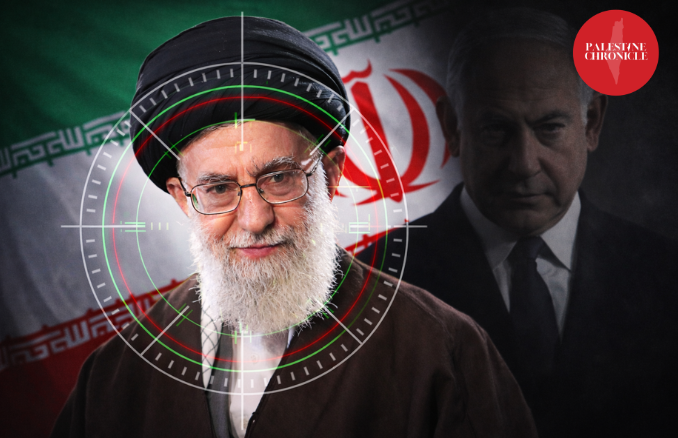
Reports of AI-assisted targeting in the US-Israeli war on Iran renew scrutiny of Israel’s pioneering AI-driven killing systems.
Key Takeaways
Experts say the scale and speed of strikes suggest AI may be generating targets in the US-Israeli war on Iran.
The Washington Post reported the Pentagon used Palantir’s Maven Smart System with Anthropic’s Claude model to analyze intelligence and prioritize targets.
Specialists warn that AI-driven targeting raises questions about “meaningful human control” and accountability when civilians are killed.
Israel previously deployed AI targeting systems during the genocide in Gaza, including “Lavender,” “Gospel,” and “Where’s Daddy.”
Researchers say Israel has long used occupied Palestine as a testing ground for surveillance and automated warfare technologies.
AI Warfare Expands in the War on Iran
Reports that artificial intelligence is being used to accelerate targeting in the US-Israeli aggression on Iran are raising growing concerns among technology experts and legal scholars, who warn that automation could be reshaping how lethal decisions are made on the battlefield.
The warnings come as thousands of strikes have reportedly been carried out across Iran since the start of the war. According to reporting by AFP cited in the Japan Times, the scale of operations and the rapid pace of target selection suggest that artificial intelligence systems may be playing a significant role in identifying potential strike locations.
Peter Asaro, an artificial intelligence and robotics expert at The New School in New York, said the tempo of operations points to automated tools being used to generate targets.
“You can rapidly produce long lists of targets much faster than humans can do it by automating that process,” Asaro told AFP.
However, he stressed that this speed raises fundamental legal and ethical questions about how targets are reviewed.
“The ethical and legal question is: To what degree are those humans actually reviewing the specific targets that have been listed, verifying their legality and their value militarily before authorizing?” Asaro said.
AI Targeting Systems
Separate reporting indicates that the United States military is already relying on advanced artificial intelligence platforms in its campaign involving Iran.
According to Anadolu Agency, citing a report by The Washington Post, the Pentagon used the Maven Smart System, an AI-powered platform developed by the American data analytics company Palantir Technologies, to identify and prioritize potential targets.
The system reportedly analyzes large volumes of classified intelligence gathered from satellites, surveillance platforms, and other sources. It then produces rapid assessments to help commanders select targets and determine operational priorities.
The report said the system has been enhanced with Claude, a generative AI model developed by the company Anthropic.
Sources familiar with the program told The Washington Post that the technology helped generate hundreds of potential targets and provided exact geographic coordinates, allowing commanders to move from weeks of preparation to near real-time operational decisions.
Reuters also reported that the Pentagon has become increasingly dependent on AI-enabled systems like Maven. The agency said Palantir was ordered to remove Anthropic’s technology after tensions emerged between the company and the Trump administration over the wartime use of artificial intelligence.
Despite the dispute, Reuters reported that the system remains embedded in US military planning while alternative technologies are being developed.
Control and Accountability
Experts say the growing use of AI in warfare raises urgent questions about accountability when mistakes occur.
Asaro warned that automated systems can generate large target lists very quickly, potentially reducing the time available for legal review.
“The desire (with) all those systems is to be able to make decisions and move faster than your enemy,” he said.. “Are you actually still in control of what’s happening?”
Another concern is transparency. Because these systems rely on classified intelligence databases and proprietary algorithms, it can be difficult to determine how a target was selected or why a mistake occurred.
“There is no easy way of evaluating the output of these systems,” Asaro said.
This creates uncertainty when civilians are killed during military operations.
Asaro pointed to reports that a school in the Iranian city of Minab was struck during the first day of the war, killing more than 160 people according to Iranian authorities.
“If something does go wrong, then who’s responsible?” Asaro asked.
Gaza’s AI Precedent
The debate over AI-assisted warfare in Iran is shaped heavily by Israel’s earlier use of artificial intelligence targeting systems during the genocide in Gaza.
Investigations by journalists and researchers have documented several AI-enabled platforms used by the Israeli military to generate targets for airstrikes.
According to research published by the Institute for Palestine Studies and other analysts, systems known as “Lavender,” “Gospel,” and “Where’s Daddy” were used to analyze massive surveillance databases and recommend individuals or buildings for attack.
The systems process large volumes of data collected through Israel’s extensive surveillance infrastructure in occupied Palestine, including communications metadata, digital activity, and social network connections.
These AI tools then generate lists of suspected targets, which Israeli operators review before approving strikes.
Israeli intelligence sources told +972 Magazine that officers sometimes spent as little as 20 seconds reviewing a target generated by the system, primarily confirming the target’s identity.
Technology scholar Sophia Goodfriend explained that the systems do not operate as fully autonomous weapons but dramatically accelerate the targeting process.
“Israel is not relying on fully autonomous weapons in the current war on Gaza,” she wrote in +972 Magazine. Instead, intelligence units “use AI-powered targeting systems to rank civilians and civilian infrastructure according to their likelihood of being affiliated with militant organizations.”
This process, she said, “rapidly accelerates and expands the process by which the army chooses who to kill, generating more targets in one day than human personnel can produce in an entire year.”
Researchers say these systems rely on the massive surveillance architecture Israel has built across Gaza and the occupied West Bank.
‘Digital Occupation’
Palestinian media scholar Helga Tawil-Souri described this system as a form of “digital occupation,” in which Israel controls telecommunications infrastructure and collects large volumes of data on Palestinian populations.
Scholars say the use of Gaza as a testing ground for surveillance and targeting technologies has long been part of Israel’s military strategy.
Palestinian legal scholar Samera Esmeir described the enclave as a “laboratory” for military experimentation, writing that “the transformation of Gaza into a laboratory for colonial and imperial hegemony in the region is made in Israel.”
For critics, these developments provide the broader context for today’s concerns about AI in the war on Iran.
The technology now shaping target selection in the conflict did not emerge overnight. Analysts say it is the product of decades of Israeli investment in surveillance systems, data analysis, and automated targeting technologies.
Many of these tools were first developed and tested in occupied Palestine, particularly in Gaza and the West Bank, before appearing on a wider battlefield.
By Palestine Chronicle Editors Years of covert infiltration, digital mapping, and targeted killings indicate Israel’s war on Iran was long prepared. Key Takeaways Israeli intelligence reportedly hacked Tehran’s traffic camera system years before the assassination … Continue reading The Kill Chain: How Israel’s Spies Engineered War and Mayhem
17 Apr 2024 …AI targeting systems draw on data from computer sensors and other sources to statistically assess what constitutes a potential target. Vast …
27 Jun 2025 … In the case of Israel, historically, it has resorted to extreme measures in war against Palestine. In 1948, Israeli forces reportedly attempted …
9 May 2024 … Artificial Genocidal Intelligence: how Israel is automating human rights abuses and war crimes · As · Israel’s use of AI in warfare is not new.
5 Apr 2024 … The Israeli publications +972 and Local Call have exposed how the Israeli military used an artificial intelligence program known as Lavender …
AI got the blame for the Iran school bombing. The truth is far more worrying
LLMs-gone-rogue dominated coverage, but had nothing to do with the targeting. Instead, it was choices made by human beings, over many years, that gave us this atrocity
On the first morning of Operation Epic Fury, 28 February 2026, American forces struck the Shajareh Tayyebeh primary school in Minab, in southern Iran, hitting the building at least two times during the morning session. American forces killed between 175 and 180 people, most of them girls between the ages of seven and 12.
Within days, the question that organised the coverage was whether Claude, a chatbot made by Anthropic, had selected the school as a target. Congress wrote to the US secretary of defense, Pete Hegseth, about the extent of AI use in the strikes. The New Yorker magazine asked whether Claude could be trusted to obey orders in combat, whether it might resort to blackmail as a self-preservation strategy, and whether the Pentagon’s chief concern should be that the chatbot had a personality. Almost none of this had any relationship to reality. The targeting for Operation Epic Fury ran on a system called Maven. Nobody was arguing about Maven.
Eight years ago, Maven was the most contested project in Silicon Valley. In 2018, more than 4,000 Google employees signed a letter opposing the company’s contract to build artificial intelligence for the Pentagon’s targeting systems. Workers organised a walk out. Engineers quit. And Google ultimately abandoned the contract. Palantir Technologies, a data analytics company and defence contractor co-founded by Peter Thiel, took it over and spent the next six years building Maven into a targeting infrastructure that pulls together satellite imagery, signals intelligence and sensor data to identify targets and carry them through every step from first detection to the order to strike.
The building in Minab had been classified as a military facility in a Defense Intelligence Agency database that, according to CNN, had not been updated to reflect that the building had been separated from the adjacent Islamic Revolutionary Guard Corps compound and converted into a school, a change that satellite imagery shows had occurred by 2016 at the latest. A chatbot did not kill those children. People failed to update a database, and other people built a system fast enough to make that failure lethal. By the start of the Iran war, Maven – the system that had enabled that speed – had sunk into the plumbing, it had become part of the military’s infrastructure, and the argument was all about Claude. This obsession with Claude is a kind of AI psychosis, though not of the kind we normally talk about, and it afflicts critics and opponents of the technology as fiercely as it does its boosters. You do not have to use a language model to let it organise your attention or distort your thinking.
In 2019, the scholar Morgan Ames published The Charisma Machine, a study of how certain technologies draw attention, resources and attribution toward themselves and away from everything else. The usual framework for understanding this dynamic is “hype”, but hype only describes what boosters do, and it assigns critics a privileged debunking role that still leaves the technology at the centre of every argument. A charismatic technology shapes the whole field around it, the way a magnet organises iron filings. LLMs may be the most powerful instance of this type in history.
By the time the war began, “AI safety” and “alignment” and “hallucination” and “stochastic parrots” had become the terms of every argument about artificial intelligence, structuring and limiting what we could even say. Worse, “artificial intelligence” itself had come to be synonymous with LLMs. When the school was bombed, those were the terms people reached for, despite the fact that this critical apparatus offered a poor fit for the older, more mature stack of technologies involved in targeting. The real question, the question almost nobody was asking, is not about Claude or any language model. It is a bureaucratic question about what happened to the kill chain, and the answer is Palantir.
As military jargon goes, “kill chain” is a remarkably honest term. In essence, it refers to the bureaucratic framework for organising the steps between detecting something and destroying it. The oldest reference to the term itself I can find is from the 1990s, but the idea is quite old – dating at least to the 1760s, when French artillery reformers began replacing the gunner’s experienced eye with ballistic tables, elevation screws and standardised firing procedures. The steps in the kill chain are subject to constant change, to keep pace with changes in targeting doctrine, but also to incorporate whatever management fads come to afflict the military’s strategic thinkers. The US military has named and renamed the steps for 80 years. In the second world war the sequence was find, fix, fight, finish. By the 1990s the air force had stretched it to find, fix, track, target, engage, assess, or F2T2EA. Every generation of military technology has been sold on the promise of making everything about kill chains shorter, except for the acronyms.
Palantir’s Maven Smart System is the latest iteration of this compression, and it grew out of a shift in strategic thinking during Obama’s second term. In 2014, the secretary of defense, Chuck Hagel, and his deputy, Robert Work, announced what they called the “third offset strategy”. An “offset” in this line of thinking is a bet that a technological advantage can compensate for a strategic weakness the country cannot fix directly. The first two offsets addressed the same problem: the United States could not match the Soviet Union in conventional forces. The thinking was that the Red Army could just continue to throw personnel at a problem, as they did at Stalingrad, or, to be anachronistic, as the contemporary Russian army did at Bakhmut and Avdiivka. Nuclear weapons, the first offset, made the personnel advantage irrelevant in the 1950s. When the Soviets reached nuclear parity in the 1970s, precision-guided munitions and stealth offered the promise that a smaller force could defeat a larger one. By 2014, that advantage was eroding. China and Russia had spent two decades acquiring precision-guided munitions and building defence systems designed to keep American forces out of range. Robert Work insisted that the third offset was not about any particular technology but about using technology to reorganise how the military operated, letting the US make decisions faster than China and Russia, overwhelming and disorienting the enemy by maintaining a faster operational tempo than they could match.
At the funeral of children killed in the US strike on Shajareh Tayyebeh primary school. Photograph: Amirhossein Khorgooei/AP
In April 2017, early in the first Trump administration, Work helped establish the Algorithmic Warfare Cross-Functional Team, designated Project Maven. One of the generals overseeing Maven, Lt Gen Jack Shanahan, put the problem plainly: thousands of intelligence analysts were spending 80% of their time on mundane tasks, drowning in footage from surveillance drones that no one had time to watch. A single Predator drone mission could generate hundreds of hours of video, and the analysts tasked with understanding this were faced with an information overload problem. “We’re not going to solve it by throwing more people at the problem,” Shanahan said. “That’s the last thing that we actually want to do.” The core conceit of the project was that the machine could watch so that the analyst could think.
The Pentagon needed someone to build it. Google took the contract, and what happened next became the most visible labour action in the history of Silicon Valley.
After Google abandoned the Maven contract, Palantir took it over in 2019. The XVIII Airborne Corps began testing the system in an exercise called Scarlet Dragon, which started in 2020 as a tabletop wargaming exercise in a windowless basement at Fort Bragg. Its commander, Lt Gen Michael Erik Kurilla, wanted to build what he called the first “AI-enabled corps” in the army. The goal was to test whether the system could give a small team the targeting capacity that had previously required thousands of people.
Over the next five years, Scarlet Dragon grew into a military exercise using live ammunition, spanning multiple states and branches of the armed forces, with “forward-deployed engineers” from Palantir and other contractors embedded alongside soldiers. Each time the exercise was run, it was meant to answer the same question: how fast could the system move from detection to decision? The benchmark was the 2003 invasion of Iraq, where roughly 2,000 people worked the targeting process for the entire war. During Scarlet Dragon, 20 soldiers using Maven handled the same volume of work. By 2024, the stated goal was 1,000 targeting decisions in an hour. That is 3.6 seconds per decision, or from the individual “targeteer’s” perspective, one decision every 72 seconds.
The Maven Smart System is the platform that came out of those exercises, and it, not Claude, is what is being used to produce “target packages” in Iran. There are real limits to what a civilian such as myself can know about this system, and what follows is based on publicly available information, assembled from Palantir product demos, conferences, as well as instructional material produced for military users. But we can know quite a bit.
The Maven interface looks like a military-skinned version of corporate project management software crossed with a mapping application. What the military analyst building the target list sees is either a map layered with intelligence data or a screen organised into columns, each representing a stage of the targeting process. Individual targets move across the columns from left to right as they progress through each stage, a format borrowed from Kanban, a “lean manufacturing” workflow system developed at Toyota, and now widely used in software development.
Before Maven, operators worked across eight or nine separate systems simultaneously, pulling data from one, cross-referencing in another, manually moving detections between platforms to assemble the intelligence and approvals needed for each strike. Maven consolidated all of these behind a single interface. Cameron Stanley, the Pentagon’s chief digital and AI officer, called it an “abstraction layer”, a common term in software engineering, meaning a system that hides the complexity underneath it. Humans run the targeting. Underneath the interface, machine-learning systems analyse satellite imagery and sensor data to detect and classify objects, scoring each identification by how confident the system is that it got it right. Three clicks convert a data point on the map into a formal detection and move it into a targeting pipeline. These targets then move through columns representing different decision-making processes and rules of engagement. The system recommends how to strike each target – which aircraft, drone or missile to use, which weapon to pair with it – what the military calls a “course of action”. The officer selects from the ranked options, and the system, depending on who is using it, either sends the target package to an officer for approval or moves it to execution.
The AI underneath the interface is not a language model, or at least the AI that counts is not. The core technologies are the same basic systems that recognise your cat in a photo library or let a self-driving car combine its camera, radar and lidar into a single picture of the road, applied here to drone footage, radar and satellite imagery of military targets. They predate large language models by years. Neither Claude nor any other LLMs detects targets, processes radar, fuses sensor data or pairs weapons to targets. LLMs are late additions to Palantir’s ecosystem. In late 2024, years after the core system was operational, Palantir added an LLM layer – this is where Claude sits – that lets analysts search and summarise intelligence reports in plain English. But the language model was never what mattered about this system. What mattered was what Maven did to the targeting process: it consolidated the systems, compressed the time and reduced the people. That is not a new idea. The US military has been trying to close the gap between seeing something and destroying it for as long as that gap has existed, and every attempt has produced the same failure. Maven may not even be the most extreme case.
In the late 1960s, the US faced a version of the same problem in Vietnam. Supplies were moving south along the Ho Chi Minh trail through jungle the military could not see into. The solution was Operation Igloo White, a $1bn-a-year programme that scattered 20,000 acoustic and seismic sensors along the trail. These sensors transmitted data to relay aircraft overhead, which fed the signals to IBM 360 computers at Nakhon Phanom airbase in Thailand. The computers analysed the sensor data and predicted where convoys would be, and strike aircraft were directed to those coordinates.
Lao and Vietnamese porters carrying supplies south along the Hoi Chi Minh trail to resupply the insurgency in the south, c1963. Photograph: Pictures from History/Universal Images Group/Getty Images
The system could sense but it could not see. It could detect a vibration but it could not tell a truck from an ox cart. The North Vietnamese figured this out. They played recordings of truck engines, herded animals near the sensors to trigger vibration detection, and hung buckets of urine in trees to set off the chemical detectors. The system could be fooled because nobody in the process could look at what it was sensing. The air force claimed 46,000 trucks were destroyed or damaged over the course of the campaign. The CIA reported that the claims for a single year exceeded the total number of trucks believed to exist in all of North Vietnam. The system’s own output was the only measure of its performance, and nobody outside the system had standing to challenge it. Air force historian Bernard Nalty later called the service’s casualty computations “an exercise in metaphysics rather than mathematics” and his colleague Earl Tilford concluded that “the air force succeeded only in fooling itself”. When daytime reconnaissance flights failed to find the wreckage of all those trucks, air force personnel invented a creature to explain the absence. They called it the “great Laotian truck eater”.
The pattern that played out in Vietnam – a targeting system that could only measure its own performance and ended up believing its own output – is actually older than digital computing. Michael Sherry’s 1987 book The Rise of American Air Power traces it to the founding doctrine of precision bombing, whose confidence in its own methods made examining what those methods produced unnecessary. “Belief in success,” Sherry wrote, “encouraged imprecision about how to achieve it.” By 1944, operations analysts on both sides of the Atlantic were measuring bombing in a shared language of industrial optimisation. Civilians bombed out of their homes were recorded as “dehoused”. For every tonne of bombs dropped, analysts calculated how many hours of enemy labour it destroyed. One British evaluation treated the bomber itself as a capital asset: a single sortie against a German city wiped off the cost of building the aircraft, and everything after that was “clear profit”. Sherry called the resulting mindset “technological fanaticism”.
Sherry’s point was not that anyone chose destruction. It was that the people refining the technique of bombing stopped asking what the bombing was for. But even by the time the operations researchers had got their hands on targeting, this logic was already taking shape. As the historian of science William Thomas has argued, the operations analysts did not impose this logic on the military; the military was already converting operational experience into systematic procedure, and had been for decades. Nobody stopped making judgments. But the judgments were no longer about whether the bombing served a strategic purpose. They were about how to measure it and how to optimise around those measurements.
Carl von Clausewitz, the 19th-century Prussian general whose writings remain the foundation of western military thought, had a word for everything the optimisation leaves out. He called it “friction”, the accumulation of uncertainty, error and contradiction that ensures no operation goes as planned. But friction is also where judgment forms. Clausewitz observed that most intelligence is false, that reports contradict each other. The commander who has worked through this learns to see the way an eye adjusts to darkness, not by getting better light but by staying long enough to use what light there is. This “staying” is what takes time. Compress the time and the friction does not disappear. You just stop noticing it. Clausewitz called this kind of planning a “war on paper”. The plan proceeds without resistance, not because there is none, but because everything connecting the plan to the real world has been stripped out.
Air power is uniquely vulnerable to this. The pilot never sees what the bomb hits. The analyst works from imagery, coordinates and databases. The entire enterprise is mediated by representations of the target, not the target itself, which means the gap between the package and the world can widen without anyone in the process feeling it. The 2003 invasion of Iraq, the operation that Scarlet Dragon would later use as its benchmark, was a case in point. Marc Garlasco, the Pentagon’s chief of high-value targeting during the invasion, ran the fastest targeting cycle the US had operated to that point. He recommended 50 strikes on senior Iraqi leadership. The bombs were precise – they hit exactly where they were aimed – but the intelligence behind them was not. None of the 50 killed its intended target. Two weeks after the invasion, Garlasco left the Pentagon for Human Rights Watch, went to Iraq, and stood in the crater of a strike he had targeted himself. “These aren’t just nameless, faceless targets,” he said later. “This is a place where people are going to feel ramifications for a long time.” The targeting cycle had been fast enough to hit 50 buildings and too fast to discover it was hitting the wrong ones.
The air force’s own targeting guide, in effect during the Iraq war, said this was never supposed to happen. Published in 1998, it described the six functions of targeting as “intertwined”, with the targeteer moving “back” to refine objectives and “forward” to assess feasibility. “The best analysis,” the manual stated, “is reasoned thought with facts and conclusions, not a checklist.” But Jon Lindsay, who served as a navy intelligence officer in Kosovo and later studied special operations targeting in Iraq, found something different. Once a target was reified on a PowerPoint slide – the target intelligence package, or TIP – it became a black box. Questioning the assumptions behind it got harder as the hunt gained momentum, as the folder thickened with what Lindsay calls “representational residua”. There was more machinery for building up a target than for inspecting the quality of its construction. Personnel became disinclined to ask whether some targets were potential allies, or not actually bad guys at all, because producing targets meant participating in the hunt. The targeting guide had warned about this too. “If targeteers don’t provide full targeting service,” it read, “then other well meaning but undertrained and ill-experienced groups will step in.” Maven eventually would.
Lindsay’s book Information Technology and Military Power is the most careful study I’ve found of how targeting actually works, at least partially because it was written by someone who actually did it. During the Kosovo air war, Gen Wesley Clark demanded 2,000 targets, which made it easy to justify any target’s connection to the Milošević government. The CIA nominated just one target during the entire war: the federal directorate of supply and procurement. Analysts had a street address but not coordinates, so they tried to reverse-engineer a location from three outdated maps. They ended up hitting the Chinese embassy – which had recently relocated – 300 metres from the building they were aiming for. The state department knew that the embassy had moved. The military’s facilities database did not. Target reviews failed to notice, because each validation relied on the last. Lindsay calls this “circular reporting”: an accumulation of supporting documents that “created the illusion of multiple validations” while amplifying a single error. The PowerPoint slide looked as well vetted as the hundreds of others that Nato struck without incident. On the night of the strike, an intelligence analyst phoned headquarters to express doubts. Asked specifically about collateral damage, he could not articulate a concern. The strike proceeded. It killed three Chinese journalists. Lindsay, writing in his journal at the time, called the result “an immense error, perfectly packaged”.
The bomb-hit former Chinese embassy in Belgrade in 2010. Photograph: Andrej Isaković/AFP/Getty Images
In 2005, Lt Col John Fyfe of the US air force published a study of time-sensitive targeting during the 2003 invasion. Fyfe highlighted the different ways UK and US forces approached this challenge. In the Combined Air Operations Center, RAF officers served in key leadership positions alongside their American counterparts. They operated under more restricted rules of engagement. Fyfe noted that their “more reserved, conservative personalities” produced what he called “a very positive dampening effect on the sometimes harried, chaotic pace of offensive operations”. The contrast between shifts was visible: American leaders pressed ahead full bore, while British officers methodically reconsidered risk and cost-benefit trade-offs before approving execution. On UK-led shifts, there were no friendly fire incidents and no significant collateral damage. On numerous occasions, Fyfe notes, the British officer in charge prevented the operation from getting ahead of itself. What the next generation of reformers would measure as latency – the delay between identifying a target and striking it – was the window in which mistakes could be caught.
From inside the efficiency frame, every feature Fyfe describes registered as a defect. The UK shifts were slower. The restricted rules of engagement added constraints. The dampening effect added time. Speed saves lives, the argument goes, but the fastest targeting cycle before Maven was Garlasco’s, and it struck 50 buildings without hitting a single intended target. Scarlet Dragon eliminated all of it. The disagreements about targeting stopped. So did the deliberation, the hesitation and the moments when someone had time to object or notice something was off.
Organisations that run on formal procedure need someone inside the process to interpret rules, notice exceptions, recognise when the categories no longer fit the case. If the organisation concedes that its outcomes depend on the discretion of the people executing it, then the procedure is not a procedure but a suggestion, and the authority the organisation derives from appearing rule-governed collapses. So the judgment has to happen, and it has to look like something else. It has to look like following the procedure rather than interpreting it.
I’ve come to think of this as the “bureaucratic double bind” – the organisation cannot function without the judgment, and it cannot acknowledge the judgment without undermining itself and being seen as “political”. One solution to this problem is to replace the judgment with a number. In his 1995 book Trust in Numbers, the historian of science Theodore Porter argued that organisations adopt quantitative rules not because numbers are more accurate but because they are more defensible. Judgment is politically vulnerable. Rules are not. The procedure exists to make discretion disappear, or seem to. The system’s actual flexibility lives entirely in this unacknowledged interpretive work, which means it can be removed by anyone who mistakes it for inefficiency.
In 1984, the historian David Noble showed that when the US military and American manufacturers automated their factory floors, they consistently chose systems that were slower and more expensive but which moved decision-making away from workers and into management. The point was not efficiency – it was frequently extremely wasteful – but control. A worker who understands what they are doing can exercise judgment the institution cannot govern. Move that understanding into the system, and the worker has nothing left to do but follow instructions. Alex Karp, the CEO of Palantir, describes exactly this achievement in his 2025 book, The Technological Republic. “Software is now at the helm,” he writes, with hardware “serving as the means by which the recommendations of AI are implemented in the world.” His model for what this should look like comes from nature: bee swarms and the murmurations of starlings. “There is no mediation of the information captured by the scouts once they return to the hive,” Karp writes. The starlings need no permission from above, they require “no weekly reports to middle management, no presentations to more senior leaders, no meetings or conference calls to prepare for other meetings”. This sounds liberating, even utopian. But the signal that passes without mediation is also the signal that nobody can question.
Karp thinks he is destroying bureaucracy. He is encoding it. The contempt for meetings and weekly reports and presentations to senior leaders; he treats these as the bureaucratic process itself. They are not. They were where people interpreted procedure, the place where someone could notice when categories no longer fit the case. The targeting doctrine is still there. They are columns on a workflow board now, stages a target passes through on its way to being struck. What Karp eliminated was the discretion the institution could never admit it depended on. What remains is a bureaucracy that can execute its rules but with no one left to interpret them. Bureaucracy encoded in software does not bend. It shatters.
The target package for the Shajareh Tayyebeh school presented a military facility. Lucy Suchman, whose 1987 book Plans and Situated Actions remains the sharpest account of how formal procedures obscure the work that actually produces their outcomes, would not have been surprised. Plans always look complete afterward. They achieve completeness by filtering out everything that wasn’t legible to their categories. This package looked like every other package in the queue. But outside the package, the school appeared in Iranian business listings. It was visible on Google Maps. A search engine could have found it. Nobody searched. At 1,000 decisions an hour, nobody was going to. A former senior government official asked the obvious question: “The building was on a target list for years. Yet this was missed, and the question is how.” How indeed.
Graves being prepared after the school bombing in Iran. Photograph: Iranian Foreign Media Department/Reuters
Congress did not authorise this war. In two weeks, American forces struck 6,000 targets. The school was one of them. American forces killed almost 200 people, and the reporting reached for “AI error”, which domesticated the event into something a better algorithm or better guardrails could have prevented.
In the days after the strike, the charisma of AI organised the entire political conversation around the technology: whether Claude hallucinated, whether the model was aligned, whether Anthropic bore responsibility for its deployment. The constitutional question of who authorised this war and the legal question of whether this strike constitutes a war crime were displaced by a technical question that is easier to ask and impossible to answer in the terms it set. The Claude debate absorbed the energy. That is what charisma does.
It has also occluded something deeper: the human decisions that led to the killing of between 175 and 180 people, most of them girls between the ages of seven and 12. Someone decided to compress the kill chain. Someone decided that deliberation was latency. Someone decided to build a system that produces 1,000 targeting decisions an hour and call them high-quality. Someone decided to start this war. Several hundred people are sitting on Capitol Hill, refusing to stop it. Calling it an “AI problem” gives those decisions, and those people, a place to hide.
An earlier version of this article appeared on Artificial Bureaucracy, Kevin T Baker’s Substack
Listen to our podcasts here and sign up to the long read weekly email here.
Eight years ago, Maven was the most contested project in Silicon Valley. In 2018, more than 4,000 Google employees signed a letter opposing the company’s contract to build artificial intelligence for the Pentagon’s targeting systems. Workers organised a walk out. Engineers quit. And Google ultimately abandoned the contract. Palantir Technologies, a data analytics company and defence contractor co-founded by Peter Thiel, took it over and spent the next six years building Maven into a targeting infrastructure that pulls together satellite imagery, signals intelligence and sensor data to identify targets and carry them through every step from first detection to the order to strike.
The building in Minab had been classified as a military facility in a Defense Intelligence Agency database that, according to CNN, had not been updated to reflect that the building had been separated from the adjacent Islamic Revolutionary Guard Corps compound and converted into a school, a change that satellite imagery shows had occurred by 2016 at the latest. A chatbot did not kill those children. People failed to update a database, and other people built a system fast enough to make that failure lethal. By the start of the Iran war, Maven – the system that had enabled that speed – had sunk into the plumbing, it had become part of the military’s infrastructure, and the argument was all about Claude. This obsession with Claude is a kind of AI psychosis, though not of the kind we normally talk about, and it afflicts critics and opponents of the technology as fiercely as it does its boosters. You do not have to use a language model to let it organise your attention or distort your thinking.