Indonesian authorities tries to stop the documentary «Pesta Babi»

Crackdown on «Pesta Babi» in Indonesia: The documentary explores deforestation in Papua

Al Jazeera English

Al Jazeera English 18 mill. abonnenter

15 199 avspillinger 22. mai 2026 #WestPapua#PressFreedom#AlJazeeraEnglish Indonesian authorities have shut down several screenings of a new documentary about alleged human rights abuses in Papua, including Indigenous land seizures. Rights groups and international media still face restricted access to the region. Al Jazeera’s Jessica Washington reports.

Any way, the Indonesian authorities cannot stop me. So here’s two versions of «Pesta Babi»!

Ivar Tveito Jørdre

PESTA BABI: Kolonialisme di Zaman Kita – (Official Full Movie)

Redaksi JubiTV dan 5 lagi

22. mai 2026 Yasinta Moiwend kaget ketika pada suatu pagi yang tenang di bulan Juli, sebuah kapal raksasa bersandar di dermaga kampungnya. Kapal itu mengangkut ratusan ekskavator dan dikawal pasukan militer Indonesia. Itulah rombongan pertama dari 2.000 alat berat yang datang ke Papua dalam Proyek Strategis Nasional untuk produksi pangan, energi biodiesel sawit, dan bioetanol tebu. Perempuan suku Marind Anim ini tak pernah tahu kalau kampungnya jadi titik nol dimulainya proyek konversi hutan terbesar dalam sejarah dunia modern. Luasnya mencapai 2,5 juta hektare. Vincen Kwipalo dari suku Yei juga terkejut ketika tanah marganya dipatok dengan tulisan: “Tanah Milik TNI AD”. Belakangan ia tahu, tanah itu diambil untuk pembangunan markas batalyon militer. Padahal di saat yang sama, ia menghadapi perusahaan perkebunan tebu yang juga menyerobot hutan marganya. Karena wilayah adatnya juga termasuk dalam konsesi, Franky Woro dan komunitas Awyu di Boven Digoel memasang palang adat dan salib raksasa yang dicat merah untuk menghadang perusahaan dan militer. Dikenal dengan Gerakan Salib Merah, aksi ini juga dilakukan suku-suku lain. Setidaknya 1.800 salib merah telah dipasang di Papua Selatan. Meski memakai simbol agama, gerakan ini tidak selalu disukai elit gereja. Film dokumenter “Pesta Babi” merekam bagaimana orang-orang Marind, Yei, Awyu, dan Muyu di selatan Papua, melawan proyek biodiesel sawit dan bioetanol tebu untuk bahan bakar kendaraan. Bersamaan dengan kisah mereka, juga tergambar isu separatisme dan 60 tahun operasi militer Indonesia yang terkait dengan penguasaan wilayah dan eksploitasi alam Papua. Menggabungkan detil-detil rekaman di lapangan dan riset investigatif, Pesta Babi mengungkap relasi kepentingan industri bioenergi multinasional dengan proyek politik dan pembangunan pemerintah Indonesia yang berkedok “lumbung pangan” dan “transisi energi” selama tiga periode presiden. Film ini juga merekam bagaimana jaringan politikus, investor, militer, dan gereja berhadapan dengan gerakan sosial masyarakat dan komunitas adat. Disutradarai Dandhy Laksono dan Cypri Dale, Pesta Babi adalah rekaman praktik kolonialisme yang terjadi hari ini, tanpa menunggu menjadi sejarah.

Kuali Merah Putih 24. KEMBALINYA ANAK ADAT, PAPUA BUKAN TANAH KOSONG‼️

Bobon Santoso

Bobon Santoso 17,7 mill. abonnenter

1. juni 2026

Papua bukan tanah kosong! Papua adalah rumah. Rumah bagi jutaan harapan, keberagaman, dan masa depan Indonesia. Papua bukan pelengkap Indonesia. Papua adalah bagian penting dari cerita besar Indonesia. Karena ketika Papua maju, Indonesia ikut melangkah lebih kuat. Kontribusi Kuali Merah Putih https://saweria.co/bobonsantoso Ikuti sosial media Bobon! Instagram:   / bobonsantoso   Facebook:   / thebobonsantoso   Tiktok:   / bobonsantoso   Kerja sama: Email: santosomanagement@gmail.com Cp Manager +6287816111988
Posta under Asia, Imperialism | Merkt , , , , , , , , | Kommenter innlegget

Booking.com: Stop listing stolen Palestinian land, now!

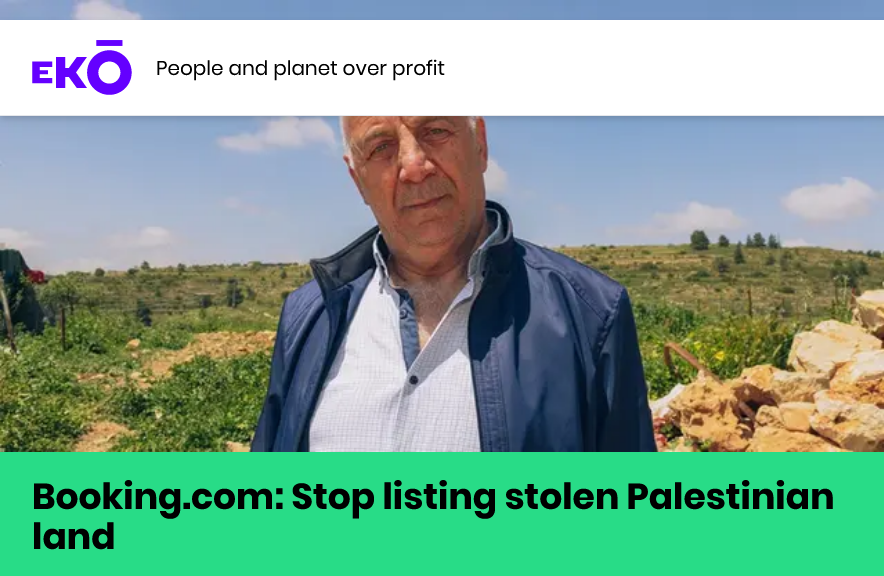
Booking.com: Stop listing stolen Palestinian land

When Mohammad Al-Sbeih saw his family’s stolen land listed on Booking.com for the first time, his heart broke.

“A settler is sitting on my land, making a beautiful home, renting it to tourists. This is supposed to be my land.»

Any tourist from around the world can book a stay on Mohammad’s stolen land tonight — except Palestinians. And Mohammad is not alone. Booking.com has dozens of other listings on stolen land, some for $7,000 a night. 

The company is profiting from Israel’s illegal occupation while settler attacks have reached their highest recorded level. And it has to stop.

The Dutch government — where Booking.com is headquartered — is preparing a bill to ban trade with Israeli settlements. We urgently need a ban on goods and services, which would stop companies like Booking.com from profiting from the occupation.

Mohammad has a message: «I want Booking.com to get off my land.»

We want to help him make that happen. And right now, there is a real opportunity to do it.

Booking.com: get off stolen Palestinian land

Our new investigation, published in the Guardian, exposes Booking.com listings in illegal settlements. We were able to successfully find the Palestinian landowners of a plot of land where a Booking.com settlement listing sits. 

The investigation documents additional Booking.com listings in or near settlements where violent settler attacks against neighboring Palestinian villages have been documented – at a moment when settler violence has reached its highest recorded level, with 1,828 attacks in 2025 alone.

Slovenia and Spain passed trade bans last year, so the Dutch and others have no excuse to keep dragging their feet. 

The Dutch government acknowledges that settlements are illegal and has a policy of discouragement of activities relating to them. It’s time to adhere to its own policy and ban trade with settlement goods and services. 

Sign the petition: Tell the Dutch parliament to ban all trade with Israeli settlements

More Information

Booking.com: Experience Israel’s Illegal Occupation

Aks3 18 May 2026

Unleashing terror: Dutch dogs in Israel’s war crimes – SOMO

Somo 10 April 2025

Jetten’s cabinet must commit to a broad ban on economic ties with settlements – PAX

Paxforpeace 17 February 2026

After the International Court of Justice: Business as Usual? Al-Haq and Others versus the Netherlands: District Court The Hague 13 December 2024

Opiniojuris 15 January 2025

‘It’s like stealing’: Palestinian family’s seized property listed on Booking.com

The Guardian 14 May 2026

Posta under genocide, Imperialism, Midt-Austen, Palestina | Merkt , , , , , , , , | Kommenter innlegget

Til minne om modige Shilan Shorsh – 13 år etter

Shilan, foto, NRK

Shilan, Foto: Astrid Olsen

Det er 13 år sidan Shilan døydde så tragisk – og me saknar henne framleis så sterkt!

Om Shilan-saka: (Bakgrunn) Shilan vart funnen død i si leiligheit, som låg i ein av toppetasjane i ei bustadblokk i Fyllingsdalen. Ein brann starta i det eine rommet i leiligheita. Det var ein av naboane som oppdaga røyken. Shilan (39) fortalde systera Shahen Ahmed, nest eldst i syskenflokken, at ho var livredd kort tid før ho døydde i brannen. Truslar hadde ho fenge lenge. Og truslane kom etter at ho stod fram i Bergens Tidende i 2005 med kritikk av tvangsekteskap og diskriminering i den kurdiske diasporaen og i heimlandet Irak-Kurdistan. Etter dette avisoppslaget skaffa ho seg valdsalarm. Politiet meinte brannen var påsett. Familien trur ho vart drept. Likevel avslutta politiet saka i desember 2013. Det er lite anna å seie om dette enn skandalaust av politiet!

(Siste-2015) Etter mykje mediaomtale og styr vart saka opna på nytt i oktober 2014. Attopptakinga kom kort tid etter at politiet i Hordaland gjekk til arrest av ein mann i den såkalla Monika-saka, der ei åtte år gamal jente vart funnen død i sin heim på Sotra i 2011. Denne saka vart også opna att, etter ei skandalaus avslutting tidlegare og utrulege grunngjevingar frå politiet. Fram til no er det ikkje noko kjent nyhende frå etterforskinga i Shilan-saka. Men, det er å håpe at politiet i Hordaland no gjer arbeidet sitt, slik dei skulle ha byrja med lenge før, og gjer kva dei kan for å finne ut kva son hendte med Shilan. Det fortener familien og det fortener rettsikkerheitskjensla til oss alle i dette landet!

(Siste-2016) Etter å ha etterforska saka på nytt, meiner politiet framleis at det ikkje hende noko straffbart då SV-politikaren og menneskerettsaktivisten Shilan Shorsh omkom i  brannen i 2013. I september 2015 avslutta politiet saka og politiinspektør Tore Salvesen, sjef for politiet i Bergen vest, sa til Bergens Tidende: – Vi har ikke funnet holdepunkter for at det har tilstøtt henne noe straffbart, og Politiet har gått gjennom heile saka med «skikkelig kritiske øyne», seier Salvesen til BT. Dei har mellom anna sjekka Shorshs arkivskap, noko som ikkje vart undersøkt i den opprinnelege etterforskninga. Dermed vart saka bortlagt på nytt. Både politiet og statsadvokaten  konkluderte med at saka måtte leggast vekk, og at det ikkje er grunnlag for tiltale mot nokon. Privatetterforskar for Shorsh sin familie, Ola Thune, er derimot ikkje så sikker på at siste ord er sagt i denne saka. Tida vil vise. Etter at det i kom ein rapport med ein knusande dom over arbeidet som vart gjort i «Monika saka» i Hordaland politidistrikt, vart det også vist til Trine Franzen-saka i Os og Shilan Shorsh-saka i Bergen. Dokument nr. 15:5 – Stortinget

(Siste-2017) Det virkar som vidare etterforsking i Shilan-saka vart endeleg avslutta i fjor. Diverre vil kanskje ein del meine, men slik er status i alle fall, pr. mai 2017. Har privatetterforskar for Shorsh sin familie, Ola Thune, noko meir informasjon i 2017 som kan opne saka om Shilan opp att?

(Siste-2018) Det er ingenting av det eg veit som tyder på at vidare etterforsking i Shilan-saka er aktuelt pr. mai 2018. Privatetterforskar for Shorsh sin familie, Ola Thune, har eg heller ikkje sett har kome med meir informasjon i Shilan-saka.

(Siste-2019) Ikkje noko nytt so langt i 2019 heller, diverre.

(Siste-2020) Ikkje noko nytt so langt i 2020 heller, diverre.

(Siste-2021) Ikkje noko nytt so langt i 2021 heller, diverre.

(Siste-2022) Ikkje noko nytt so langt i 2022 heller, diverre.

(Siste-2023) Ikkje noko nytt so langt i 2023 heller, diverre.

(Siste-2026) Ikkje noko nytt so langt i 2026 heller, diverre.

Eit innlegg, av frilandsskrivar Bjørn Enes frå 2014, fortel mykje om kva som var  i avisspaltene den gongen. Les det her.

Om denne etterforskinga i Shilan-saka er nok til å trygge tilliten til rettstryggleiken i Noreg er ikkje sikkert, i alle fall ikkje slik eg ser det. Det skal meir til av m.a. openheit frå politiet og etterforskingsmetodane deira, til at mange av oss gjer det.

—————————————————————————————————

Under er det eg skreiv om Shilan i 2013. Postar det på nytt som i åra før, til minne om henne, kampen hennar og den kampen i hennar inspirasjon me må halde fram, for ei betre verd:

Då nyhende om at aktivisten og politikaren Shilan Shorsh døydde i ein brann i si leiligheit i Bergen, 18. mai 2013, var sjokket stort hjå alle som kjente henne og utover det også. Det går ikkje an å forstå at denne modige og sterke kvinna ikkje lenger kjem mot ein med sitt varme smil. Me i det politiske og aktivistiske miljøet i Bergen saknar henne kvar dag og vil alltid gjere det! Denne kurdisk-irakiske stolte kvinnen var ein aktiv samfunnsdebattant og politikar og starta og leida heilt til ho døydde “Selvstendig Demokratisk Kurdisk Kvinneforening”. Ho var også med i RV (før partiet Raudt vart danna i 2007) og var i den siste tida med i styret i Bergen SV. Ho fekk Bergen Kommune sin likestillingspris i 2006 for sitt arbeid for kvinnerettar og Norske kvinners sanitetsforening sin pris for det same i 2009. Med den kurdiske kvinneforeininga arrangerte ho mange seminar og møter med uvanleg gode og kjende aktørar som sette ljoset på kvinners (og mens) kamp mot kvinneundertrykking og menneskerettar generelt. Ho snakka sjølv ofte og høgt om undertrykking, fridomsfrårøving og tvangsgifte av kvinner og jenter i deler av det kurdiske samfunnet, både i Kurdistan og i diasporaen som i Noreg. For denne aktivismen fekk ho også mange uvener, og opplevde i mange år mykje hets og feige truslar. I den siste tida beklaga ho seg om nye truslar og var redd for hevn. Heldigvis hadde ho mange som støtta henne, men lagnaden gjorde at me ikkje har ho hjå oss lenger.

Shilan:
– Samvittigheten min. Jeg har alltid reagert på undertrykking, og vil at sannheten alltid må komme frem.

Me vil alltid minnast deg og ditt modige arbeid, me skal og må føre kampen din vidare!

Shilan

Ei sterk kvinne

Me minnest ei sterk kvinne
som modig og stolt snakka ut
mot urettferd i denne verda

Du snakka så sterkt og klårt
om kurdiske kvinner og jenter
og rettvisa og eit fritt liv

Din kamp mot tvang og patriark
står som ein bauta i våre sinn
og lyser opp eit framtidshåp

Dette håp om vårt menneskeverd
må me aldri gløyme i denne tid
av krenkingar og valdelege skuggar

Du sterke, modige Shilan
minn oss på det me må gjere:
Halde fram din kamp for våre kurdiske søstrer!

———————————————-

A strong woman

We memorize a strong woman
Who brave and proud spoke out
Against injustice in this world

You spoke so strong and clear
About Kurdish women and girls
And justice and a free life

Your fight against coercion and patriarch
Stands as a memory in our minds
And lights up a hope for the future

This hope of our human dignity
We must never forget in this time
Of humiliation and violent shadows

You strong, courageous Shilan
Remind us on what we have to do:
Keep on your fight for our Kurdish sisters!

Ivar Tveito Jørdre

Lenke til Wikipedia om Shilan Shorsh

Posta under Kvinne- og jentekamp, Our global world, Politic&Society, Politikk, samfunn, Vår globale verd | Merkt , , , , , , , , , , , , , , , , , , | Kommenter innlegget

Our time comedians can learn from ancient comedians!

What Kimmel and Colbert can learn from ancient comedians who ticked off their leaders

Updated September 24, 20251:24 PM ET

Heard on Weekend Edition Sunday

Headshot of Chloe Veltman

Chloe Veltman

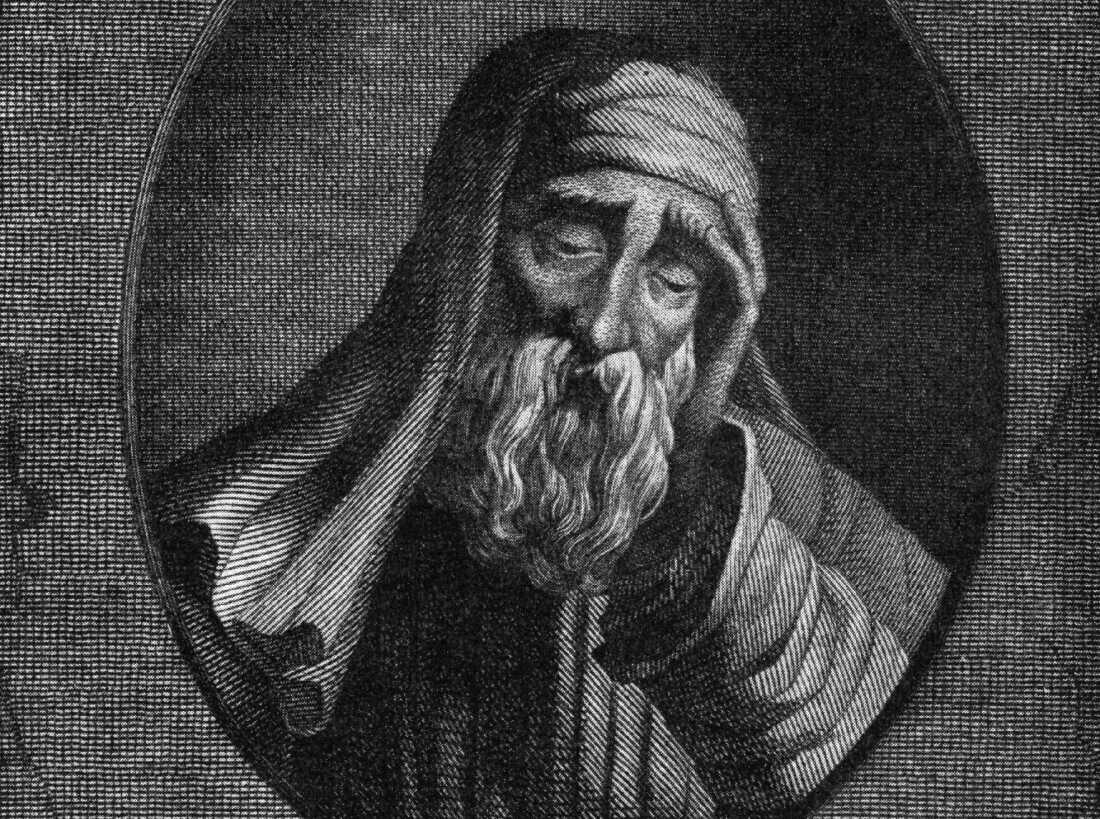
The ancient Greek writer and biographer Plutarch chronicled the fates of comedians who paid a heavy price for making jokes that displeased those in power.

The ancient Greek writer and biographer Plutarch chronicled the fates of comedians who paid a heavy price for making jokes that displeased those in power.

Hulton Archive/Getty Images

President Trump’s celebration of Jimmy Kimmel’s (now brief) and Stephen Colbert’s (still happening) removal from the air — along with his calls for canceling other late-night comedians — may feel very 2025. But for classics scholars, it feels a lot like the ancient world.

In fifth century B.C. Athens, it was a point of civic pride that comedians could say pretty much anything they wanted to the people in power.

«They could crack merciless jokes about politicians as those politicians sat in the audience,» said Mike Fontaine, a professor of classics at Cornell University and the author of a book about ancient jokes. «And nothing happened to those comedians.»

But, of course, there were limits. Starting in the fourth century B.C., when the ancient Greek world became more autocratic, comedians who said things that displeased their rulers could land themselves in a lot of trouble.

«The patterns are identical, which makes all this totally predictable,» said Fontaine. «The reason we have to focus on ancient Greece and Rome is because those are examples of democracies that slid into authoritarian states.»

Two Greeks and a Roman walk into a bar …

Fontaine said the Greek philosopher Plutarch shared stories about the fates of comics who dared to make fun of their leaders in a treatise titled The Education of Children from around 100 A.D.

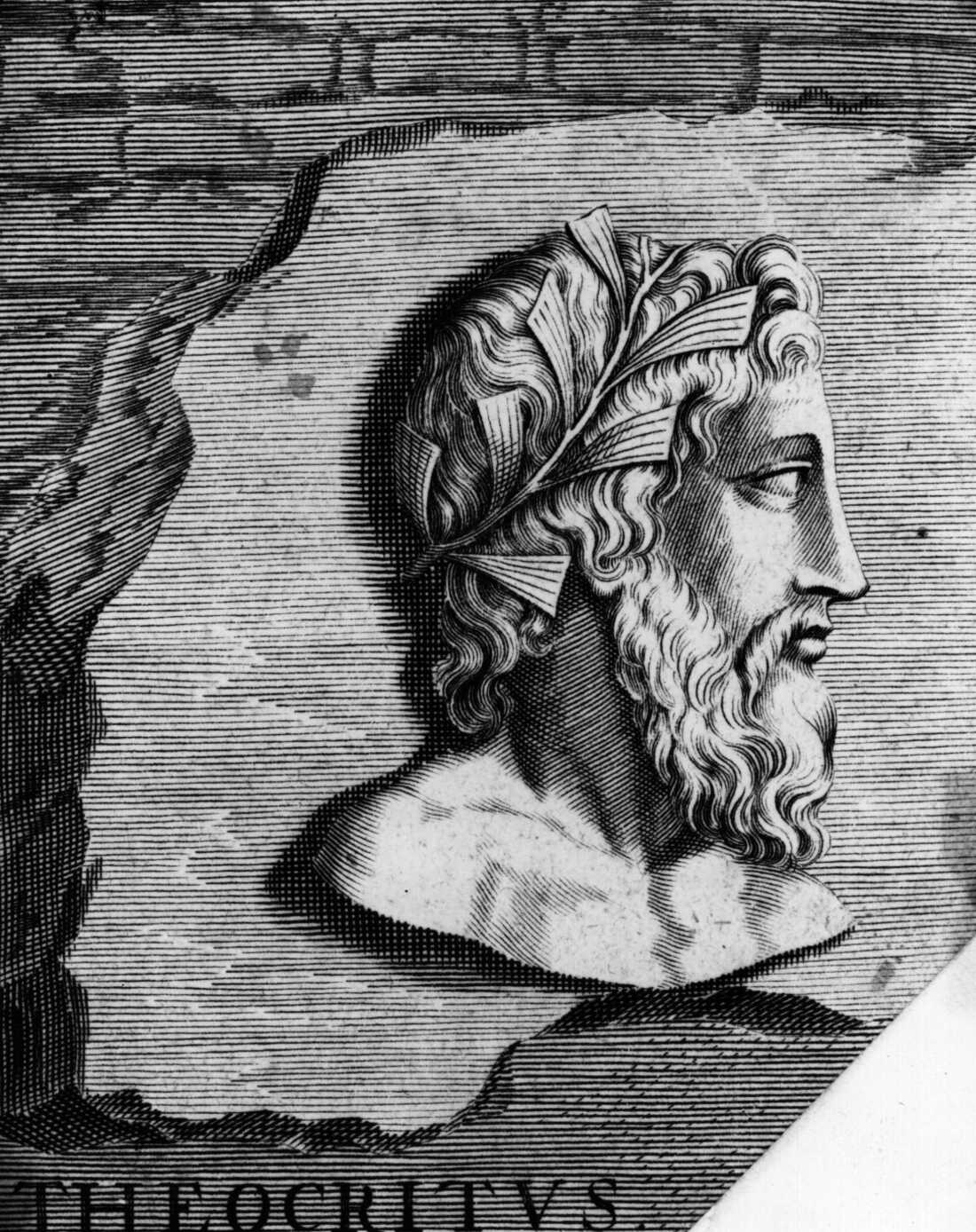
Theocritus of Chios was a poet and politician was known for his witty criticism of powerful figures. Until he unleashed that wit on a king named Antigonus the One-Eyed.

Theocritus of Chios was a poet and politician was known for his witty criticism of powerful figures. Until he unleashed that wit on a king named Antigonus the One-Eyed.

Hulton Archive/Getty Images

One of these cautionary tales concerns the Ancient Greek satirist Sotades, who lived in Alexandria in the third century B.C. When the ruler at the time, Ptolemy, married his sister, Arsinoe, Sotades wrote a poem telling the king, «εἰς οὐχ ὁσίην τρυμαλιὴν τὸ κέντρον ὠθεῖς.» Rough translation: «You’re pushing your scepter into an ungodly hole.»

«Ptolemy didn’t think it was funny. So he had him hauled away and put in prison,» Fontaine said, adding that Sotades escaped, but was eventually caught. «And he was closed up in a lead coffin and thrown into the sea, where he drowned.»

Plutarch’s same treatise also gets into the tale of Theocritus of Chios. The fourth century B.C. poet and politician was known for his witty criticisms of powerful figures. But Fontaine says things took a serious turn when Theocritus got a gig working for a king named Antigonus the One-Eyed.

«He rather stupidly made a couple of jokes about Antigonus missing one eye,» Fontaine said.

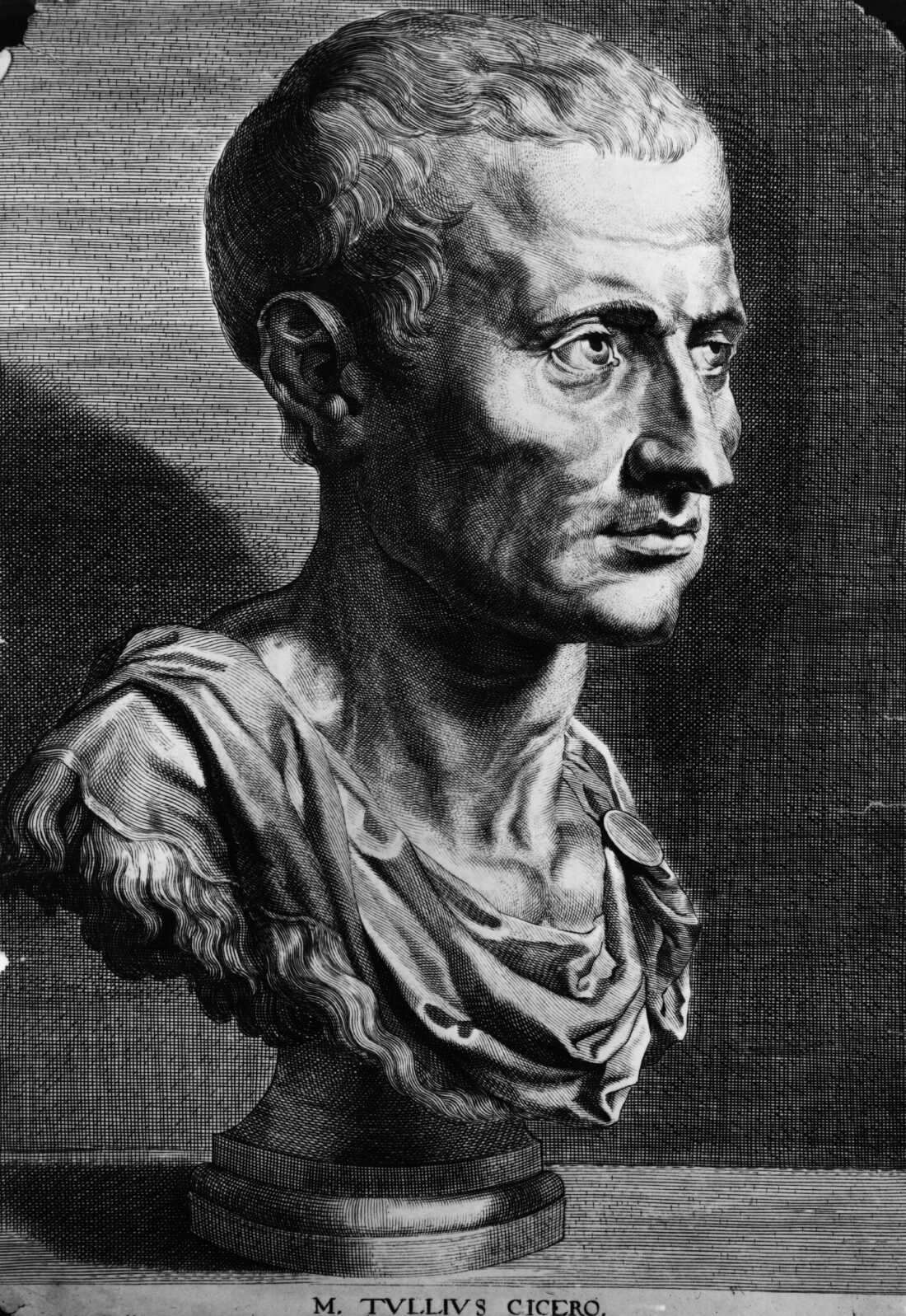
Roman orator and statesman Marcus Tullius Cicero roasted Roman strongman leader Marc Anthony. It didn't go well for Cicero.

Roman orator and statesman Marcus Tullius Cicero roasted Roman strongman leader Marc Anthony. It didn’t go well for Cicero.

Hulton Archive/Getty Images

The punchline to one of these jokes refers to the king as a cyclops — the cannibalistic, one-eyed monster of Greek mythology. For this, Fontaine said the king promptly had Theocritus executed.

It wasn’t just ancient Greek comedians who met similarly grisly fates for making politically incendiary quips.

Fontaine said Plutarch also shares a similar story about the Roman statesman and caustically funny orator Marcus Tullius Cicero. In the biography Life of Cicero, Plutarch describes Cicero’s death at the hands of followers of Rome’s strongman leader Marc Antony.

«Cicero delivered a famous series of speeches called The Philippics, where he roasted Mark Antony over and over. He derided him in all kinds of terms; some funny, some not so funny,» Fontaine said. «Mark Antony didn’t think it was funny at all.»

Comedians under fire — then and now

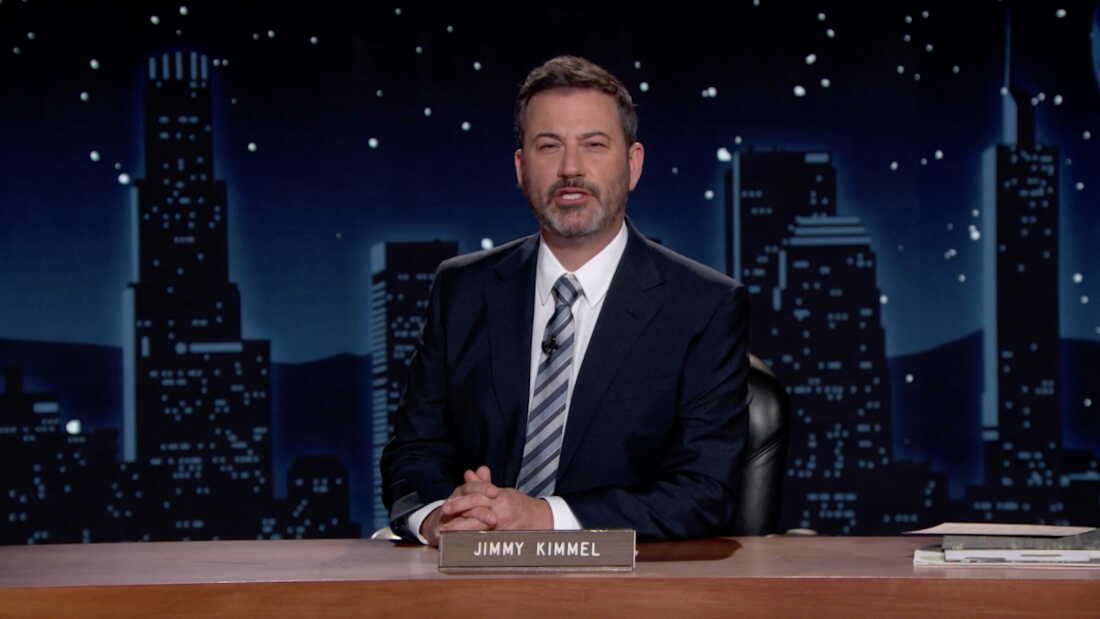
President Trump similarly didn’t find Kimmel’s recent remarks on Jimmy Kimmel Live! that took aim at supporters of the slain right-wing pundit Charlie Kirk entertaining — though Kimmel hasn’t been thrown behind bars (or worse) as a result, and this wasn’t a direct jibe at Trump, though Kimmel has made many of those over the years.

Jimmy Kimmel pictured in 2020.

Jimmy Kimmel pictured in 2020.

Getty Images/Getty Images for Easterseals/Getty Images for Easterseals

Instead, two days after the controversial monologue, ABC pulled Kimmel’s late-night show indefinitely, bowing to threats from the FCC chairman against stations carrying the program. Though Kimmel has since returned to the airwaves, two major broadcast groups — Sinclair and Nexstar — continue to refuse to air his show in their broadcast areas.

But scholars see a direct link between the fates of ancient comedians living through collapsing democracies and the crackdown on their descendants today, noting the importance of ancient Greek and Roman writings to the founders of this country.

Television

«We have to speak out,» Jimmy Kimmel says in his late-night return

«The founders absolutely read Plutarch,» said Stanford University history department chair Caroline Winterer, who studies the influence of the ancient world on early American history. «And they often alluded to people who dared in these early democracies, these nascent republics, to look tyranny in the face and say that tyrants were a threat to the very survival of democracies and republics, which ultimately rest not on the will of one, but on the good of the many.»

Television

Legal experts say pulling Jimmy Kimmel from air may amount to illegal «jawboning»

Winterer said like the ancients, the creators of the U.S. Constitution possessed the general belief that those in power should have thick skins.

«Because along with the adulation of the masses comes the discontent of the masses with one of the sublimest weapons that we have in our arsenal of free speech,» Winterer said. «And that is wit and humor.»

Posta under Artist/Kunstnar, Our global world, Politic&Society | Merkt , , , , , | Kommenter innlegget

The dictatorship of Trump closes Stephen Colbert’s «Late Show» – US press- and culture freedom rate is as low as EVER!

Stephen Colbert’s «Late Show» ends with a swan song and a giant wormhole

May 22, 2026 – npr.org

Mandalit del Barco (square - 2015)

Mandalit del Barco

The Late Show with Stephen Colbert during Thursday night's finale.

Host Stephen Colbert receives a standing ovation during Thursday night’s Late Show finale.

Scott Kowalchyk/CBS ENTERTAINMENT

Satirist Stephen Colbert ended the late night show he hosted for nearly 11 years on a whimsical and joyful note.

During his finale, he invited his audience, his crew and famous friends to dance with him onstage as he sang Hello, Goodbye with former Beatle Paul McCartney. Joining them was singer Elvis Costello, and musicians Louis Cato and Jon Batiste, the current and former band leaders for Colbert’s show.

And in the end, Colbert and McCartney together switched off the lights at New York’s Ed Sullivan Theater, where the Beatles made their American debut in 1964 and where the Late Show franchise was taped in front of audiences for close to 33 years.

Through the magic of visual effects, Colbert’s entire show and the theater were sucked into a giant green interdimensional wormhole that at times looked like the CBS logo to this reporter.

Joining Colbert for a bit earlier in the show were his late night host buddies John Oliver, Seth Meyers and the two Jimmies – Fallon and Kimmel – aka «Strike Force Five.»

«We came to say, we’re going to miss you,» Kimmel said. «Late night is not going to be the same without you.»

Meyers added, «Yeah, without you. Where will Americans turn to see a middle-aged white man make jokes about the news?»

YouTube

Last July, CBS canceled Colbert’s top-rated late night show, saying it was «purely a financial decision against a challenging backdrop in late night.» But his fans and friends say it was retribution for his continuous criticism of President Trump and his administration. The cancellation also came as Paramount Global – which owns CBS – sought Federal Communications Commission approval for its $8.4 billion merger with Skydance Media.

The network gave Colbert months to wind down his show, and he never stopped roasting Trump during his monologues…. except for his last one, where he didn’t mention politics.

While Colbert never directly blamed the president for the cancellation, many of his friends and fans did.

On the eve of the final Late Show with Stephen Colbert, musical guest Bruce Springsteen told the host, «You’re the first guy in America who lost his job because the president can’t take a joke.»

Colbert’s final show continued to feature some of his famous friends, including Bryan Cranston, Paul Rudd, Tim Meadows, and Ryan Reynolds, though he had teased the final guest would be Pope Leo XIV.

Colbert was also visited by his friend and mentor Jon Stewart, host of The Daily Show.

«I didn’t think my show would end like this,» Colbert said to him. «But still, grateful.»

«The only choice you have is how to walk through it,» Stewart told him as they faced the pretend wormhole they agreed was a metaphor. «You can go in kicking and screaming. Or you can do what you’ve done for the past 30 years when faced with something dark: you stare it down and you can laugh.»

Earlier in the week, Stewart came on the show to quote something former Late Night host David Letterman once told him: «Don’t confuse cancellation with failure.»

Letterman was also a guest on one of Colbert’s last shows, and expressed his outrage about the cancellation. «As we all understand,» Letterman told him, «you can take a man’s show, but you can’t take a man’s voice, so that’s the good news.»

Letterman and Colbert also went onto the roof of the Ed Sullivan Theater and proceeded to gleefully participate in what Letterman called «wanton destruction of CBS property.» They threw chairs from the set, a cake and some watermelons, over the side of the building, onto a target painted with the CBS logo.

Colbert’s departure marks the end of The Late Show franchise, which Letterman began in 1993 before handing the baton to Colbert.

This is a pivotal moment for late night television, as audiences increasingly watch online clips of shows rather than tune in to broadcast networks. The cancellation also comes at a time when the FCC is reviewing the broadcast licenses of eight Disney-owned television stations.

Disney, the parent company of ABC, which broadcasts Jimmy Kimmel Live!, has also found itself in the crosshairs of the Trump administration.

Kimmel asked ABC to air a rerun of his show on Thursday so fans could watch Colbert’s finale, which aired at the same time. Kimmel also urged viewers to «never watch CBS again,» after The Late Show was «pushed out.»

«I hope the people who did the pushing feel ashamed of themselves,» Kimmel said on his own show Wednesday night, «although I know they probably won’t.»

Colbert told People magazine he has not thought much about what’s next, beyond attending his brother’s wedding this weekend. He’s been working on a passion project: co-writing a script for an upcoming Lord of the Rings movie with his son Peter McGee. This week, Colbert also started a new TikTok account.

CBS says the set of The Late Show will be donated to the Museum of Broadcast Communications in Chicago, where Colbert started his career with the legendary improv comedy troupe, The Second City.

Starting Friday, CBS will replace The Late Show with Stephen Colbert with Comics Unleashed, the long-running syndicated talk show hosted by the new BuzzFeed owner and CEO, Byron Allen. The media executive is leasing the coveted timeslot from CBS, insisting the comedy on his show will be apolitical.

TV Reviews

Colbert’s final episodes: Here’s what happened on «The Late Show» this week

The Late Show with Stephen Colbert and guests Jimmy Kimmel, Jimmy Fallon, John Oliver, and Seth Meyers during Monday’s May 11, 2026 show.

Television

Stephen Colbert and late night hosts strike again as his show nears finale

Stephen Colbert during a taping of Comedy Central's The Colbert Report in December 2014.

For 20 years, Stephen Colbert distinguished truth from truthiness

The ancient Greek writer and biographer Plutarch chronicled the fates of comedians who paid a heavy price for making jokes that displeased those in power.

History

What Kimmel and Colbert can learn from ancient comedians who ticked off their leaders

More Stories From NPR

NPR’s Newsmakers

Late night has enough political humor already, says host stepping into Colbert’s slot

TV Reviews

«Widow’s Bay» is cursed — but manages to be both funny and frightening

Pop Culture Happy Hour

Stephen Colbert takes his last bow in late night

Pop Culture Happy Hour

Every season of «Survivor,» ranked worst to best, by NPR’s resident superfan

TV Reviews

Bruce Springsteen voices what Colbert left unsaid on penultimate «Late Show»

Music

«SNL» just wrapped its 51st season: It’s time to cruelly rank its musical guests

Wikipedia

https://en.wikipedia.org  ›  wiki  ›  The_Late_Show_with_Stephen_Colbert

The Late Show with Stephen Colbert – Wikipedia

Posta under Our global world, Politic&Society | Merkt , , , , , , | Kommenter innlegget

Heiderspris til Tore Godal – Gavi-legen redda truleg over 20 millionar liv gjennom globalt vaksineprogram

Lege Tore Godal hedres av WHO

Bildet viser Tore Godal (86)
FIKK PRIS: Tore Godal er sannsynligvis en av dem som har gjort mest for å få ned barne- og mødredødeligheten i verden. Her er han i desember under lanseringen av sin egen biografi «Norges dyreste mann – historien om legen Tore Godal». Foto: Thomas Fure / NTB

Tore Godal (86) er tildelt Verdens helseorganisasjons hederspris for livslang innsats i global helse. I 2009 avslørte han for Sykepleien et fiffig søknadstriks som fikk Bill Gates til å punge ut for den globale vaksinealliansen Gavi.

Hedersprisen deles ut under World Health Assembly i Genève 18. mai, skriver Panorama Nyheter.

Tore Godal er sannsynligvis en av dem som har gjort mest for å få ned barne- og mødredødeligheten i verden.

Skrev søknad til Bill Gates tilpasset golfbanen

Legen har ledet høyt forankrede prosjekter for Verdens helseorganisasjon (WHO) mot tropesykdommer og var også den som fikk Bill and Melinda Gates Foundation til å støtte opprettelsen av den globale vaksinealliansen Gavi med 750 millioner dollar. 

– Søknaden måtte ikke være lengre enn fem sider, så den kunne leses på golfbanen. Det blir 150 millioner dollar per side. Et tips jeg har formidlet videre til Forskningsrådet, betrodde han i et portrettintervju med Sykepleien i 2009.

Hele portrettet kan leses i PDF-utgaven på side 28.

bildet viser Tore Godal på forsiden av Sykepleien
FORSIDELEGE: Tore Godal fra 2009, da Sykepleien portretterte ham som 70-åring. I dag er han 86. Foto: Therese Borge 

Sentral i Gavi

Godal var ikke bare sentral i etableringen av vaksinealliansen Gavi i 2000. Han ledet også organisasjonen de første seks årene. Ifølge Norad har Gavi siden oppstarten vaksinert mellom 1,1 og 1,2 milliarder barn i fattige land. Innsatsen kan ha forhindret over 20 millioner dødsfall.

I et brev til Godal fremhever WHO-sjef Tedros Adhanom Ghebreyesus hans betydning for global vaksineinnsats.

Hilsen fra statsministeren

Også statsminister Jonas Gahr Støre er imponert og skriver i en e-post til Panorama Nyheter:

– Tore Godal har vært en uvurderlig kraft i global helse. Gjennom sin strategiske tenkning, integritet og evne til å overbevise beslutningstakere har han bidratt til å redde millioner av liv, bygge effektive helsesystemer og drive innovasjon på tvers av landegrenser – spesielt for livreddende vaksiner. Hans arbeid viser hvordan én persons visjon og innsats kan skape varig endring i verden. Jeg vil gratulere ham med prisen.

Bildet viser Tore Godal som 70-åring
UKJENT FJES: Til tross for kjendisstatus blant verdens helse- og politikertopper hender det folk tar feil av Tore Godal og Ap-politiker Bjørn Tore Godal

. Da Bjørn Tore ble utenriksminister, hadde Dagens Nyheter i Sverige bilde av Tore. Foto: Therese Borge

1 Kommentarer

Hans Erik Heier

Tidligere avdelingsoverlege og profesdor

4. mai 2026

Som tidligere stipendiat hos Tore Godal benytter jeg anledningen til å takke for alt han gjorde for å hjelpe meg fram til doktorgrad og gratulere med en meget vel fortjent pris for livslang innsats for medmenneskers helse og levekår. TG er en av de virkelig store i norsk og internasjonal medisin og immunologi.

Publisert 04.05.2026 – sykepleien.no

Eivor HofstadJournalist

Relatert

Billig malariavaksine kan redde flere hundre tusen liv

Etter over 30 års forskning har verden nå fått to vaksiner mot den livstruend

Nyheter

Bildet viser en malariamygg som suger blod
Tolv land i Afrika får ny malariavaksine

Tolv land i Afrika får rundt 18 millioner doser av den nye malariavaksinen in

Nyheter

Kristin Waldum-Grevbo, leder for helsesøstrenes faggruppe
– Barn dør av vaksineskepsis

– Mener Thore K.

Debatt

Bildet viser kvinner og barn på et sykehus i Tanzania.
NSF får nesten 35 millioner kroner til bistandsprosjekter

Mange organisasjoner fikk bistands-nei fra Norad.

Nyheter

Posta under Politikk, samfunn, Vår globale verd | Merkt , , , , | Kommenter innlegget

The Norwegian democracy in a tin can of oil – and the 212 year constitution

Some ways to explain the Norwegian democracy is liberal, antagonistic, protective, unselfish, selfish, open, closed, free press, complacent press, etc. By this it is possible to assume that this tiny rich nation beside the north pole is behaving double moralistic, and have also done it in the past. The answer is YES! When the Norwegian people marked the 200 anniversary of the constitution in2014, some “higher people” (ruling elite, bureaucracy, kingdom, etc.) opened the show in Eidsvoll (the place where the constitution was written and finished the 17th of May 1814), 16th of February. Equal the elite who came together that year and put the new constitution on paper. They were in quite a smaller number of course, but still..

Many things have been written about the so called liberal Norwegian democracy through the years. Not everything could be said have been done with accuracy on facts which regards the “shadows” in this story telling.

The constitution

File:Grunnloven 1814 plktr 08739.jpg

To start with the constitution which is regarded as one of the most radical at the time and inspired by both the US and the French constitution. Firstly, § 2 in the constitution said that the state religion was evangelical-lutheran, the commitment to raise the children in this, Jesuits and monks should not be tolerated and Jews not allowed into the nation. No other country had this ban against Jews. This paragraph has been changed several times since then and consists no longer these bans. But not until 2012 the “protestant” part was changed into “Christian and humanist heritage”, still no totally religion free nation in the constitution § 2. “Freedom of religion” is to be found in § 16.

§ 2. Den evangelisk-lutherske Religion forbliver Statens offentlige Religion. De Indvaanere, der bekjende   seg til den, ere forpligtede til at opdrage sine Børn i samme. Jesuitter og Munkeordener maae ikke taales. Jøder ere fremdeles udelukkede fra Adgang til Riget.

To be able to vote in the period 1814–1884 it was required 25 years of age, belong to a privileged group of occupation and possess a certain property. At the time it was obvious that women had no suffrage. Workers and women were to groups fighting for suffrage. It was no way they could fight for this in the Parliament so they fought for their cause outside the power base. In 1898 every men passed 25 got suffrage. Not until 1913 did every women get their full rights of voting. In comparison with the French constitution the share of the population with suffrage was higher than the Norwegian. The first time all men got suffrage was in 1792. Despite several setbacks later, in 1848 all men over 21 got suffrage, but not until 100 years later (1944) did all women get this.

Power, the people and bureaucracy

Experts on power, law, sovereignty and bureaucracy are not so sure that the last 210 years have widened the democracy or people’s power. Are we back into the nation of bureaucracy and elites, or have we been there all along? Let us take the issue ”sovereignty”. Many will argue that politicians too many times have breached the constitution. In § 1 it says: Norway is a free, independent, undivided and sovereign nation. Is it as simple as it sound? No, says a lawyer from The University of Bergen, Norway. During the last 30 years the Parliament has voted in favour of ceding sovereignty to European Union through EEA (European Economic Area). New EEA laws have been adopted with simple majority. But when EU institutions get direct influence on f. ex. Norwegian companies and state institutions this should be decided with 2/3 majority. In any case, is this a real democracy where the people have the vote? No, it is indirect democracy where we the people vote through the ballot box every 4th year, that is all! Very seldom do we have direct democracy. Only the votes for or against Norwegian membership in EEC (1972) and EU (1994) was done by referendum. Never have the Norwegian people been asked on the participation in wars. The government’s involvement in f. ex. Afghanistan and Libya with Nato was never challenged by peoples vote. Norway was and still is “the nice boy” in the US classroom of atrocities and imperialism!

The undemocratic tin can of oil

Vintage 2 quart tin oil can dispenser with handle and flexible spout

Neither have we been asked how to manage our own money, the huge petroleum fund which contains around $1.626 trillion (15 trillion Norwegian crowns (NOK), March 2024). This revenue which comes from the large surplus generated by the Norwegian petroleum sector, also have ethical implications. One thing is the climate issue. Where we the nation is getting richer and richer from revenues mostly from non-sustainable energy recourses. The issue of using parts of the fund in science and development in renewable energy future has never been discussed properly in parliament. Another thing is economic footprints. The high level of exposure (around 60 percent) to the highly volatile, and therefore risky, stock market is financially unsafe. F. ex. in the beginning of global economic crisis in 2007/8 the fund lost around 633 billion NOK ($104 billion) in 2008 and 86 billion NOK ($14 billion) in 2011. That year the national revision found out one manciple in the fund, alone got half a billion NOK in bonuses. Is this democracy to the benefit for the so called sovereign people? The economic elite is just not only capitalists in private sector, they are gaining ground in our collective economy too!

Part of the investment policy debate in Norway is related to the discovery of several cases of investment by The Petroleum Fund in highly controversial companies, involved in businesses such as arms production, mining industry, biogems, pharmaceutical industry and tobacco. According to its ethical guidelines, the Petroleum Fund cannot invest money in companies that directly or indirectly contribute to killing, torture, deprivation of freedom, or other violations of human rights in conflict situations or wars. Contrary to popular belief, the fund is allowed to invest in a number of arms-producing companies. Only some kind of weapons such as nuclear arms, are banned by the ethical guidelines as investment objects. An investigation by the Norwegian business newspaper Dagens Næringsliv in February 2012 (wikipedia) showed that Norway has invested more than $2 billion in 15 technology companies producing technology that can and has been used for either filtering, wiretapping, or surveillance of communication in various countries, among them Iran, Syria, Burma, Israel and USA. Although surveillance tech is not the primary activity of all these 15 companies, they have all had, or still have some kind of connection to such technology. The Ministry of Finance in Norway stated that it would not withdraw investing in these companies, nor would it discuss an eventual exclusion of surveillance industry companies from its investments. So here we are. In an example among others from our nice democratic, transparent and equal society! Money and capitalism rules!

Back to square one – the power of the people

This brings the argument back to the Norwegian constitution and in what way the lack of democracy works in our time and much in the same way as it did 210 years ago. In 1814 the small elite who made the constitution was very afraid of letting the people participate in elections, they thought it would be chaos. The same way of thinking, but in modern terms, f. ex. is to avoid many big issues to properly be decided democratically. We have, according to the indirect democracy system, always had democratic deficit compare with a direct power of the people system. Of course we can here talk about real socialism. Ideas that were very much alive in the beginning of 20th century, but they never came to power. In fact the whole idea of representative democracy shows a great mistrust in the people. The entire system has some mechanisms that subdue initiatives from the people. An example is the slow process in constitutional changes – it is just not enough with one election or two. Another example is that it is almost impossible with inhabitant initiatives, because the standard right never want to allow this. The right-wing have always been about strengthen the power of the market against the public power. In turn that means to restrict the area of decision making.  The politicians will do less while the capitalists and big corporations rules. One good example is the eager of the right-wing, but also social democrats, to manoeuvre Norway into EU without too much protest. The more we are engulfed in the four liberties of EU (free movement of capital, labour, services and goods) the more the economic elite rules both Europe and Norway. At the same time the difference between masses and elite increases.  It is about classes. The class struggle is concealed behind consumerism and alienation. I wonder when the struggle will start. Many things depend on this, but we see signs on “going back” to a more elitist and authoritarian way of ruling. The so called “free market” is not democratic. When will the people see this and what will we do with it?

Ivar Tveito Jørdre

Posta under Capitalism, Our global world, Politic&Society | Merkt , , , , , , , , , , , , , , , , , , , , | Kommenter innlegget

Stopp nedlegginga av pasientbiblioteket på Haukeland!

Artistar og lydteknikar bak protestkonserten på Haukeland. F.v. Helge Stokke, Klaus Vatne, Øystein Lydvo aka Lydven, Linn Kristin Løvfall-Breistein aka Løvfall, Synneva Noel og Stine Karin Sæle.Foto: Privat

Øystein Lydvo, 21.04.26

I desember vart det vedteke at Pasientbiblioteket på Haukeland Universitetssjukehus i Bergen skulle leggast ned, som eit ledd i i budsjettkutt der føretaket skal spare 250 millioner kroner. 18 kommunar, mellom anna Voss Herad, tilhøyrer Helse Bergen sitt føretaksområde og engasjementet for å bevare Pasientbiblioteket aukar for kvar dag. Oslo Universitetssjukehus satsar stort på Pasientbiblioteket, med 4,5 årsverk fordelt på to bibliotek. Ved Trondheim Universitetssjukehus la dei ned pasientbiblioteket for nokre år sidan, medan ei prosjektgruppe no jobbar for å etablere eit nytt pasientbibliotek på St. Olavs hospital. I Bergen legg dei ned.

Eg har vore pårørande på Haukeland i over eitt år no og har stor nytte av Pasientbiblioteket. I ein kvardag prega av sjukdom og alvor representerer Pasientbiblioteket for meg ei heilt anna verd enn det venteareal og sjukehuskorridorar gjer. Denne kulturoasen genererer håp og fungerer som ein ladestasjon. Når eg er der, ser eg at biblioteket er i bruk på ulike måtar: Lån av bøker, avkopling i Jon Fosse-kroken, leik i barneavdelinga, lesing av gratisaviser eller lån av sjukehuset sin einaste pasient-PC. Mange ynskjer å treffe besøket sitt her i staden på eit fleirmannsrom, medan andre sit med PC-en og jobbar.

Argumentasjonen kring vedtaket er dårleg belyst. Den faglege begrunninga frå kommunikasjonsdirektør Erik Vigander er at pasienter i større grad brukar eigen mobil til underhaldning og det vert vist til ei digital utvikling i samfunnet. Han ser ikkje ut til å bry seg om at Brukarutvalet i Helse Bergen er bekymra for barn og unge sin skjermbruk på sjukehuset og at nedlegginga er i strid med Regjeringa sin leselyststrategi «Sammen om lesing», som skal snu den digitale trenden i samfunnet.

Vigander meiner at sjukehuset vil spare kring ein million på nedlegginga, noko eg meiner er ei sanning med modifikasjonar: Bibliotekaren held fram som tilsett og internleiga for lokalet må ei avdeling på Haukeland uansett betale. Dersom ein ser på den totale innsparinga til helseføretaket står ein igjen med utgifter til bokinnkjøp. Føretaket må heve denne saka over avdelingsnivå og sjå på alternative løysingar for å drifta biblioteket vidare.

Som pårørande har eg, i saman med pasientar, tilsette og andre pårørande, sidan desember jobba for å bevare Pasientbiblioteket. Me opplever ein uvilje hjå leiinga til å gå i dialog for å sjå på løysingar. Dei har ikkje invitert på møte, svarer sjeldan på e-postar, og når det kjem eit svar er det det same: Vedtaket kan ikkje reviderast. På kort tid samla me inn over 2000 underskrifter mot nedlegginga, men heller ikkje det ser ut til å ha motivert til dialog.

Ei kulturmarkering som skulle formidle bekymring kring nedlegginga vart stoppa av leiinga, med begrunninga at ein ikkje kunne ha politisk markering på sjukehuset sitt område. Då me opplevde at bodskapen ikkje blei lytta til, tydde eg nyleg til sivil ulydigheit og arrangerte uanmeldt aksjonskonset på scena ved Pasientbiblioteket. Etter konserten kom ei dame bort til artistane og takka oss for konserten. Ho hadde vore pasient på sjukehuset i eitt år og brukt Pasientbiblioteket kvar dag. I dag skulle ho skrivast ut og ho var sjokkert over at dette flotte tilbodet skulle leggast ned.

Dei som kontaktar meg er ikkje berre bekymra for Pasientbiblioteket. Dei kjenner også på at demokratiet er trua, når føretaksleiinga på eit av Noregs største sjukehus verkar å vera lite lydhøyre og prega av maktsentrering. Politikarar har engasjert seg og er i kontakt med Helse- og omsorgsdepartementet, Kultur- og likestillingsdepartementet og Kunnskapsdepartementet. Vår eigen politikar Terje Breivik var styreleiar i Helse Bergen då vedtaket vart fatta, og kanskje kan ein forvente at også han engasjerer seg? For saka vedkjem ikkje vossingane berre fordi dei kan ha nytte av Pasientbiblioteket dersom dei sjølv må søkje helsehjelp på Haukeland, men også fordi demokratiet, grunnsteinen i samfunnet vårt, er trua. Eg høyrer tilsette på Haukeland snakke om ulike demonstrasjonar for å redde Pasientbiblioteket, som hadde sin siste opningsdag på fredag. Det kan vera lurt å lytte til folket. Stopp nedlegginga av Pasientbiblioteket på Haukeland no!

Frå avisa-hordaland.no

Posta under Bøker, Noreg - Norway, Politikk&Samfunn | Merkt , , , , , | 2 kommentarar

NAKBA – Boikott Israel – Fritt Palestina!

78 år uten fred og frihet

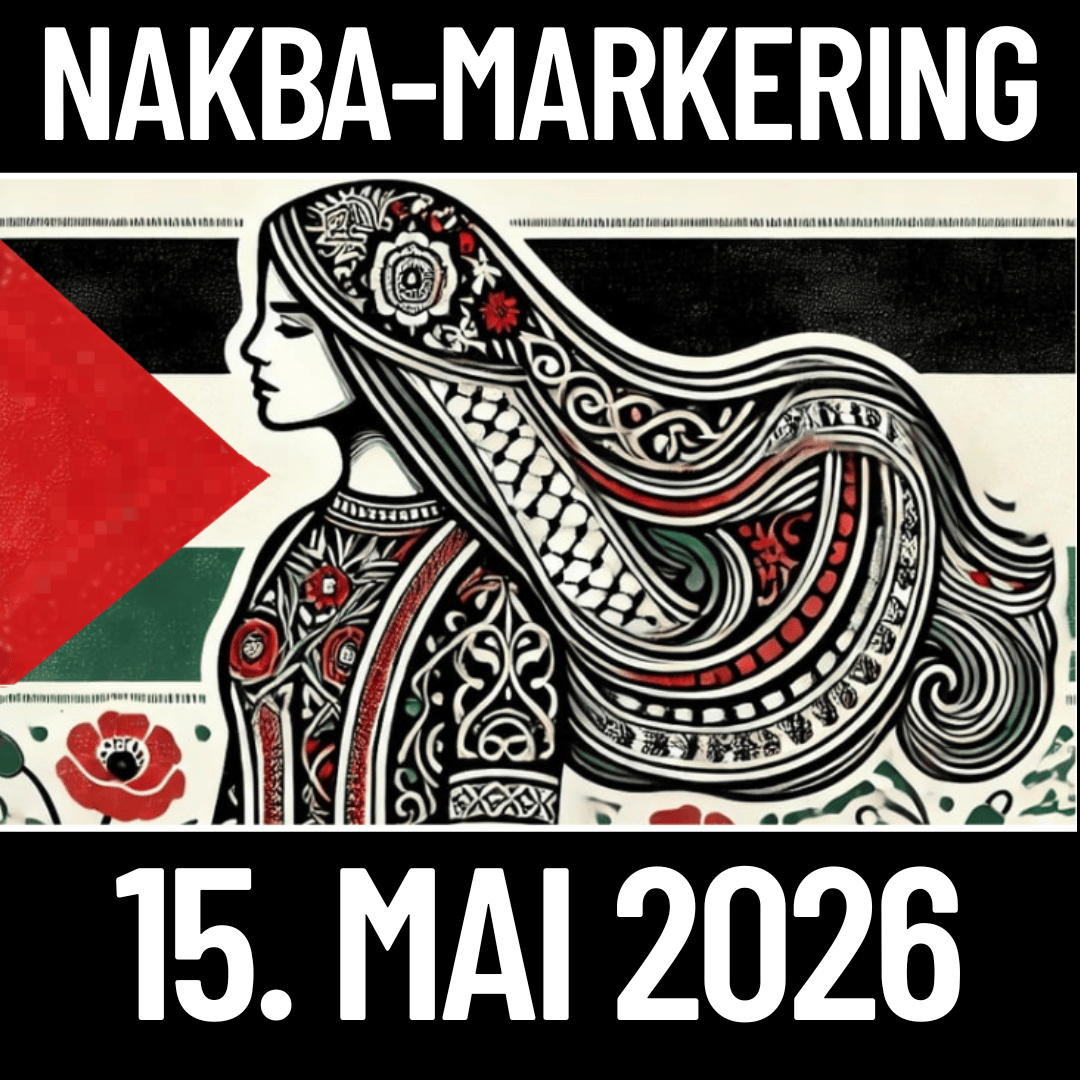
15. mai markerer vi at det er 78 år siden Nakba – «katastrofen» – da over 750 000 palestinere ble fordrevet fra sine hjem i forbindelse med opprettelsen av staten Israel i 1948.

Mange av disse menneskene og deres etterkommere bor fortsatt i flyktningleirer i Gaza, på Vestbredden, i Libanon, Syria og Jordan. De palestinske flyktningene har rett til å returnere – dette er nedfelt i internasjonale konvensjoner, pakter og erklæringer. Likevel nekter Israel dem å vende hjem.

I lys av dagens situasjon, hvor vi igjen ser massedrap, tvangsforflytninger og ødeleggelse i Palestina, er det viktigere enn noen gang å stå sammen i solidaritet og minnes – ikke bare katastrofen i 1948, men også den uavbrutte kampen for rettferdighet og menneskeverd.

Arrangementet er gratis, men vi oppmuntrer til å vise solidaritet ved å støtte organisasjoner som arbeider for det palestinske folket.

NAKBA-markering

Palestinakomiteen i Bergen, Norsk Folkehjelp Bergen, LO i Bergen og Omland, Rødt Møhlenpris, Sosialistisk Ungdom Bergen, Internasjonal Kvinneliga for Fred og Frihet, Cornerteateret, Bergen Kaffebrenneri – samt flere frivillige og enkeltpersoner.

Fredag 15. mai, 16.30 – 22.00
Møhlenpris, Cornerteateret, Bergen Kaffebrenneri

Vil du støtte arrangementet?
VIPPS Palestinakomiteen: 767907 merk betalingen med  ”NAKBA«. 


For oppdatert program følg med på arrangementer på FACEBOOKArrangementet vil bli avholdt på Cornerteateret på Møhlenpris fra 1630 til 2130.

PROGRAM:
Velkomst ved Nakba-komiteen

Appeller:
Nasreen Ahmed, nestleder i Palestinakomiteen i Norge
Hussam Ahmad fra Yalla yalla kaffe
Susan Hassan Abdallah fra Global Sumud Flotilla Norge
Linn Kristin Langley Engø fra Arbeiderpartiet i Bergen

Panelsamtale med Mohammed Elsusi og Frode Bjerkestrand

Foredrag av Sissel Rosland fra Historikere for Palestina

Musikk med Elsusi, Marthe Valle og Linar Yacob

Salgsutstilling av plakater ved Mats Grorud

Plakatutstilling ved Geir Goosen

Auksjon ved Strikk for Palestina

Palestinsk mat

Markering av Nakba – 78 år med motstand og håp

Den 15. mai markeres 78 år siden Nakba – katastrofen – da over 750.000 palestinere ble fordrevet fra sine hjem i forbindelse med etableringen av staten Israel i 1948. Mange av disse menneskene og deres etterkommere bor fortsatt i flyktningeleirer i Gaza, på Vestbredden, i Libanon, Syria og Jordan – uten rett til å vende hjem.

I Bergen har vi lang tradisjon for å markere Nakba. I år samler vi krefter til et bredt og inkluderende arrangement i solidaritet med det palestinske folket.

Programmet inkluderer foredrag, appeller, palestinsk og norsk kulturinnslag, kunstneriske bidrag, aktiviteter for barn og servering av tradisjonell palestinsk mat. Arrangementet er åpent for alle og gratis å delta på – men vi oppfordrer til å gi et frivillig bidrag som går til å dekke kostnader som leie av lokaler og teknisk utstyr, honorarer og reiseutgifter, samt matservering.

I lys av dagens situasjon, hvor vi igjen ser massedrap, tvangsforflytninger og ødeleggelse i Palestina, er det viktigere enn noen gang å stå sammen i solidaritet og minnes – ikke bare katastrofen i 1948, men også den uavbrutte kampen for rettferdighet og menneskeverd.

Velkommen til en dag for refleksjon, fellesskap og solidaritet.

Norsk Folkehjelp:

Anneksjon er ikke tillatt under internasjonal lov, og kan bety slutten på alt håp for den palestinske stat.

Israelske myndigheters overgrep mot palestinere øker og kampen for et fritt Palestina blir viktigere og viktigere. Israels statsminister Benjamin Netanyahu, har varslet at han vil legge frem planer for formell anneksjon av store deler av det okkuperte Vestbredden og Jordandalen for Knesset i sommer. Anneksjon er ikke tillatt under internasjonal lov, og kan bety slutten på alt håp for den palestinske stat.

Palestinas president Mahmoud Abbas har informert internasjonale myndigheter om at det palestinske folket ikke vil godta annektering av deres land.

Vil det internasjonale samfunnet denne gangen stå opp for palestinernes rett?

  • Norsk Folkehjelp Solidaritetsungdom støtter palestinernes markering av Al-Nakba.
  • Vi støtter palestinernes legitime rett til selvbestemmelse.
  • Vi støtter palestinernes rett til frihet fra undertrykkelse, okkupasjon og anneksjon.
  • Vi støtter palestinernes rett til frihet fra et liv som flyktninger.
  • Vi krever at Norges utenriksminister Ine Eriksen Søreide gjør mer enn å være bekymret. Vi krever at våre myndigheter legger press på Israel og at de arbeider for et fritt Palestina.

Boikott Israel, fritt Palestina!

Solidaritetsungdoms blogg

Posta under genocide, Imperialisme, Midt-Austen, Palestina | Merkt , , , , , , , , | Kommenter innlegget

Happy 100th birthday David Attenborough!

Happy 100th birthday David Attenborough! Nature salutes you!

The science communicator has raised awareness of the natural world and its myriad interconnections on which humans depend.

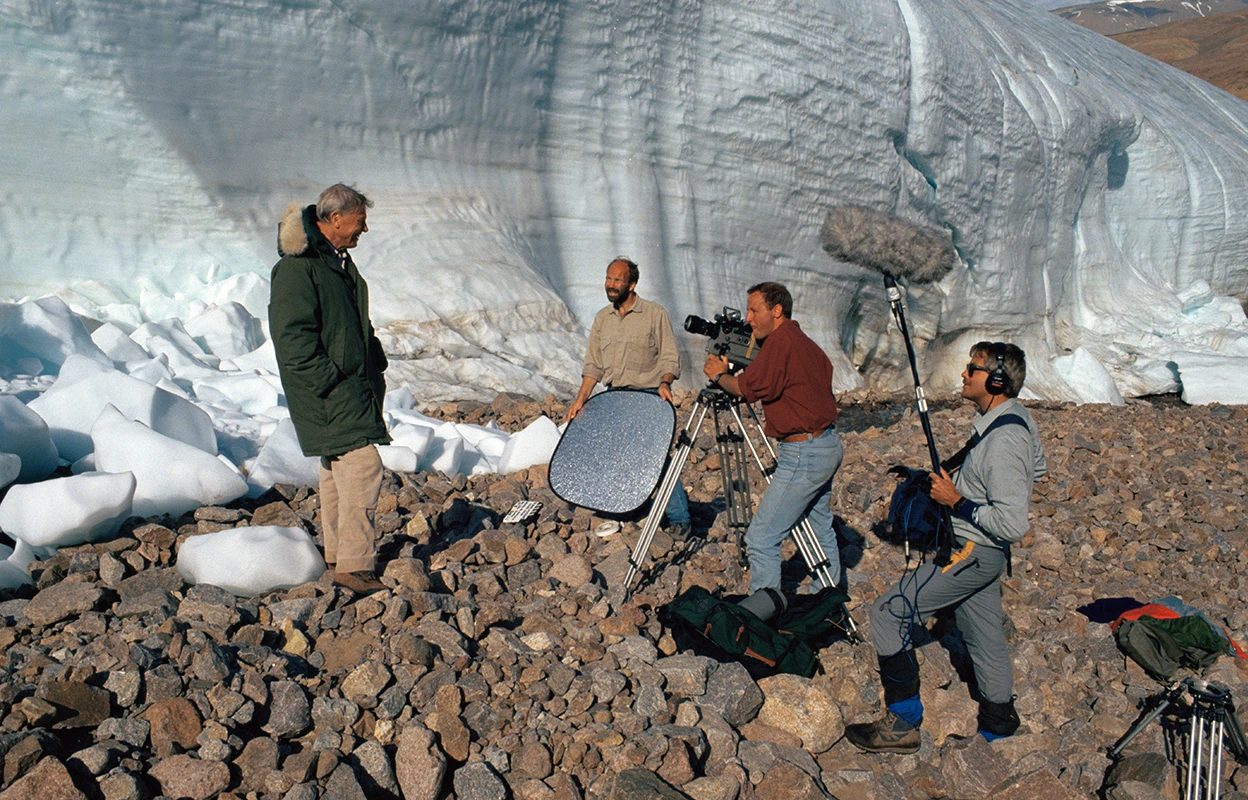
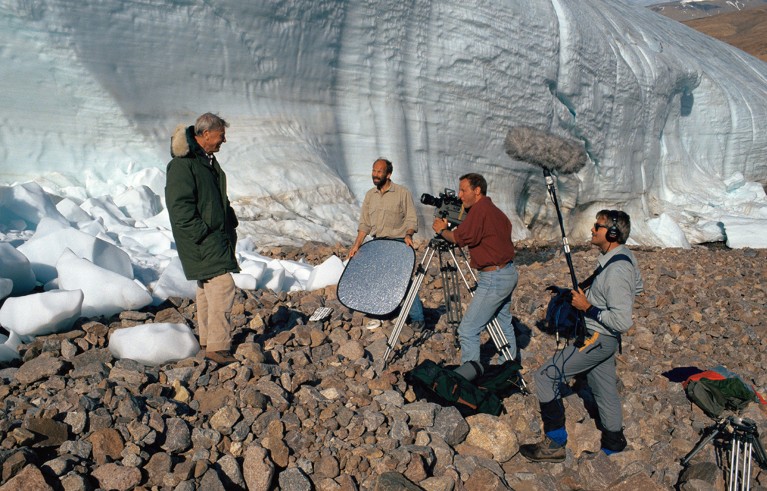
Producer Neil Nightingale and film crew filming David Attenborough standing on rocky terrain near a large glacier for a documentary.
Filming for the 1995 series The Private Life of Plants on Ellesmere Island, Canada. Credit: Neil Nightingale/NPL

08 May 2026 – nature.com

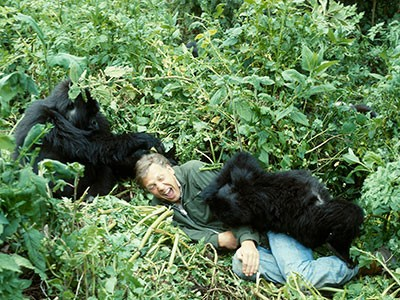
It is one of the most memorable moments in natural-history film-making: two young mountain gorillas playing with the broadcaster David Attenborough in Rwanda, later joined by the gorillas’ watchful mother. Attenborough is in his element, quietly demolishing a widely held perception — bolstered over decades by films such as King Kong — that these shy and peaceful creatures pose a violent threat to humans.

The clip, filmed in 1978 for the landmark BBC series Life on Earth: A Natural History, demonstrates what has become Attenborough’s trademark over his 70-year career: the communication of new, surprising and complex phenomena by showing rather than telling. There’s no lecture here — just curiosity, mischief and arresting visual impact.

Attenborough turns 100 on 8 May. Here, Nature salutes him and celebrates his unparalleled impact as a science communicator who has brought nature closer to many millions of people. We also pay tribute in an immersive article that shows his extraordinary life in pictures (see go.nature.com/4wddktw). The inspiration he provides must continue to shape efforts to conserve the natural world.

A scientist and communicator

It’s hard to overstate Attenborough’s influence on science broadcasting. In the early decades of television, programmes fronted by experts usually involved men giving lectures to the camera, with photography and graphics having a secondary role. Attenborough was no less an expert and, unusually for someone at the BBC at the time, had studied science: geology and zoology at the University of Cambridge, UK. But he brought a more involved, engaging approach, getting out into the field. His films are a personal journey of discovery, but the spotlight is shared.

Life on Earth, a 13-part series of hour-long episodes that aired in 1979, told a sweeping story of the origins and evolution of life. It took three years to make, and Attenborough and his crew travelled 2.1 million kilometres to 100 locations in 49 countries, filming 650 species. In letting the cameras (and his now-familiar enthused whisper) do the talking, he took full advantage of the beginning of colour television — an innovation he had been instrumental in bringing to the United Kingdom, during a stint as the controller of the television channel BBC2 in the 1960s. The series was watched by an estimated 500 million people worldwide — more than one-tenth of the global population at the time.

Many of the scenes in Life on Earth had never before been captured on camera, and the series spotlighted not just charismatic megafauna, but also the wonders of life at all scales. One of the most memorable segments involves Darwin’s frogs (Rhinoderma darwinii), a tiny species found in the forests of Chile and Argentina. The males collect and incubate fertilized eggs in their mouths, before dramatically releasing the newly developed froglets.

We are all broadcasters now

Attenborough followed Life on Earth with ever-more-ambitious films on subjects such as mammals, birds and life in the deep ocean, culminating in two further landmark series: Planet Earth and Blue Planet, which he narrated well into his later years. For much of this time, only relatively few well-financed broadcasters had the resources to take on such projects. The BBC’s budget for Life on Earth reached an estimated £1 million (then equivalent to around US$2 million), according to Jean-Baptiste Gouyon, a science-communication researcher at University College London who has studied Attenborough’s documentaries (J.-B. Guoyon BBC Wildlife Documentaries in the Age of Attenborough, 2019). It was an astronomical sum at the time. Today, public-service broadcasters such as the BBC are under considerable financial and political pressure, and so are less likely to take on such risky projects.

Streaming platforms such as Disney+ and Netflix are taking up the baton, satisfying to an extent the market for big-ticket nature documentaries created by Attenborough. But as technology has evolved, so, too, have opportunities to become creators. Camera equipment that was once carted around in trucks and vans now fits in our pockets. Content creators on YouTube or TikTok have the potential to achieve Attenborough levels of viewership — and engagement — regardless of resourcing or where they are in the world.

There has never been a greater need for such science communication and engagement. Attenborough’s long career has coincided with a period during which humanity’s impact on the planet has vastly increased. His evolving output reflects changing attitudes towards those effects. The first series he presented was Zoo Quest in the 1950s, in which a team from London Zoo collected species from other countries and transported them to London. It would not be commissioned today. Series such as Life on Earth have been criticized for focusing on celebrating the wonders of evolution and the beauty of natural environments, while excluding many people who live in the locations involved, and overlooking threats to such places from unchecked industrial development powered by fossil fuels.

By contrast, Attenborough’s newer films have broadened their focus to include not only species, but also ecosystems — biodiversity in its fullest sense. They have also adopted a more urgent tone about the degradation of the environment; his 2025 film Ocean with David Attenborough, for example, includes heart-wrenching footage of the devastation wrought on ocean-floor ecosystems by the fishing practice of bottom trawling.

And, after many decades of avoiding the lecture format and giving his own opinion, Attenborough has increasingly turned to personal advocacy, warning of the risks of climate change. In a 2021 speech to the United Nations COP26 climate meeting in Glasgow, UK, he told delegates: “In my lifetime I’ve witnessed a terrible decline. In yours, you could and should witness a wonderful recovery.”

Attenborough has arguably done more than anyone else on the planet to raise awareness of the natural world and its myriad interconnections on which humans depend. As we mark his centenary, the most fitting legacy of the next 100 years would be for humanity to achieve that necessary recovery.

Nature 653, 329-330 (2026)

doi: https://doi.org/10.1038/d41586-026-01473-0

Reprints and permissions

A life in pictures: celebrating David Attenborough at 100

https://www.nature.com/articles/d41586-025-01572-4

Related Articles

See also:

https://www.bbc.co.uk/programmes/m002w132

https://en.wikipedia.org/wiki/100th_birthday_of_David_Attenborough

Posta under Climate Change, Our global world, Politic&Society | Merkt , , , , , , , , , , | Kommenter innlegget