Larry Johnson om the prospect of war with Russia, or not

Larry Johnson: Putin Warns the West – Russia is Ready for War

Glenn Diesen – Jun 27, 2026

Larry Johnson discusses NATO’s increasingly direct involvement in attacks against Russia, and Putin’s warnings to the West about war. Johnson is a former CIA intelligence analyst who also worked at the U.S. State Department’s Office of Counterterrorism.

Read Larry Johnson’s Sonar21: https://sonar21.com/

Transcript from the video (video here):

Welcome back. We are joined again by Larry Johnson, a former CI analyst who writes on Sonar21, and I’ve left a link in the description. So thank you for coming back on, Larry. It’s great to see you as always.

I always enjoy the invitation and the chance just to chat with you.

Very good. I want to talk about an article you recently penned because that is on Russia now recognizing that the Europeans are essentially preparing for more Glenn Diesen’ I’ve heard enough comments from top American officials to verify this and we know that in 2014 of course the NATO backed coup was framed as a democratic revolution

but what they really did was build a huge Ukrainian proxy army Glenn Diesen’ Glenn Diesen’ And, well, we can say furthermore, you know, unless we are to believe that the drones that attacked St. Petersburg from the Baltic Sea did not transit through airspace or even originate in NATO territory, then,

you know, then we can say that all these attacks are now also coming from NATO. at least using their territory. So something appears to be changing in Moscow. Perhaps it’s the European leader speaking ever openly about the need to break Russia, mass-produce long-range weapons to strike deeper and deeper inside Russia. I mean, There’s no more pretend anymore.

and they were able to launch attacks all along the southern border of the United States and going deep into Texas and into Arizona, New Mexico. The United States would view that as an act of war and would retaliate accordingly. They wouldn’t sit there and pretend that it was just some minor border dust-up.

Well, that’s exactly now what’s happening with Russia. And I think that we can see that, let’s call it the Anchorage period, where Putin met with Trump and there was some hope that the United States, now the United States is engaging Russia, and that there was going to be perhaps a diplomatic exit,

or at least something other than force. That’s dead. Absolutely dead. And that has been announced as well by Sergei Lavrov, among others, and Ushakov, Yuri Ushakov, who’s a close advisor of Putin. They’ve all made it clear that that process is dead. And this goes back to Sergei Karaganov’s position. The West has lost its fear of Russia.

They assume that we can do whatever the hell we want. We can bomb them. We can kill them. We can destroy schools.


The first articles came out that, well, Russia’s already losing. It’s running out of missiles within the next two to five days or something. Then we had the Nord Stream issue. Oh, yes. They blew up their own pipeline. Then we had the invasion of Kursk, which was, oh, this is definitely turning the tide now. Russia is losing.

Every time NATO escalates with a new weapon, it’s all Glenn Diesen is a game changer. Yeah. I mean, we listened to this for more than four years now that the war, that now the Ukrainians are winning. Now they’re winning. It’s getting more and more, uh, yeah, absurd every time. But again, the, the,

The goal is always the same, is to prolong the war, keep it going, and officially the language is, well, we just want Ukraine to negotiate from a position of peace. We want a force put into the negotiation table, even though it’s the European Glenn Diesen’s I didn’t understand Putin’s speech. He did refer to Operation Barbarossa of 1949.

and the West would stand on the sideline. And that’s essentially what’s been created here, though. It’s a war where the Europeans have said, well, we have to bring this war to Russian territory, which they now have, but Europe is a safe zone. So all the industrial production, all the missiles and drones,

which they advertise that they’re producing to attack Russia with all of this. Glenn Diesen is within European or EU territories and British territory. So this can’t be touched by the Russians. And essentially the Russians accepted this rule of the game. That is the NATO countries can now launch long range missiles and drones deep

into Russia and Russia is allowed to touch NATO territory. I mean, this isn’t sustainable, especially now that it’s becoming so much more open and larger scale. And also, as you said, the clear Indication of intent, that is to fight a war once Russia has been weakened. But I was wondering, how do you see Putin’s change over time?

Because last year he was all about diplomacy, Anchorage, all of this. Now we don’t hear much about diplomacy anymore. The main speeches are about war, that is, you know, we will achieve our objectives, we have the military power. Yes, they have kept their arms open or door open for diplomacy,

Well, there’s actually a reality that’s going to descend on Europe within the next two to three weeks. And this is the fallout from the shutdown of the Persian Gulf and Iran closing off the Strait of Hormuz. So there has been a dramatic loss of five significant, I’ll call them commodities, but they are inputs into the global economy.

Glenn Diesen-At-Least 20% of the oil, 25% of the liquid natural gas, 25 to 30% of the sulfur and urea which go for fertilizer, and over 40% of the helium which is used for making computer chips among other things. Well, right now on the oil front, the United States within two weeks will essentially have run out of having

a reserve supply of diesel and aviation fuel. So they won’t have enough oil, the heavy or sour crude, that’s required to make diesel and aviation fuel Glenn Diesen’ It will be sort of week to week, depending upon what they can receive, because the United States is already a net importer of that. Well, the same for Europe.

Europe is a net importer of all classes of oil, and the shortages that are going to come will affect the economies dramatically. They’re already sort of barely bumping along, staying maybe slightly above zero. But we’re talking now that it’ll be recession, if not depression territory.

And oddly enough, Donald Trump talked about this two weeks ago at the G7. And I think that helped explain why he signed the MOU, because he recognized in four weeks You know, we could be running on zero as far as the kind of crude oil that’s Well, there’s actually a reality that’s going to descend on Europe within the next two to three weeks. And this is the fallout from the shutdown of the Persian Gulf and Iran closing off the Strait of Hormuz. So there has been a dramatic loss of five significant, I’ll call them commodities, but they are inputs into the global economy.

Glenn Diesen-At-Least 20% of the oil, 25% of the liquid natural gas, 25 to 30% of the sulfur and urea which go for fertilizer, and over 40% of the helium which is used for making computer chips among other things. Well, right now on the oil front, the United States within two weeks will essentially have run out of having

a reserve supply of diesel and aviation fuel. So they won’t have enough oil, the heavy or sour crude, that’s required to make diesel and aviation fuel Glenn Diesen’ It will be sort of week to week, depending upon what they can receive, because the United States is already a net importer of that. Well, the same for Europe.

Europe is a net importer of all classes of oil, and the shortages that are going to come will affect the economies dramatically. They’re already sort of barely bumping along, staying maybe slightly above zero. But we’re talking now that it’ll be recession, if not depression territory.

And oddly enough, Donald Trump talked about this two weeks ago at the G7. And I think that helped explain why he signed the MOU, because he recognized in four weeks You know, we could be running on zero as far as the kind of crude oil that’s needed to produce diesel and aviation fuel.

would target and destroy those encampments. So that leaves air power. And, you know, again, what we’re running up against now is until the Strait of Hormuz is open and the oil, the 20% of oil that disappeared from the market is back on the market, and that’s going to be months. maybe a year or so,

then there’s not going to be enough aviation fuel to sustain the kind of combat operation that would be required against Russia. And at the same time, you know, the United States calculation that it could engage in attacks on Russia and that its own continental locations would be free? No, no, no, no.

As Russia’s deployed the Boroveshnik atomic cruise missile, Russia will this time would not hesitate to strike sites in the United States. I mean, this is an absolute worst case scenario, nightmare scenario. The reality is the United States has limited military assets. They’re very expensive, but we don’t have depth, strategic depth with any of them.

And what they’ve discovered, again with Iran, that You know, Iran does not have the kind of missile defense systems that Russia does, and Iran survived what the United States unleashed on it. And I would say that Russia carries more potential counterweight, that they’re able to respond in greater levels of violence.

to the United States or the Europeans than Iran could to Israel or the United States in the recent war. So no, it’d be a recipe for suicide, in my view.

Well, it does appear that we are moving towards suicide in Europe at least. That is, if you hear the hawks now in Moscow and their voices grow louder every day and they get more and more people on their side, their argument is essentially Go for full mobilization, kill Zelensky, destroy the entire government district in Kiev,

and while you’re at it, go after all the European plants that build weapons that are used to attack Russia. And if something goes wrong, reach for the tactical nukes. And again, what’s holding all of these hawks back is Putin. And this is the man which the European leaders most of all want to get rid of.

Because he is Hitler.

I mean, you couldn’t make this up. It’s so bizarre, but there is no logic anymore.

It’s just pure insanity. Pure insanity. But, you know, they may get what they want, and they won’t like what they get. So… Hey, let me leave you—unrelated to this, but we’ll call it breaking news—I have confirmed that the United States, the Central Command through the Joint Chiefs of Staff have issued The Order for U.S., all those,

remember all those U.S. military forces that were being deployed into the bases in the Persian Gulf and in Jordan and in Israel. The order is now, they’ve been issued the order, come home. So you’re going to start seeing all of that combat aircraft withdrawn. All the personnel, 82nd Airborne, they’re going to be withdrawn. You know,

it took more than a month to deploy them, and it’s going to take more than a month to redeploy them. But the point is, now that this order to redeploy has been issued, the chances of the United States re-engaging Iran militarily have been reduced significantly.

Well, on those good notes or good news, and there’s not much of that recently, you know, we can wrap it up. Hopefully, you know, why not pack up the military bases in Europe as well, send them home and perhaps then the Europeans become a little bit less cocky and we discover diplomacy.

But yeah, that’s for the future at least.

From your mouth to God’s ears. Well, thanks again, Larry. It’s always great to speak with you. All right, Glenn.

Take care. Bye-by

Recent Posts

Jeffrey Sachs: The Greater Israel Project is Collapsing

Jun 25•Glenn Diesen

Seyed M. Marandi: Trump Lost the Iran War – Must Sell It as a Victory

Jun 24•Glenn Diesen

Max Blumenthal: «Iran Deal» Divides the U.S. & Triggers Panic in Israel

Jun 24•Glenn Diesen

Ray McGovern: Putin Under Pressure to Retaliate Against NATO

Jun 23•Glenn Diesen

Einar Tangen: Can China Resist the Temptation of Empire?

Jun 21•Glenn Diesen

Yanis Varoufakis: U.S. Surrenders to Iran & Gulf States Must Adjust

Jun 20•Glenn Diesen

Alastair Crooke: A New Middle East Is Born & NATO Attacks Moscow

Jun 20•Glenn Diesen

Posta under Europa, Imperialism, nedrustning, Our global world, Politic&Society | Merkt , , , , , , , , , | Éin kommentar

Den stygge rasismen – Kva gjer det «deg» at alle ikkje er lik som «du»?

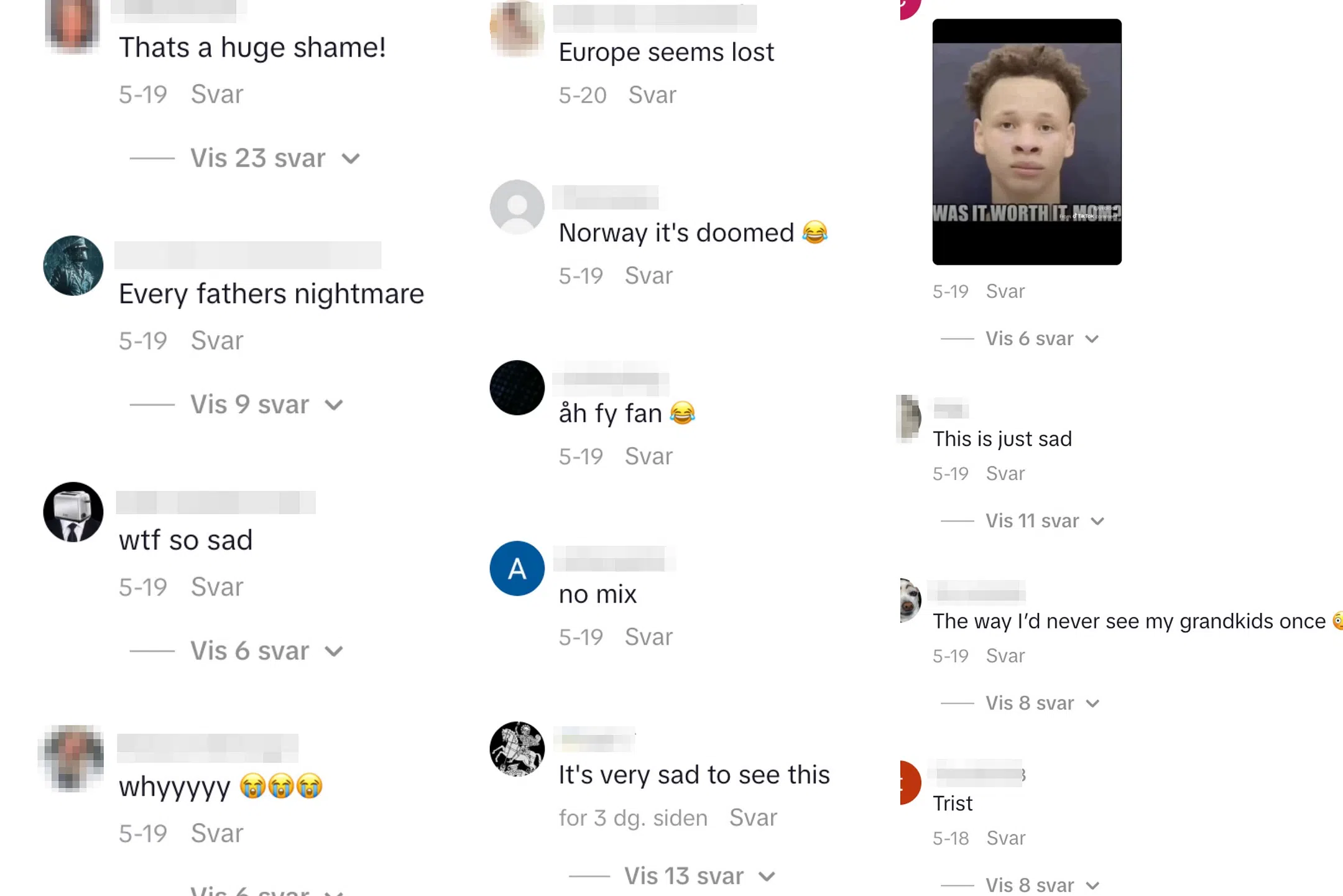
Pepret med rasistiske kommentarer etter bunads­video

Emanuel Bereket Beyene anslår å ha fått 850 negative kommentarer på videoen der familien pynter seg for nasjonaldagen. – Jeg blir skikkelig forbanna, sier likestillingsministeren.

Emanuel Bereket Beyene, Maja Sandvik og sønnen deres på syv måneder klare for årets 17. mai-feiring. Foto: Privat

Bendik Hansen, oppdatert 3. juni 2026 – vg.no

«Wtf so sad»

«thats a huge shame!»

«Every parents nightmare»

«No mix»

Og flere hundre andre, negative kommentarer.

Årets 17. mai-feiring skulle bli helt spesiell for kjæresteparet Emanuel Bereket Beyene (27) og Maja Sandvik (27), som for første gang skulle feire nasjonaldagen med sønnen deres på syv måneder.

Derfor delte han en video av familien som kledde seg i dress og bunad, før feiringen gikk i gang.

  • Her er videoen Emanuel publiserte på TikTok:

Emanuel er fra Bergen og har eritreisk bakgrunn.

Kjæresten Maja er fra Finnsnes i Troms.

Etter at han publiserte videoen på TikTok, har den blitt kommentert over 900 ganger.

«Nei til rase-miksing»

Flesteparten av kommentarene er fra anonyme brukere, og mange av dem er rasistiske og nedsettende.

– Flere av kommentarene handler om «nei til rase-miksing», at jeg med innvandrerbakgrunn og min etnisk norske kjæreste ikke burde være sammen, sier Emanuel til VG.

27-åringen forteller at han ikke tar seg nær av kommentarene, men spør:

– Hva med de som er 14,15 år og har samme bakgrunn som meg?

– De kan se slike kommentarer og tenke «OK, jeg er ikke god nok, hvorfor skal jeg gidde å integrere meg, når de hater meg uansett?»

Her er noen av kommentarene til TikTok-videoen. Foto: Montasje/TikTok

Emanuel sier at han føler et ansvar for å fjerne de groveste kommentarene, for at yngre personer med innvandrerbakgrunn skal slippe å lese dem.

Han tror flere av dem som legger igjen kjipe kommentarer ikke har det særlig bra med seg selv.

– Jeg skulle gjerne snakket med en rasist for å høre hvorfor de tenker som de tenker. Hva er det jeg kan gjøre for å få dem vekk fra de tankene?

Likestillingsministeren: – Jeg blir skikkelig forbanna

– Dette er fullstendig uakseptabelt, og jeg blir skikkelig forbanna, sier kultur- og likestillingsminister Lubna Jaffery (Ap) til VG, når hun får høre om kommentarfeltet.

Statsråden sier at det opprører henne dypt å se at Emanuel har fått slike kommentarer etter å ha feiret 17. mai.

– I Norge skal man kunne være sammen med den man vil, og ta på seg pent tøy på nasjonaldagen uavhengig av hvem man er, hvordan man ser ut eller hvor man kommer fra, sier Jaffery.

Kultur- og likestillingsminister Lubna Jaffery. Foto: Gabriel Aas Skålevik / VG

Hun sier at kampen mot rasisme og hatefulle ytringer er en prioritert oppgave for regjeringen.

Ministeren sier at de derfor blant annet har styrket politiets innsats i saker om hatkriminalitet og lagt frem handlingsplaner om diskriminering og rasisme.

– Hvor går grensen for hva som er greit å kommentere på sosiale medier?

– Hva som er straffbart og ikke er det opp til politi og påtalemakt å vurdere i konkrete tilfeller, men generelt kan jeg si at folk må rett og slett ha folkeskikk. Vi snakker ikke slik om andre mennesker.

Emanuel Bereket Beyene, Maja Sandvik og sønnen deres. Foto: Privat

Emanuels kjæreste, Maja, sier at hun ble overrasket over omfanget av kommentarene.

Ifølge henne fikk én av de rasistiske kommentarene rundt 2500 likerklikk.

– Det er ganske mange som er rasister, og som støtter det, selv om de ikke skriver noe selv, sier hun.

Maja forteller at hun er kjempestolt av familien, og lurer på hvordan det blir når sønnen vokser opp. Kommer han til å få lignende kommentarer rettet mot seg, fordi faren ikke er etnisk norsk?

– Vi ønsker jo ikke at han skal få det vanskelig på grunn av det.

Amnesty: – Utviklingen går i feil retning

Amnesty International Norge har i flere år jobbet med temaet netthets, særlig mot kvinner og minoriteter. Siden 2018 har organisasjonen målt netthets og jobbet for å løfte temaet.

– For oss ser det ut som om hetsen på nett tiltar i styrke og at utviklingen går i feil retning, sier kommunikasjonssjef Sindre Tollefsen til VG.

Amnesty mener at en av årsakene til dette er at en del internasjonale ledere, med Donald Trump i spissen, setter dårlige eksempler for resten av befolkningen og tjener som dårlige forbilder.

Bilde av Sindre Tollefsen
Sindre Tollefsenkommunikasjonssjef i Amnesty International Norge

I tillegg kommer algoritmer og tek-selskaper som premierer konflikt, sier Tollefsen.

– Da får vi en giftig miks som gjør at vi beveger oss i gal retning. Det går særlig utover minoritetsgrupper, sier han.

Han reagerer sterkt når han hører om Emanuels TikTok-kommentarfelt.

– Det er ekstra synd når mennesker med innvandrerbakgrunn stolt står frem med norske symboler og vil være en del av fellesskapet, men blir møtt på denne måten. Vi trenger at alle står sammen om de norske symbolene, og at vi ikke lager et samfunn med en inn- og en utgruppe.

Svak nedgang i anmeldt hatkriminalitet

Selv om flere av kommentarene er drøye, har ikke Emanuel levert noen anmeldelse hos politiet.

VG har vært i kontakt med politiet, som opplyser at de ikke har kapasitet til å svare på våre spørsmål. De viser til sin siste hatkrimrapport, som forteller at det har vært en svak nedgang i anmeldt hatkriminalitet i Norge i 2025.

Totalt ble 1123 anmeldelser registrert og etterforsket som hatkriminalitet i fjor. Det er en reduksjon på 4,2 prosent siden 2024.

Flesteparten av registreringene handler om hudfarge eller etnisitet.

Les også: AUF politianmelder meldinger mot Gaute Skjervø

Hva er hatefulle ytringer?

I loven defineres hatefulle ytringer ut fra paragraf 185 i straffeloven. Det forstås som ytringer som er egnet til å skape eller spre hat mot bestemte grupper.

Følgende grunnlag er gitt særskilt vern i loven:

  • Hudfarge, nasjonale eller etniske opprinnelse
  • Religion eller livssyn
  • Seksuelle orienteringer
  • Kjønnsidentitet eller kjønnsuttrykk
  • Nedsatte funksjonsevner

Kilde: Politiet

Posta under Noreg - Norway, Politikk&Samfunn, Vår globale verd | Merkt , , , , , | 2 kommentarar

Dårleg handelsavtale – Typisk nyliberalistisk, og for storkapitalen

Handelsavtaler må fremme lokal og nasjonal matberedskap

En mann holder opp en plakat med teksten «Mercosur betyr den sikre død» under en demonstrasjon mot EU–Mercosur-avtalen i Strasbourg tidligere i år. Foto: Pascal Bastien / NTB

Av

Ingvild Haukeland, Handelskampanjen og Mari Kirsti Kaaen, Latin- Amerikagruppene i Norge (LAG)Publisert: 25.05.26

Dagens kriser krever at vi tenker nytt om handel, men frihandelsavtalen mellom EFTA og MERCOSUR som nå behandles i Stortinget, går i motsatt retning.

Avtalen fanger oss i et utdatert system med lange verdikjeder som gjør oss sårbare. Hensynet til lokal og nasjonal matberedskap må være sentralt, også i Norges handelspolitikk.

Stortinget skal nå ta stilling til om den kontroversielle frihandelsavtalen mellom EFTA og MERCOSUR-landene Argentina, Uruguay, Paraguay og Brasil skal ratifiseres. Sivilsamfunn, fagbevegelse og bønder på begge sider av Atlanteren er kritiske til avtalen.

Forhandlingene om avtalen startet for over 25 år siden, og avtalen vi sitter igjen med reflekterer en helt annen virkelighet enn den vi lever i i dag. Midt i en akselererende global oppvarming og kriger som truer globale forsyningskjeder og sender energiprisene i været, er det behov for en handelspolitikk som fremmer lokal og nasjonal matberedskap. Det skaper vi ikke gjennom å binde oss til lange verdikjeder som legger bedre til rette for import av mat og fôr produsert i Sør-Amerika, og å binde søramerikanske bønder til råvareeksport, og avhengighet av gjødsel og maskiner fra Europa.

Det gjør vi ved å arbeide for regional og nasjonal matberedskap, gjennom blant annet økt selvforsyning, kortere verdikjeder og lokal matproduksjon, lagring og bearbeiding. Norske bønder har i lang tid poengtert at en løpende produksjon her hjemme er avgjørende for matberedskapen. «Ulik, mangfoldig og spredt produksjon over hele landet bidrar til å redusere klimarisiko for det norske matsystemet», skriver Norsk Bonde- og Småbrukarlag i sin nylanserte beredskapsplan for norsk jordbruk. EFTA-MERCOSUR-avtalen tar oss i helt motsatt retning.

Handel påvirker alt, og derfor må norsk handelspolitikk sees i sammenheng med andre nasjonale mål, som matsikkerhet, beredskap, klima og miljø og utviklingspolitikk. Ellers risikerer vi at norsk handelspolitikk stikker kjepper i hjulene for arbeidet med å oppnå andre samfunnsmål, både i Norge og hos våre handelspartnere.

EFTA-MERCOSUR-avtalen er full av slike motsetninger: Selv om man har tilstrevd beskyttelse av norske sensitive grasbaserte produksjoner, legger avtalen til rette for økt norsk import av blant annet soyamel til oppdrettslaks og kraftfôr, noe som er stikk i strid med Regjeringens målsetting om å øke Norges selvforsyningsgrad til 50 prosent. Og mens Norge bruker milliarder på å hindre avskoging av Amazonas, vil handelsavtalen bidra til å utvide det storindustrielle landbruket i MERCOSUR, som er hovedårsaken til avskogingen i Amazonas.

Avtalen vil føre til økt press på sårbare økosystemer og få negative konsekvenser for urfolk, småbønder og arbeidere i MERCOSUR-landene. I Sør-Amerika konkurrerer de nemlig med den sterke agrobusinesssektoren. I tillegg til å drive med avskoging, er det et velkjent problem at brasiliansk agroindustri driver med landran for å utvide produksjonen av monokulturer som soya og mais for eksport.

Ifølge Priscila Araújo fra de jordløses bevegelse i Brasil (MST), vil avtalen fordype den allerede svært skjeve jordfordelingen i Brasil. De største jordbrukene i Brasil dekker enorme landområder, og 1 prosent av landeierne eier nesten 50 prosent av Brasils landbruksjord. Det er disse enorme landbruksbedriftene som vil styrkes av frihandelsavtalen. Hun forklarer at avtalen vil være et stort tilbakeslag for arbeidet med landrettigheter og sosioøkonomisk utvikling. «Småbrukere, som produserer 70 prosent av maten som spises i Brasil, vil bli presset vekk til fordel for eksportjordbruket», forteller Priscila i samtale med oss.

MST frykter at avtalen vil styrke det allerede mektige eksportlandbruket og låse landet til å produsere monokulturer for eksport i stedet for å produsere mat for egen befolkning. Avtalen vil dermed svekke matsikkerhet og matberedskap på begge sider av Atlanteren.

Krisetider krever at vi tenker nytt om handelspolitikk. Det virker som om regjeringen har hatt hovedfokus på eksportinteresser når de har signert EFTA-MERCOSUR-avtalen. Som et av landene i verden med lavest grad av selvforsyning gir det ikke mening å inngå en frihandelsavtale som legger bedre til rette for import fra Sør-Amerika. Det er også stikk i strid med norsk miljø- og klimapolitikk å inngå en avtale som vil øke presset på sårbare økosystemer som Amazonas.

Vi kan ikke fortsette å inngå handelsavtaler som har som hovedmål å øke handelen for handelens skyld. Vi trenger handelsavtaler som svarer på dagens utfordringer. Det gjør ikke EFTA-MERCOSUR-avtalen.

Debattinnlegg i nationen.no

Posta under Kapitalisme, Klima, Latin-Amerika, Noreg - Norway, Vår globale verd | Merkt , , , , , , , , | 3 kommentarar

Novelle – Den andre verda – Historiar frå planeten Proxima b

Den gode planeten – del 6

Forandringar – Forvandlingar

Den pulserande reisa

Forteljinga om den lange reisa til nærast pulsar, byrja lenge før sjølve reisa. Sjølvsagt gjorde ho det. For det første måtte me bygje romfarkosten så sterk og kraftig som mogleg, og for ikkje å gløyme ein farkost med utruleg hastigheitspotensiale. Med «me» meiner eg romfartsorganisasjonen vår, som me har gove det nye namnet «Proxima b Space Mission». Namnet vart stemt inn ved ei folkeavstemming for ei tid attende. Det gamle namnet meinte styresmaktene, Planetrådet, var utdatert og «gamaldags», og ikkje gav det oss proximittar meining lenger heller, meinte folk. Det var med akronym også og heitte «XMUSK b». Eg er heilt samd i at det var eit veldig dårleg namn, ja. Ikkje politisk bra var det heller.

Romskipet heiter «Pulsar Space» og vart bygd ferdig på under eit planetår, utruleg raskt med andre ord. Me lyt seie at me har veldig flinke romingeniørar her på Proxima b. Det var det jo på Tellus og Mars også, men eg vil hevde at «romkunstnarane» våre har kome ein del lenger. Mellom anna ei spesiell legering me vel er åleine om, i høve til dei planetane menneska har vore før, altså. Denne legeringa me no kler romskipa våre med er ein miks av tre mineraltypar: det eine er så enkelt som namngove etter solsystemet vårt Alpha Centauri, og heiter «Centauritt». Stilig namn spør du meg, kjære lesar. Dei to andre metalla har noko kjedelegare namn, kan ein påstå, «Terra a» og «Terra b». I alle fall så er denne legeringsblandinga reine «dynamitten» for å seie det slik. Og, som nemnt er ikkje desse metalla kjende andre stader,

Det som er bra med denne «kåpa» som romskipet har er motstanden mot ekstrem varme og ekstrem stråling, når ein t.d. nærmar seg ein Pulsar. Og, det er presis det som skal hende. Proxima b sender ein ekspedisjon til næraste Pulsar. Eller rettare sakt reisa er allereie i gong, for nokre månader sidan. Og, tenk det kjære lesar, eg, «gamle mannen», er no med i romskipet. 

Eg som skriv dette er no 135 år, og har vore på Proxima b i 50 år, eg brukar Tellusår i denne forteljing. Eg og Signy tok ei strabasiøs reise frå planeten Mars, etter fleire år med urolegheiter og konflikt. Dette etter fleire gode år. Men, Mars er ridd av mange valdsame sandstormar og dei tildels enorme drivhusa våre tålte dei godt lenge, men på eit tidspunkt hugsar eg det var så mange store sandstormar etter kvarandre at det vart hungersnaud lenge. Dei fleste drivhus vart knuste også dei kilometerstore med sine solide takkonstruksjonar. Folk svalt og mange døydde. Som kjent, naud skapar konflikt og naud skapar grådigskap. Nokon få karrar til seg mykje, mange får ingenting. Krigen vart eit faktum.

Det var ikkje berre denne mat- og dyrkingskatastrofen som vår årsak til «Marskrigen», sjølv om han var den utløysande faktoren. I lengre tid hadde det vore misnøye med dei som styrte koloniane på Mars. Dei vart klaga på for vanstyre, korrupsjon og nepotisme. Kjende klagemål på Jorda som dei kom frå. Ironisk nok vart dei ikkje kvitt desse typiske og dårlege menneskelege trekka, sjølv om dei hadde reist til Mars. Nei, det er nok ikkje slik at ein reiser frå elendig tankegods og får eit nytt godt eitt berre ein reiser til ein ny stad. Denne misnøya tiltok i styrke over fleire år og fredelege protestar utvikla seg til væpna gjengar og til slutt milits. Diverre hadde menneska teke med seg våpenkunnskapen og teknologien til Mars. Mange vart drepne og skadde på begge sider i den 5-årige krigen og noko våpenkvile kunne ein sjå langt etter. Etterkvart var berre halvparten av folket att, omlag 110 000. Dei som ikkje slåss var att, men livsgrunnlaget som mykje var øydelagt var ikkje bærekraftig for alle. Så nokon måtte reise vidare. Men kvar? Romskip og teknologien til lange reiser hadde dessutan overlevd krigen.

Mot slutten av Marskrigen fekk ein på Mars forståinga av at ei gruppe menneske måtte kome seg vidare ut i verdsrommet for å finne ein eigna planet der ein kunne byrje på nytt. Endå eit framstøyt for ein redningsaksjon for menneslekta, eller? Me hadde i alle fall lenge høyrt om eit solsystem 4,2 ljosår unna, der ein planet ved namn Proxima b gjekk rundt den vesle stjerna Proxima Centauri, i trippelstjernesystemet Alfa Centauri. Føljesvennen min Signy og eg var så heldige å få vera med i denne første gruppa som reiste med stjerneskipet «Starstruck» på den lange ferda mot vår nye heim.

Me reiste altså frå planeten Mars til planeten Proxima b, i tre-stjerne systemet Alfa Centauri for 50 år sidan. Dette stjerne- og planetsystemet er det næraste til Sol-systemet og Tellus (menneskeslekta si Jord) og er 4,37 ljosår unna. Her lever me godt, dei få av oss som er her. Signy er også med meg enno, takk Universet for det! Denne forteljinga er skreve ned på ære og samvit, anno 2295 før år 1 (Tellusår). Litt om korleis eg og Signy har det på denne gjestmilde planeten (sett bort frå monstersandstormane ei gong i hundreåret). No i våre eldre dagar held me på med litt av kvart, litt dyrking..sokalla politiske ting..reising..osb… Eg lyt skunde meg å fortelje at føljesvennen min, Signy, har namnet sitt etter mi mor (litt for å ta vare på gamle Tellusnamn), men ho brukar no mest proximttnamnet QAlva A.

Mest av alt er me saman med andre rundt vår eigen alder. Det er ei lita gruppe som me tilhøyrer som likar å bade og å fiske. Det gjer me i virtuell realitet. Noko som vil seie at gjennom ein liten chip som alle innbyggjarane på Proxima b har innplantert inn i hjernen, har me ei nokolunde samstemt tilhøve til kvarandre med respekt og difor er det også lite konfliktar.Me opplever alle like tilhøve i samfunnet ved at alle opplever like ting gjennom dei virtuelle opplevingane. Når eg seier «alle» så er det med nokre unntak sjølvsagt. Som i alle samfunn før oss her på planeten, så vidt me veit, er det alltid nokon som ikkje vil halde seg med fleirtalet. Og det er greit, synes me. Dei som ikkje vil ha innplantat i hjernen gjer sine ting i verklegheita, som elles. Me gjer begge delar. Det verkelege og det virtuelle. Me har forresten gode tilhøve til dei, som ofte kallar seg «Proximistane». Dei meinar at dei har eit planetnært tilhøve til liv og natur.For flott natur er det på Proxima b, med kjempestore savanner, grasland, lange slake dalbotnar, enorme elvestryk, gigantiske fossar der fjell finns, og små innsjøar.

Lenge, lenge før alt dette gode livet her på Proxima b, hadde altså dei første koloniane på Mars etablert seg. Grunnane til at menneske reiste dit er dette: Dei enorme klimatiske problema menneska på Tellus då hadde, i tillegg krigar. Det var som det var profeti på alle dei konfliktar, pandemiar og «Den store krigen», som då var i emning i hundreåret etter, skreiv nokre av forfedrane til min far. Desse olde- og tipoldeforeldra hadde også tidlegare kjelder å bygge på,  frå 2000-talet (Tellustid), hundreåret før. Det er spesielt to dømer på sanselause krigar som far min fortale om frå dagboknotatane og dokumenta frå forfedrane som besteforeldra hans tok med seg til Mars, som eg vil fortelje om her. Truleg begge desse krigane kan vera med på å kaste ljos på opptakta til «Den store katastrofen»:

Menneska var i byrjinga av å utslette seg sjølve (utan å skjøne det på det tidspunkt), om ikkje noko «revolusjonerande» var i ferd med å hende. Men, som me alle veit no her på Proxima b så «brente dei verda mens dei gjekk». Berre nokre få millionar levde på Tellus etter mange tiår med krig og pandemiar. I tillegg kom dei menneskeskapte klimaendringane. Midt oppe i alt dette reiste ei gruppe menneske til Mars, med einvegsbillett!

Utdrag frå Tellus-notata:

Afghanistan-krigen 

Erling Borgen skreiv eit veldig godt Facebook-innlegg i 2021, om Afghanistan-krigen. Sitat derifrå:

«Norge har vært med på en brutal angrepskrig i Afghanistan, siden vi sendte de første soldatene dit ved årsskiftet 2001/2002. 9000 norske soldater sendt til landet av våre politikere. Vi har valgt å se bort. ……..  Ledende norske politikere har prøvd å fremstille dette som en lang fredsoperasjon. Da Jonas Gahr Støre var utenriksminister sa han at norske soldater var ”på et krystallklart fredsoppdrag i Afghanistan”.

Sanninga er heilt annleis. Afghanistan-krigen, leda av USA og Storbritannia, var ein komplett katastrofe. Meir enn 70 000 sivile døde. 69000 døde afghanske soldatar. 3500 døde amerikanske soldatar. Ti norske soldater mista sitt liv i krigen.

Målet for USAs åtak på Afghanistan hausten 2001 var slett ikkje å bygge ein demokratisk stat og bygge skular så også jenter fekk utdanning. Kor mange gonger fekk me ikkje servert dette som ei viktig årsak for norsk deltaking I krigen? Nei, det var å knekke Taliban-regimet og sette inn eit USA-vennleg regime.  Dette i eit strategisk svært viktig land geopolitisk, m.a. som eit bolverk mot Kina og for kontroll over store delar av Asia. Olje og mineralressursar finns det og.

Det kjempeironiske er at det Taliban USA og vestmaktene ville ha vekk og ikkje fekk til gjennom 20 års krigføring, var det Taliban som kom attende etter at Biden-administrasjonen trekte USA ut «med halen mellom beina» i august 2021. Når yankeeane stakk av frå Kabul rulla Taliban inn i Kabul!

Å bombe eit folk til demokrati og kvinnefrigjering er imperialismens forsøk på kvitvasking av det reelle målet – forsterking og utviding av kapitalismen! Kamp mot diktatur og for demokrati er underordna geopolitisk og strategisk militarisme. Det er t.d. Utallege dømer frå historia på brutale militærdiktatur sett inn av USA i Latin-Amerika.  Kva imperialisme fører til ser ein i Afghanistan, Irak (krig 2003-2010) og Libya (2011). Og Noregs rolle som USAs løpegut I mykje av dette er skammeleg. Berre i Libya er Norge ansvarleg for å ha vore truleg den flinkaste I «bombeklassen»: Norske F-16-fly slepte 588 bomber over Libya. Nato slepte i alt 7642 bomber over Libya frå mars til oktober 2011. Noreg si deltaking var med på å produsera millionar av flyktningar, og for å ha gjort befolkningen i Libya og omkringliggende afrikanske land til fritt vilt for terroristar. Kaoset denne «regimeskiftekrigen» skapte er framleis høgst til stades.

Det er folket  i eit samfunn som skal bestemme si eiga framtid, ikkje imperialistmakter!

Iran-krigen (starta i månaden Mars i Tellus-året 2026, varte fleire månader)

Før den midlertidige våpenhvilen i Iran, får vi kanskje aldri vite hvor nær vi var atomkrig da Donald Trump truet med at «en hel sivilisasjon vil dø i natt.»

Denne krigen setter iranske sivile i fare for katastrofale skader, samtidig som den setter amerikanske tropper direkte i fare. Hele samfunn blir redusert til mål, deres menneskelighet slettet for å rettferdiggjøre vold. Historien har vist nøyaktig hvor dette fører.

Når konflikten eskalerer i utlandet, skaper det skade hjemme. Muslimske samfunn i USA møter økt overvåkning, trakassering og vold. De samme systemene som rettferdiggjør ødeleggelse i utlandet, forsterker diskriminering og statsmakt innenlands. Dette er et kontinuerlig mønster om hvem som beskyttes og hvem som behandles som engangs.

Det amerikanske folket ser hva som skjer. Bare 24 % mener at Trumps krig har vært verdt prisen. Et klart flertall krever en annen vei videre. Nå må Kongressen handle for å beskytte uskyldige sivile og amerikanske soldater mot Donald Trumps verste instinkter før denne ulovlige krigen spinner enda mer ut av kontroll.

Her hjemme rammer kostnadene allerede arbeidende folk. Familier blir tvunget til å absorbere økende bensinpriser, høyere matkostnader og den økonomiske ustabiliteten som følger hver krig.

Den byrden faller ikke jevnt. Svarte samfunn, latino-samfunn og innvandrerfamilier er mer tilbøyelige til å tjenestegjøre i frontlinjen, mer tilbøyelige til å kjenne presset fra økende kostnader, og mer sannsynlig å tape offentlige investeringer når milliarder omdirigeres til krigsutgifter.

Dette handler om makt og ansvarlighet. Kriger som denne gagner ikke offentligheten. De gagner politiske interesser og rike eliter som tjener på det, mens arbeiderne bærer kostnadene. Hver bombe som slippes, hver opptrapping som gjøres, betales av familier som ikke hadde noe å si i avgjørelsen.

Kongressen har myndighet til å stoppe dette. De kan nekte å finansiere eskalering. De kan kreve tilsyn. De kan tvinge frem en permanent våpenhvile. Men de vil ikke handle med mindre presset er overveldende og umulig å ignorere.

Krig kostar, masse menneskeliv, men og dyreliv, miljø og økonomi. Dei sivile går det alltid værst ut over, alltid! For krigsherrane (det er mest «herrar» som styrer krig) er dei ikkje-militære (sivile) såkalla «kalkulerte ofre». Dei er ein del av den kyniske utføringa av krig. Krigsstrategane legg inn i «det dødelege rekneskapet» at så og så mange sivile og stridande vil verte drept anten av eigne innbyggjarar eller hjå «fienden». Slik er det her hjå oss på Jorda, skriv min far sine forfedrar. Her er det døme dei nemner i høve den delvis korte, men forferdelege Iran-krigen. Sett i gong av to imperialisttenkande tyranniske menn:

Den menneskelege kostnaden ved krig, i tal:

🇵🇸 Gaza: 736 drept siden starten av Trumps Gaza-plan (det palestinske helsedepartementet); 2 073 israelske brudd på Trumps Gaza-plan (Gaza Government Media Office); 72 333 drept under Israels folkemord (Palestinsk helsedepartement)

🇮🇷 Iran: 3 375 drept (Iran Forensic Medicine Organization)

🇱🇧 Libanon: 2 089 drepte (Libanons helsedepartement); 1,1 millioner fordrevne (FN)

🇮🇱 Israel: 26 drept (Israels helsedepartement)

🇺🇲 USA: 13 tjenestemedlemmer drept (US militær)

(Dokument frå anonym kjelde)

Det er ei historie frå Tellus eg gjerne vil fortelje (har fortalt ho før), som går slik:

Det vart rekna ut frå ein rar, men klok person at menneskeslekta, at homo sapiens sapiens har totalt vore17 milliardar på Tellus i den tida arten har eksistert, om lag 200 000 år. Og at om lag 300 000 tusen av dei har vore lukkelege ifølge dette reknestykket. Kva no det meinast med lykke, veit ikkje eg? Kanskje var det matriell lykke dei meinte eller var det kanskje sosial lykke dei meinte?  Av forbruk og overforbruk vart menneska i alle fall ikkje lukkelege av, viste forsking på den tida. Det var ikkje berre krigar, pandemiar og naturkollaps som etterkvart tynna ut talet på menneske, men aukande overforbruk i storskala av dei rikaste og øvre middelklasse,  var ein medvirkande årsak til at det gjekk så gale som det gjekk. På det meste var forbruket på den kloden såpass valdsamt at forskarar fann ut at skulle alle jordbuarar forbruke på dette nivået så måtte dei hatt nærare 4 jordklodar. Det var rett og slett ikkje bærekraftig i det heile teke. Dei brukte opp Tellus sine ressursar på rekordfart og som me no veit er det knapt menneske att på Tellus og kloden er inne i eit klimakaos som ikkje stoppar med det første. Alt dette bygger me på informasjon frå små undersøkings sondar me har sendt mot Tellus for omlag 20 år sidan og som no går i bane der. Dei undersøker korleis det står til på planeten, den blå kule som ho vert kalla. Det står ikkje så bra til, nei, visar våre data. Planeten virkar ganske øde, lite dyreliv og veldig varmt klima, altfor varmt! Noko som er mest slåande er at sondane oppdagar ingen større teikn på menneskeleg sivilisasjon. Ingen større byar og ingen nemneverdig produksjon av matvarer og anna viktige ting til menneskeleg trong. Dei siste data me har frå sondane våre viser at dei tydelegaste teikn på at arten homo sapiens sapiens framleis finns på Tellus er spreidde busetnader nord og sør på planeten. Der er det klimatisk sett råd å vera. Elles er ekvator og dei klimasonane nord og sør for han uråd å overleve i. Trist for menneska, men slik er det. Stadige kjempetornadoar i desse sonane, i tillegg til store vulkanutbrot, gjer det heilt ulevleg der. Difor er dei få menneska som er att busette langt nord og langt sør. Isen over alt på Tellus har smelta for lenge sidan og havstigninga, nokre områder over 10 meter (har sondane oppdaga), har gjort at det totale landområde har skrumpa ganske så mykje. Dei landområda som framlei er buande då grunna klimaendringane, er altså dei norlegaste og sørlegaste områda, og oftast finn me bustnadar langt frå hava, inn og opp i terrenget. Der «klamrar» dei seg fast i små samfunn.

Eg byrja denne forteljinga med menneska sitt forbruk og oerforbruk som ein av dei sentrale årsalene til kollapsen av menneskesamfunn, klima og natur. Til dette valdsame konsumet ligg det ressursar bak som vert utnytta sjølvsagt. Dermed aukar krig og konflikter også i kampen for stadig  minkande tilgong til dei. Veksten kan ikkje vekse inn i himmelen, sa nokre menneske, men det va det dei higa etter heile tida, då måtte det skjære seg og det til dei grader og. Stakkars menneskeslekt , men dei har seg sjølv å takke.

Eg er jammen glad nokre av oss har kome til denne vår vakre planet, Proxima b, i det tripple stjernesystemet Alfa Centauri. Men, eg kan ikkje la vera å tenkje på det triste lagnaden til vår forferdrar sin planet Tellus. Så kom ein liten gjeng seg først til Mars og derfrå kom etterkomarane seg hit me er no. Noko trist det eg avslutta brevet mitt denne gongen, kjære lesar, men opptimistisk også i det høvet at nokon av menneskeslekta fann seg ein ny stad å vera i Universet med livslyst og håp som innsats.

*I Tellusåret 2295 etter år 1, er proximitten Ravi 135 år = fødd i år 2160

Skreve ned på ære og samvit, Proximitt «Ravi 999999», Proxima b, 26-28. stjernerunde rundt Proxima Centauri, i trippelstjernesystemet Alfa Centauri, Tellusåret 2301 etter år 1.

Posta under Art & Science, Universet | Merkt , , , , , , | Éin kommentar

The biggest earthquake in Venezuela in many decades!

Venezuelans search through rubble as earthquake death toll rises

At least 589 people have been killed and thousands injured, officials said.

By Elmira Aliieva – nbcnews.com

June 26, 2026

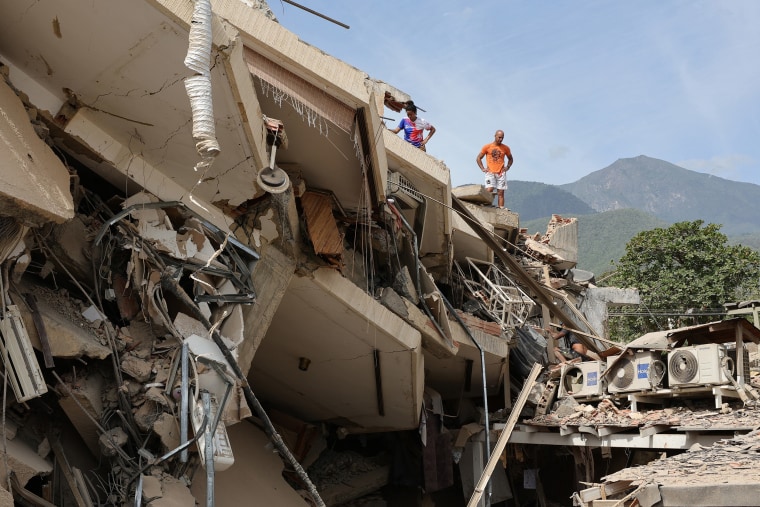
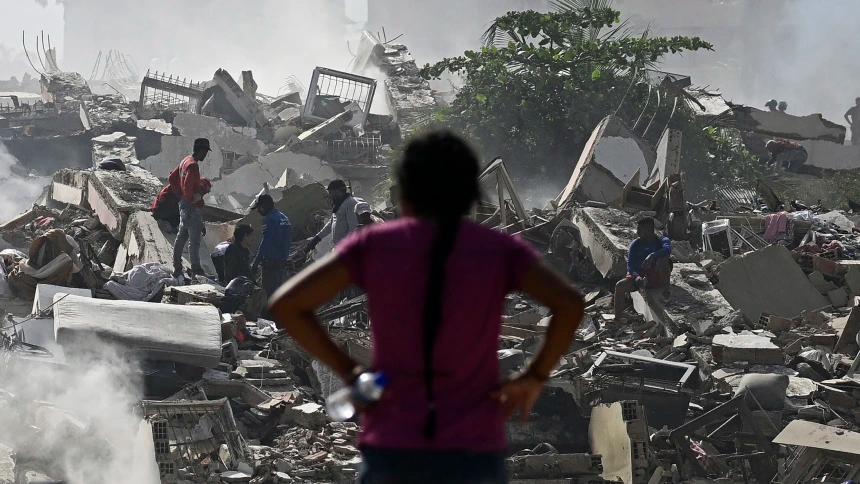
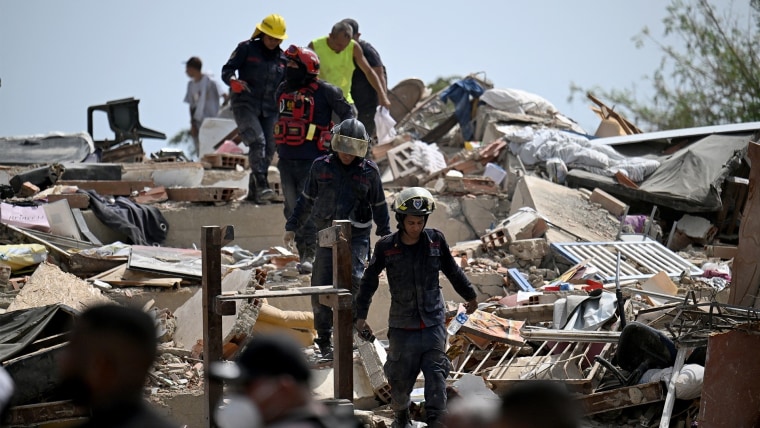
Television footage showed emergency workers rescuing injured people and animals from collapsed buildings. Many were covered in dust and blood as distraught relatives cried out for loved ones and others frantically searched for survivors.

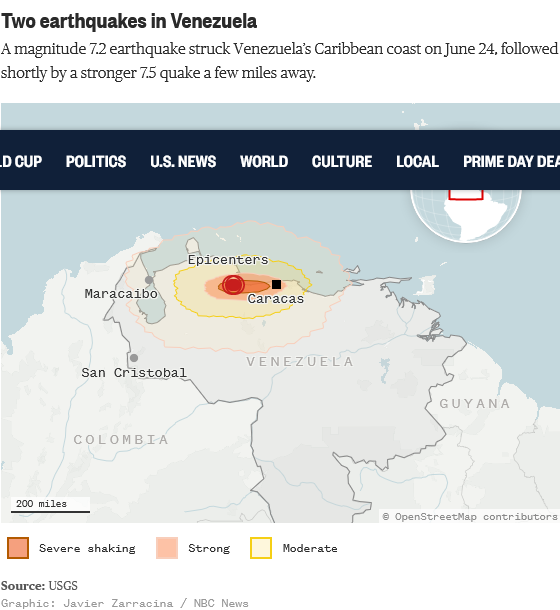
The 7.2- and 7.5-magnitude earthquakes struck west of the capital, Caracas, on Wednesday evening less than a minute apart. They were among the strongest to hit Venezuela in more than a century, sending tremors across much of the country and neighboring areas.

A senior U.S. Southern Command official arrived in Caracas late Thursday to oversee Washington’s relief efforts.

Marine Maj. Gen. Kevin J. Jarrard will work to coordinate the U.S. response, the military said.

President Donald Trump said Thursday that the United States was “ready, willing and able to help” Venezuela.

Rescue Efforts Continue In Venezuela After A Magnitude 7.2 Earthquake Struck The Country
Search efforts in La Guaira, Venezuela, on Thursday. Jesus Vargas / Getty Images

Nelson Ospedales was home in Caracas’ Altamira neighborhood when the quake struck.

“Material possessions can be recovered, but at this moment, the competent authorities — such as firefighters and civil defense — have been completely overwhelmed. They need more personnel,” he told Noticias Telemundo in Spanish. “Hospitals have become severely congested.”

Ospedales’ home partially collapsed and he’s now staying with a relative, he said.

Hospitals had reached capacity by Thursday evening as the country’s health system struggled to cope with the influx of patients, Health Minister Carlos Alvarado said on state television.

Jorge Rodríguez, president of Venezuela’s National Assembly, said late Thursday that about 200 people remained trapped beneath collapsed buildings, while around 250 structures had been damaged or destroyed.

Two earthquakes in Venezuela

A magnitude 7.2 earthquake struck Venezuela’s Caribbean coast on June 24, followed shortly by a stronger 7.5 quake a few miles away. © OpenStreetMap contributors

Source: USGS

Graphic: Javier Zarracina / NBC News

Acting President Delcy Rodríguez declared a state of emergency following the quakes, ordering the closure of Caracas’ international airport, suspending metro and rail services in affected areas and shutting schools for the remainder of the week.

Overnight, thousands of people who lost their homes slept outdoors, sheltering in tents or sleeping on benches and makeshift beds after being displaced by the disaster.

As rescue efforts unfolded, the acting president visited the coastal town of Macuto in La Guaira state, one of the areas hit hardest by the earthquakes.

“We are supporting the families, and they have our solidarity. We hope to recover alive as many people as possible,” she said.

The state, which borders Caracas and is home to the capital’s main international airport, saw about 70,000 families affected, Interior Minister Diosdado Cabello said.

In La Guaira, José Rolón was celebrating his birthday at a pool in his brother’s apartment building when disaster struck.

“I felt the floor start to shake violently. The water in the pool began to churn wildly, like a heavy swell,” Rolón told Noticias Telemundo in Spanish. As everyone inside the pool began to get out, they saw the building next to them collapse.

“It was a moment of shock,” Rolón said, adding that he spent the night sleeping inside his car with his 4-year-old and 2-year-old children.

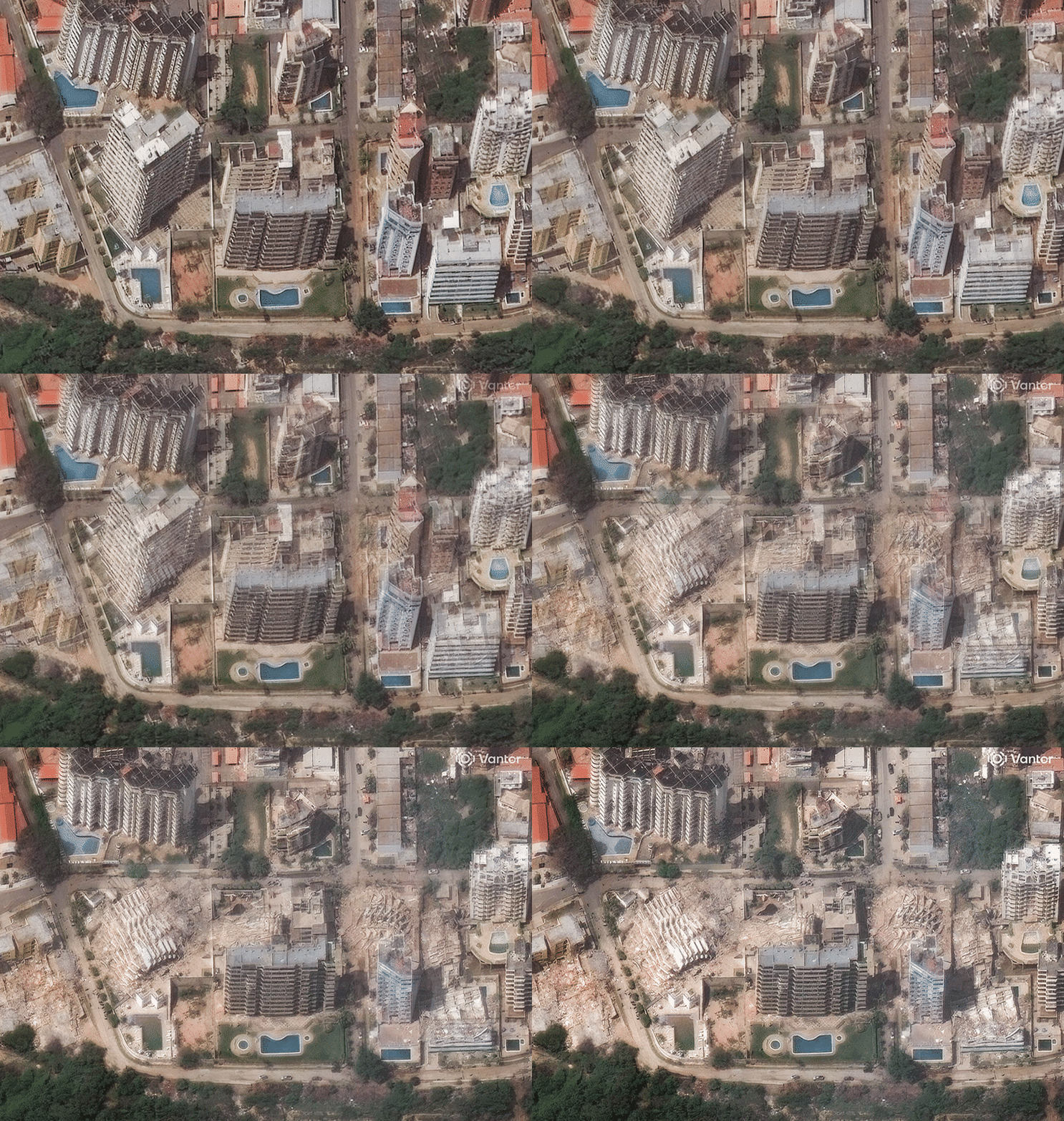
Apartment building in La Guaira, Venezuela, on June 22, 2026 and on June 25 after the earthquakes.
Apartment building in La Guaira, Venezuela, on June 22, and on June 25 after the earthquakes.Vantor

A website created to help locate missing people listed more than 50,000 as unaccounted for as families searched for loved ones. It reported that 8,000 people have been found so far.

Several countries have also reported citizens among the dead and missing, including Brazil, China, Italy and Spain.

The U.S. Geological Survey’s predictive modeling suggested the number of fatalities could climb to more than 10,000 as rescue crews continue searching through collapsed buildings and piles of rubble for survivors.

Search for survivors underway as twin quakes in Venezuela strain resources

Governments and humanitarian organizations around the world mobilized assistance, with emergency supplies and rescue teams arriving from countries across Latin America, Europe and Asia.

The State Department said it was mobilizing $150 million in aid for Venezuela. The aid was going through assistance partners like charity groups and a $100 million contribution to a U.N. Office for the Coordination of Humanitarian Affairs fund.

The Trump administration also eased sanctions to authorize transactions related to quake relief that would otherwise be prohibited.

Secretary of State Marco Rubio announced that Washington would deploy search and rescue teams, while the Pentagon would provide logistical support and help restore operations at Caracas’ damaged airport.

United Nations’ Humanitarian Chief Tom Fletcher wrote on social media that search and rescue teams were being deployed from around the world.

“Every hour counts,” he said.

Posta under Latin-Amerika, Our global world | Merkt , , , , | Kommenter innlegget

Gaza born journalist: Two different worlds stand before my eyes

Reporting on Gaza keeps my connection to my homeland alive
Relatives and colleagues of Palestinian journalist Hassan Eeslayeh, killed in an Israeli attack on Nasser Hospital’s burn unit, at his funeral ceremony on May 13, 2025. (Photo: Abdullah Abu Al-Khair/APA Images)
Journalists attempt to get an internet connection on their phones in Gaza City after internet and phone services collapsed across the Strip on June 13, 2025, during the height of the war. (Photo: Omar Ashtawy/APA Images)
Filed by Tareq S. Hajjaj
Two different worlds stand before my eyes.In one, there is safety, order, and calm — a place of exile that has offered me shelter, yet never quite felt like home. In the other, there is Gaza: wounded, shattered, and distant, yet closer to me than anything else. Even amid the quiet of this new life, the image of my destroyed homeland remains suspended before me like a mirage I cannot stop chasing.I spent my entire life in Gaza City. It is the place where my family belongs, where generations before me lived, and where every street carries a memory. Growing up, I watched uncles, cousins, and friends leave in search of opportunities, stability, and futures they could not find at home. I also witnessed something else: the distance that quietly grows between those who leave and those who remain.In Gaza, people often say, “Those who are far from the eye are far from the heart.”I used to think that saying was unfair.Now I understand why people say it. I’ve watched it happen — to a cousin who left years before me, to friends I grew up with, whose calls grew shorter and then stopped altogether. The distance doesn’t announce itself. It just arrives.When Palestinians leave a place shaped by occupation and arrive somewhere free, they encounter an entirely different reality. Things that seem ordinary to others become extraordinary. Wide roads. Organized cities. A plane landing just minutes away. Store shelves that are always full. The freedom to move from one city to another without checkpoints, permits, or fear. For many Palestinians, these are not everyday experiences. They are glimpses of a life that occupation has denied.Most people I know who left become absorbed by the demands of starting over. Work, survival, paperwork, responsibilities, and the endless effort of building a life in a new country gradually pull their attention away from home. Not because they stop caring, but because life leaves little room to carry two worlds at once. I have seen it happen to people I grew up with — people who once spoke about Gaza every day, and then one day simply didn’t anymore.Yet my experience has been different.The work I do every day pulls me back toward Gaza.Reporting on Gaza is not simply a profession. It is a form of belonging.Every morning begins with messages, calls, updates, recordings, interviews, photographs, and testimonies. Every story leads to another story. Every voice carries the weight of a place that refuses to disappear. The hours spent reporting, listening, writing, verifying, and publishing are not merely journalistic tasks. They are threads connecting me to a homeland that remains physically distant but emotionally inseparable.Perhaps the old saying is incomplete.Maybe places, too, can be far from the eye and far from the heart.But Gaza refuses to disappear from either.Every report from Gaza passes through networks of journalists scattered across different locations. Some remain on the ground, documenting events from within the Strip. Others, like me, work from outside. Together, we form a bridge across the distances that war has created. Through our reporting, we reconnect neighborhoods, cities, and communities that have been fragmented by displacement, destruction, and military occupation.Often, during video interviews, I find myself looking beyond the person speaking.In the background, I see streets I once walked through. Buildings where I worked. Intersections I crossed countless times. Sometimes I recognize a tree standing alone and remember the others that once surrounded it. Sometimes I search for familiar landmarks only to realize they are gone.The landscape has changed, but memory has not.The people speaking may be describing a military operation, a destroyed home, or another day of survival. Yet I am also quietly searching the frame for traces of the Gaza I knew.Gaza comes close again.Close to my eyes.Close to my heart.Journalistic work about Palestine creates a relationship that goes beyond reporting. Listening to people’s stories and writing them down becomes more than an interaction between a journalist and a source. It becomes a connection between two human beings.There is a particular kind of understanding that exists when the person asking the questions has lived the same reality. The grief being described is not abstract. The fear is familiar. The loss requires no translation.Perhaps that is why I continue to feel Gaza so intensely despite the distance.Because every story I write is also, in some way, a conversation with home.And every day that I report on Gaza, Gaza reports back to me — through its people, its streets, its memories, and its wounds — reminding me that while I may be far from the land, the land has never been far from me.
Yumna Patel, Mondoweiss Palestine News Director Tareq S. Hajjaj, Gaza Correspondent Articles / X – Mondoweiss.net

Posta under Midt-Austen, Palestina | Merkt , , , , | Kommenter innlegget

Guest blog: The BIG FRAUD and CORRUPTION of a Trump-asociate – Guess WHO?

«The Capitalist», oil on canvas, 2012, Ivar Tveito Jørdre

Trillion-Dollar Loopholes: The Real Cost of Untaxed Wealth

How does Elon Musk beat the tax system? From the Hunger Games Capitol to Neo-Feudalism, an analysis of untaxed wealth and the new social order. Let’s begin and find out.

The End of the Invisible Compact

The history of modern political economy is filled with a naive, almost childish faith that citizens have in the fairness of the system. We are taught in school that democratic states are built upon Jean-Jacques Rousseau’s «Social Contract»—an invisible compact where individuals pay taxes in proportion to their means, and in return, the state builds roads, funds schools, and ensures justice.

Yet, as the smoke clears from the historic Nasdaq listing of SpaceX, that ancient, cynical reality of political economy hangs heavily over the global markets. We are left to witness a breathtaking structural theater. If you look at the stage under the bright lights of Wall Street, the smiling fellow holding the trillion-dollar keys while paying virtually zero taxes is, without a doubt, Elon Musk. The social contract didn’t just bend; it was quietly liquidated.

1. The Financial Chess Match: How a Billionaire «Beats» the House

An ordinary global citizen—looking at the followers blinded by the spectacular glare of exploding Starships, and finding them no different from the crazed crowds of the Capitol in the Hunger Games—asks a painfully sharp question: How can the world’s first trillionaire see his wealth skyrocket by hundreds of billions, yet not owe a single, solitary penny in personal income tax?

The answer is not illegal tax evasion. Professional oligarchs and deep-financial apparatuses do not commit crimes; they write the rules. Musk and his army of financial engineers simply walk through the very doors the state left open for them, utilizing four ruthless techniques:

* The Phantom Wealth (Unrealized Gains): 

Under the current system, a trillion-dollar surge in stock value is treated as a mere «paper gain.» As long as Musk doesn’t perform the clumsy act of selling his SpaceX or Tesla shares, the IRS cannot touch him. Think of the global financial system as a high-stakes casino where the house has set up a rather «peculiar» rule for its VIP guest. Musk walks into the room, his chips are worth billions on the felt, but he never actually goes to the cashier’s cage to cash them out. If he did, the IRS tax man waiting at the exit would take a 20% cut. Instead, the casino manager smiles, pats him on the back, and hands him an open briefcase of cash as a «low-interest loan,» using his uncashed chips as a guarantee. Musk spends the cash, lives like a king, and legally remains a «pauper» on paper. The house gets its loyalty, Musk gets his liquidity, and the middle-class crowd standing around the table pays the entry fee for the entire casino. It is the classic elite formula: Buy, Borrow, Die.

* The «Ghost Losses» Weapon

 SpaceX spent years burning billions of dollars while blowing up rocket prototypes in the Texas desert. To the untrained eye, this looked like a loss. To financial engineers, it was gold. According to SpaceX’s official IPO filing (Form S-1), these accumulated losses were legally weaponized as a «Deferred Tax Asset,» granting the company a staggering $1.1 billion in direct federal tax credits to wipe out any future tax liability.

* The xAI Corporate Marriage: 

Why did Musk absorb his artificial intelligence venture, xAI, into SpaceX just before going public? It wasn’t just for technological synergy; it was a tactical masterclass in profit reduction. The multi-billion-dollar infrastructure costs of xAI were consolidated with SpaceX’s revenues, artificially driving down the company’s taxable net profit on paper and eviscerating the corporate tax base.

* The Stock-Based Illusion: 

SpaceX showers its executives and engineers with billions in stock options instead of cash salaries. While this costs the company zero physical liquidity, the tax code treats it as an «operating expense.» SpaceX effectively issues its own financial assets (shares) like a currency, distributes them to its staff, and leverages this practice as a tool to legally slash its tax bill.

2. Real-World Realities and Public Harm: Subsidizing Starship

Economic theorists and tech-evangelists love to lean back and argue that this untaxed wealth is being put to better use—funding the space race, building satellite constellations, and saving humanity.

But let’s translate this into the language of a local diner: Elon Musk, the Pentagon, and Wall Street sit at a luxury table, order a magnificent, multi-billion-dollar feast of rockets and AI infrastructure, and have a grand old time. But when the waiter brings the check, the elites use their «corporate credit vouchers» to walk out the back door. The diner owner doesn’t just tear up the bill; he simply divides the cost of that entire lavish dinner and adds it to the price of the burgers and coffees ordered by the working-class families sitting at the counter. You aren’t watching a private space race; you are paying for their dessert.

The daily quality of life for an ordinary citizen is not measured by the trajectory of a rocket launched into the stratosphere, but by the safety of the streets in their own neighborhood. The grand illusion of «technological innovation» is, in reality, a public subsidy forced upon the middle class.

3. Sociological Erosion: The New Overlords

Socio-politically, a society stays intact because of a shared sense of justice. When a fixed-income factory worker or a teacher sees their taxes deducted from their paycheck before it even hits their bank account, while a trillionaire acts as a sovereign entity above the tax code, the social fabric tears.

This creates a dangerous new paradigm: Neo-Feudalism. By allowing capital to accumulate completely unchecked by taxation, we are no longer dealing with mere businessmen. We are dealing with modern-day feudal lords who monopolize global information flows (X/Twitter), satellite networks (Starlink), and the future of human intelligence (xAI). The core dynamics of their monopolization are by no means easy to swallow; it is an overt attempt by the elites—who are acutely aware that something else will replace capitalism—to design and dictate the new order with a single hand, targeting future generations. This untamed capital transforms into an absolute leverage tool over democratic governments, effectively rendering the principle of the separation of powers a relic of the past.

4. Analytical Impact Assessment (Cost/Benefit Analysis)

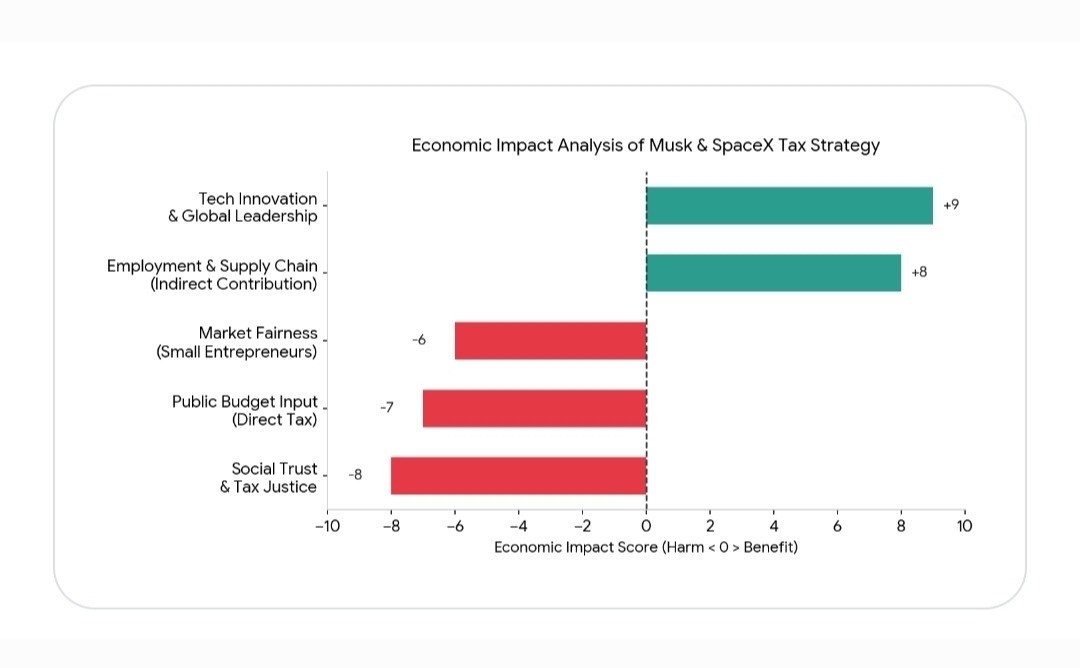
To map out the definitive reality of this grand parallelism of interests, we must look past the PR campaigns and score the structural damages and macroeconomic benefits (-10 being critical systemic harm, +10 being maximum geopolitical benefit):

The numbers speak for themselves. While Social Trust (-8) and Public Budgets (-7) are deeply bled, the system attempts to buy back its legitimacy through Technological Dominance (+9). But a state that conquers the stars while starving its own social foundation is gambling on a highly volatile future.

An Unsustainable Table

When looking at the final balance sheet, the momentum gained in the global space race cannot cover the massive deficit in societal peace. An empire’s presence on Mars becomes completely irrelevant if its domestic borders are rotting from a lack of systemic justice. The tragedy is that Planet Earth has seemingly been completely discarded, and the people here rendered obsolete; surely, never in human history has such blatant hubris been on display—where someone finds in themselves the absolute authority to act upon an entirely different planet as if it were their own private property. Perhaps this was experienced under Nero; who knows. If trillion-dollar loopholes are to carry capitalism on their backs, where will the rights of the middle class, the working class, be granted? Or was the progress of humanity since the Roman Empire merely virtual, and has slavery simply changed its name and form? Creating an environment for billionaires to practice philanthropy is nothing but a culture of almsgiving. If workers are democratically equal individuals of the same society, a Wealth Tax emerges as a structural demand. An even better approach, of course, is to regulate the loopholes in the laws in a way that prevents this injustice from occurring in the first place. Otherwise, as history has shown us time and again, when the social contract completely collapses, a ruinous downfall will occur where neither the owner of the diner nor the diner itself remains, and humanity will plunge into a new vicious cycle solely due to the insatiable greed of a single class.

——————————

References Notes (Verification & Data Sources)

* SpaceX SEC Form S-1 Filing: Official registration data regarding $1.1 billion in Net Operating Losses (NOLs), asset consolidation with xAI, and corporate tax credits [finance].

* Federal Shareholder & Credit Disclosures (Form 13D/G): Public agreements detailing share-pledged credit lines via Morgan Stanley, Goldman Sachs, and JPMorgan Chase [finance].

* US Internal Revenue Code (IRC): Statutory regulations regarding R&D incentives and stock-based operating write-offs.

Written by Eylem

​………

Posta under Capitalism, Politic&Society | Merkt , , , , , , , | Kommenter innlegget

One Palestinian child has been killed every day on average for more than eight months in Gaza since a so-called “ceasefire” – Zionist murderers!

Israel kills ‘a child a day’ on average in Gaza despite ceasefire, UN says

‘No ceasefire can be considered meaningful while children continue to be killed’ says UNICEF.

Maternal uncle of Bissan, who was evacuated as a premature baby during the two-year Israeli offensive for treatment in Egypt, plays with her after she returned to Gaza as her Palestinian mother Sundus al-Kurd reaches her arms out, in Deir al-Balah in the central Gaza Strip, March 31, 2026. [File: Mahmoud Issa/Reuters]
Israel’s genocidal war on Gaza has killed tens of thousands of children, charity groups report, in spite of a ceasefire in place [File: Mahmoud Issa/Reuters]

By Elis Gjevori – aljazeera.com

Published On 19 Jun 2026

One Palestinian child has been killed every day on average for more than eight months in Gaza since a so-called “ceasefire” with Israel was announced, the United Nations children’s agency says.

UNICEF describes the truce as a “cruel and deadly illusion” as Israel continues to attack the besieged enclave.

Israeli forces have killed at least 265 Palestinian children since October 2025, when the halt in hostilities was declared, UNICEF said on Friday.

“During a period supposedly defined by restraint and protection, a child has been killed, on average, every single day for more than eight months,” UNICEF spokesperson James Elder told reporters in Geneva.

He said the continued deaths exposed the hollowness of a ceasefire that has not protected Palestinian children from Israeli fire.

“While the world continues to speak the language of ceasefire, families in Gaza continue to bury their sons and daughters,” he said.

Elder said children had been killed in homes, schools and public spaces, including while playing football or fishing.

“This week: a 2-year-old boy was shot and killed by Israeli forces; a 13-year-old boy was shot and killed inside his tent; a 5-year-old boy and his father were killed by an Israeli strike, and on and on it goes,” he added.

According to UNICEF, more than 400 children have also been injured since October, many with devastating wounds.

“The suffering does not end with those killed. More than 400 children have been injured, many with catastrophic wounds,” Elder said.

“You sneeze near the Orange Line and you may well get shot,” Elder maintained, referring to the “continual creeping” of Israel’s so-called “Yellow Line” and “Orange Line” boundaries of occupation.

He cited recent cases involving a 12-year-old girl shot in the chest inside her tent and a three-year-old girl shot in the face by a bullet from a quadcopter drone while inside her home.

Elder warned that hundreds of children urgently need medical evacuation, while Israeli restrictions on essential medicines are increasing the risk of infections, complications and amputations among wounded children.

‘Loss and violence have become constant’

Israel’s blockade and military restrictions have trapped children inside a devastated health system, where hospitals are struggling with shortages of medicine, fuel, staff and equipment after months of bombardment and siege, humanitarians say.

Elder said the psychological toll on Gaza’s children had become unbearable, with fear and violence shaping daily life.

“For Gaza’s children, fear, loss and violence have become so constant that trauma is no longer an episode in their lives – it is woven into the very fabric of their childhood,” he said.

He urged governments and international institutions to act, saying continued child deaths during a ceasefire should alarm anyone committed to international law.

“No ceasefire can be considered meaningful while children continue to be killed,” he said.

Elder also pointed to Lebanon, where UNICEF said 247 children have been killed and 992 injured since hostilities escalated on March 2.

The warning on Friday came as an Israeli air strike hit a tent sheltering displaced families in al-Mawasi, west of Khan Younis in southern Gaza, injuring at least five people, according to the Palestinian news agency Wafa.

Palestinian health authorities said on Thursday that Israel’s genocidal war on Gaza has killed at least 73,018 Palestinians and wounded 173,273 since October 7, 2023.

They said Israeli attacks have killed 1,007 people and wounded 3,165 since the “ceasefire” took effect on October 11, while rescue teams have recovered 784 bodies from areas that had previously been inaccessible.

0:51More than 1,000 killed in Israel attacks on Gaza since ceasefire

These are the Palestinians that Israel has killed during Gaza’s ‘ceasefire’

These are the Palestinians that Israel has killed during Gaza’s ‘ceasefire’

02:26

Gaza girl fights to recover after Israeli strike kills mother and siblings

Gaza girl fights to recover after Israeli strike kills mother and siblings

00:49

Former PM says Israel smuggled Starlink internet systems into Iran

Former PM says Israel smuggled Starlink internet systems into Iran

Posta under genocide, Imperialism, Midt-Austen, Palestina | Merkt , , , , , , | Kommenter innlegget

The zionist terrorists are Bombing the Ceasefire!

Tentative But Defiant, Lebanese Families Return to Southern Lebanon Amid Continued Occupation

Israel conducted some of its heaviest attacks on Lebanon following the U.S.-Iran deal. The bombardment has finally halted but troops remain.

Lylla Younes – dropsitenews.com

Jun 22, 2026

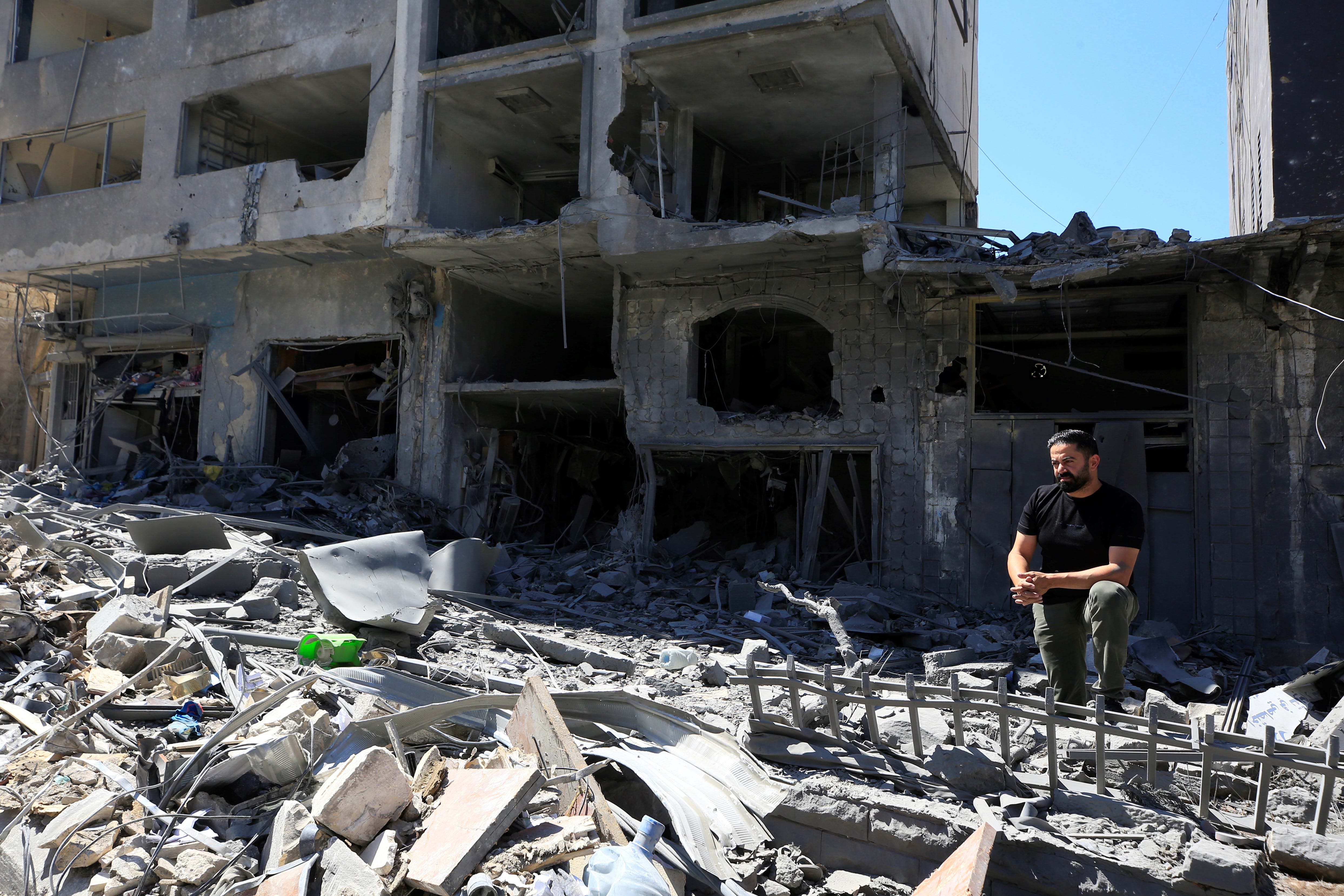
A man inspects buildings destroyed by Israeli airstrikes in Nabatieh, southern Lebanon, June 21, 2026. Photo by Ali Hashisho/Xinhua via Getty Images.

BEIRUT, Lebanon—Fadel Jaber returned to Nabatieh in southern Lebanon on Thursday, anxious to see his home for the first time since he was forcibly displaced by the Israeli military three months ago. The previous day, the U.S. and Iran had signed a memorandum of understanding to end the war between them that included a specific stipulation to halt the fighting in Lebanon. Believing that the city would be safe, Jaber joined thousands of people heading south on roads choked with traffic, the flow of vehicles slowed by damaged bridges targeted by Israeli airstrikes.

After several hours, he finally reached his home, but the respite turned out to be temporary. Around midnight, the earth began to shake from heavy bombardment.

“It was a disaster,” Jaber told Drop Site News. “Nonstop warplanes, nonstop bombing. The strikes seemed to come from every direction.”

His son in the nearby village of Kfar Joz received a call from the Lebanese Civil Defense telling him that they were evacuating residents and that he should meet them at the emergency vehicle down the street. Minutes after leaving, his building along with three others in the vicinity were flattened by Israeli bombs.

“The strikes weren’t concentrated in one area of military importance; they were widespread and targeted civilian areas,” said Abbad Romani, a medic and spokesperson with the Islamic Health Authority in Nabatieh. Romani spent the night assisting at Najdi Hospital, where the dead and wounded were brought throughout the brutal Israeli assault. “They were so intense that people weren’t even able to leave.”

Around 5 a.m, Jaber decided to leave his home once again and try to head back to Beirut. Within an hour of departing, he got word that the building adjacent to his and another across the street were both bombed, and his own home was heavily damaged. The Israeli military later declared it had conducted more than 150 strikes across Lebanon, the majority concentrated in Nabatieh and its surrounding villages. At least 47 people were killed that night, according to Lebanon’s Health Ministry, though Romani expected the toll to grow as more bodies were recovered.

“It was the most violent night we witnessed this war. The work was very tough,” Hassan Fakih, the head of the Lebanese Civil Defense in Nabatieh, told Drop Site. “Drones targeted anything moving on the roads, which limited our ability to rescue the injured,” he said, adding that the waves of airstrikes were supplemented with heavy artillery shelling.

Despite reports emerging on Friday of a ceasefire deal between Israel and Hezbollah, Israeli strikes continued overnight killing scores more people. Hezbollah fought back killing at least six Israeli soldiers and wounding more than 20. But by Saturday afternoon the attacks subsided and a relative calm has held for the first time since March.

Bombing the Ceasefire

Multiple residents told Drop Site that the events on Thursday bore resemblance to April 8, when the Israeli military struck more than 150 locations across Lebanon in the span of ten minutes after the United States and Iran first agreed to a temporary ceasefire—an attack that killed over 350 people and is referred to in Lebanon as “Black Wednesday.”

The lack of warning, the breadth and scale of the bombardment, and the timing were echoed in Thursday’s assault on Nabatieh. In both cases, Israel launched an intensified attack after Washington and Tehran reached an agreement that included a ceasefire in Lebanon in no uncertain terms.

According to local witnesses, the assault coincided with an Israeli attempt to advance through the village of Kfar Tebnit and seize Ali Taher hill, which overlooks Nabatieh and which Israel claimed serves as a major strategic location for Hezbollah. Residents reported heavy clashes between Hezbollah fighters and Israeli troops, with the Israeli military illuminating the night sky with flares as it evacuated wounded soldiers. At least four Israeli soldiers, including a battalion commander, were killed by Hezbollah anti-tank missile fire on Thursday night, while at least 17 others were wounded.

Since March, when Hezbollah entered the war alongside Iran, Israel has killed more than 4,100 people in Lebanon and displaced over 1.2 million. Hezbollah has continued to retaliate against Israel’s military campaign and has stunned Israel with its ability to inflict losses on occupation forces. More than 30 Israeli soldiers have been confirmed killed in action since March 2.

The first provision of the MOU signed last week mentions Lebanon three times, calling for “the immediate and permanent termination of military operations on all fronts, including in Lebanon” as well as “ensuring the territorial integrity and sovereignty of Lebanon.”

In response to Israel’s bombardment of Lebanon on Thursday, Iran refused to de-link Lebanon and allow the agreement with the U.S. to move forward, declaring it would close the Strait of Hormuz, jeopardizing a key provision of the MOU. Iran also told mediators it was prepared to suspend the agreement entirely and launch retaliatory strikes against Israel, a senior Iranian official told Drop Site.

Nevertheless, Israeli Prime Minister Benjamin Netanyahu has insisted that Israeli troops would remain in a “security zone” in southern Lebanon, which runs several kilometers along the border into Lebanese territory and encompasses more than 60 Lebanese villages, indefinitely. “Our fighters in southern Lebanon have full freedom of action to thwart any direct or emerging threat against them or against the residents of the north. The IDF has no restrictions in this matter,” Netanyahu said on Monday. “I stand firm on the fact that we will remain in the security zone in southern Lebanon for as long as is required to protect the residents of the north and all the citizens of the state.”

Israeli Defense Minister Israel Katz also said that Israeli troops would not withdraw from Beaufort castle—also known as Qalaat al-Shaqif—in southern Lebanon. “Israel has no intention of withdrawing from the Beaufort, which is an integral part of the security zone in Lebanon and essential for the defense of the Galilee settlements and IDF forces,” Katz wrote on X.

Hezbollah Secretary General Naim Qassem rejected Israel’s continued occupation of Lebanese territory, saying in a televised address on Sunday Israeli troops “remaining on Lebanese land is impossible. There are no security zones for Israel…we have a national army which deploys, and it is responsible for preserving sovereignty, and it is who we cooperate with.” He also condemned the hypocrisy of Israel’s position. “A ceasefire means Hezbollah does not fire and Israel is free to occupy anywhere. We do not want such a ceasefire.”

Even Lebanese President Joseph Aoun—who at the outbreak of the latest phase of the war on March 2 regularly condemned what he called Iranian interference in Lebanese affairs, declared a ban on Hezbollah military activity, and supported efforts to expel Iran’s ambassador from Beirut—appeared to warm to Tehran’s stance. Aoun held direct talks with Israeli officials in Washington—the first publicly acknowledged direct negotiations in decades—that were conducted alongside the U.S.-Iran negotiations in what was presented as two separate tracks. Since the signing of the MOU, however, Aoun has welcomed the deal and spoken by phone with Iranian Foreign Minister Abbas Araghchi.

Yet the continued occupation of large swathes of southern Lebanon by the Israeli military risks scuppering the deal, which explicitly calls for the “territorial integrity and sovereignty of Lebanon.”

As Israel’s bombardment has halted, Lebanese families once again began to slowly return to the south, including to Nabatieh and its surrounding villages, many to find their homes reduced to rubble.

Jaber said that despite relative calm and the progress made in the U.S.-Iran talks over the weekend in Switzerland, he didn’t believe the war was over. “It won’t end until the Israelis have completely withdrawn from Lebanese land,” he said. He planned to return to Nabatieh on Tuesday to begin repairs on his home in preparation to move back for good. He said he could not afford another month of rent in Beirut and did not want to endure life in a government shelter. “Better to die in dignity.”

Posta under genocide, Imperialism, Midt-Austen | Merkt , , , , , , | Kommenter innlegget

In deepest memory: The brave Lebanon’s turtle advocate, Mona Khalil, killed by zionist murderers IDF

Mona Khalil, Lebanon’s turtle advocate, dies after Israeli attack

Khalil spent more than two decades protecting the nests of endangered turtle species in southern Lebanon.

Mona Khalil holds a Lebanese flag as she walks with a group of people.
Mona Khalil and colleagues are seen on their way to release baby sea turtles into the sea at a seashore in al-Mansouri village, near the southern city of Tyre, Lebanon, July 29, 2018 [Jamal Saidi/Reuters]

By Al Jazeera Staff – aljazeera.com

20 Jun 2026

Lebanese marine ecologist Mona Khalil, who was severely wounded after an Israeli strike hit her home near Tyre last week, has died, according to local reports.

Khalil, 77, succumbed to her wounds on Friday, the same day Israel escalated air attacks on southern Lebanon, killing at least 50 people and injuring dozens despite the risk posed to a fragile peace deal between Iran and the United States.

“It is with deep sadness that we mourn the passing of Mona Khalil today,” environmental group Live Love Tyre said in a Facebook statement on Friday.

“She will be remembered through an incredible legacy. Through it all, Mona chose to stay and care for the turtles of Live Love Tyre. Her life was selfless and impactful.”

A life of impact

Khalil was born in Lagos, Nigeria, in 1949. She spent several years abroad before moving to southern Lebanon.

A fleeting encounter with a turtle which had emerged from the ocean to lay its eggs on al-Mansouri beach near Tyre in 1999 propelled her on a lifelong journey devoted to animals.

She went on to dedicate decades to protecting the nesting sites of endangered loggerhead and green sea turtles on Lebanon’s southern coast.

Both species are highly threatened by coastal development, plastic pollution, fishing nets, and light pollution and are at risk of becoming extinct in the eastern Mediterranean.

In 2000, Khalil helped establish the Orange House, an eco-tourism project situated at al-Mansouri beach. She also helped document marine life in southern Lebanon and advocated for wildlife and against the pollution of Lebanon’s coastline.

“You have left us yet you remain within us – we, your children,” journalist and volunteer Fadia Joumaa, who worked closely with Khalil, said in a tribute shared on Facebook.

Khalil’s death “is a loss for all of Lebanon… not just for us. A loss for the life you guarded so

faithfully,” she said.

Recommended Stories, all on:

https://www.aljazeera.com/news/2026/6/20/mona-khalil-lebanons-turtle-advocate-dies-after-israeli-attack

Shifting Roots: A Lebanese woman’s fight to save her olive trees

Recommended Stories

list of 4 items

Next

02:49

Remembering Al Jazeera cameraman Ahmed Wishah’s life’s work

Remembering Al Jazeera cameraman Ahmed Wishah’s life’s work

01:36

Displaced Lebanese inspect shattered Nabatieh after Israel halts attacks

Displaced Lebanese inspect shattered Nabatieh after Israel halts attacks

01:28

Colombia elections take place as Abelardo de la Espriella leads polls

Colombia elections take place as Abelardo de la Espriella leads polls

02:22

Iran warns closure of Hormuz is ‘just a first step’ if Israeli attacks continue

Iran warns closure of Hormuz is ‘just a first step’ if Israeli attacks continue

Posta under Imperialism, Midt-Austen | Merkt , , , , , | Kommenter innlegget