

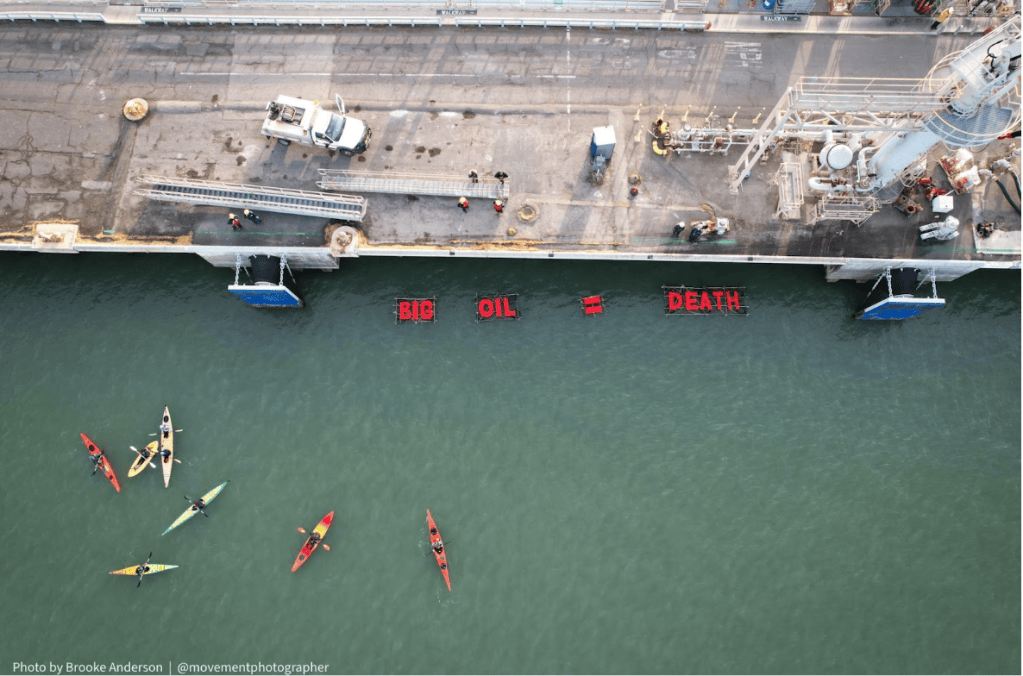
| This was a strategic day of action against a corporation that’s profiting from genocide while destroying our planet—and they felt it. As Israel shoots, kills, and kidnaps Palestinian people seeking aid at U.S.-run concentration camps for “aid distribution,” we must confront complicity in all its forms. Climate activist Greta Thunberg, who just set sail on the Freedom Flotilla boat to deliver aid to Gaza, captured exactly why this matters: «When we see the children of Gaza killed by Israel’s war machine, their homes burned, schools bombed, and families destroyed, all fueled and funded by gas corporations like Chevron—what kind of future do we have if we cannot stop this genocide today?» Here’s what we accomplished together on Anti-Chevron Day: In the U.S., activists picketed Chevron gas stations, dropped banners, and confronted the company’s complicity in Israel’s genocide against the Palestinian people. In Latin America, communities that have been fighting Chevron’s environmental destruction for over a decade stood in solidarity with Palestinians. In Australia and Europe, organizers connected the dots between climate justice and Palestinian liberation. The numbers tell the story of Chevron’s complicity:$1.5 billion in gas sale revenues from Israeli fields in 2023 alone1$820 million paid to Israel in taxes and royalties—funds that bankroll apartheid and genocide2$900 billion Chevron would owe if held accountable for climate damage3But here’s what gives me hope: Chevron just reported their greatest quarterly loss in years. Our coordinated pressure is working. This is how we win: sustained, strategic campaigns that hit corporations where it matters most. Your action is part of something bigger, and we’re just getting started. BOYCOTT CHEVRONThe timing of Anti-Chevron Day wasn’t accidental. It happened one week before Chevron’s annual shareholders meeting, part of a strategic push ahead of a vote on a resolution requiring the company to acknowledge its human rights abuses worldwide. From shareholder meetings to the streets, people are demanding accountability. Tens of thousands have already pledged to boycott Chevron, dozens of groups worldwide have organized actions, and at least three U.S. cities have divested from the company. Chevron only entered the Israeli market in 2020. They can exit at any time, and with enough pressure, they will. And the pressure is building. Just one day before Chevron’s annual shareholders meeting, the Swiss National Bank announced it had sold its entire stake in Chevron because the company now breaches its portfolio guidelines. At the meeting itself, 25% of shareholders voted4 to lower the threshold for calling special meetings: a clear sign of growing investor dissent, worth approx. $60 billion in shares. Kichwa leader Leo Cerda addressed shareholders, «Chevron came in, extracted oil, poisoned the land and water, and then walked away. Entire communities were left to face the consequences of corporate negligence. This is a human rights crisis—one where lives were devalued, voices ignored, and justice denied.» What happened on Anti-Chevron Day proves that when we coordinate across movements– connecting Palestinian liberation with climate justice, Indigenous rights, and anti-corporate organizing, we become unstoppable. The message is clear: From Ecuador’s poisoned rivers to Gaza’s bombed hospitals, Chevron profits from human suffering. And people around the world are saying enough. Join the growing movement: Take the pledge to boycott Chevron, share it with three friends, and find more ways to take action on this page. Every time you pass a Chevron station without stopping, every time you choose a different gas company, every time you pressure your communities to divest, you’re part of building the sustained pressure that will force Chevron to choose between profits and genocide. They’re already feeling the heat. Let’s keep going. Onward to liberation, |
 AHMAD ABUZNAIDExecutive DirectorUS Campaign for Palestinian Rights |


